Key Takeaways
- Clear sphere ice is usually the result of a freezing system, not a single mold: water quality, freezing speed, mold geometry, and demolding all matter.
- A large ice cube maker and a sphere ice maker serve different drink styles; choose based on dilution speed, glass shape, and presentation goals.
- An ice baller maker for home use should be easy to fill, support slow freezing, and release cleanly without cracking the sphere.
- For B2B buyers, custom silicone ice molds can be developed around cavity design, shape, size, color, logo, and packaging [K2].
- Always verify current availability, material composition, dimensions, certifications, MOQ, and lead time before publishing product-specific claims or quotations [K5].
1. Introduction
If you are searching for an ice baller maker, a clear sphere ice maker, or a large ice cube maker, you are probably solving more than one problem. You may want whiskey ice that looks clean in a glass, slower dilution for cocktails, or a repeatable mold format for a branded product line. At the same time, many buyers discover that the mold is only one part of the result. Cloudy centers, cracks, trapped air, and difficult demolding often come from the freezing process rather than the tray itself.
This article explains how clear sphere ice is actually made, how large cube and sphere molds differ, and what practical steps improve results at home or in small-scale production. It also covers what international B2B buyers should check when sourcing a custom ice baller maker or large ice cube maker. The goal is to help you compare options, avoid common mistakes, and make a decision that fits your use case rather than relying on vague product claims.
2. Clear Sphere Ice Science: Why Directional Freezing Matters
Core conclusion: Clear ice is created when water freezes slowly and directionally, pushing dissolved gases and impurities away from the ice that will be used. A clear sphere ice maker helps by shaping the ice, but it cannot guarantee clarity if the freezing environment is wrong.
In a normal freezer, water freezes from the outside in. Air and dissolved minerals become trapped in the center, which is why many homemade ice cubes look cloudy. Directional freezing usually means insulating the mold so that freezing starts from one side or one direction. The clearer ice forms first, while the cloudy, gas-rich portion remains in a separate area that can be discarded or trimmed. This is why many clear ice methods use a cooler, an insulated sleeve, or a mold designed with a sacrificial section.
For a big ball ice maker, the challenge is that a sphere has no natural “top” or “bottom” for impurities to escape. A well-designed sphere mold often accounts for this by controlling the fill line, the wall thickness, and the opening. Silicone is popular because it flexes during demolding, but flexible molds may need a rigid support tray to keep their shape while freezing. Cavity design, product shape, and size are therefore not cosmetic details; they affect clarity, release, and durability [K2].
Practical advice:
- Start with clean-tasting water. If your tap water has strong mineral notes, filtered or distilled water may reduce haze, but it does not replace slow freezing.
- Freeze slowly. A colder freezer is not always better; a fast freeze tends to trap more gas.
- Insulate the mold. A simple silicone sleeve or a cooler-based setup can encourage directional freezing.
- Do not overfill. Leave the recommended headspace so expanding ice has room and the sphere does not deform.
- Temper before demolding. Let the mold sit briefly at room temperature so the surface releases without cracking.

The main boundary condition is that clarity is never guaranteed by a single product. A clear sphere ice maker can improve consistency, but the result still depends on water, freezer behavior, and handling.
3. Large Ice Cube Maker vs. Sphere Ice Maker: Match the Mold to the Drink
Core conclusion: Large cubes and spheres are not interchangeable. Large cubes are often better for highball glasses and batch presentation, while spheres are usually chosen for whiskey, spirits, and cocktails where slow dilution and visual impact matter.
A large ice cube maker typically produces blocky or cuboid ice. The shape allows the cube to sit predictably in a rocks glass, and the larger mass slows melting compared with standard cubes. A sphere ice maker produces round ice that looks distinctive and can roll slightly in the glass. Because a sphere has less surface area for its volume than many irregular shapes, it can melt slowly when it is well made. However, a poorly formed sphere with cracks or a cloudy core will melt faster and may crack in the glass.
For buyers exploring custom silicone ice mold development, the key is to match the mold format to the final use case. Ice molds can be tagged under household, kitchen, and promotional use cases, so a single mold design may serve more than one market [K1]. A branded ice cube tray for a beverage company, for example, may need different cavity geometry than a retail ice ball tray sold for home bars.
| Mold type | Typical shape | Best for | Main advantage | Main caution |
|---|---|---|---|---|
| Sphere ice maker | Round ball | Whiskey, spirits, premium cocktails | Slow dilution and strong visual appeal | Cracks or cloudy cores are visible |
| Large ice cube maker | Large cube or block | Highballs, punch, batch drinks | Stable in glass, easy to stack or store | Can be bulky in small freezers |
| Silicone ice ball tray | Flexible sphere cavities | Home bars, gifts, promotions | Easy demolding, broad design options | May need a support tray for shape control |
| Rigid sphere mold | Hard-shell sphere | Consistent shape and clarity | Good structural control | Demolding can be less forgiving |
| Combined tray | Mixed shapes | Parties, sampling, variety packs | Flexible use cases | Less optimized for one drink style |
Practical advice:
- Choose a sphere if the drink is served neat or on a single large rock.
- Choose a large cube if the glass is wide and the drink is built over ice.
- Choose a mixed tray if you are testing consumer preference before committing to a custom mold.
- Check freezer clearance before buying a large cube maker; oversized molds may not fit on a standard shelf.
4. Big Ball Ice Maker Tips: From Filling to Demolding to Storage
Core conclusion: Better results come from a repeatable routine. The most common failures—cracks, cloudy centers, and hard-to-release spheres—can usually be reduced by controlling fill level, freezing position, and demolding temperature.
Filling: Fill the cavities to the marked line, not to the rim. Water expands as it freezes, and overfilling can distort the sphere or force water into neighboring cavities. If the mold has a shared water channel, follow the manufacturer’s filling sequence so each cavity receives enough water without overflow.
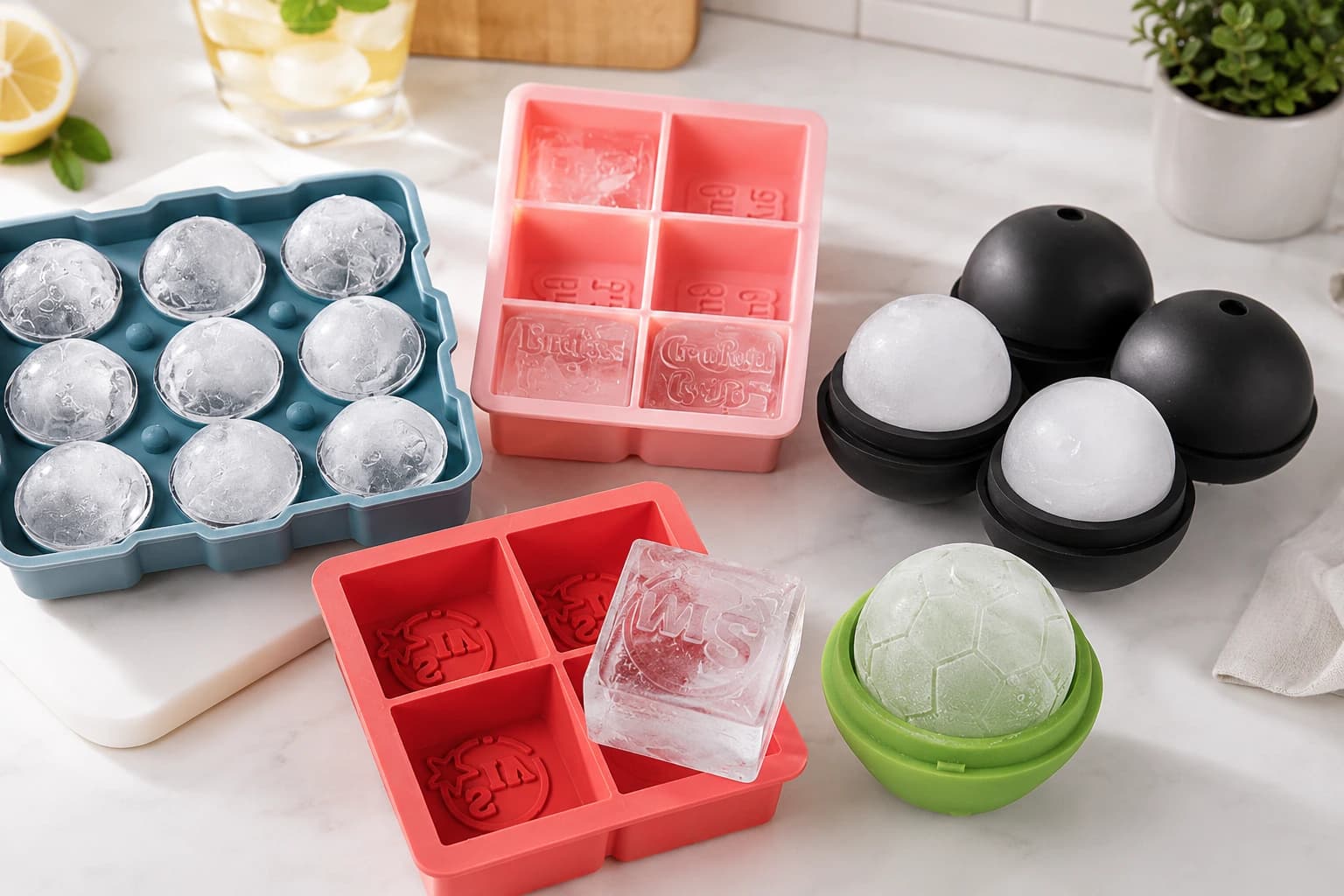
Freezing position: Place the mold on a level surface. If the design supports directional freezing, keep the insulated side or the intended top orientation consistent. Rotating the mold halfway through freezing is sometimes suggested, but it can introduce air pockets if the mold is not designed for it. A stable, undisturbed freeze is usually more reliable.
Freezing time: Allow a slow freeze, often overnight or longer depending on freezer temperature and sphere size. Removing the mold too early produces a weak shell that cracks when demolded. Waiting too long can make the sphere frosty or cause it to sublimate in the freezer.
Demolding: Let the mold rest at room temperature for a short time, or dip it briefly in cool water if the material allows. Do not twist silicone aggressively around a fully frozen sphere; the ice can fracture. Release the edges first, then support the sphere from underneath as it comes out.
Storage: Store finished spheres in an airtight container or freezer bag. Large ice balls can absorb odors and develop surface frost if left uncovered. For service, use tongs or a clean cloth to avoid warming the surface with your hands.
For brands that need repeatable production, silicone OEM/ODM support can help move from a sample concept to a defined mold specification, including cavity layout and packaging. The practical rule is simple: test the full routine—fill, freeze, demold, store, and serve—before scaling the design.
5. Custom Ice Baller Maker and OEM Sourcing: What Buyers Should Verify
Core conclusion: A custom ice baller maker project should be managed as a product development project, not just a mold purchase. The buyer needs to define the use case, the target market, and the verification steps before tooling.
Custom silicone ice molds can be customized by cavity design, product shape, size, color, logo, and packaging [K2]. That flexibility is useful for branded ice programs, promotional products, retail gift sets, and housewares lines. However, customization also creates risk if the specification is vague. A sphere that looks clear in a sample photo may behave differently when produced in a different wall thickness, material hardness, or cavity layout.
A practical sourcing sequence usually includes:
- Define the use case. Is the mold for home consumers, bars, promotional gifting, or private-label retail?
- Prepare design files. Confirm sphere diameter, cavity count, draft angles, fill line, and packaging format.
- Review material and construction. Silicone is common for flexibility, but the full product may include rigid frames or support trays. Verify the material composition rather than assuming every item is pure silicone [K5].
- Sample and test. Freeze real water, demold, and evaluate clarity, cracking, odor, and release.
- Confirm production details. Check availability, dimensions, certifications, MOQ, and lead time before publishing a product-specific page or quotation [K5].
- Plan packaging and inspection. Retail packaging, instruction inserts, and quality inspection criteria should be agreed before mass production.
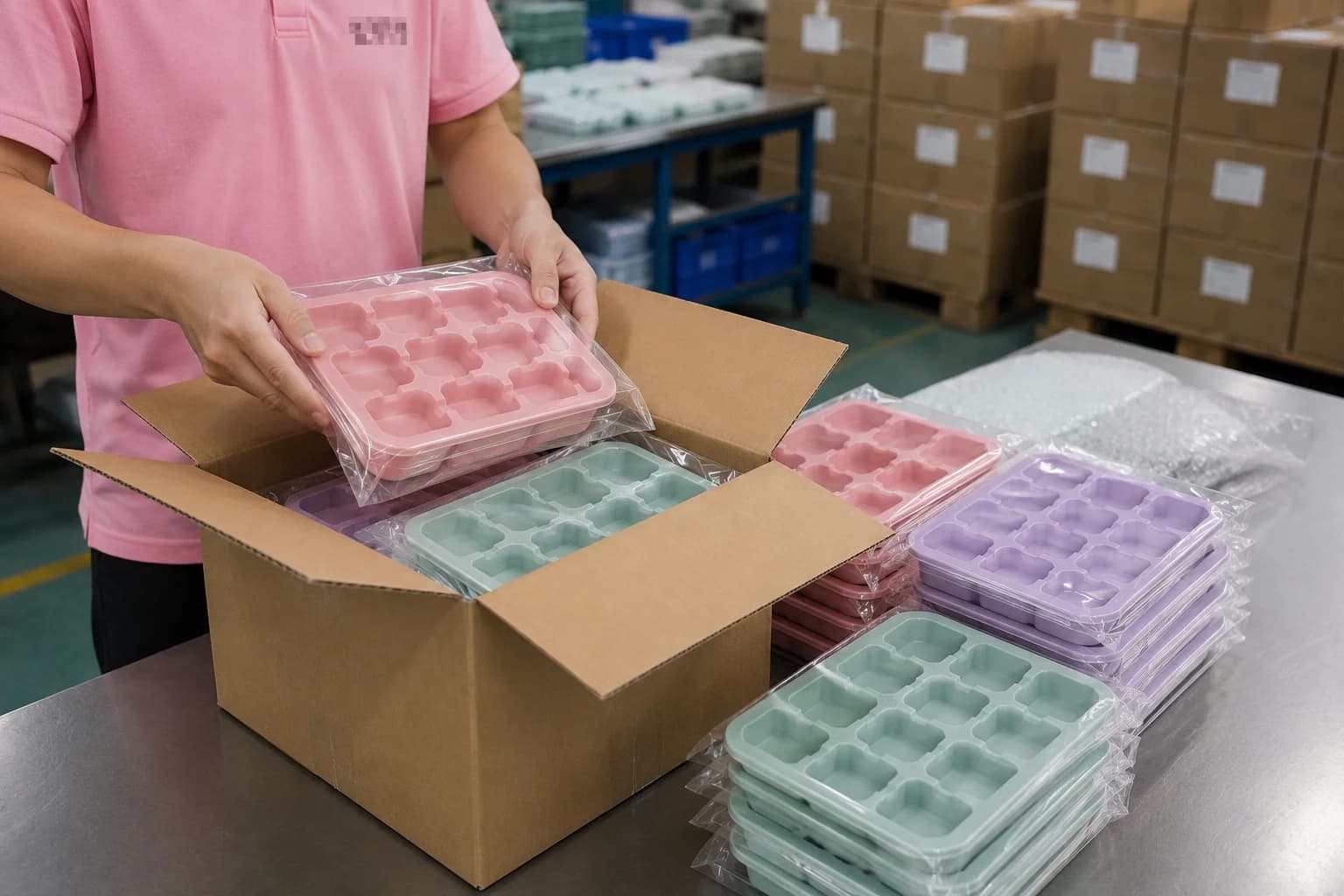
Renjia’s public positioning combines custom silicone product development, responsive OEM/ODM support, and evidence-aware compliance planning to help international buyers move from idea and sampling to dependable production [K3]. This approach aligns with Renjia's buyer-facing brand promise, which emphasizes practical project guidance for tooling, samples, production, inspection, and market-specific documentation [K3].
One caution for buyers: a broad product portfolio diagram is evidence of reported product categories, not proof that every item is currently stocked or available for every market [K5]. Ice molds may appear under household, kitchen, and promotional use cases, and that category placement should not limit cross-category content or positioning [K1][K5]. Content for international B2B buyers should stay in clear professional English and avoid internal quotation rules, negotiation scripts, or sales-performance data [K4].
6. FAQ
Q1. How do I make clear ice spheres at home?
Use clean-tasting water, freeze slowly, and try a directional freezing setup such as an insulated mold or cooler method. Fill to the recommended line, avoid disturbing the mold, and temper it briefly before demolding. A clear sphere ice maker can improve shape consistency, but clarity still depends on the freezing process.
Q2. Are silicone ice ball molds better than plastic ones?
Silicone is often easier to demold because it flexes, which reduces the risk of cracking the sphere. Plastic or rigid molds can provide more structural control, but they may be harder to release. The better choice depends on whether you prioritize easy release, shape stability, or both.
Q3. Can I customize an ice baller maker for my brand?
Yes. Custom silicone ice molds can be developed with specific cavity design, shape, size, color, logo, and packaging [K2]. Before tooling, confirm the target market, sample performance, material composition, certifications, MOQ, and lead time [K5].
Q4. Why do large ice cubes crack?
Large cubes and spheres can crack when they freeze too quickly, when they are demolded too soon, or when they are warmed unevenly. Cracks often start at trapped air pockets or stress points. Slower freezing, proper fill levels, and gentle demolding usually reduce the problem.
7. Conclusion
The best clear sphere ice maker or large ice cube maker for your situation depends on how you will use the ice. For home bars, a flexible silicone sphere mold with a support tray is often the most practical starting point. For whiskey and premium cocktails, a well-designed big ball ice maker can deliver slow dilution and strong presentation. For highballs, batch drinks, and everyday service, a large ice cube maker is usually more versatile.
For B2B buyers, the decision should be based on a verified specification: cavity design, material, dimensions, packaging, certifications, MOQ, and lead time. Ice molds can serve household, kitchen, and promotional markets, but they should not be treated as automatically available or identical across every product line [K1][K5]. Start with a sample, test the full freeze-and-release routine, and only then move to tooling and production. That process is slower than choosing a mold from a photo, but it is the more reliable path to a product that performs in the glass and on the shelf.