Key Takeaways
- A clear ice cube maker and an ice baller maker solve two different problems. The first controls how water freezes (clarity). The second controls geometry (shape). Confusing the two is the most common purchasing mistake in this category.
- Most "baller" products are finishers, not producers. An ice ball press needs a large, clear cube as its input, so it only makes sense after clarity is already solved.
- A clear sphere ice maker built around directional freezing and a reusable mold gives most home users the best balance of clarity, slow melt, and cost per use.
- The single biggest quality variable in mold-based systems is cavity design and mold material. Food-grade silicone is odorless and rated from -40°C to 240°C (-40°F to 464°F), which supports freezing, release, and hot-side cleaning in one tool [K4].
- Brands sourcing for private label should lock cavity design, shape, size, color, logo, and packaging early, and treat tooling, sampling, and lead-time planning as upstream decisions rather than late-stage details [K1][K3].
1. Introduction
A clear, oversized ice sphere in a rocks glass has become a small status signal in home bars. It signals that someone thought about dilution, temperature, and presentation — not just about whether the drink is cold.
That ambition has produced two very different shopping paths, and they are usually searched side by side:
- Buy a clear ice cube maker and hope the output can be shaped into a ball.
- Buy an ice baller maker and assume it will produce clear ice on its own.
Neither assumption is reliably correct. A cube maker optimized for clarity may produce blocks that are too small or too irregular to press into a clean sphere. A ball press or ball mold may produce a perfectly round sphere that is still cloudy, because it never addressed the freezing direction that causes cloudiness in the first place.
This article separates the category into its three real device types, explains which variable — clarity or geometry — actually changes what happens in the glass, and gives a use-case verdict on which big ball ice maker wins. It also covers what buyers sourcing these products for a brand should specify up front, drawing on verified silicone product sourcing and customization information [K1][K3][K4].
2. Three Device Types, Not Two
Core conclusion: "Ice baller maker" is an umbrella term covering at least three different products with different capabilities. Until you know which one you are looking at, price comparisons are meaningless.
The three categories:
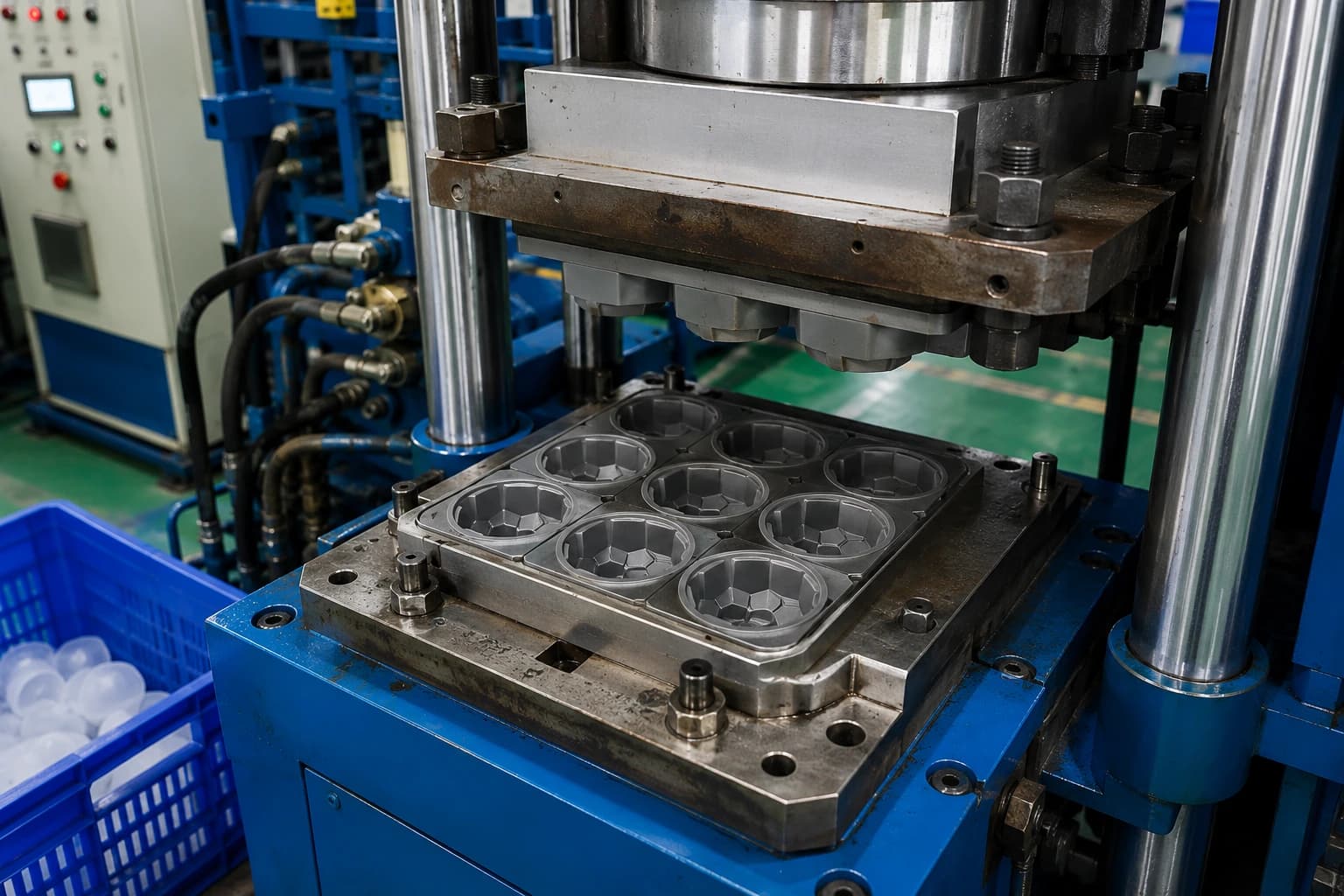
- Clear ice cube maker. An appliance or tray system engineered for directional freezing. Its purpose is clarity first. Output is typically cubes, slabs, or blocks.
- Ice baller maker. Usually one of:
- an ice ball press (gravity or lever driven) that shaves and compresses an existing cube into a sphere;
- a spherical ice mold (two-part silicone or rigid plastic) that freezes water into a ball shape;
- a commercial sphere ice machine that produces spheres in a continuous cycle.
- Clear sphere ice maker. The intersection: a system that produces a clear sphere in one workflow, most commonly by combining directional freezing with a spherical cavity mold.
Why directional freezing matters. When water freezes in an ordinary tray, it freezes from the outside inward. Dissolved gases and minerals are pushed toward the center and get trapped there, producing the cloudy white core most people recognize. Directional freezing changes the geometry of that process: one face of the water is exposed to cold while the rest is insulated, so impurities are driven downward into a sacrificial layer at the bottom that you discard. What remains above it is transparent.
For a manufacturing view of mold structure, branding, and production planning, review RENJIA’s custom silicone ice mold manufacturing capabilities.
Practical scenario. A two-part silicone sphere mold is, perhaps counterintuitively, a decent directional-freezing tool. Silicone has low thermal conductivity, so a filled mold sitting in a freezer with good air circulation tends to freeze from the exposed top downward rather than uniformly. That is the mechanism behind most successful home clear-sphere setups — not the brand of the mold.
Boundary condition. Directional freezing improves clarity; it does not guarantee it. Starting water quality, freezer temperature stability, and airflow all matter. Boiling and cooling water before freezing to reduce dissolved gas is a widely used practice that improves results, but it does not by itself guarantee a perfectly clear sphere.
3. Clarity vs. Geometry: Which Variable Changes the Drink?
Core conclusion: Clarity and shape are independent variables with different effects. Clarity is mostly about appearance and consistency; geometry is mostly about melt rate.
Clarity. Cloudy ice contains trapped air and concentrated impurities. Those internal boundaries and surface irregularities tend to produce a faster, less predictable melt and a more visible dilution curve early in the drink. Clear ice is denser and more uniform, so it behaves more predictably over the life of a cocktail.
Geometry. For a given volume, a sphere has the lowest surface-area-to-volume ratio of the common ice shapes. Less exposed surface means slower heat transfer, which means slower dilution. This is the real reason a big ball is desirable in a spirit-forward drink — not the aesthetics alone.
Practical implication. If your goal is "the drink should look impressive and dilute slowly," you need both variables addressed. A clear cube press that produces a cloudy sphere has solved geometry and failed clarity. A perfect clear cube that is too small melts faster than a cloudy large sphere in some setups.
Recommendation. Decide which variable you actually care about first. If presentation in a rocks glass is the priority, prioritize a clear sphere ice maker. If you are batching stirred cocktails where appearance is secondary, a clear cube maker producing 2-inch cubes is usually the more efficient tool.
4. Which Big Ball Ice Maker Wins, by Use Case
Core conclusion: There is no universal winner, but there is a clear default for most readers: a mold-based clear sphere ice maker. Machines win on volume; presses win on flexibility for people who already own a clarity solution.
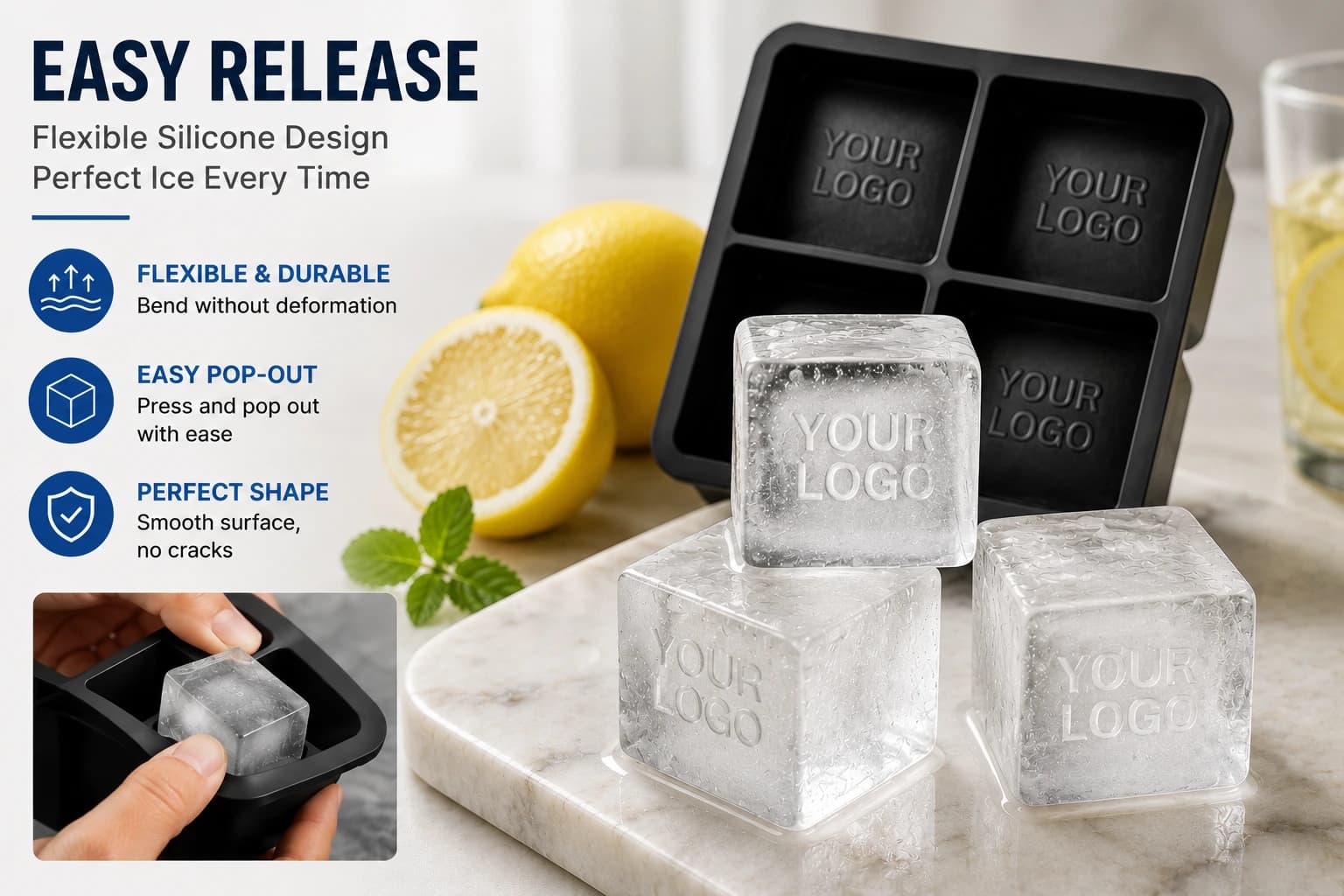
Home cocktail enthusiast, low volume. A clear sphere ice maker using a reusable food-grade silicone mold wins. Lower upfront cost, no counter footprint, and the mold handles freezing and release in one part. Silicone's flexibility also matters mechanically — water expands as it freezes, and a flexible cavity releases the sphere without cracking or chipping it.
Buyers turning a concept into an RFQ can compare these decisions with RENJIA’s OEM silicone product customization process.
Home user who already owns a clear cube maker. An ice ball press becomes a reasonable add-on, provided the cube maker produces a cube large enough to yield the sphere size you want. Presses are finishers: they require clear, oversized input. Budget for the fact that a press only performs as well as the cube you feed it.
Small bar or restaurant, moderate volume. A commercial sphere ice machine wins on consistency and labor. The trade-off is service, footprint, and ongoing maintenance. For venues where the sphere is a signature serve, the machine is usually the correct answer.
Brand or private-label buyer. Neither an appliance nor a press — you are sourcing a mold. Custom silicone ice molds support cavity design, shape, size, color, logo, and packaging customization [K1]. Ice ball trays sit within an established promotional and kitchen product range alongside ice cube trays, ice block molds, and popsicle molds, which means tooling and packaging infrastructure for this category is mature [K2]. That maturity is an advantage: it shortens the distance between a design file and a sellable SKU.
Practical scenario. A spirits brand wants a branded clear sphere mold for a gift-with-purchase campaign. The realistic sequence is cavity and logo design review, sampling, mold and packaging confirmation, then production planning — with MOQ, tooling, sampling, and lead-time questions resolved before artwork is finalized, not after [K3].
Before approving mass production, align the specification with a documented silicone product quality control plan.
5. Key Comparison and Buyer Considerations
5.1 Head-to-head comparison
| Dimension | Clear Ice Cube Maker | Ice Baller Maker (Press) | Clear Sphere Ice Maker (Mold-Based) |
|---|---|---|---|
| Primary function | Produces clarity | Reshapes an existing cube | Produces a clear sphere in one workflow |
| Input required | Water | A large, clear cube | Water |
| Clarity control | High (directional freezing) | Depends entirely on input cube | Moderate to high, dependent on freezing setup |
| Geometry output | Cube, slab, or block | Sphere | Sphere |
| Space and cost | Appliance footprint | Small, but requires a cube source | Lowest footprint |
| Best fit | Batch cocktails, cube service | Existing clear-cube owners | Home bars, gifts, branded molds |
| Brand sourcing angle | Not typically mold-based | Not typically mold-based | Custom cavity, color, logo, packaging [K1] |
5.2 Verified material specifications for mold-based systems
When evaluating a mold-based clear sphere ice maker or sourcing one for private label, these are the specification points worth confirming in writing:
| Specification | Verified detail |
|---|---|
| Material | Silicone material [K4] |
| Food-contact grade | Food-grade [K4] |
| Odor | Odorless [K4] |
| Temperature resistance | -40°C to 240°C (-40°F to 464°F) [K4] |
| Core specification | Custom sizes available [K4] |
| Customization options | Custom colors, custom sizes, custom shapes, custom packaging [K4] |
5.3 Buyer checklist before committing
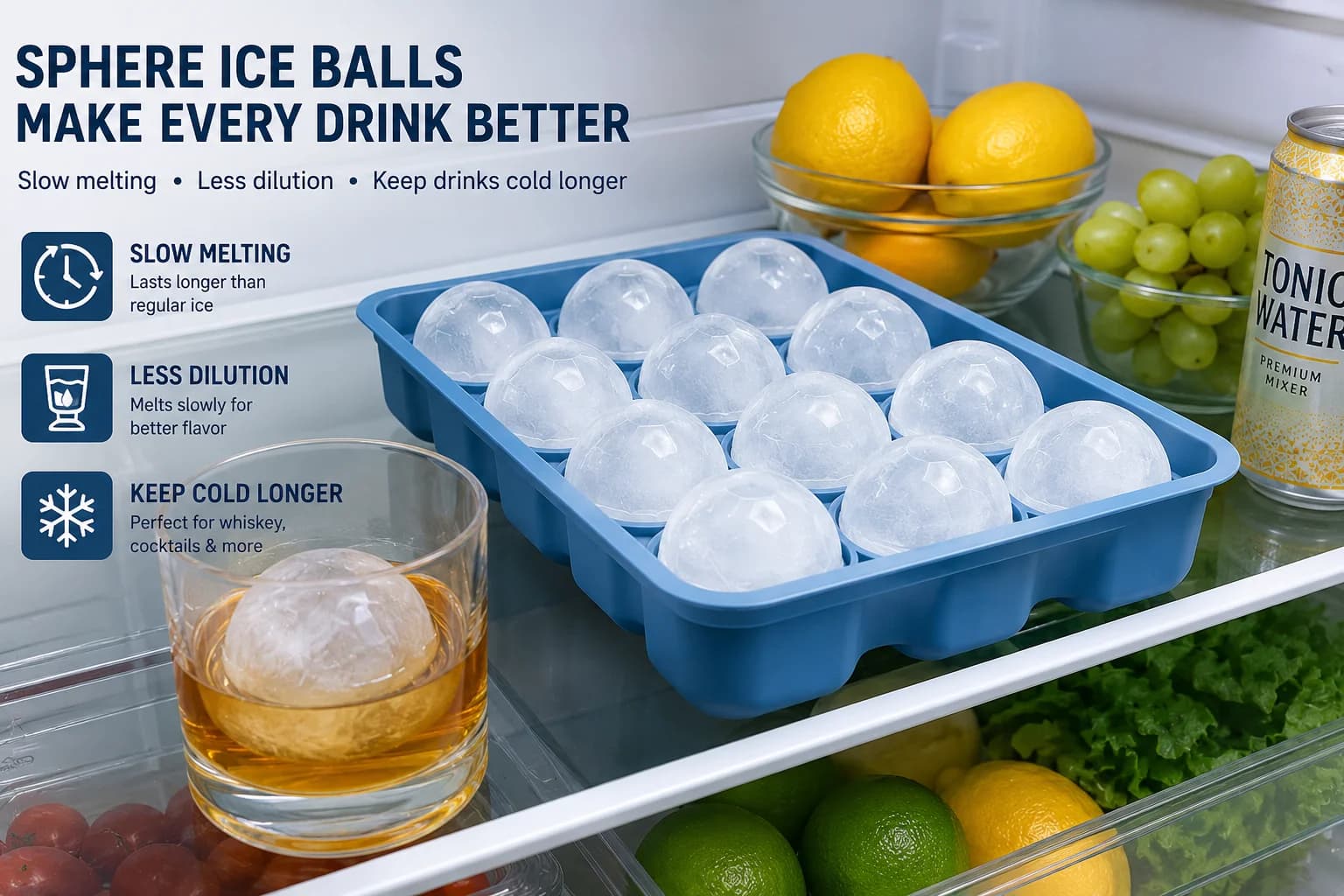
- Confirm the product type. Press, mold, or machine. Ask which one, in writing.
- Confirm cavity geometry. Sphere diameter determines both glass fit and melt rate.
- Confirm release behavior. Flexible silicone cavities release frozen spheres more reliably than rigid cavities.
- Confirm the temperature range against your actual use — freezer storage through hot-side cleaning [K4].
- For brand projects, prepare design files and packaging direction early, and ask the supplier specific questions about sample approval and pre-shipment inspection criteria [K3].
- Plan compliance claims carefully. Market-specific compliance planning should be handled without unsupported certification claims — claim only what can be documented [K3].
6. FAQ
Q1. Can a silicone ice ball mold produce clear ice on its own?
Not by itself. Silicone's low thermal conductivity helps create directional freezing when the mold is placed in a cold, circulating-air environment, and impurities are pushed to a sacrificial layer you discard. That is the mechanism. But starting water quality, freezer stability, and airflow still determine the outcome. The mold is a tool for directional freezing, not a guarantee of clarity.
Q2. Do I need an ice ball press if I already have a clear ice cube maker?
Only if your cube maker produces cubes large enough to yield the sphere size you want, and only if you value the sphere shape specifically. A press consumes part of the cube as shaved ice and meltwater, so the input cube must be meaningfully larger than the finished sphere. If your goal is simply clearer, slower-diluting ice, upgrading cube size may be more efficient than adding a press.
Q3. What should a brand specify when sourcing custom silicone ice molds?
At minimum: cavity design, product shape, size, color, logo placement, and packaging [K1]. Beyond the physical product, plan the project sequence — design review through production, MOQ and tooling decisions, sampling, lead-time planning, sample approval criteria, and pre-shipment inspection — before finalizing artwork [K3]. Catching a cavity or logo conflict at the design-review stage is far cheaper than catching it after tooling.
Q4. Which one actually wins for a home bar?
For most home users, a clear sphere ice maker built on a reusable food-grade silicone mold. It addresses clarity and geometry in one product, has the smallest footprint, and the mold itself is rated for -40°C to 240°C (-40°F to 464°F), so it can go from freezer to hot-side cleaning without a separate tool [K4]. Machines win on volume. Presses win as add-ons. Molds win as the default.
7. Conclusion
The clear ice cube maker versus ice baller maker question usually resolves once you separate the two variables. Clarity comes from how water freezes. Shape comes from the cavity it freezes in. Products that only address one of those will always feel like a compromise.
The verdict:
- If you want one product and one purchase: choose a clear sphere ice maker. It is the only option in the comparison that handles clarity and geometry together, and mold-based versions keep cost and footprint low.
- If you already make large clear cubes: an ice ball press is a legitimate finisher, but budget for the input cube, not just the press.
- If you serve at volume: a commercial sphere ice machine is the correct operational answer.
- If you are sourcing for a brand: you are buying a mold and a project plan, not a gadget. Verify material, temperature range, and customization scope, then sequence design review, sampling, and packaging decisions in the right order.
Next step: before buying or sourcing, write down the sphere diameter you need, the environment it will freeze in, and whether clarity or volume matters more. Those three answers point to a single product type in almost every case — and they are the same three answers a supplier or OEM/ODM partner will ask for first [K3].