Key Takeaways
- A skull ice cube tray is a novelty format: it is most useful for themed drinks, desserts, punch bowls, and branded serveware, not everyday hydration.
- A large ice ball mold is a slow-melt format: it suits whiskey, iced tea, punch, cold brew, and infused ice, but it needs level freezing and a little patience during demolding.
- A round ice cube tray remains the practical everyday option for coffee, cocktails, meal prep, and freezer storage; novelty trays work best as a second or occasional format.
- Silicone ice molds can be customized by cavity design, shape, size, color, logo, and packaging, but buyers should verify current availability, material composition, dimensions, certifications, MOQ, and lead time before publishing product claims [K2][K4].
- Food-contact claims should be product-specific. A material sample test report is not the same as universal certification for every finished mold or market [K5].
1. Introduction
Summer ice is usually treated as an afterthought until it starts to fail. Small cubes melt too quickly in a cold drink, ordinary trays crack or spill in the freezer, and novelty shapes often look better in product photos than they perform on a serving tray. At the same time, home hosts and beverage brands are looking for low-cost ways to make drinks feel more intentional: a skull-shaped ice cube in a dark cola, a large clear ball in a glass of iced tea, or a round ice cube tray used for cold brew concentrate.
The opportunity is not simply “buy a fun tray.” It is to match the ice format to the use case. A skull ice cube tray and a large ice ball mold solve different problems. One adds theme and visual identity; the other changes the drinking experience by reducing dilution. A standard round ice cube tray fills the daily-use gap between them.
This article explains creative, practical ways to use both formats this summer, compares them with a round ice cube tray, and outlines what buyers should verify before ordering custom molds or making food-contact claims. The goal is to help readers use ice molds better and help brands source them with clearer expectations.
2. Start With the Format: What Each Tray Actually Does Well
Core conclusion: Choose the ice format by surface area, shape detail, and serving occasion — not by novelty alone.
A large ice ball has a lower surface-area-to-volume ratio than a cluster of small cubes. In practice, that usually means it melts more slowly and dilutes a drink less aggressively. That is why large ball molds are often associated with whiskey, but the same logic applies to iced tea, punch bowls, and cold brew. A skull tray works in the opposite direction: its value is shape recognition. The detail in the skull cavity is the point, so the tray should release cleanly and hold the shape through freezing.
Silicone is common for both formats because flexible walls help with demolding, especially in undercut or highly detailed shapes. Renjia’s extended product portfolio lists ice cube trays and ice ball trays among its promotional products, and the same knowledge base notes that ice molds can be tagged under household, kitchen, and promotional use cases rather than being limited to one category [K1][K4]. That cross-category flexibility matters: the same skull tray can be sold as partyware, a bar accessory, a gift item, or a branded giveaway.

For buyers reviewing ice mold product portfolio options, the practical advice is to define the primary use first. A tray designed for detailed skull shapes may need a different cavity layout from a tray designed for easy stacking and freezer storage. A large ball mold may need a fill line, a support base, or a rigid cradle to keep the sphere intact while freezing. Do not assume that one cavity design can serve every channel.
For home users, the recommendation is simple: keep a round ice cube tray for daily use and treat the skull tray or large ball mold as a serving format. That reduces frustration when a novelty tray takes longer to fill, freeze, or demold than a standard tray.
3. Creative Ways to Use a Skull Ice Cube Tray
Core conclusion: A skull tray performs best when the shape is visible and the drink or dessert has a reason to be themed.
The skull shape is not subtle, so the best uses are the ones where the ice is part of the presentation. Here are practical ways to use it this summer:
- Dark drinks with contrast. Cola, cold brew, blackberry mocktails, and dark sangria give a skull cube a strong silhouette. Freeze the skulls with plain water first; adding juice or syrup can make the detail less visible and may leave residue in the cavity.
- Punch bowls and beverage dispensers. A large skull cube can become the centerpiece of a punch bowl. Freeze several skulls in advance, store them in a freezer bag, and add them just before serving so the detail does not melt away before guests arrive.
- Dessert molds, not just drinks. Food-grade silicone trays can be used for chocolate, frozen yogurt bites, coffee ice cubes, or fruit-juice ice. Keep a separate tray for strongly flavored or savory mixtures if you plan to use the same tray for drinks.
- Themed party ice for kids’ drinks. A skull shape can work for pirate parties, Halloween-in-July events, or movie nights. Use a light-colored juice or lemonade so the shape reads clearly, and avoid overfilling the cavities.
- Branded bar service. For hotels, bars, or promotional campaigns, a custom skull tray can support a signature serve. Customization can cover cavity design, product shape, size, color, logo, and packaging, but the brand should confirm the mold design and sample before committing to a production run [K2].
A common mistake is filling the tray too high. Silicone cavities often need headspace because water expands as it freezes. Overfilled cavities can bridge across the tray, making demolding messy. Place the tray on a flat shelf or sheet pan during freezing, and release the cubes by pressing the base of each cavity rather than twisting the whole tray aggressively.
For brands, the skull shape is only one variable. The custom silicone ice mold development page category covers cavity design, shape, size, color, logo, and packaging, which means the project should start with a clear brief: what drink will the mold serve, what freezer space will it fit, and what level of detail can be reproduced consistently? A supplier may be able to make a sample, but the buyer still needs to approve the shape, release, and packaging before production.
4. Large Ice Ball Mold Ideas Beyond Whiskey
Core conclusion: A large ice ball mold is most valuable when slow melting and a clean, round form improve the serve.
Whiskey is the obvious use case, but it is not the only one. A large ball can be used for:
- Iced tea and lemonade pitchers. A single large ball can chill a small pitcher with less dilution than several small cubes. Freeze it with lemon slices or mint inside for a visual cue, but use only food-safe ingredients and potable water.
- Cold brew concentrate. Freeze cold brew into large balls and add them to milk or water. The ice melts into more coffee rather than watery dilution.
- Punch bowls and summer cocktails. Large balls work well in a punch bowl because they melt slowly and look intentional. Fill the mold on a level surface and allow enough freezing time for the center to set.
- Infused water or spa-style drinks. Freeze berries, cucumber, or citrus inside the ball. Keep the mold clean and use a separate mold for strongly flavored or colored ingredients if you also use it for neutral drinks.
- Dessert and display use. Large ball molds can shape frozen mousse, ice cream portions, or decorative ice for a dessert table. If the mold is used for non-water mixtures, check the manufacturer’s guidance and clean it thoroughly between uses.
The main operational challenge is handling. A large ball is heavier and more fragile than small cubes. Silicone molds often need a rigid tray or support during transfer to the freezer, and the ball should be released only after the surface has set. If the ball cracks, it will still chill the drink, but it may not look as clean in a glass.
This is where a round ice cube tray is more forgiving. Standard round trays produce smaller pieces that are easier to store, stack, and portion. For daily iced coffee or meal prep, a round ice cube tray is usually the more efficient choice. The large ball mold is the format to bring out when the drink is the centerpiece.
5. Key Comparison: Skull Tray vs. Large Ice Ball Mold vs. Round Ice Cube Tray
Core conclusion: The three formats are complementary, not interchangeable. Match the tray to the occasion and the buyer’s channel.
| Format | Best summer use | What to watch | Customization angle |
|---|---|---|---|
| Skull ice cube tray | Themed drinks, punch bowls, desserts, branded bar service | Detail release, cavity fill level, freezer space, strong flavors | Cavity design, shape, size, color, logo, packaging [K2] |
| Large ice ball mold | Whiskey, iced tea, punch, cold brew, infused ice | Level freezing, fill line, seam strength, demolding support | Ball diameter, mold layout, color, logo, retail packaging [K2] |
| Round ice cube tray | Daily coffee, cocktails, smoothie packs, freezer storage | Stackability, lid fit, cube release, freezer footprint | Cavity count, round size, lid design, private-label packaging [K3] |
A practical buyer checklist should include more than the mold shape. Confirm current availability, material composition, dimensions, certifications, MOQ, and lead time before publishing a product-specific page or quotation [K4]. The product portfolio diagram is evidence of reported product lines, not proof that every item is stocked for every market [K4]. That distinction matters for e-commerce listings, wholesale catalogs, and promotional campaigns with fixed delivery dates.
For food-contact products, request the product-specific test scope and read the wording carefully. A submitted silicone material sample passed the food-contact test scopes listed in BACL report 2601R31742E under the test conditions stated in the report [K5]. That statement should not be expanded into universal LFGB certification for every Renjia baking mold or food-contact product. Buyers should confirm finished-product identity, formulation, color, food type, time and temperature conditions, repeated-use conditions, and market requirements [K5].
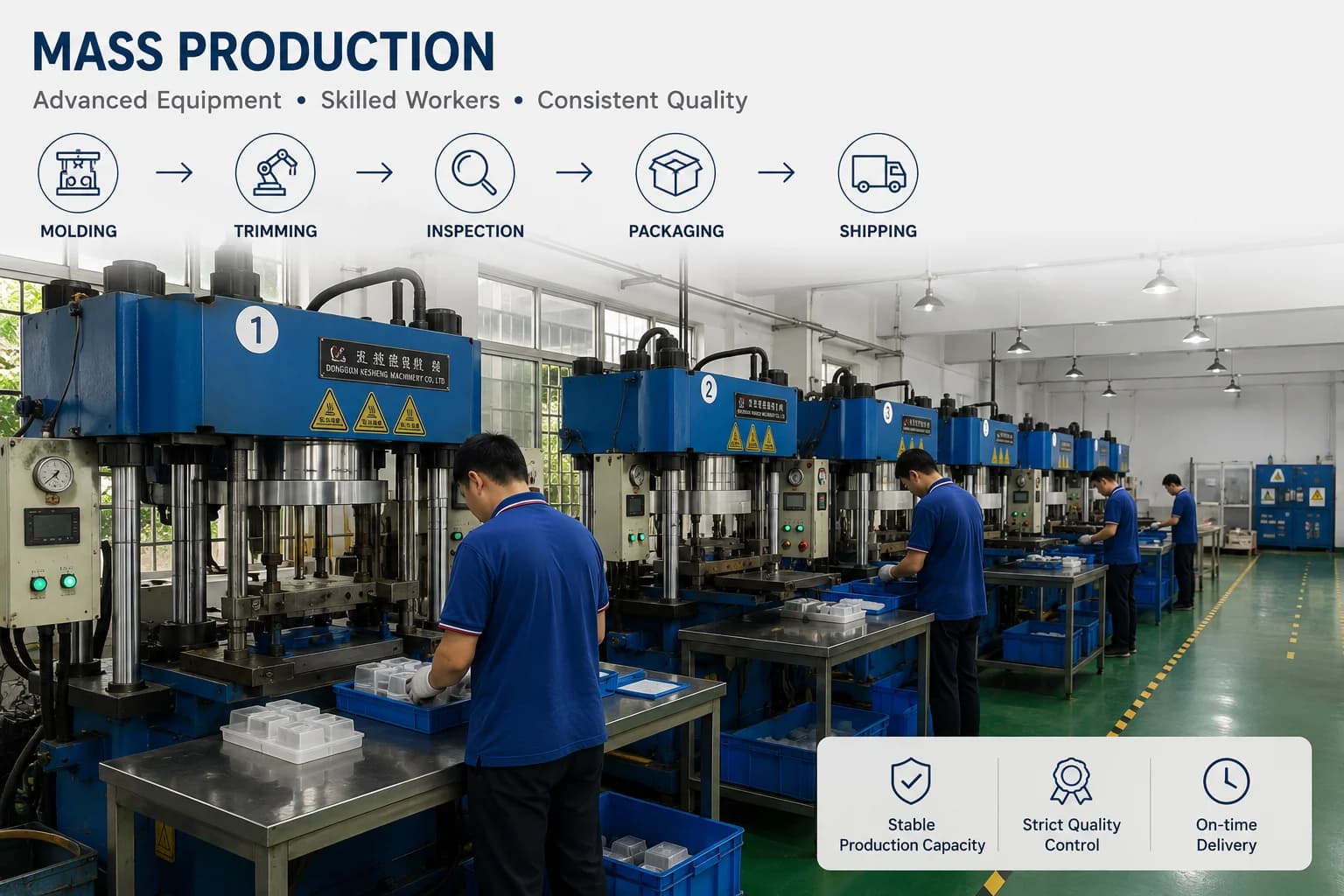
If you are planning a custom project, use a silicone OEM/ODM project planning process that covers design review, sampling, tooling, packaging, and inspection. The knowledge base also supports topics such as MOQ, tooling, sampling, lead-time planning, private-label development, custom colors, shapes, sizes, logos, artwork, and packaging [K3]. These are the details that determine whether a skull tray or large ball mold becomes a repeatable product rather than a one-off sample.
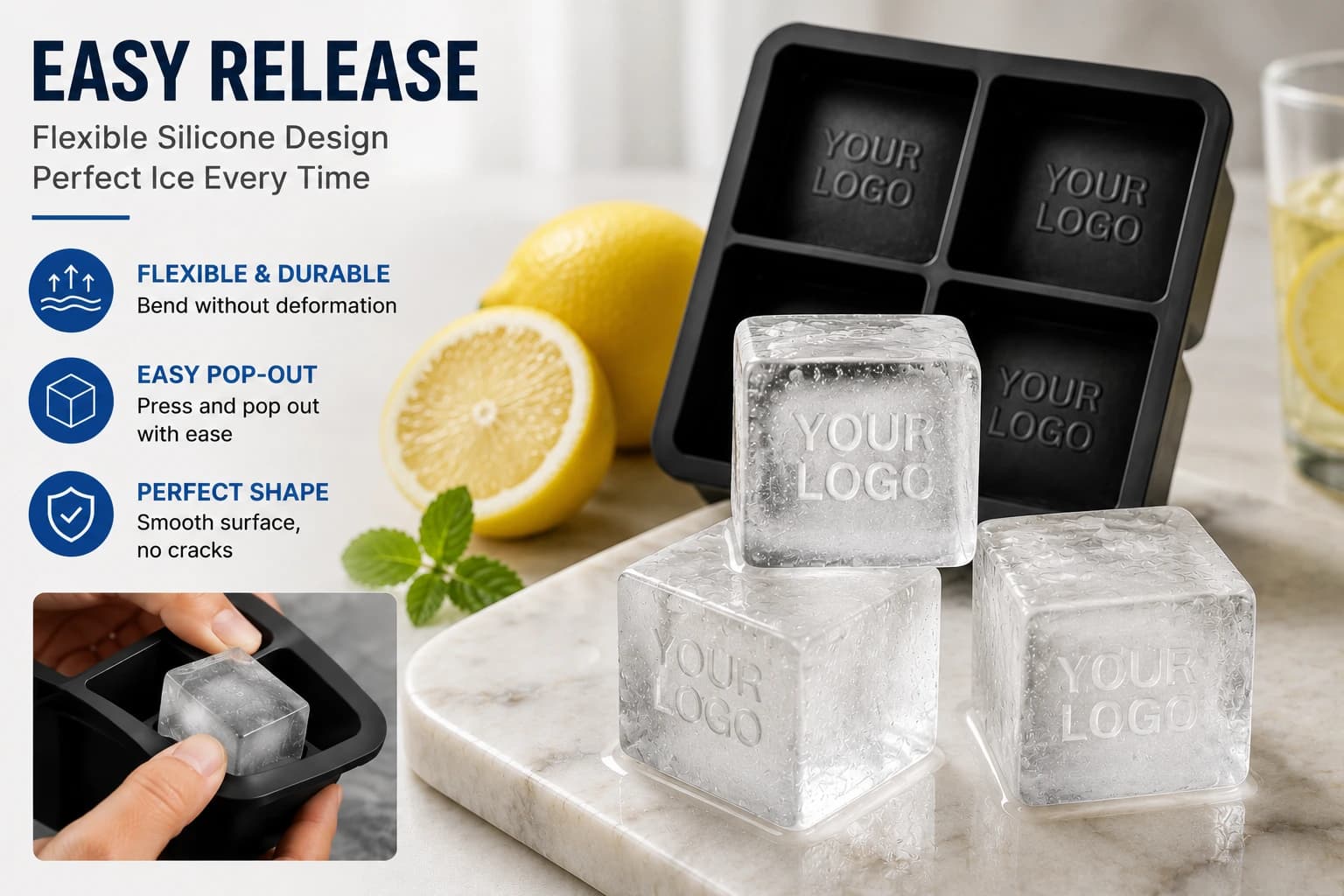
Finally, test the mold the way your customer will use it. Fill it with water, freeze it on a level shelf, demold it, and wash it. A mold that looks good in a studio photo but releases poorly or traps water in the cavity will create returns and negative reviews. For a round ice cube tray, the same test applies: check whether the cubes release cleanly and whether the tray fits the freezer space your audience actually has.
6. FAQ
Q1. Is a skull ice cube tray food-safe?
Food safety depends on the specific material, formulation, and finished product — not on the shape. Ask the supplier for product-specific documentation and confirm the intended use, temperature range, and cleaning instructions. A material sample test report can support a narrow statement about the tested sample and test conditions, but it should not be treated as automatic certification for every finished tray or every market [K5].
Q2. How do I get clearer ice in a skull tray or large ice ball mold?
Clear ice depends on freezing direction, dissolved air, and how the water freezes. Home trays often produce cloudy centers because freezing happens from multiple directions. For large balls, use a mold designed for directional freezing if clarity is important, and avoid overfilling. For skull trays, smaller cavities may freeze more evenly, but fine detail can still trap air. Clarity is a process issue, not a guarantee that comes with the tray alone.
Q3. Can I use a large ice ball mold for anything other than whiskey?
Yes. Large balls work for iced tea, lemonade, cold brew, punch, and infused water. They can also shape frozen desserts or display ice. The main constraints are freezer space, fill level, and handling. If you use the mold for strongly flavored mixtures, clean it thoroughly and consider keeping a separate mold for neutral drinks.
Q4. What should a brand verify before ordering custom round ice cube trays or skull molds?
Verify current availability, material composition, dimensions, certifications, MOQ, and lead time [K4]. Review the cavity design, product shape, size, color, logo, and packaging plan [K2]. Ask how the supplier handles sampling, tooling, design-file preparation, and pre-shipment inspection [K3]. For food-contact claims, confirm the finished-product identity and the exact test scope rather than relying on a general statement [K5].
7. Conclusion
A skull ice cube tray and a large ice ball mold are not better or worse than a standard tray; they are different tools for different summer moments. Use the skull tray when the shape is part of the experience — themed drinks, punch bowls, desserts, or branded bar service. Use the large ball mold when slow melting and a clean round form improve the serve — whiskey, iced tea, cold brew, or punch. Keep a round ice cube tray for the daily work of chilling coffee, cocktails, and freezer meals.
For buyers, the next step is to move from inspiration to specification. Define the use case, confirm the cavity design and packaging, request a sample, and verify current availability, material composition, dimensions, certifications, MOQ, and lead time before making claims [K2][K4]. If food contact is part of the product story, keep the evidence product-specific and use restrained wording that matches the test scope [K5]. That approach supports creative summer products without turning a fun shape into an unsupported compliance claim.