Key Takeaways
- Custom logo silicone ice ball molds let a brand appear inside the glass itself — a physical touchpoint that outlasts a coaster, a stirrer, or a printed napkin.
- The customization surface is wider than most buyers expect: cavity design, ball shape, diameter, color, logo placement, and packaging can all be developed together [K1].
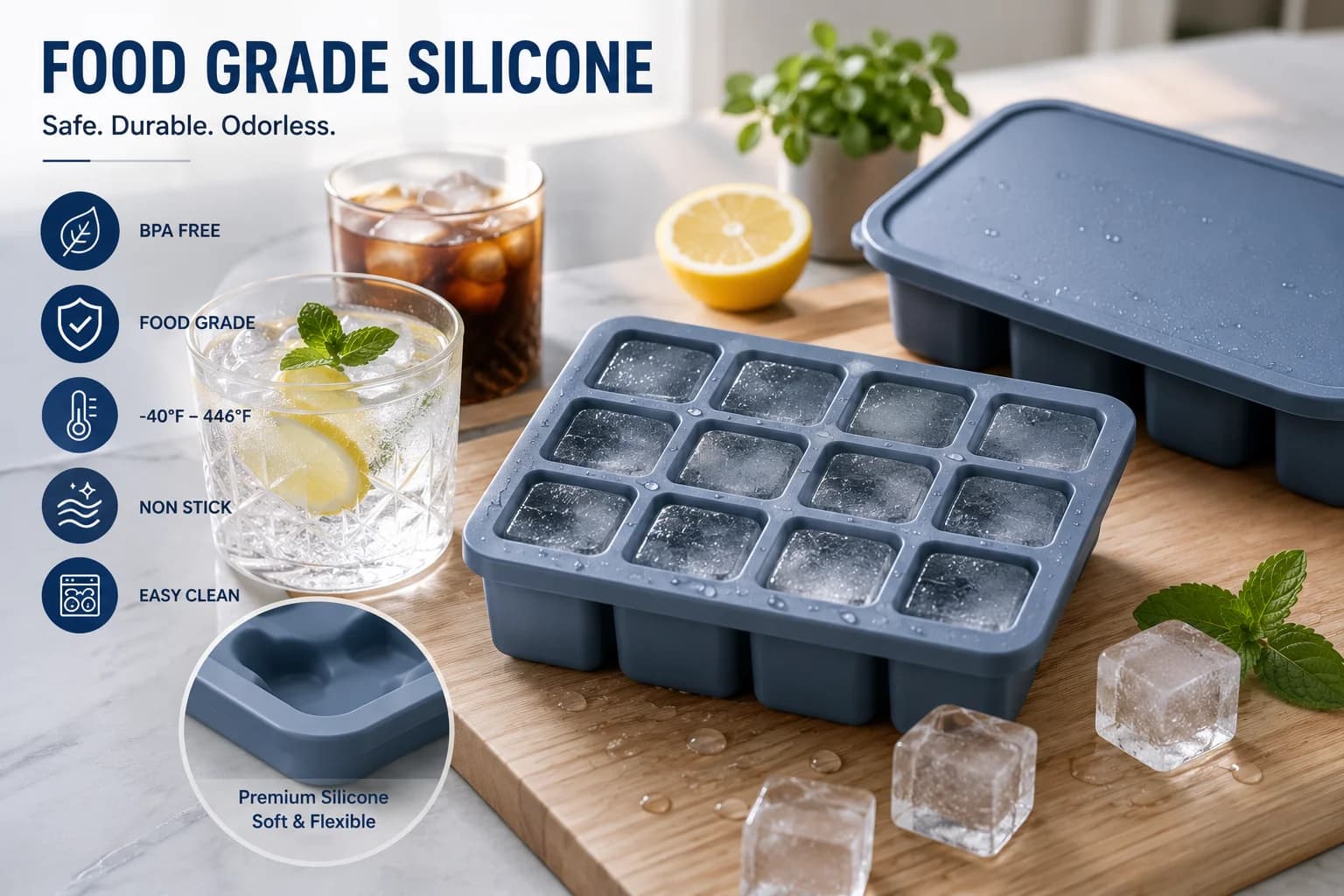
- Silicone is the practical material base for this product because it is food-grade, odorless, and rated from -40°C to 240°C (-40°F to 464°F), which covers freezing, demolding, and normal washing routines [K5].
- Logo ice works best when the mold design, the freezing method, and the serving format are planned together — a logo that reads clearly at 55 mm may disappear at 40 mm or in a cloudy ball.
- Buyers should treat tooling, sampling, and packaging as one project timeline rather than three separate purchases, and should confirm material and compliance documentation with the supplier before committing [K3].
1. Introduction
A branded drink moment is hard to buy. Logos on glassware get washed off, printed napkins get thrown away, and social posts disappear in a day. Ice, by contrast, sits in the drink for ten or twenty minutes and is photographed constantly — which is why bars, hotels, distilleries, event agencies, and promotional-product buyers keep asking for logo ice.
The problem is that "custom logo ice ball molds" is often treated as a simple decoration request. In practice it is a small product-development project: the cavity geometry has to release cleanly, the logo has to survive freezing and demolding, the ball size has to fit the glassware actually in use, and the whole thing has to be packed and shipped in a way that protects a flexible silicone product. Buyers who skip those steps end up with samples that look right in a photo but fail behind the bar.
This article explains how custom logo silicone ice ball molds are developed, where the logo can physically go, what decisions change perceived quality, and how to plan a project from design file to delivered carton. It is written for brand owners, bar operators, hospitality procurement teams, and promotional-product distributors who need a defensible answer rather than a slogan.
2. Why ice carries a brand better than most drink accessories
Core conclusion: ice is one of the few branded elements that a guest interacts with physically, repeatedly, and without being asked to.
A logo ice ball does three jobs at once. It signals that the drink was prepared deliberately, it gives the guest something to photograph, and it keeps the brand present after the glass is empty. That combination is rare. A branded glass only works while it is in the venue; a branded ice ball travels into photographs and group chats.
For buyers, the practical question is not "does logo ice look good" but "does it fit my serving format." Consider the scenarios:
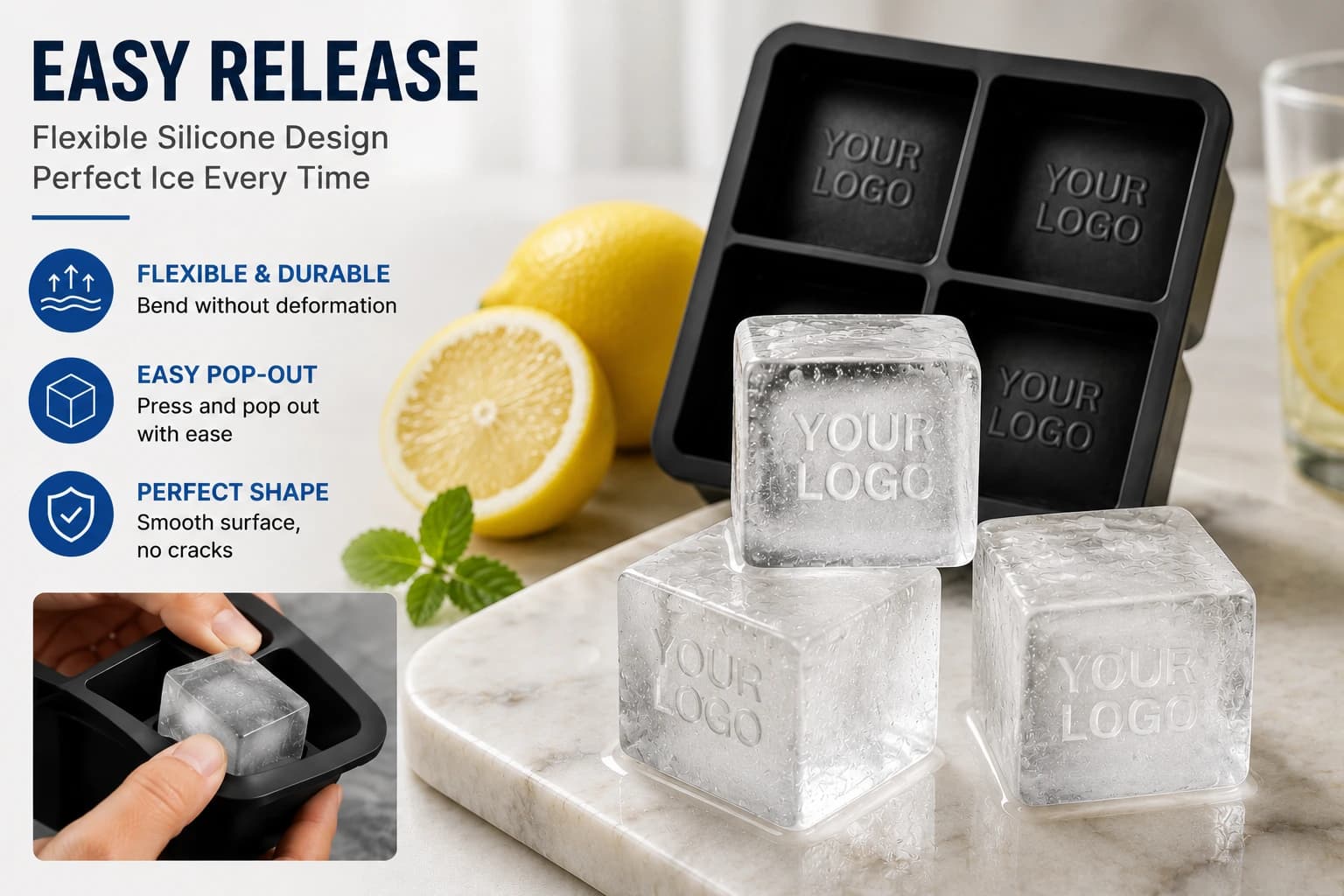
- Cocktail bars and hotel bars. A single large clear ball with a debossed crest suits spirit-forward drinks served in a rocks glass. The mold must produce a consistent diameter so the ball does not jam or rattle.
- Distilleries and brand-ambassador kits. Logo ice is used in tasting sessions, press events, and gifting, where the mold itself can be packaged as a branded item rather than used only behind the bar.
- Promotional and event products. Ice cube trays and ice ball trays already sit inside the promotional silicone category alongside popsicle molds and soap molds, so a logo version is a natural extension for agencies ordering giveaway items [K2].
- Hospitality groups. Multi-property buyers usually want one mold design with property-level packaging, which is a packaging question more than a molding question.
The corresponding caution: logo ice is a low-cost-per-use item only when volume is real. If a venue serves a few dozen drinks a week, a custom tooling investment may not pay back as quickly as a stock ice ball tray with branded packaging. Buyers should size the project against actual serving volume before approving tooling, and can review the broader range of custom silicone ice molds to compare formats before deciding.
3. What can actually be customized — and what it changes
Core conclusion: the customization list is long, but only three or four variables drive whether the finished product feels premium.
Renjia's product documentation lists the typical customization scope for custom silicone ice molds as cavity design, product shape, size, color, logo, and packaging [K1]. Shared product specifications add that the material is food-grade, odorless silicone with a -40°C to 240°C service range and that custom sizes, colors, shapes, and packaging are available [K5]. In practice, those options translate into a short list of real decisions:
| Variable | What it controls | What buyers typically get wrong |
|---|---|---|
| Cavity design | Number of balls per mold, wall thickness, release behavior | Choosing too many cavities, which makes demolding awkward and increases tooling complexity |
| Ball diameter | Glass fit, melt rate, logo legibility | Ordering a size that does not match the venue's actual rocks glasses |
| Logo style (raised, recessed, or applied) | How strongly the mark reads in ice | Expecting crisp fine detail on a small ball |
| Silicone color | Brand match, visual contrast in the freezer | Assuming a light colorway will stay visually clean in heavy use |
| Packaging | Retail readiness, gifting, shipping protection | Treating packaging as an afterthought and paying for it later |
Two boundary conditions matter. First, logo legibility degrades with ball size. Recessed or raised marks need enough surface area and depth to survive demolding; a complex crest squeezed onto a small ball will read as a smudge. Second, ice clarity is a freezing-method variable, not only a mold variable. A mold can be designed to support clearer results — for example by encouraging directional freezing or by using an insulated shell — but the buyer should confirm with the supplier what the mold is actually designed to achieve rather than assuming clarity is automatic.
The practical recommendation is to lock three things before tooling: ball diameter, logo style, and mold format (single ball, multi-cavity, or sphere tray). Everything else — color, packaging, secondary marking — can be decided in parallel without blocking the mold.
4. From design file to delivered carton: how the project actually runs
Core conclusion: most delays in custom logo ice projects come from file preparation and sample approval, not from molding itself.
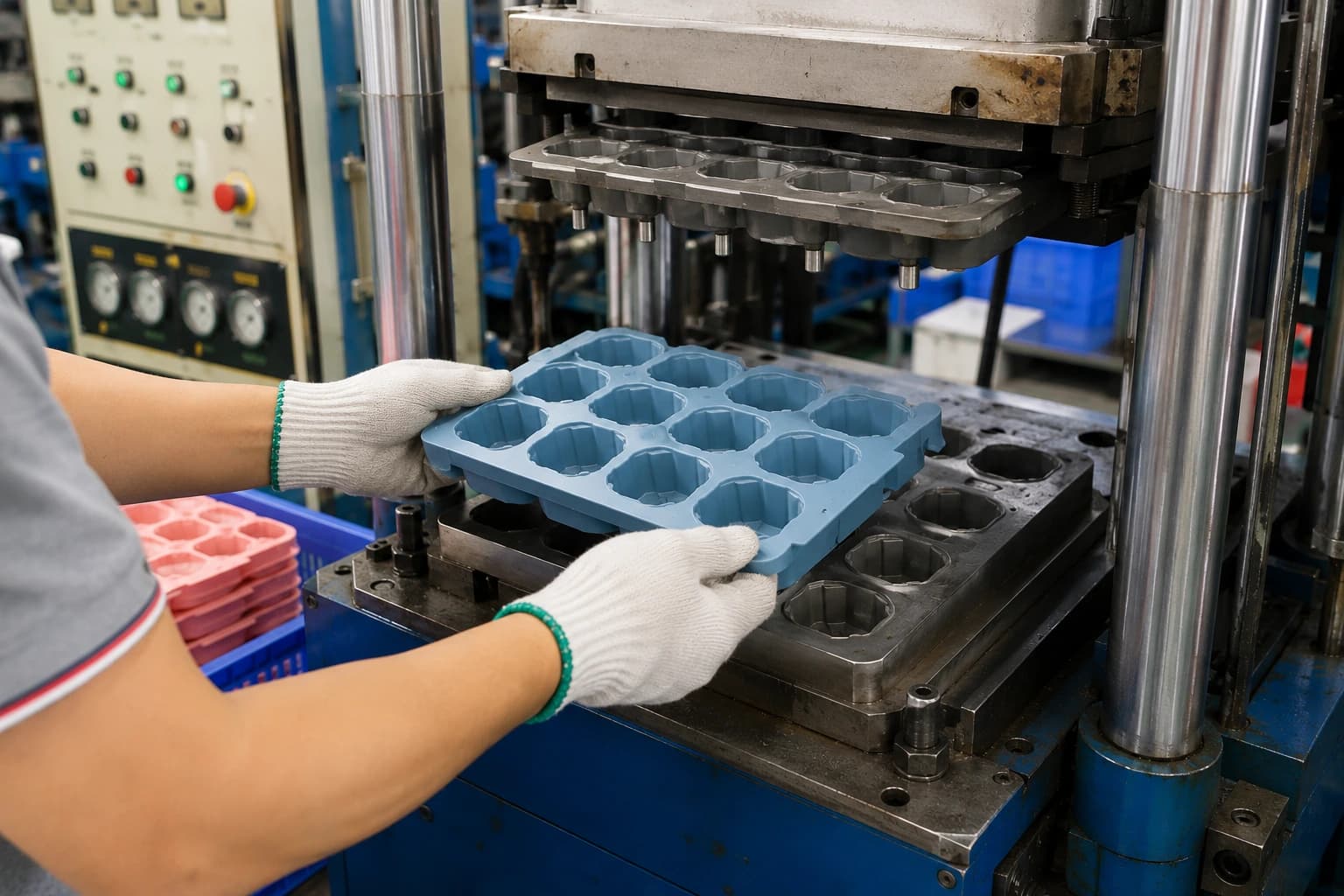
A silicone OEM/ODM project moves through a predictable sequence: design review, tooling, sampling, approval, production, inspection, and shipping. The knowledge base explicitly supports content on how custom silicone mold projects move from design review to production, and on MOQ, tooling, sampling, and lead-time planning [K3]. Buyers who understand the sequence can compress it; buyers who treat it as a single purchase order usually lose a month.
A workable sequence for a logo ice ball mold:
- Brief and design review. Define ball diameter, cavities per mold, logo artwork, color, and packaging format. Supply vector artwork and confirm how the logo will be represented in the cavity — this is where most rework originates.
- Tooling. The cavity and logo geometry are cut into the tool. Changes after this point are expensive, so approve the drawing, not just a verbal description.
- Sampling. Physical samples are produced and evaluated for release, surface finish, logo depth, and dimensional consistency. Evaluate samples under real conditions: freeze them, demold them the way staff would, and drop them into the actual glassware.
- Sample approval. Sign off against a written checklist — dimensions, logo appearance, color match, packaging mock-up — rather than a photo.
- Production and inspection. Confirm the inspection criteria before the run and request pre-shipment inspection evidence.
- Packaging and shipping. Flexible silicone compresses and deforms in transit; confirm carton configuration and inner protection.
Renjia's stated positioning is to combine custom silicone product development with responsive OEM/ODM support and evidence-aware compliance planning, so that international buyers can move from idea and sampling to dependable production [K4]. In practical terms, that means asking early for the documentation your market requires rather than assuming certification language will appear on a spec sheet. Buyers who want a fuller picture of how these stages are organized can review the custom silicone mold development process, and should keep every approval in writing.
A realistic caution on timelines: tooling and sampling time depends on design complexity, and no responsible supplier should quote a firm production date before the sample is approved. Plan backwards from your event or launch date and leave buffer for one sample revision.
5. Buyer checklist and comparison
Before requesting a quote, buyers should be able to answer each item below. A supplier who asks these questions is generally easier to work with than one who quotes immediately.
Design and product checklist
- Target ball diameter and the glassware it must fit
- Number of cavities per mold and expected cycle time in real use
- Logo style, artwork file format, and minimum readable detail
- Silicone color reference and tolerance for shade variation
- Packaging format: polybag, retail box, branded sleeve, or gift set
- Expected annual and per-order volume, to size tooling and MOQ realistically
- Market-specific documentation needs, stated as requirements rather than assumptions
- Sample approval criteria written down before sampling begins
- Pre-shipment inspection scope and acceptance criteria
Common failure modes and their prevention
| Failure mode | Typical cause | Prevention |
|---|---|---|
| Logo unreadable in the finished ball | Detail too fine for the cavity size | Test logo depth on a sample at final diameter |
| Balls crack on demolding | Cavity design or wall thickness mismatch with use | Demo the sample the way staff will, not gently |
| Inconsistent dimensions | Unclear tolerance expectations at design review | State tolerances and check them on the sample report |
| Packaging damaged in transit | Packaging treated as an afterthought | Approve a packaging mock-up with the sample |
| Compliance surprises at customs | Documentation requested after production | Raise documentation requirements at the brief stage |
Renjia's wider portfolio — spanning household, baby, pet, kitchen, and promotional silicone categories — is relevant here because it shows the same development and inspection discipline applied across product types, subject to product-specific verification [K2][K4]. Buyers sourcing several branded silicone items at once can review the silicone product categories to see how packaging and documentation can be consolidated across a single order.
6. FAQ
Q1. Are custom logo silicone ice ball molds food-safe?
The silicone used for these molds is described as food-grade and odorless, with a service range of -40°C to 240°F, which covers freezing and normal washing [K5]. Buyers should still request the specific documentation their market requires for food-contact silicone, and should state that requirement during the brief rather than after production.
Q2. Can the logo be embossed, debossed, or printed?
Logo customization is part of the standard customization scope for silicone ice molds [K1]. The specific method depends on the cavity design and the amount of detail in the artwork. Because legibility changes with ball diameter and ice clarity, the practical step is to approve the logo on a physical sample at final size, not on a rendering.
Q3. What is the minimum order quantity and how long does a project take?
MOQ depends on mold complexity, cavity count, and packaging format, and lead time depends on tooling plus sample approval plus production plus inspection [K3]. Neither number should be treated as fixed before the design review. Plan at least one sample revision cycle into your schedule.
Q4. Does a logo ice ball mold actually improve brand recall?
It creates a genuine branded touchpoint inside the drink, and it is highly photographable. But it works best where volume and serving format support it — high-traffic bars, tasting events, gifting, and promotional kits. For low-volume venues, a stock-format mold with branded packaging may be the more sensible first step.
7. Conclusion
Custom logo silicone ice ball molds are a small product with an outsized branding footprint, but they reward planning. The buyers who get good results tend to do three things: they match ball diameter and logo detail to the actual glassware and serving ritual, they approve a physical sample against a written checklist before tooling is finalized, and they raise documentation and packaging requirements at the brief stage rather than at shipment.
If your goal is a memorable branded moment in the glass, start with the design brief — diameter, cavities, logo style, color, packaging — and request a sample you can freeze, demold, and photograph under real conditions. That single step will tell you more about the finished product than any specification sheet.