Key Takeaways
- A foldable silicone ice ball maker solves two common problems at once: it saves freezer and cabinet space, and it produces consistently round ice that melts slower than standard cubes.
- Food-grade silicone offers practical benefits such as easy release, flexibility, and easier cleaning compared to rigid plastic molds.
- Foldable ice ball molds are positioned within the larger silicone ice mold category, which is available in household, kitchen, and promotional product lines [K2][K3].
- Buyers should verify material composition, dimensions, certifications, and MOQ before purchasing in bulk or publishing a product-specific offer [K3].
- When sourcing custom ice ball molds, confirm the cavity design, color, logo, and packaging requirements with a qualified silicone OEM/ODM manufacturer [K1].
1. Introduction
A standard ice cube tray does one basic job: it freezes water into cubes. But for whiskey drinkers, cocktail enthusiasts, and anyone hosting a gathering, cube trays often produce ice that melts too quickly, leaves odd shapes, or takes up awkward space in the freezer. A foldable silicone ice ball maker addresses these pain points by producing a single large sphere of ice that fits neatly into a glass, melts slower, and can be stored flat when not in use.
The utility of this product goes beyond convenience. Silicone ice molds are part of a broader product category that includes custom ice cube trays, ice ball trays, popsicle molds, and other kitchen and promotional items [K2]. Understanding how a foldable ice ball mold works, what to look for in materials, and what to expect from the manufacturing process will help both home users and business buyers make informed decisions.
This article explains the design logic behind foldable silicone ice ball makers, how to use and maintain them effectively, how they compare with traditional ice trays, and what buyers should consider when sourcing custom versions.
2. Why Foldable Silicone Ice Ball Molds Make Sense
Core conclusion
Foldable silicone ice ball molds are a practical choice because they combine the shape benefits of large spherical ice with the storage and flexibility advantages of silicone.
Why this matters
The most obvious benefit of a silicone ice ball mold is the shape. A round ice sphere has less surface area relative to its volume than several smaller cubes. This means it melts more slowly, which dilutes a drink less over time. For spirits, whiskey-on-the-rocks, and premium cocktails, this slower melt is a genuine improvement in the drinking experience.
The "foldable" aspect adds a second layer of usefulness. Many traditional ice molds are rigid, bulky, and difficult to store. A foldable silicone mold can collapse down when empty, making it easier to tuck into a drawer or a small cabinet. Users with limited freezer space also benefit because the mold can be filled, placed horizontally or vertically, and stored with less wasted space than a rigid container.
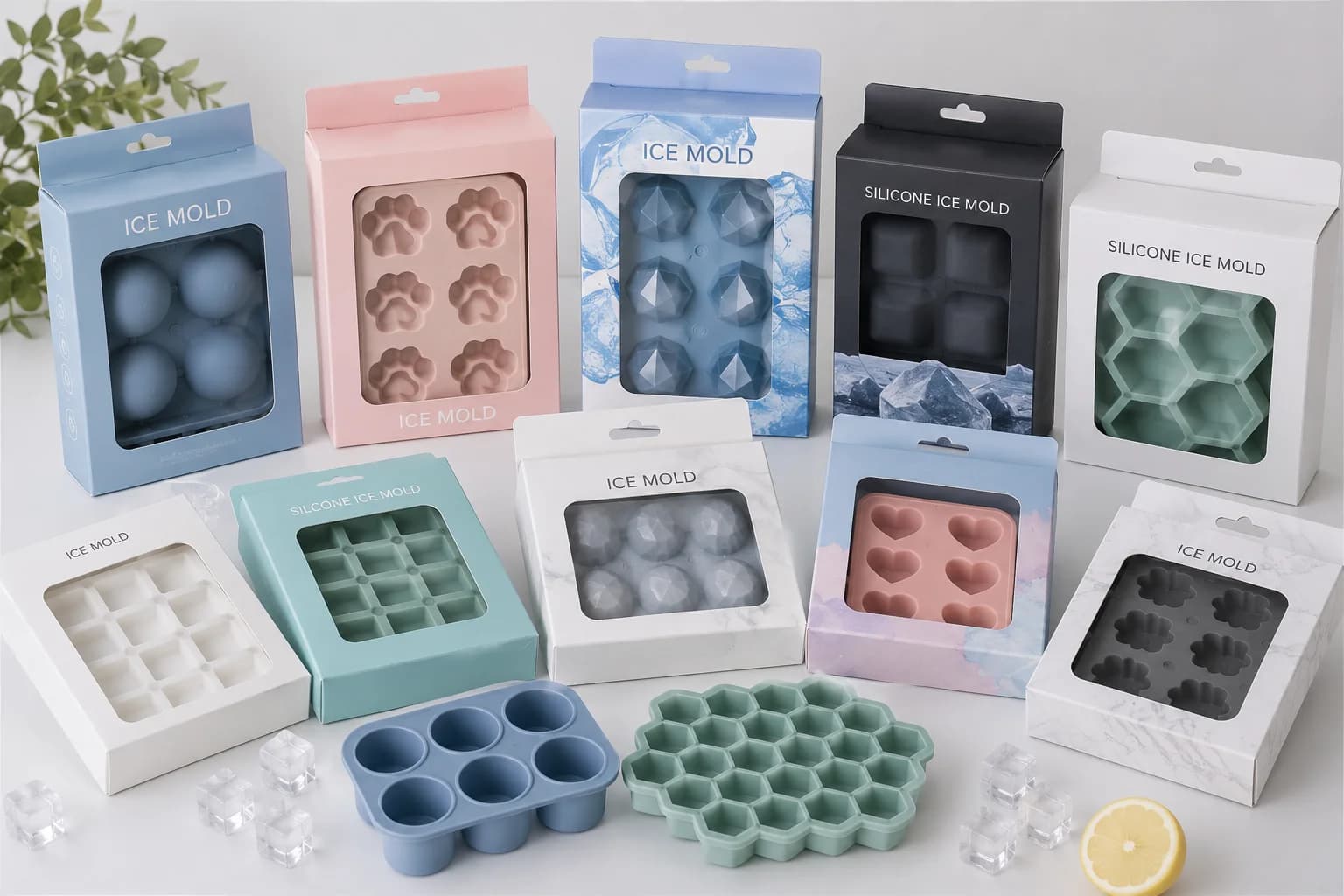
Silicone also solves the release problem. In rigid plastic trays, removing ice often requires twisting, banging, or running the tray under warm water. Silicone is flexible and non-stick, so the ice ball pushes out more easily. This is especially helpful when making larger ice spheres, which can be difficult to extract from a hard mold.
Practical recommendation
For home use, look for a foldable silicone ice ball mold made from food-grade silicone that feels smooth, has minimal odor, and is clearly labeled as safe for freezers. Check whether the mold has a sealed opening mechanism—some designs use a small gasket or overlap closure to prevent leaks. A well-sealed mold prevents water from expanding out during freezing and ensures a full, round sphere.
For a related manufacturing reference, review custom silicone ice mold manufacturing.
For business buyers, note that ice molds appear across multiple use categories, including household, kitchen, and promotional products [K2]. This means the same base product can be positioned differently depending on the target customer [K3].
3. How to Use a Foldable Silicone Ice Ball Maker Correctly
Core conclusion
Getting a perfect round ice ball depends less on the mold itself and more on the preparation steps: filling method, orientation, and release technique.
Step-by-step process
- Clean the mold before first use. Wash the silicone with warm soapy water or a food-safe silicone cleaner. Rinse it thoroughly and dry it before filling.
- Fill with filtered or boiled water. Mineral deposits or air bubbles in tap water can make ice appear cloudy. Boiling and cooling the water before freezing reduces trapped air and helps produce clearer ice.
- Fill just below the rim. Water expands when frozen. Overfilling can cause the mold to bulge or leak. Underfilling leaves an incomplete sphere. The right level depends on the design, so check for a fill line or test once with a small amount.
- Close the mold securely. For foldable or two-piece molds, align the seams and press firmly. Some designs require a small twist or snap closure.
- Freeze on a flat surface. Place the filled mold on a level tray or shelf in the freezer. Keep it away from strong-smelling foods; silicone can absorb odors if stored near pungent items.
- Release the ice ball. Remove the mold from the freezer and let it sit for one or two minutes. Gently flex the silicone or press the bottom of the sphere to loosen it. If the ice sticks, run the outside of the mold under warm water for a few seconds—avoid hot water because rapid thermal shock may shorten the mold's lifespan.
Practical scenario
Imagine hosting a small gathering. You want to serve whiskey without diluting it too quickly, but your freezer does not have a dedicated ice machine. A foldable silicone ice ball mold lets you prepare two or four spheres the day before. Because the mold is flexible and collapsible, you can place it on a shelf beside other frozen items. When guests arrive, you release the spheres and place them directly in tumblers. The mold folds flat into a drawer after a quick rinse.
4. Choosing Between Silicone, Plastic, and Metal Ice Ball Molds
Core conclusion
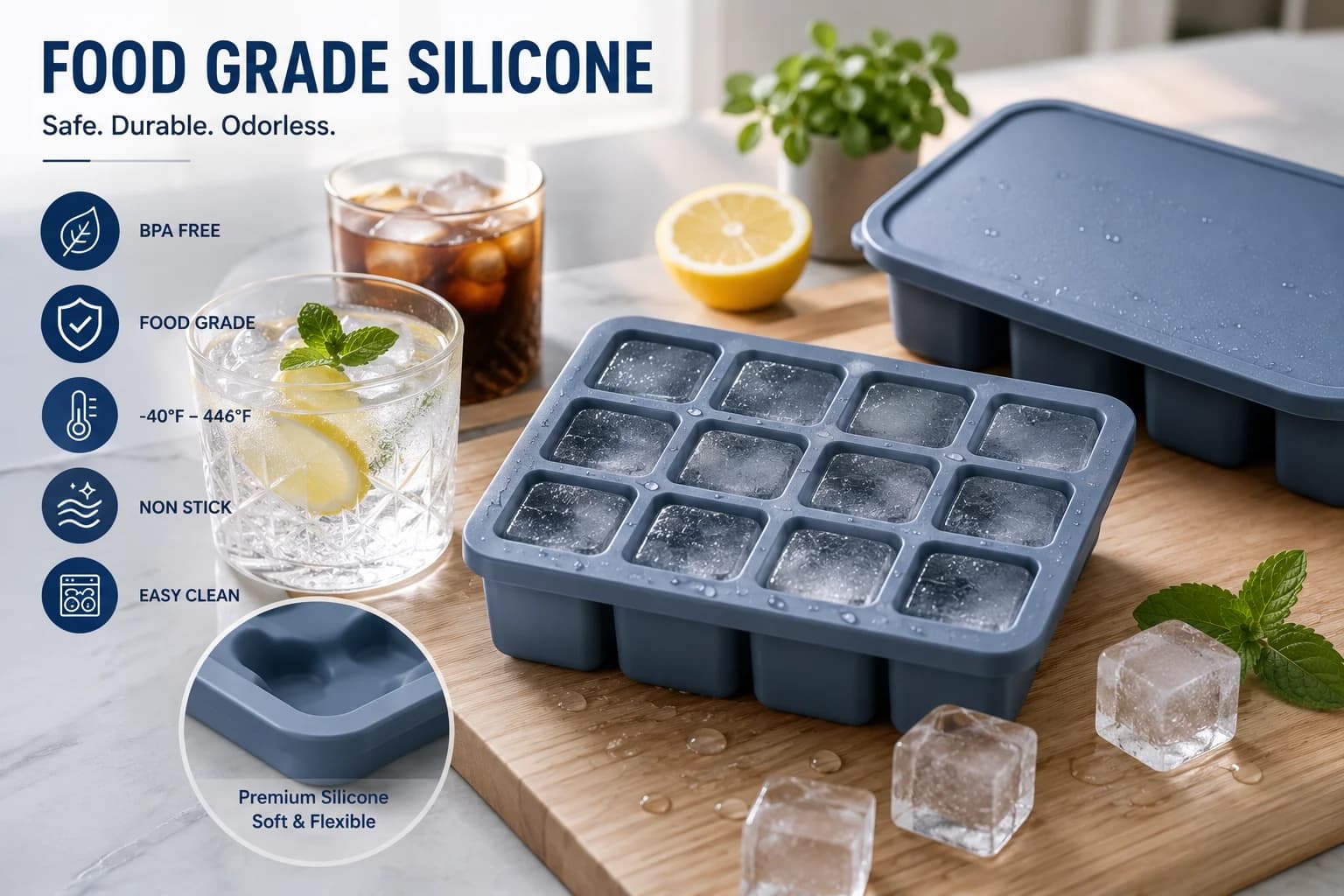
Silicone molds offer the best balance of flexibility, food safety, and ease of release for home ice ball production, but they require careful handling and proper storage to avoid deformation.
Comparison table
| Feature | Foldable Silicone Mold | Rigid Plastic Mold | Metal/Ball-Press Mold |
|---|---|---|---|
| Ice shape | Round sphere | Round sphere | Round sphere |
| Storage | Collapsible, space-saving | Bulky, fixed shape | Bulky, heavy |
| Ease of release | High—flexible and non-stick | Medium—may need warm water | Medium—requires pressing or assembly |
| Leak risk | Low if properly sealed | Low if sealed | Low if sealed |
| Heat/cold tolerance | Wide range, food-grade silicone | Check manufacturer rating | High, but can be heavy |
| Use case | Home, promotional, custom | Home, basic use | Bars, high-volume service |
| Customization options | High (color, logo, shape, packaging) [K1] | Limited | Limited |
Why this comparison matters
Plastic molds are common and inexpensive, but they can be stiff, difficult to release, and more prone to cracking in low temperatures. Metal sphere ice molds, often used in cocktail bars, can produce excellent ice but are heavier and more expensive. Foldable silicone offers a middle path: low cost, flexible release, food-grade compliance, and easier storage. It is not necessarily the best choice for high-volume commercial use where metal molds may be faster to fill and stack, but it is well suited for home use, gifting, and branded merchandise.
For additional context on this decision, see How We Designed a Four-Sphere Two-Piece Ice Mold for a Singapore Retailer.
Practical recommendation
If you are choosing one mold for home use, select a food-grade silicone model with a simple closure system. If you are sourcing for a business, ask the manufacturer about available cavity designs, custom colors, logos, and packaging options [K1]. Remember that the broad product portfolio includes ice ball trays and ice cube trays as promotional items, so the same mold can be branded and sold as a gift item or corporate giveaway [K2].
5. Sourcing and Customization Considerations for Silicone Ice Ball Molds
Core conclusion
For buyers who want to sell or distribute branded foldable silicone ice ball makers, the sourcing process is not just about picking a mold from a catalog. It involves design review, sampling, tooling, packaging, and compliance planning.
What to clarify before you order
- Material specification: Confirm that the silicone is food grade and suitable for low-temperature use. Ask for a material specification sheet or test report rather than relying only on verbal claims.
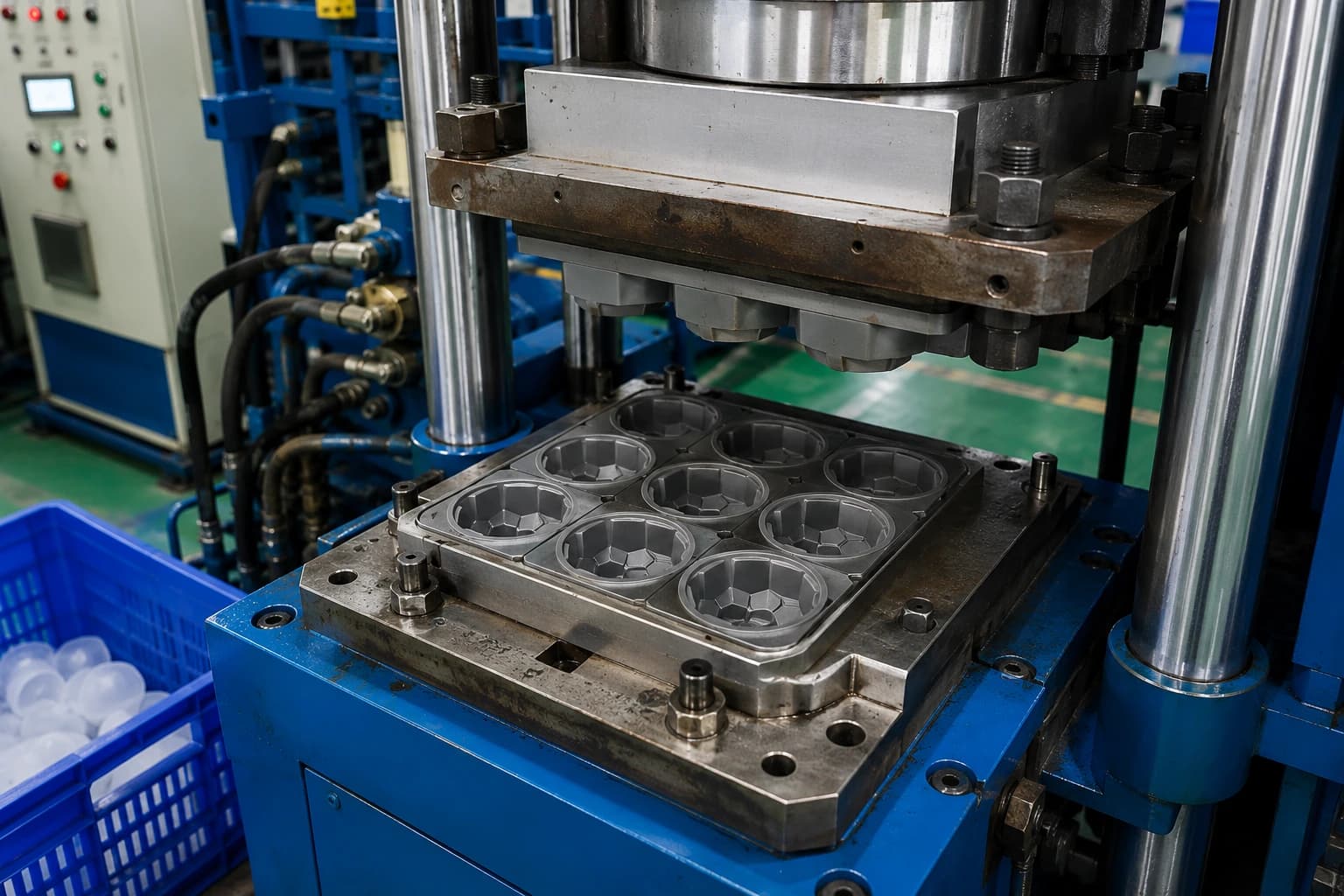
- Cavity design and product shape: Decide whether you want a standard round sphere, a textured ball, or a mold with other cavity shapes. Custom cavity design is a standard option in silicone mold manufacturing [K1].
- Color and logo: Silicone can be produced in custom colors and can accept logos through embossing, debossing, or printed labels. Confirm how the logo will appear on the final product and whether it will withstand cleaning and freezer temperatures [K1].
- Packaging: Decide whether the mold will be sold as a single item, in a multi-pack, or with a branded box. Packaging is one of the typical customization areas for silicone molds [K1].
- Sampling: Ask for a pre-production sample before committing to a full batch. Validate the mold's ability to form a complete round sphere, the ease of release, and the stability of the closure system.
- MOQ and lead time: Confirm the minimum order quantity and production lead time. These vary by manufacturer and should be established before design finalization [K3].
- Compliance: Do not assume that a generic "silicone" label means a product is certified for every market. Verify any compliance claims with the manufacturer and request the relevant test reports when needed. If the product is to be sold as food contact, check for applicable food-grade statements or certifications in your target market [K4].
Example: custom promotional ice ball mold
A company wants to promote a premium whiskey brand. They order a foldable silicone ice ball mold in dark grey with the brand logo debossed on the top. The mold is packaged in a small box with a card explaining how to use it. The buyer requests samples in three colors, checks the logo quality after repeated freezing and cleaning, and then places a bulk order. This approach—sample first, then validate—is a practical way to avoid costly design errors.
Before finalizing the specification, use How We Built a Two-Color Eight-Sphere Ice Mold Range for a Canadian Importer as an additional planning reference.
6. Care and Maintenance Tips for Silicone Ice Ball Molds
Core conclusion
With simple care, a foldable silicone ice ball mold will last through many freezing cycles.
Do's and don'ts
- Do wash the mold after each use with mild soap and warm water. Silicone is easy to clean, but it can retain odors if left dirty.
- Do dry the mold completely before folding it for storage. Moisture in a folded mold can lead to mildew or surface spotting.
- Do keep the mold away from sharp objects and direct flames.
- Don't use abrasive scrubbers when cleaning. They can dull the surface and make the mold harder to release.
- Don't force the mold open when ice is stuck. Let it warm for a minute first.
- Don't place the mold in the oven unless the manufacturer explicitly states that it is oven-safe. Freezer-safe silicone is not necessarily heat-safe.
Practical scenario
A frequent user keeps two molds in the freezer, cycling them so one is always ready. After release, the used mold is rinsed, dried, and folded flat in a kitchen drawer. The user reports no cracking or smell after several months of weekly use. This aligns with the expectation that well-maintained silicone molds are a low-cost, durable kitchen tool.
7. FAQ
Q1. How does a silicone ice ball maker produce a perfect round ice ball?
The mold is designed with a spherical cavity and a closure system that holds water in place as it freezes. Water expands slightly during freezing, so the mold must be filled correctly and sealed securely. The flexibility of silicone allows the ice sphere to be removed easily without breaking. For best results, use pre-boiled water and avoid overfilling.
Q2. Are foldable silicone ice ball molds safe for food and freezer use?
Silicone molds sold for kitchen use are generally made from food-grade silicone. However, not every silicone product is certified for every market. Check the product label or ask the manufacturer for a material specification or test report before use or before resale [K3][K4]. If you are sourcing custom molds, request the relevant compliance documentation as part of the sample approval process.
Q3. Can a silicone ice ball mold be customized with a logo or brand name?
Yes. Silicone ice molds can be customized in terms of cavity design, shape, size, color, logo, and packaging [K1]. Common branding methods include debossing, embossing, or adding a printed label. Confirm the branding method with the manufacturer and validate it through a pre-production sample.
Q4. How is a foldable silicone ice ball mold different from a regular ice cube tray?
A regular ice cube tray produces several small cubes, while an ice ball mold produces one or more large spheres. The sphere has less surface area relative to volume, so it melts slower. The foldable silicone design also stores more compactly than a rigid tray and typically allows easier ice removal.
8. Conclusion
A foldable silicone ice ball maker is a small but genuinely useful kitchen tool. It addresses the common frustrations of slow-melting ice, hard-to-release trays, and limited freezer space. For home users, the best approach is simple: choose a food-grade silicone mold, use filtered or boiled water, fill it correctly, and store it flat when not in use. For business buyers and brand owners, the same product opens the door to custom silicone mold projects, with options for custom cavity design, branding, and packaging [K1][K2].
Before purchasing or sourcing, always confirm materials, dimensions, certifications, MOQ, and lead time with the manufacturer [K3]. This prevents surprises and ensures that the final product matches your quality and compliance expectations. Whether you are buying one for your home bar or planning a branded promotional run, a foldable silicone ice ball mold is a practical choice that balances function, storage, and consistency.