Key Takeaways
- Choose a bourbon ice ball mold or an ice ball tray based on serving volume, freezer space, release, storage, and cleaning—not on product names alone.
- “Bar-level” whisky ice is mainly about controlled dilution, consistent size, clean release, and cold storage. Clarity is a technique and water-quality issue, not a mold-only feature.
- Custom silicone ice mold projects should be treated as development projects: cavity design, sampling, tooling, packaging, and quality checks all need review [K1][K3].
- Do not accept unconditional promises about MOQ, free samples, fixed mold fees, or guaranteed production dates before project review and written confirmation [K5].
- Before ordering or publishing product-specific claims, confirm current availability, material composition, dimensions, certifications, MOQ, and lead time [K4].
1. Introduction
A large piece of ice looks simple: frozen water, a glass, a pour of bourbon. In practice, home drinkers and bar teams run into the same problems—cloudy spheres, cracked ice, molds that will not release, trays that take up too much freezer space, and ice that dilutes a spirit faster than expected. The search often starts with a bourbon ice ball mold and later shifts to an ice ball tray once volume, storage, or branding becomes important.
That shift is the subject of this checklist. The goal is not to declare one format universally better. It is to help you compare formats by workflow, judge what “bar-level” ice actually requires, and prepare a custom silicone sourcing brief that a manufacturer can review without guesswork. Where the article touches on customization and sourcing, it follows verified product knowledge for custom silicone ice molds and related tray formats [K1][K2].
2. Mold or Tray? Decide by Workflow Before You Buy
Core conclusion: A single-style bourbon ice ball mold is usually best for low-volume, deliberate serving. An ice ball tray is usually better for batch preparation, entertaining, and bar service. The right choice depends on how many drinks you make per session and how much freezer space you can dedicate.
A bourbon ice ball mold is often designed around one large cavity or a small set of cavities. It suits a drinker who wants one or two large pieces of ice for a spirit-forward pour and does not want a full tray occupying the freezer. An ice ball tray uses multiple cavities in one frame, so it supports batch production and consistent replenishment. For a home bar, the practical pattern is often: one individual mold for daily use, plus a tray for weekends or guests. For a commercial bar, tray capacity and cold storage matter more than the novelty of a single mold.
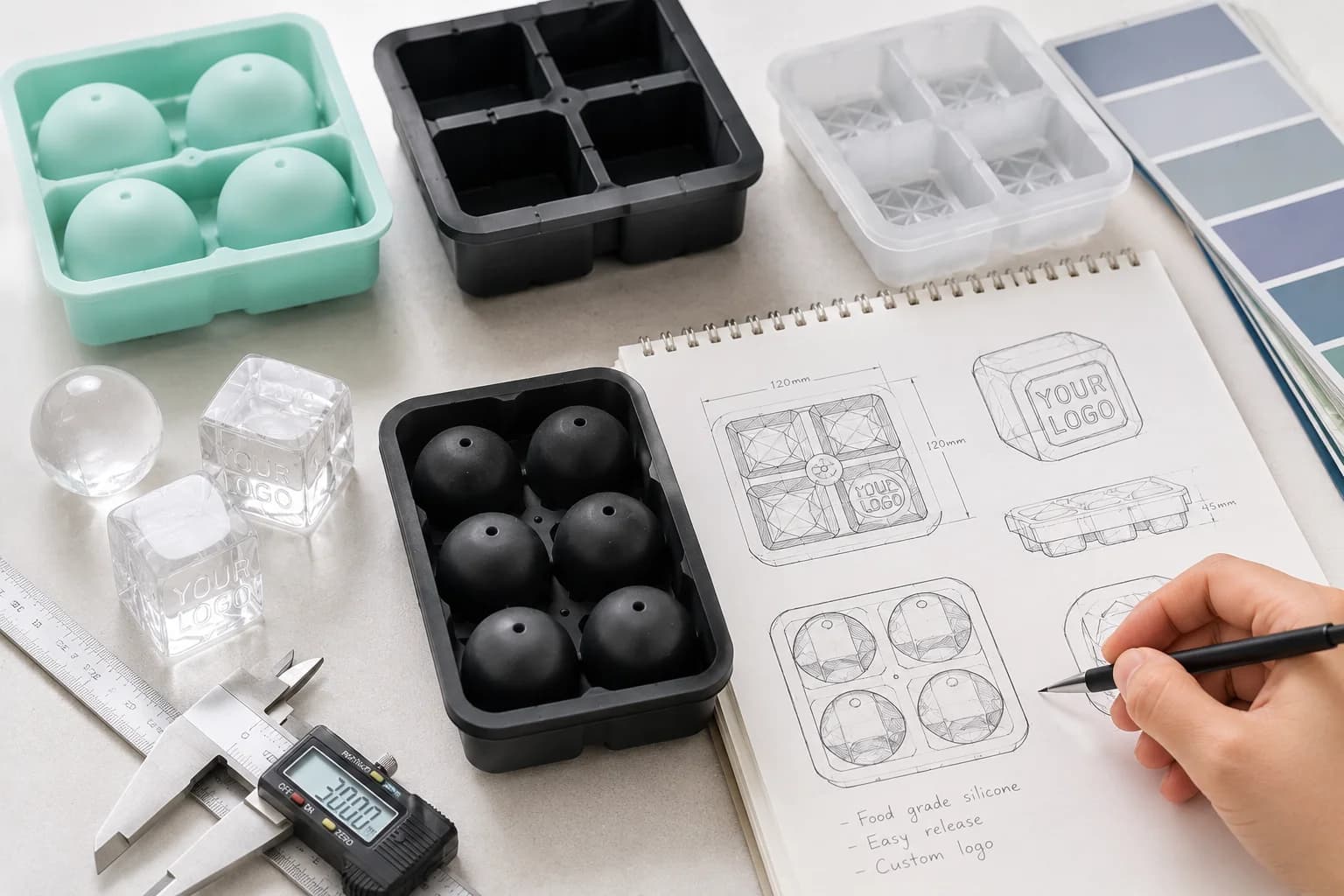
The distinction is also commercial. Ice molds can sit under household, kitchen, and promotional use cases, and that category placement should not limit cross-category content or product planning [K4]. A tray sold as a promotional item may use the same cavity and release logic as a household product. If you are sourcing rather than buying retail, review the supplier’s custom silicone ice molds capabilities across cavity design, product shape, size, color, logo, and packaging [K1].
Practical advice: Count the number of large-format drinks you serve on a typical occasion. If the answer is one or two, start with an individual mold and measure whether the sphere fits your glass. If the answer is four or more, compare tray cavity count, lid design, stackability, and freezer footprint before buying.
3. What “Bar-Level” Whisky Ice Actually Means
Core conclusion: Bar-level ice is not simply clear ice. It is ice that fits the glass, melts at a controlled rate, releases cleanly from the mold, and can be stored without picking up odors or cracking before service.
Large-format ice—whether a sphere, cube, or tall block—reduces the surface-area-to-volume ratio compared with small cubes. In a spirit-forward bourbon serve, that usually means slower dilution and a longer drinking window. But size alone is not enough. A poorly made sphere with internal cracks can fracture when liquid is poured over it. A mold that is hard to release can produce torn surfaces that melt unevenly. A tray that sits uncovered in a freezer can absorb food odors.
Clarity comes from freezing direction, water quality, and handling. A mold shapes the ice; it does not guarantee clarity. For home use, practical steps include using clean water, filling to the marked line, freezing in a stable position, and allowing the ice to temper briefly before release. For bar service, consistency matters more than perfection: the same cavity size, the same fill level, and the same storage routine make ice easier to plan around.
For buyers developing a branded bar program, the same logic applies to custom ice ball tray development: the cavity must match the glass and the serve, and the release and storage workflow must match the venue. A visually impressive mold that slows service or produces inconsistent sizes is not bar-level equipment.
Practical advice: Test one batch before scaling. Check three things: whether the ice releases without tearing, whether it fits the intended glass with room for liquid, and whether it still looks acceptable after 24 hours in storage. If any answer is no, adjust the mold, fill level, or storage method before ordering more.
4. Design and Material Checklist for Molds and Trays
Core conclusion: Most ice mold complaints trace back to design and specification gaps, not to the general idea of silicone. A useful mold or tray has a cavity that fills predictably, releases cleanly, and can be cleaned and stored without deformation.
Use this checklist when comparing samples or preparing a custom brief:
- Cavity geometry: Confirm sphere or cube shape, cavity diameter, draft angles, and seam placement. Sharp seams can leave a ridge that cracks during release.
- Fill line and lid: A lid can reduce spills and evaporation, but it must fit without forcing the mold out of shape. Confirm whether the lid is separate, hinged, or integrated.
- Wall thickness and flexibility: The mold must be flexible enough to release ice but stable enough to carry when full. Ask for material composition and sample verification rather than assuming.
- Release method: Test whether the design expects a twist, push, or peel. A tray with many cavities can be harder to release than a single mold.
- Cleaning and storage: Confirm cleaning instructions, stackability, and whether the tray can be stored flat without warping. Do not assume dishwasher suitability without supplier confirmation.
- Customization scope: Cavity design, product shape, size, color, logo, and packaging are typical customization areas for custom silicone ice molds [K1].

Material and compliance claims should be product-specific. Before publishing a product page or quotation, confirm current availability, material composition, dimensions, certifications, MOQ, and lead time [K4]. This matters especially when a tray is being adapted for branded retail or promotional use, where packaging and labeling may change the project scope.
Practical advice: Ask for a sample in the final intended color and packaging format where possible. Review the sample for flash, odor, cavity consistency, and lid fit. If the sample is approved only verbally, put the approval points in writing before tooling or production planning moves forward.
5. Sourcing a Custom Ice Ball Tray: A Practical Buyer Checklist
Core conclusion: A custom ice ball tray should be managed as a development project with defined review points. The sequence matters more than a single price quote.
A typical project starts with a design brief: intended use, glass size, cavity count, target market, logo placement, and packaging format. The supplier then reviews the design file, discusses sampling, and clarifies tooling and MOQ assumptions. Only after that should production dates or mold fees be treated as reliable. The knowledge base explicitly supports content on how custom silicone mold projects move from design review to production, as well as MOQ, tooling, sampling, and lead-time planning [K3].
Use this buyer checklist:
- Design review: Share cavity dimensions, shape, logo, color, and packaging requirements. Ask what file format and tolerances are needed.
- Sampling: Confirm what the sample will prove—shape, release, lid fit, color, or packaging. Ask whether sample and freight terms are project-specific.
- Tooling and mold fee: Request a written scope. Do not publish or accept a fixed mold fee without design evaluation [K5].
- MOQ and lead time: Treat these as project-specific. Do not assume an unconditional 500-piece MOQ or guaranteed production dates before written confirmation [K5].
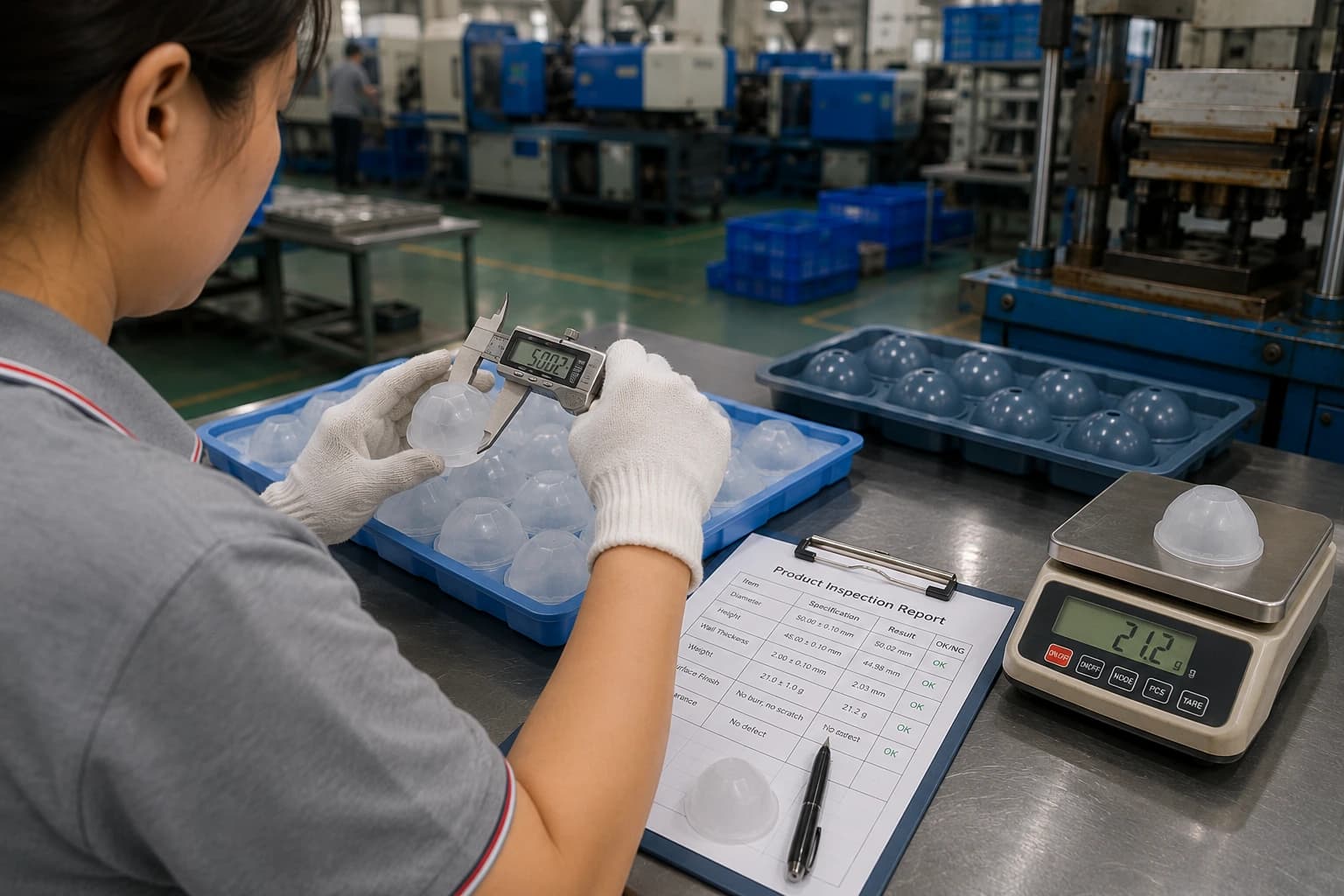
- Quality inspection: Agree on checkpoints for cavity consistency, flash, odor, color, logo placement, and packaging before shipment.
- Pre-shipment confirmation: Confirm current availability, material composition, dimensions, certifications, MOQ, and lead time before quotation or publication [K4].
For teams that need a structured starting point, a silicone OEM/ODM project planning conversation should cover design files, sampling, tooling, packaging, and inspection rather than price alone. The strongest sourcing signal is not a fast quote; it is a supplier that asks for the design brief and states what must be verified before committing.
6. Key Comparison: Mold, Tray, and Custom Program
| Format | Best for | Strengths | Watch-outs |
|---|---|---|---|
| Individual bourbon ice ball mold | Home drinkers, 1–2 large-format drinks per session | Focused use, easier to find freezer space, simple serving ritual | Low batch output; cavity must fit the glass; release quality varies by design |
| Ice ball tray | Entertaining, batch prep, home bars, promotional use | Multiple pieces per freeze, easier replenishment, stackable formats may save space | Lid fit, tray rigidity, release from many cavities, freezer footprint |
| Custom silicone mold or tray program | Bars, private label, branded retail, promotional campaigns | Cavity, shape, size, color, logo, and packaging can be specified [K1] | Tooling, sampling, MOQ, lead time, and compliance details need project review [K5] |
Ice molds can be tagged under household, kitchen, and promotional use cases, so the category label should not limit how you evaluate the product [K4]. The better question is whether the format fits the serving workflow and the buyer’s verification process.
7. FAQ
Q1. Are bourbon ice balls better than standard ice cubes for whisky?
For spirit-forward bourbon or whisky, a large bourbon ice ball can slow dilution because it has less surface area relative to its volume than small cubes. That is a useful effect when you want a long, slow drink. It is not automatically “better” for every serve: cocktails that need dilution may perform better with standard cubes, and a sphere that does not fit the glass is a practical failure regardless of melt rate.
Q2. What is the difference between a bourbon ice ball mold and an ice ball tray?
A bourbon ice ball mold usually refers to a single mold or a small set of cavities for large ice. An ice ball tray is a multi-cavity format designed for batch freezing. The mold is often chosen for low-volume serving; the tray is chosen for entertaining, bar prep, or promotional programs. Both can be made in silicone, but release, lid fit, and storage design vary by product.
Q3. Why does my ice ball come out cloudy or cracked?
Cloudiness is usually related to freezing direction, dissolved gases, and water quality; the mold shapes the ice but does not guarantee clarity. Cracking can come from internal stress, overfilling, rough release, or thermal shock when the ice meets a warm glass or liquid. Try a cleaner fill, a stable freezing position, a brief temper before release, and a sample review if the problem repeats across batches.
Q4. Can I customize an ice ball tray with my logo and packaging?
Yes, custom silicone ice mold projects commonly cover cavity design, product shape, size, color, logo, and packaging [K1]. However, MOQ, tooling, sampling, and lead time should be confirmed after design review. Do not rely on unconditional promises about free samples, fixed mold fees, or guaranteed production dates before written confirmation [K5].
8. Conclusion
The practical path from a bourbon ice ball mold to an ice ball tray is a workflow decision. For one or two deliberate pours, choose an individual mold that fits your glass and releases cleanly. For entertaining or bar service, choose a tray that supports batch freezing, storage, and consistent cavity size. For branded or private-label programs, treat the project as custom development: define the cavity, sampling plan, packaging, and inspection checkpoints before discussing production dates.
Bar-level whisky ice is built from repeatable details—clean water, controlled freezing, proper fill levels, clean release, and cold storage. The mold matters, but it is only one part of the system. Before you order, publish, or quote, confirm the product-specific facts: current availability, material composition, dimensions, certifications, MOQ, and lead time [K4]. That verification step is what separates a useful ice tool from an expensive freezer ornament.