Key Takeaways
- Large-format ice, especially spherical cubes, melts more slowly than standard small cubes because it has less surface area relative to its volume — which means less drink dilution and a longer-lasting chill.
- Food-grade silicone is the most practical mould material for this application. Verified specifications include food-contact-grade silicone, an odourless finish, and a temperature resistance range of -40°C to 240°C (-40°F to 464°F) [K3].
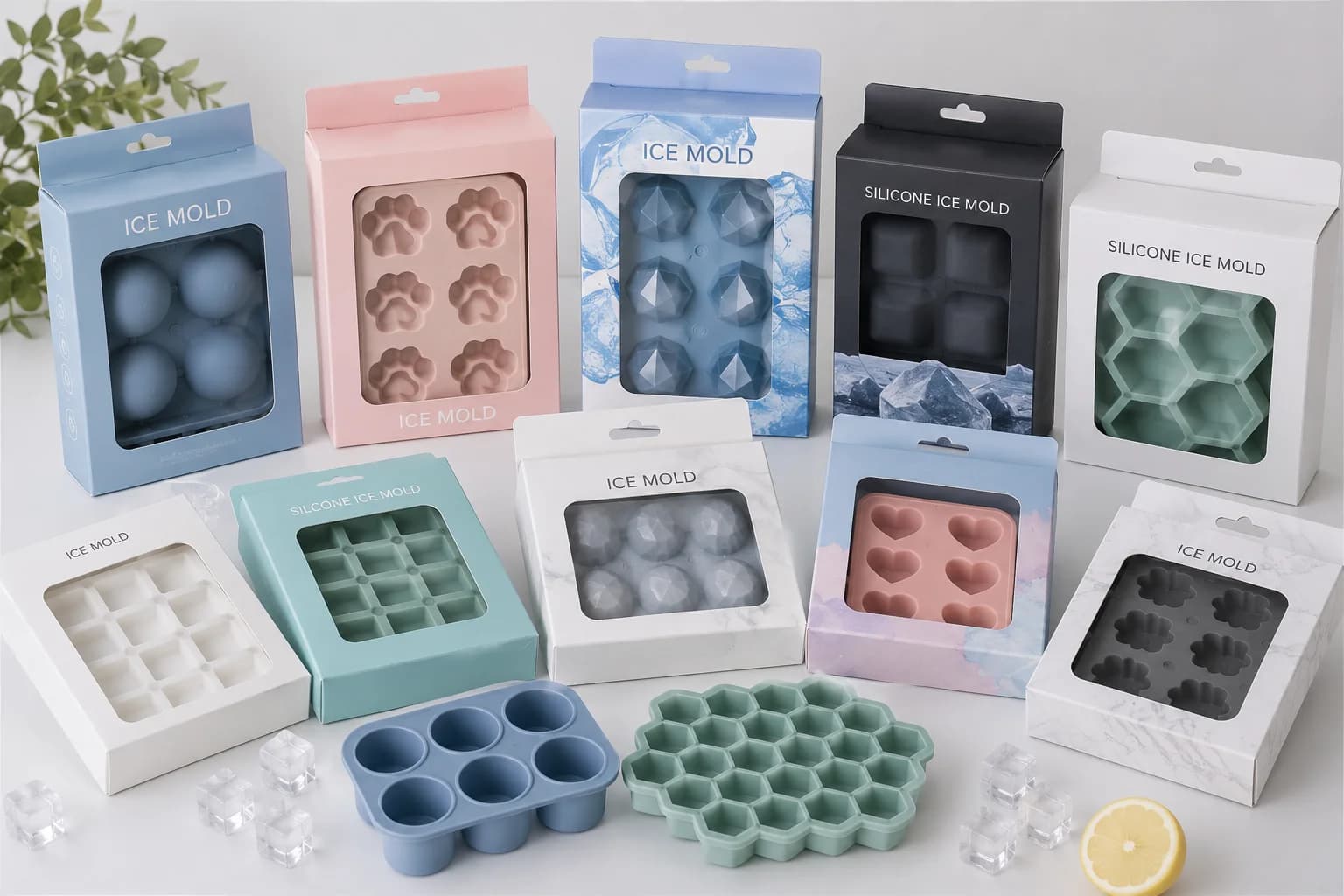
- Commercial buyers can customise ice moulds in cavity design, product shape, size, colour, logo, and packaging [K1], which makes branded and signature ice realistic for bars, hotels, and promotional campaigns [K1][K4].
- A typical custom order starts at around 500 pieces; stock samples usually ship in 1-2 working days, custom samples in 7-10 working days, and mass production in 15-20 working days after confirmation [K5].
- This guide is written for bar owners, beverage brand managers, event planners, and procurement teams that need to specify, compare, and source ice moulds without guesswork.