Key Takeaways
- A sphere is the most efficient shape for slow, controlled dilution: it has the lowest surface-area-to-volume ratio of any shape, so a large round ice ball melts more gradually than cubes or crushed ice in the same pour.
- For home-bar use, the deciding factors are cavity diameter, mold material, demolding design, and freezer fit — not brand claims or decorative styling.
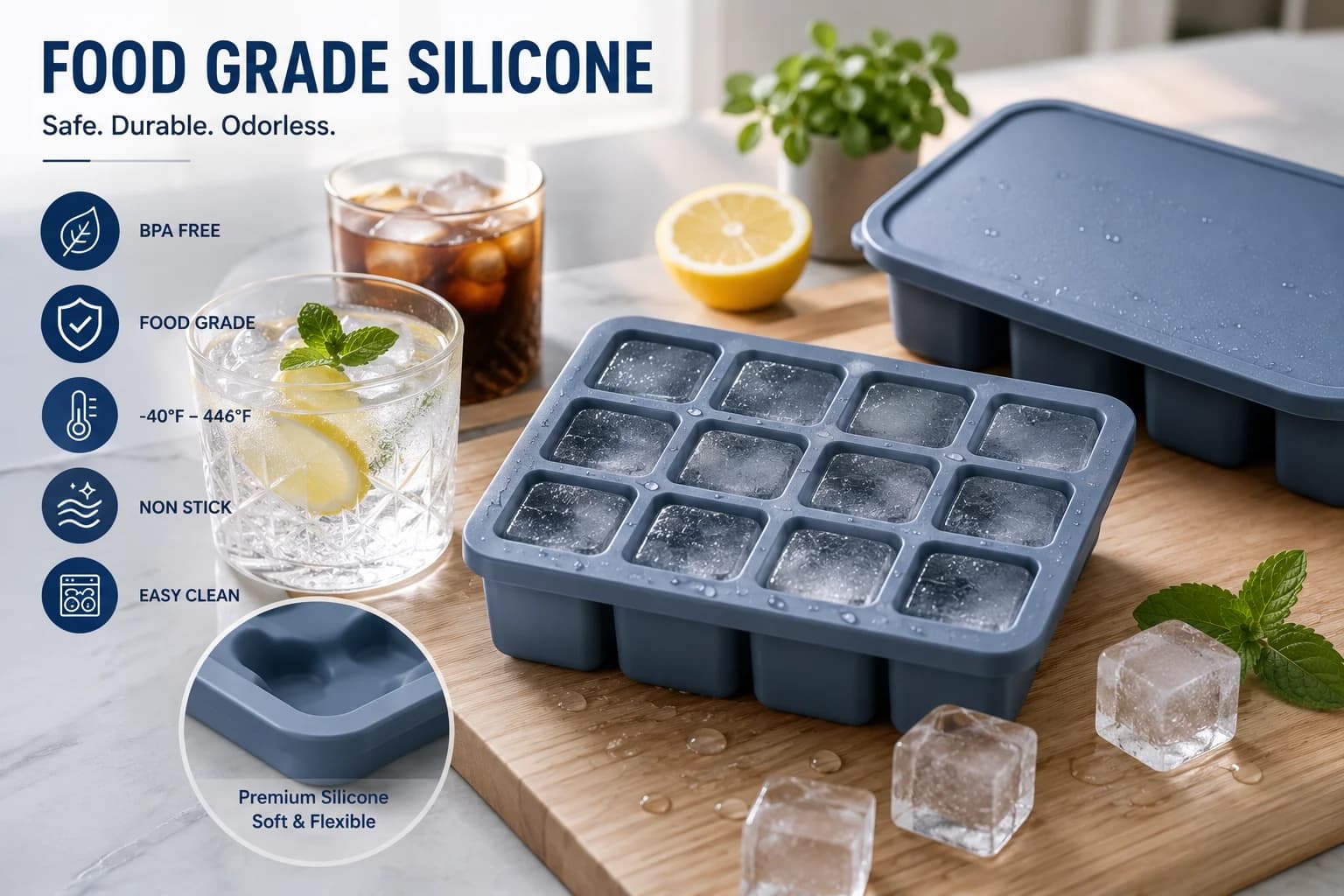
- Food-grade silicone is the most common material for sphere ice molds because it flexes for easy release; verified silicone specifications typically list food-grade, odorless material rated from −40°C to 240°C (−40°F to 464°F) [K5].
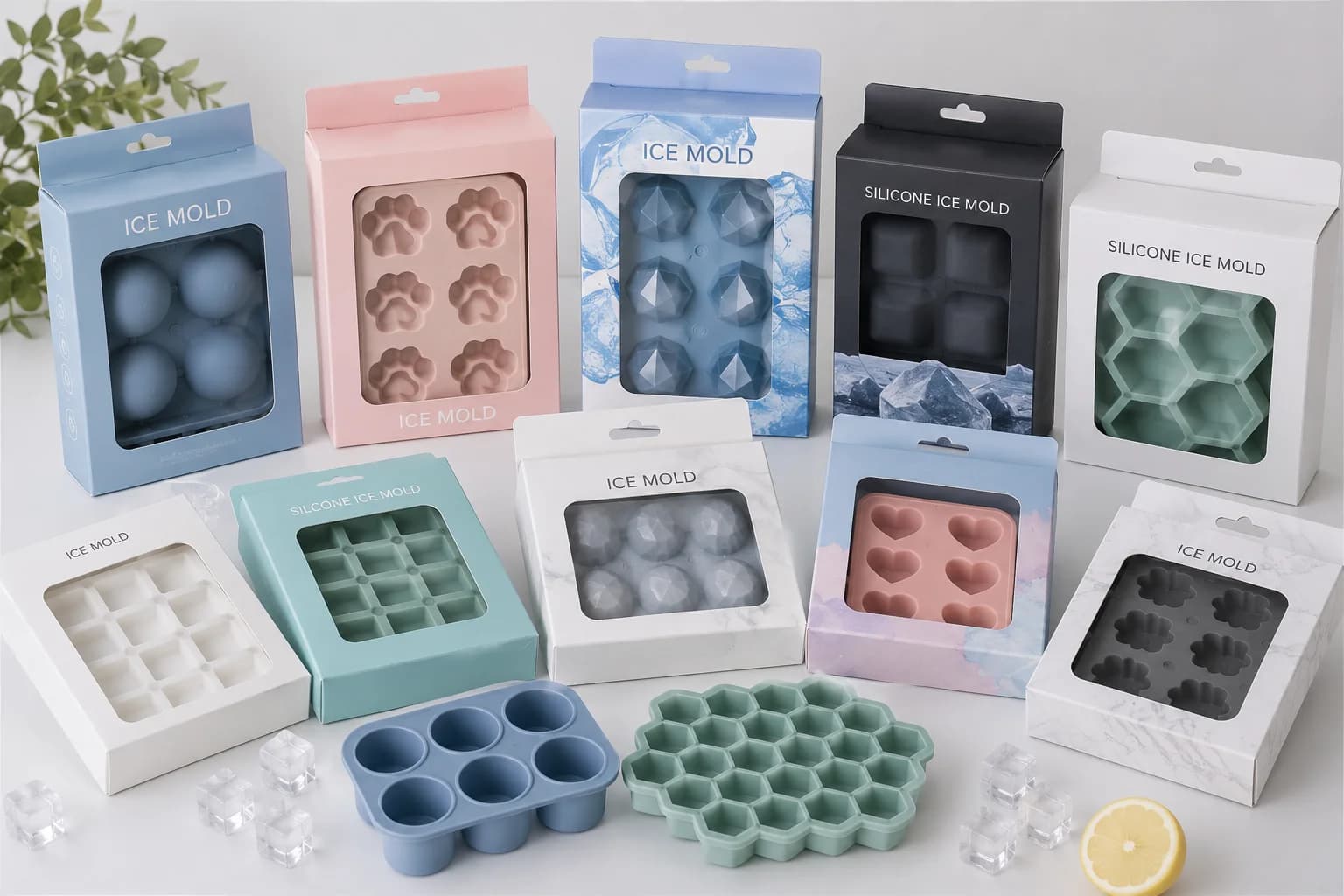
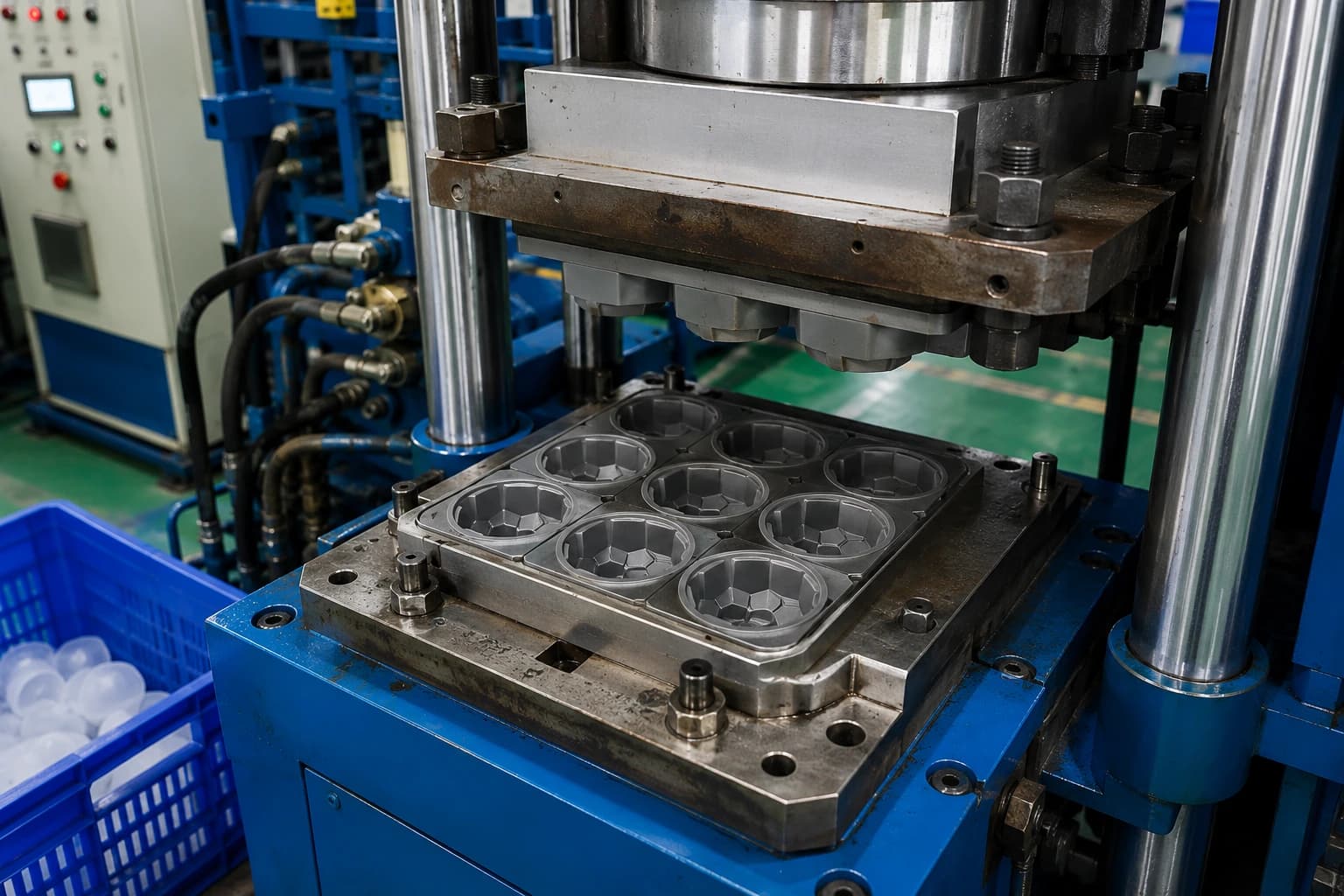
- If you want branded ice for a bar program, a promotional giveaway, or a private-label product, custom silicone molds support custom shapes, sizes, colors, logos, and packaging, but they follow a real development process: design review, tooling, sampling, then production [K1][K2].
- Always confirm current availability, material composition, cavity dimensions, MOQ, and lead time with the supplier before publishing a product page or quoting a price [K3].
1. Introduction
A whiskey drinker who spends $60 on a bottle of bourbon and then drops four crescent-shaped freezer-tray cubes into it is making a decision that shows up in the glass within three minutes: the ice melts fast, the proof drops, and the finish flattens. That is the problem a large-format ice ball is meant to solve.
But the market for ice ball makers is noisy. Listings promise "perfect clarity," "slow melt," and "bar-quality," often with no specification attached. Buyers end up with molds that are too large for their glasses, trays that crack after a dozen freeze cycles, or spheres that come out with a seam line running across the middle.
This article is a practical buying framework for a home bar. It covers what actually determines performance — cavity geometry, material, demolding, and freezer logistics — then explains how the same criteria change if you are sourcing sphere ice molds for a branded, promotional, or private-label program rather than for your own countertop.
2. Why a Sphere, and What Actually Determines Melt Speed
Core conclusion: The shape matters less than the mass and the temperature of the ice going into the glass. A sphere is the right shape because it maximizes volume for a given surface area, but a small sphere still dilutes fast.
For any given volume of ice, a sphere has the smallest possible surface area. Since melting happens at the surface, a sphere in contact with liquid at room temperature melts more slowly per unit of ice than a cube, and far more slowly than crushed or pebble ice. This is the entire technical case for round ice in bourbon: acceptable dilution, delivered slowly, so the drink opens up rather than collapsing.
Three practical variables determine the real outcome:
- Cavity diameter and mass. A larger ball carries more cold "reserve," but it also needs a glass wide enough to hold it. Measure the inner diameter of your rocks glass at its narrowest point before buying, and compare it against the mold's stated cavity size.
- Freezer temperature and dwell time. Ice that has not fully frozen to the core — or that has been sitting in a frost-free freezer for weeks — melts faster than a dense, freshly frozen ball. Rotating stock and freezing for a full cycle matters more than most marketing copy suggests.
- Starting glass temperature. Pre-chilling the glass and the bourbon slows the initial melt significantly. This is a free upgrade that no mold can replace.
Practical advice: If your glass is narrow, a 2-inch-class ball is usually more useful than a very large one — an oversized ball that sits above the liquid line chills the drink unevenly and looks awkward in the hand. Buy for your glassware first, then for your freezer space.
For a manufacturing view of mold structure, branding, and production planning, review RENJIA’s custom silicone ice mold manufacturing capabilities.
On clarity: a silicone mold does not, by itself, produce clear ice. Clarity comes from how the water freezes — dissolved air and minerals are pushed out during directional freezing, so the clearest results come from freezing slowly from one direction and discarding the cloudy fraction. A mold with a large open cavity helps, but the freezing method is the deciding factor.
3. Material and Build Quality: What Food-Grade Silicone Should Specify
Core conclusion: Choose food-grade silicone for flexibility and durability, and check that the supplier publishes real material specifications rather than vague claims.
Silicone is the dominant material for sphere ice molds for one reason: it flexes, so a frozen ball releases without cracking the mold or requiring a twist that warps the tray. Verified public specifications for food-grade silicone products in this category describe the material as food-grade, odorless, and rated from −40°C to 240°C (−40°F to 464°F), with custom sizes available [K5].
That temperature range is worth understanding rather than memorizing. It means the mold survives a deep freezer without becoming brittle and can be washed in hot water — or, if the maker rates it that way, placed in a dishwasher cycle. It is not a statement about oven use, and it does not automatically make a mold suitable for every appliance. Boundary conditions matter: extreme temperature swings and repeated flexing are what wear silicone out, not cold alone.
What to check, in order:
- Material disclosure. "Silicone" alone is not a specification. Look for food-grade claims with a stated temperature range and odor description [K5].
- Wall consistency. Thin, uneven walls tear at the seams first. A supplier that publishes material composition and dimensions is easier to hold accountable [K3].
- Smell test on arrival. An odorless material should not carry a strong plastic or rubber smell out of the packaging [K5].
- Rigid or hybrid frames. A rigid ABS or PP frame paired with a flexible silicone cavity can improve stacking and give a cleaner sphere, but it adds parts that can separate. Both designs work; the hybrid is more about freezer organization than about ice quality.
Cautions: Avoid any supplier that markets a mold as "pure silicone" without a product-specific specification. Product families that appear in a manufacturer's portfolio may use composite or non-silicone materials, and category placement in a portfolio diagram is not proof that an item is currently stocked or available in your market [K3].
Buyers turning a concept into an RFQ can compare these decisions with RENJIA’s OEM silicone product customization process.
4. Design Details That Decide Daily Usability
Core conclusion: Most buyer regret in this category comes from demolding friction, not from ice quality. Prioritize release design and freezer footprint.
A mold that produces a beautiful ball but requires two minutes of prying at 7 p.m. will end up in the back of a cabinet. The details below are what separate a mold you use weekly from one you use twice.
- Split-shell vs. one-piece cavity. Split-shell designs open like a clamshell, which usually releases a cleaner, seam-free sphere. One-piece trays with a flexible base are faster to fill but more prone to a visible equatorial seam or an uneven top.
- Fill line and overflow channel. A marked fill line or a shallow overflow groove prevents the dome of ice that makes trays stick together.
- Stackability and footprint. Measure the internal height of your freezer shelf. Stackable, low-profile trays mean you can freeze a batch and store it without dedicating a whole shelf.
- Funnel or narrow-spout filling. Wide openings splash. A small fill port or an included funnel saves countertop cleanup.
- Retrieval tooling. A soft silicone cup or a slight warm-water dip releases stubborn balls; some designs build this into the tray.
Practical scenario: For a two-person household drinking bourbon two or three nights a week, four to six ball cavities per tray is enough if you freeze a fresh batch after each use. For hosting, two trays or a tray plus a storage container of pre-frozen balls is more realistic than one oversized mold.
5. Comparison: Home Bar vs. Branded or Promotional Sourcing
The buying criteria change depending on who the ice is for. Use this table to identify which column you are in before you start collecting quotes.
| Criterion | Home bar buyer | Branded / promotional / private-label buyer |
|---|---|---|
| Primary goal | Slower dilution, easy release | Consistent product, on-brand presentation |
| Typical product form | Retail ice ball tray or single-ball mold; ice ball trays appear in promotional product portfolios alongside ice cube trays and popsicle molds [K4] | Custom silicone ice mold with specified cavity design, shape, size, color, logo, and packaging [K1] |
| Key specification | Cavity diameter vs. glass size; material safety data [K5] | Material composition, dimensions, MOQ, sampling schedule, lead time [K2][K3] |
| Minimum order | One unit | Project-dependent; MOQ, tooling, and lead time must be planned and confirmed [K2][K3] |
| Development path | Buy off the shelf, test, repeat | Design review → design-file preparation → sampling → tooling → production → inspection [K1][K2] |
| Risk to manage | Wrong size, seam lines, freezer fit | Unverified certification claims, unconfirmed availability, packaging mismatch [K2][K3] |
| Best next step | Measure your glass, buy one tray, test a full freeze cycle | Prepare design files and ask a structured set of supplier questions [K2] |
A supplier question checklist for the sourcing column — ask these before committing:
- What is the confirmed cavity diameter and overall tray footprint, and is that a current production specification? [K3]
- What material is used, and what temperature range and food-contact grade are documented? [K5]
- What are the MOQ, tooling cost, sampling timeline, and production lead time for a custom mold? [K2]
- What design-file format and artwork specifications do you need for logos and packaging? [K1][K2]
- What are your sample-approval and pre-shipment inspection steps? [K2]
- Which market-specific compliance requirements apply, and what documentation can you actually provide — without unsupported certification claims? [K2]
If you are sourcing for a bar program, note that ice molds sit naturally in household, kitchen, and promotional use cases at the same time; a portfolio diagram's category placement should not restrict how you position the product [K3].
Before approving mass production, align the specification with a documented silicone product quality control plan.
6. FAQ
Q1. Do silicone sphere ice molds make clearer ice than plastic trays?
Not on their own. Silicone is chosen for release flexibility, not for clarity. Clear ice depends on freezing direction, water quality, and how slowly the block freezes — dissolved air and minerals are pushed toward the last part of the water to freeze. A mold with an open top and a large cavity makes directional freezing easier to manage, but the method does most of the work.
Q2. How long will a bourbon ice ball last in the glass?
It depends on the ball's mass, the freezer temperature, the starting temperature of the glass and the spirit, and the room temperature. The reliable comparison is relative, not absolute: a large sphere of the same mass as a set of cubes will melt more slowly because it exposes less surface area to the liquid. If you want a longer, slower session, chill the glass and the bourbon first, and use a fully frozen, dense ball rather than one that has been sitting in the freezer for months.
Q3. Can I order custom-branded sphere ice molds?
Yes. Custom silicone ice molds support customization of cavity design, product shape, size, color, logo, and packaging [K1]. Custom colors, sizes, shapes, and packaging are standard options, and custom sizes are commonly available [K5]. Expect a defined process — design review, design-file preparation, sampling, tooling, production, and inspection — and confirm MOQ, tooling, and lead time for your specific project before quoting a customer [K2].
Q4. What temperature range should a mold be rated for?
Verified food-grade silicone specifications in this category list −40°C to 240°C (−40°F to 464°F), alongside food-grade and odorless descriptions [K5]. Treat that as the material's rated envelope, not as permission for every use: confirm with the supplier whether a specific mold is dishwasher-safe or intended for freezer-only use, and never assume high-temperature tolerance applies to the rigid frame or any accessory parts.
7. Conclusion
Choosing the best bourbon ice ball maker for a home bar comes down to four checks, in this order: the cavity diameter fits your glass, the material is documented as food-grade silicone with a stated temperature range and no odor, the release design is one you will actually use at 7 p.m., and the tray fits your freezer shelf. Get those right and the ice does its job — chilling the bourbon and softening the proof without washing out the finish.
If you are buying for yourself, start with one tray in the size that matches your glassware, run a full freeze cycle, and judge it on demolding and melt behavior rather than on packaging. If you are sourcing sphere ice molds for branding, promotional use, or private label, shift your focus to specification confirmation: ask for dimensions, material composition, MOQ, tooling, sampling steps, and lead time in writing, and confirm current availability and compliance documentation before you publish anything about the product [K2][K3]. That discipline is what turns a mold purchase into a repeatable bar program instead of a one-off experiment.