Key Takeaways
- A nugget ice mold or ice nugget tray makes nugget-style ice at home; it does not replicate the continuous scraping process of a commercial nugget ice machine.
- Consistent results depend on small cavities, flexible silicone, full freezing, brief tempering, and gentle release.
- Diamond ice golf balls are a different shape goal: use a faceted sphere mold rather than a nugget tray.
- Custom silicone ice molds can be tailored by cavity design, shape, size, color, logo, and packaging ([K1]).
- Food-contact and environmental claims should be product-specific; do not rely on unsigned draft declarations or absolute “eco-friendly” language ([K3], [K5]).
1. Introduction
Nugget ice has become a familiar restaurant and convenience-store texture: small, irregular, and easy to crunch in a glass of soda or iced coffee. That popularity has created a home-market question: can you get the same effect with a nugget ice mold or an ice nugget tray instead of buying a countertop nugget ice machine?
The short answer is yes, but with an important distinction. Home trays and molds produce nugget-style ice pieces. They do not produce true machine nugget ice, which is formed by compacting and scraping ice from a cold surface. Understanding that difference prevents disappointment and helps you choose the right tool for your drink, your freezer, and your budget.
This article explains how to use a nugget ice mold and ice nugget tray, how to improve release and texture, and how to choose cavity shapes. It also clarifies a common search confusion: diamond ice golf balls are a faceted sphere-ice format, not a nugget-ice format. If your goal is a specific shape for cocktails, whiskey, or branded service, the mold design matters more than the label on the tray.
2. What a Nugget Ice Mold and Ice Nugget Tray Actually Do
Core conclusion: A nugget ice tray or silicone mold is a practical home tool for making small, firm ice pieces that work well in everyday drinks. It is not a replacement for a commercial nugget ice machine.
Commercial nugget ice is made by continuously compacting and scraping ice, which gives it a soft, chewable, pellet-like structure. A home mold works differently: water fills small cavities, freezes solid, and is released as individual pieces. The result is usually harder and more uniform than machine nugget ice. That does not make it inferior for all uses. It simply means you should judge it by the right standard: fast chilling, easy portioning, and a pleasant shape in the glass.
For home use, the best tray or mold has three practical features:

- Small cavities that create pieces close to nugget size.
- Flexible silicone walls that let you push pieces out without cracking the tray.
- A lid or rigid frame that keeps cavities level and prevents spills during freezing.
Shape choice is where many buyers get confused. A search for diamond ice golf balls usually points to faceted, sphere-shaped ice for whiskey or cocktail presentation. That is a different mold category from a nugget tray. If you want pellet-style ice, choose small cylindrical or irregular cavities. If you want diamond ice golf balls, choose a faceted sphere cavity. A custom silicone ice mold project can define cavity design, product shape, size, color, logo, and packaging ([K1]), but the starting point should always be the drink experience you want.
3. How to Use a Nugget Ice Tray or Mold: Step-by-Step
Core conclusion: The best results come from controlled filling, full freezing, short tempering, and gentle release—not from forcing pieces out of a rigid tray.
Step-by-step process
- Clean and dry the tray. Wash the mold before first use and let it dry fully so the first batch does not pick up dust or freezer odors.
- Use clean, filtered water. Filtered water reduces off-flavors and visible sediment. It does not guarantee clear ice, but it gives a cleaner starting point.
- Fill each cavity almost to the top. Leave a small headspace so water can expand as it freezes. If the tray has a lid, press it gently to displace excess water.
- Freeze flat and undisturbed. Place the tray on a level shelf. Small cavities freeze faster than large cubes, but the exact time depends on freezer temperature, tray material, and cavity depth. Check after several hours and continue until pieces are fully solid.
- Temper for one to two minutes. Remove the tray from the freezer and let it sit briefly. This slight warming helps release pieces without cracking them.
- Flex and release. Twist the silicone tray gently or push from the bottom of each cavity. Drop pieces into a bowl or freezer bag.
- Store loosely. If you are not serving immediately, store nugget-style ice in a freezer bag or covered container. Avoid packing pieces tightly while they are still wet.
Practical scenario
For a home soda station, fill a tray the night before and release the pieces into a covered bowl in the morning. For iced coffee, use slightly smaller cavities so the ice chills quickly without diluting the drink too fast. For cocktails, a larger faceted sphere mold—not a nugget tray—is the better choice for diamond ice golf balls.
Before scaling up from one tray to a retail-ready product, use a sourcing checklist for silicone OEM/ODM projects that covers sample approval, pre-shipment inspection, and questions to ask a manufacturer ([K2]). This is especially important if you plan private-label packaging or a custom cavity shape.
4. Designing the Right Cavity: Nugget Pieces vs Diamond Ice Golf Balls
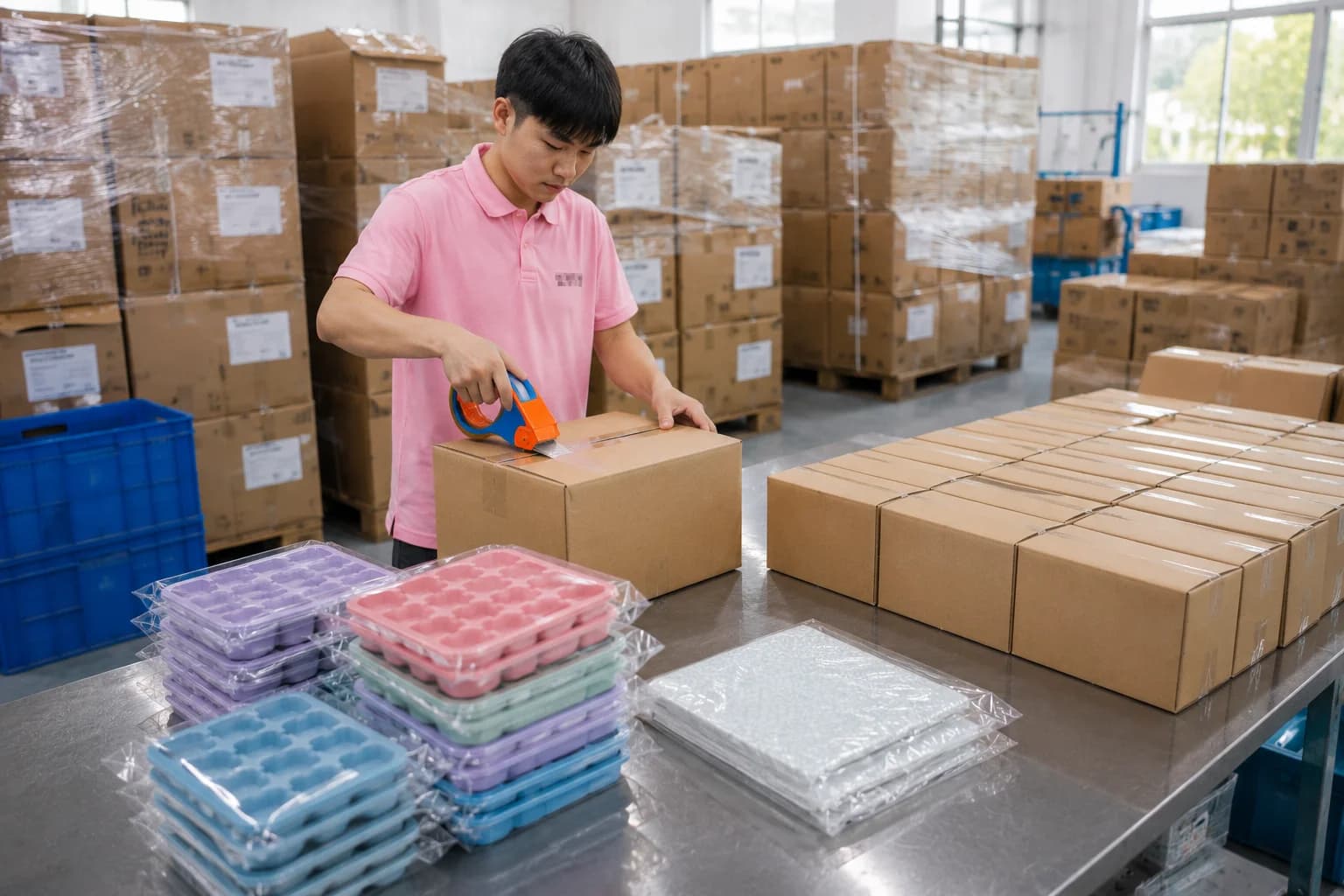
Core conclusion: Cavity shape controls the look, melt speed, and perceived texture of the ice. Match the cavity to the drink, not to a generic “ice mold” label.
A nugget-style cavity should be small and relatively shallow. The goal is a piece that fits neatly in a glass and chills quickly. A large cube cavity will still freeze water, but it will not give the nugget-like appearance or portion size that most buyers expect.
Faceted sphere cavities are different. They are designed to create diamond ice golf balls—round ice with angled faces that catch light and melt more slowly than small pieces. These are popular for whiskey, bar service, and gift sets. They require more freezer space and longer freezing time, and they should be released with patience because the larger mass can stick if the mold is twisted too aggressively.
Customization is possible at several levels: cavity design, product shape, size, color, logo, and packaging ([K1]). A buyer may want a small nugget cavity for a household tray, a faceted sphere for a premium cocktail mold, or a branded shape for promotional use. Each choice affects tooling, sampling, and packaging planning. MOQ, tooling, sampling, and lead-time planning are typical topics in a custom silicone mold project ([K2]), so it is better to define the cavity and use case before requesting a quote.
5. Key Comparison / Method / Considerations
| Option | Typical output | Texture and use | Main limitation | Customization potential |
|---|---|---|---|---|
| Ice nugget tray | Small irregular or cylindrical pieces | Firm, quick-chilling pieces for soda, iced tea, coffee | Not true machine nugget ice | Usually limited to stock cavity layouts |
| Silicone nugget mold | Defined small cavities, often with lid | Uniform pieces with easier release | Deep cavities may need longer freezing | Cavity shape, size, color, logo, packaging ([K1]) |
| Diamond ice golf ball mold | Faceted sphere | Large, slow-melting ice for whiskey and cocktails | Not a nugget-style piece; needs more freezer space | Faceted cavity design, size, branding ([K1]) |
Considerations before you buy or specify a mold
- Material and compliance: For food-contact silicone, ask for product-specific documentation. An unsigned draft declaration is not a completed EU Declaration of Conformity and should not be published or used as final evidence; a corrected, signed declaration should be linked to the applicable technical documentation ([K3]).
- Environmental language: Avoid “eco-friendly,” “zero waste,” or “non-toxic” claims unless they are tied to verified product data, lifecycle evidence, or a specific test or report for the exact product ([K5]).
- Freezer space: A tray that fits your shelf is more useful than a larger mold you cannot place flat.
- Release design: Flexible silicone and a slight taper in the cavity reduce breakage.
- Batch consistency: If you need repeatable retail units, plan sampling and pre-shipment inspection rather than relying on a single home test.
A documented custom silicone mold sourcing process should cover sampling, tooling, MOQ, and lead-time planning before you commit to retail packaging ([K2]). For a home buyer, the equivalent step is simpler: buy one tray, test it with your normal freezer and glassware, and only then invest in multiple molds.
6. FAQ

Q1. Can I make real nugget ice at home with a tray or mold?
Not exactly. A tray or mold makes nugget-style ice pieces. True nugget ice is produced by a machine that compacts and scrapes ice continuously. Home molds can produce a similar size and convenience, but the texture will usually be harder and more uniform.
Q2. How long should I freeze a nugget ice tray?
There is no universal time because freezer temperature, cavity size, and tray material vary. Freeze until the pieces are fully solid, then temper for one to two minutes before release. Small cavities may freeze faster than large faceted spheres, but checking is more reliable than guessing.
Q3. What mold makes diamond ice golf balls?
Use a faceted sphere silicone mold with cavities sized to your glass and service style. Cavity design, shape, size, color, logo, and packaging can be customized in a silicone mold project ([K1]). A nugget tray is not the right tool for this shape.
Q4. Are silicone ice molds food-safe?
That depends on the specific product and its supporting documentation. Do not accept a blanket claim without product-specific evidence. An unsigned draft declaration should not be treated as a final compliance document ([K3]), and environmental claims should be tied to verified product data or a specific test or report ([K5]).
7. Conclusion
A nugget ice mold or ice nugget tray is a useful home upgrade when you want small, convenient ice pieces without buying a dedicated nugget ice machine. Use small cavities, fill them carefully, freeze flat, temper briefly, and release gently. Expect nugget-style ice rather than a exact machine-made texture, and you will get more satisfaction from the tool.
If your real target is diamond ice golf balls, choose a faceted sphere mold instead of a nugget tray. If your target is a custom retail product, start with cavity design and sampling, then confirm tooling, MOQ, and lead-time planning ([K1], [K2]). The best mold is not the most complicated one; it is the one that matches your drink, your freezer, and your documentation standards.