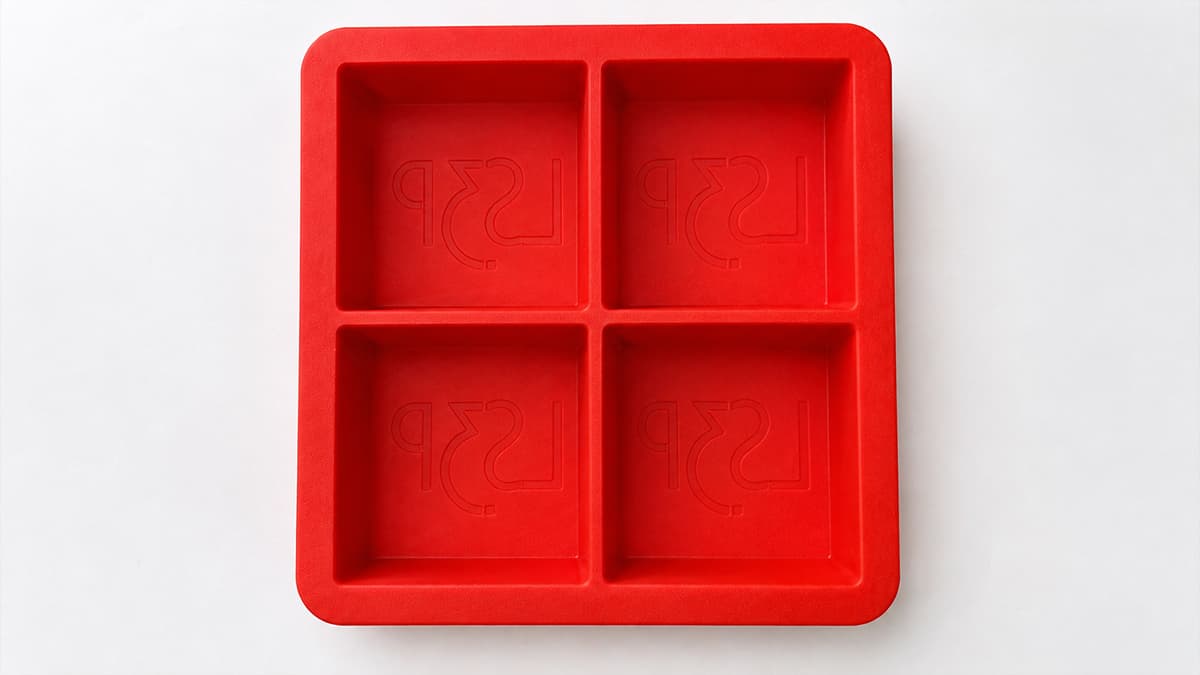
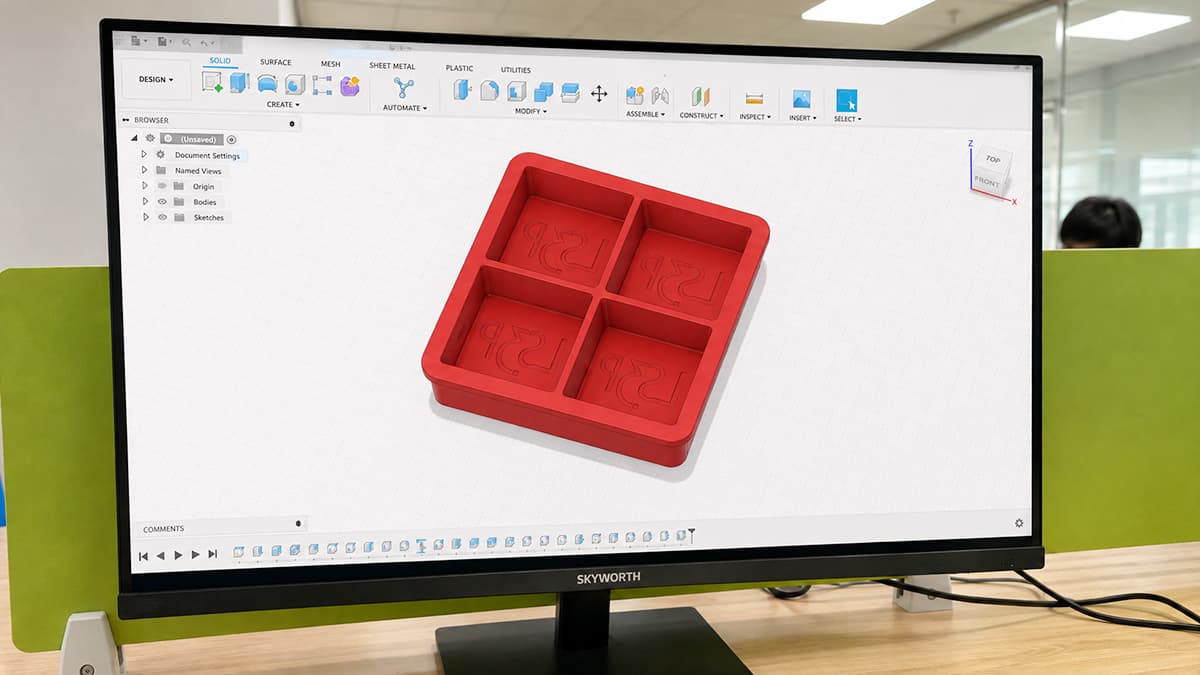
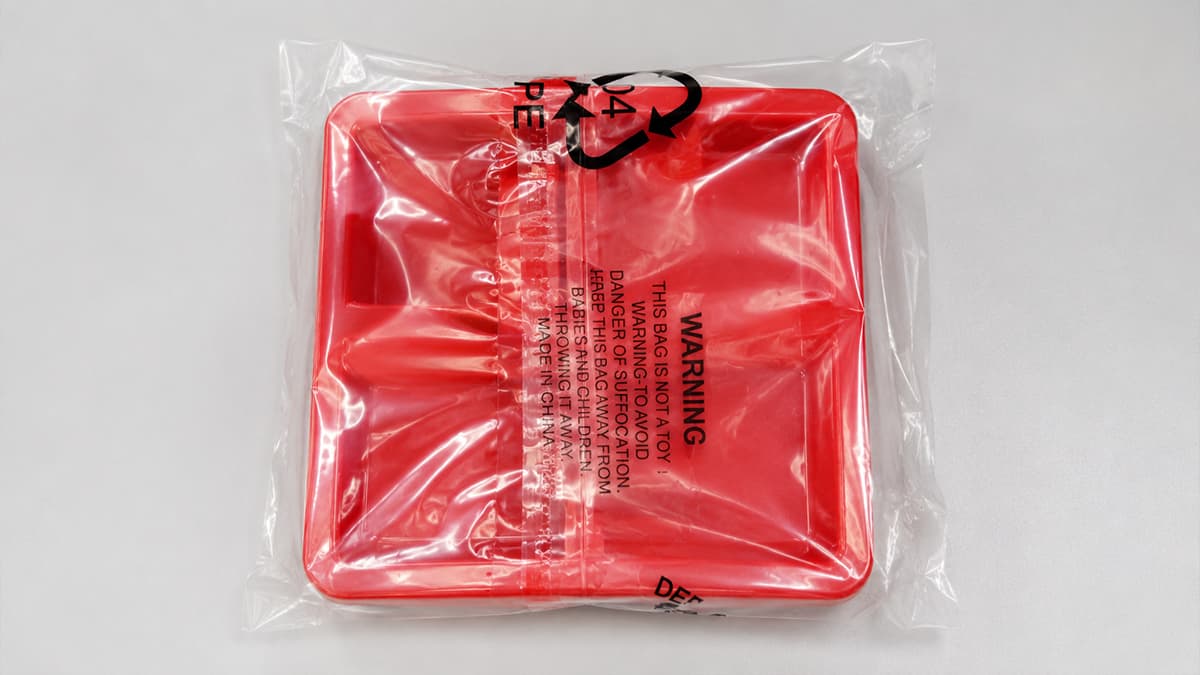
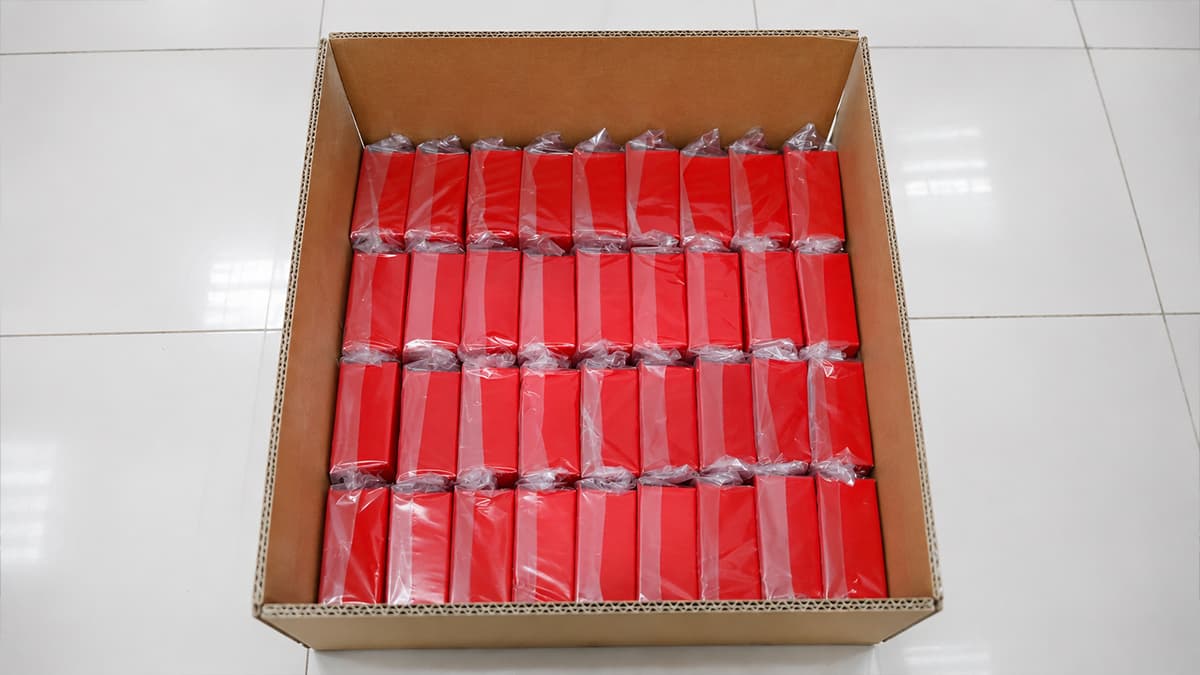
This record covers a red 2-by-2 silicone ice mold associated with an anonymous UK hospitality buyer. The same authorized logo is visible at the bottom of all four square cavities. The supplied project images show the finished product, its 3D design, individual warning-bag packaging and bulk carton packing.
Project Snapshot
| Item | Documented detail |
|---|---|
| Buyer profile | Anonymous UK hospitality buyer |
| Product | Red four-cavity square silicone ice mold |
| Branding | The same authorized logo appears in every cavity |
| Packaging shown | Individual warning bag and bulk carton |
| Evidence boundary | No quantity, timeline, material grade, functional test or customer-feedback claim |
What the Supplied Records Show
The finished-product image provides a direct view of the 2-by-2 tray structure and the repeated logo placement. It shows that the four cavities share a common orientation and that the visible mark is part of the cavity surface.
For a related manufacturing reference, review custom silicone ice mold manufacturing.
The 3D-design image documents the corresponding digital product model. It is evidence of a design stage, but it does not establish why a particular depth or draft angle was selected, whether the ice was tested or whether a buyer approved a sample. Those details remain outside this draft.
The remaining photographs show the red trays in individual warning bags and then arranged in a carton. This confirms the visible packaging configuration without making claims about bag material, carton quantity, shipment or delivery.
Design Considerations for Repeating One Logo
When one logo is repeated across several cavities, consistency begins with one approved master file. A cavity map should define direction, scale and position so that the mark is not mirrored or rotated from one cavity to another. Buyers should also confirm how much detail must remain visible in the molded surface and whether small lines need to be simplified before tooling.
For additional context on this decision, see silicone product quality-control framework.
For hospitality use, the product brief should separately document the intended glassware, desired ice dimensions, service volume and cleaning procedure. Those application details can affect the tray format, but they are not inferred from the photographs in this case.
Inspection planning should distinguish what is visually observable from what requires a functional test. Logo orientation and surface appearance can be reviewed visually. Freezing, release, leakage and repeated-use performance require agreed methods and recorded results before they can be stated publicly.
Buyer Checklist
- Provide one final logo file and written permission to reproduce it.
- Confirm logo direction in every cavity.
- Define acceptable line width, depth and edge treatment.
- Specify tray dimensions, color and silicone requirements.
- Record any freezing, release or durability tests separately.
- Confirm individual bag warnings, labels and carton requirements.
- Keep quantity, timeline and approval records available for the final case review.
For a related feasibility review, see custom logo ice molds for hospitality. Buyers can also review Renjia's silicone product quality-control framework when preparing their inspection requirements.
Before finalizing the specification, use custom logo ice molds for hospitality as an additional planning reference.
Project Inquiry
Send the logo artwork, target ice format, intended use, quantity, color and packaging brief for a project-specific review. The quotation and development plan can then be based on confirmed requirements rather than assumptions.