Key Takeaways
- The best choice depends on use case: daily freezer use, seasonal gifting, or novelty presentation. A largest ice cube tray is only useful if it fits the freezer and releases ice cleanly.
- For daily trays, verify overall footprint, cavity volume, lid fit, stackability, and demolding behavior before focusing on capacity claims.
- For Xmas and dice molds, design detail and packaging matter, but deep cavities and complex geometry can make filling and release harder. Sample approval is essential.
- Custom silicone ice molds can be tailored by cavity design, shape, size, color, logo, and packaging [K1]. MOQ, sample terms, mold fees, and lead times should be confirmed case by case [K3][K5].
- Treat published lead times as planning ranges, not guarantees, and confirm production dates in writing [K5].
1. Introduction
Ice trays have moved well beyond the basic freezer accessory. Buyers now search for a specific ice maker silicon tray for daily use, a Xmas ice cube tray for seasonal retail or gifting, and a 20 sided dice ice mold for novelty drinks, game nights, or promotional products. The search terms look similar, but the purchase logic is different. A tray that works well for batch ice may be too large for a compact freezer. A seasonal mold may look impressive in photos but be difficult to fill or demold. A dice mold may appeal to a niche audience but require more careful sample review.
The phrase largest ice cube tray is especially misleading. “Largest” can mean the biggest overall tray, the biggest individual cube, or the highest total ice output. Those are not the same specification. A tray with a large footprint may not fit a freezer shelf or door bin, while a tray with very large cavities may take longer to freeze and be harder to release. For buyers sourcing custom molds, the challenge shifts again: cavity design, product shape, size, color, logo, and packaging all become project variables [K1]. Renjia’s reviewed product map also lists ice cube trays and ice ball trays within its promotional silicone product range, alongside popsicle molds and soap molds [K2].
This guide compares the three formats by practical use case. It explains what to check before buying, how to compare “largest” claims, and what custom buyers should confirm before sampling or production.
2. Ice Maker Silicon Tray: Daily Use and the “Largest Ice Cube Tray” Question
For daily use, the recommended pick is not the largest tray available. It is the largest tray that fits your freezer, fills without spilling, stacks or stores conveniently, and releases ice without cracking. Many shoppers search for an “ice maker silicon tray” or “silicon tray,” but the product specification usually refers to silicone. The material name matters less than the actual construction: rim stiffness, cavity shape, lid design, and whether the tray can be flexed without tearing.
A practical way to evaluate a largest ice cube tray claim is to separate three measurements:
- Overall tray dimensions — will it fit the shelf, drawer, or door bin?
- Individual cavity dimensions — how large is each cube or shape?
- Total usable capacity — how much ice does the tray produce per freeze cycle?
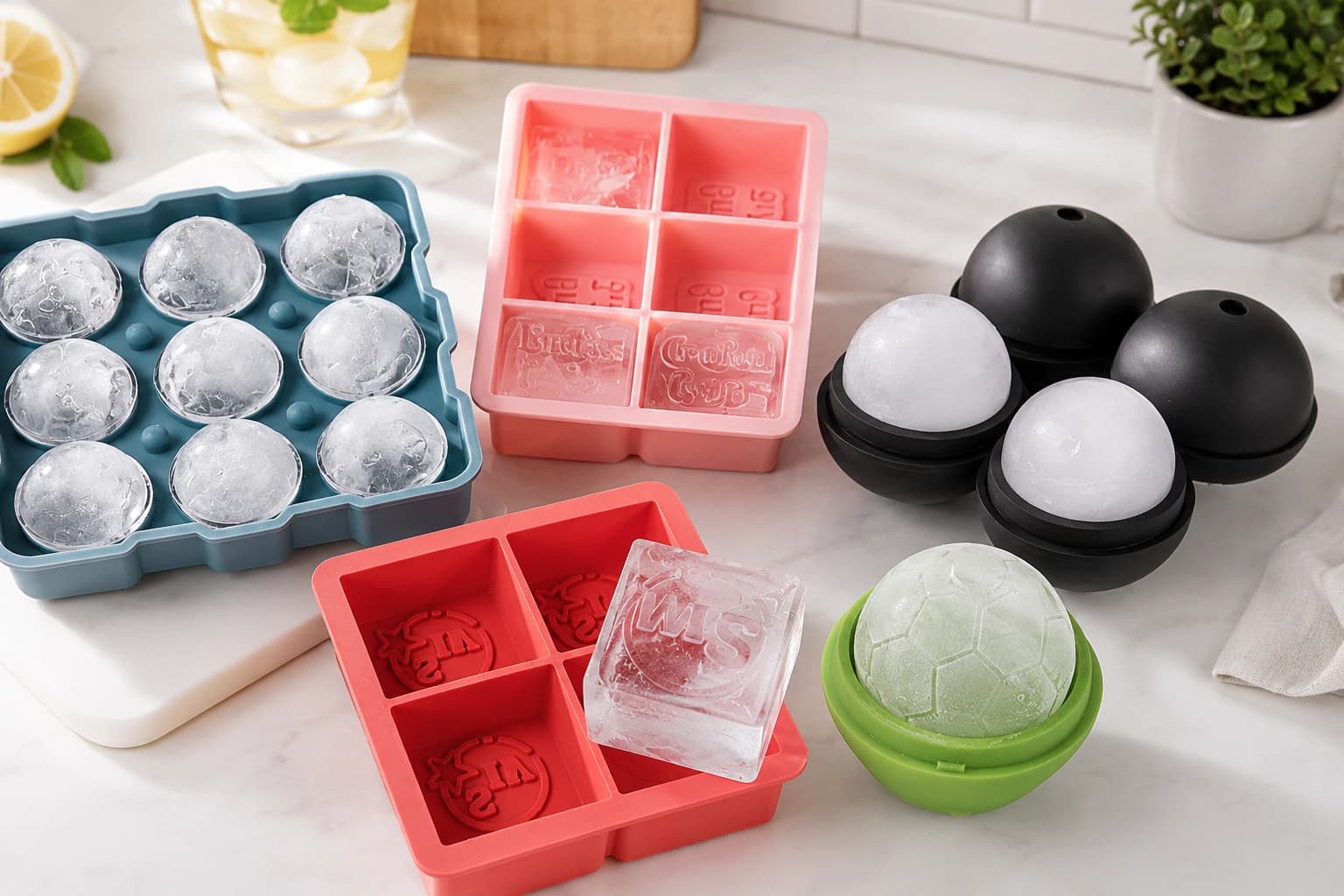
A tray can be large overall but have small cavities, or have large cavities but a footprint that does not fit. For everyday kitchens, measure the freezer space first, then compare cavity volume. If the tray is intended for a household ice bin, check whether the cubes will fit the bin opening and whether the tray can be stacked once filled. If the tray is intended for parties, a larger total capacity may be useful, but only if the tray can be moved safely when full.
Silicone trays also vary in feel and rigidity. A very soft tray may demold easily but feel unstable when full. A stiffer tray may be easier to carry but harder to twist. There is no universal answer; the right balance depends on whether the user prioritizes release, stacking, or large-cube presentation. For retail buyers, packaging and instructions can reduce complaints: include a fill line, a leveling tip, and a note about leaving headspace for expansion.
For buyers moving from retail trays to private label, a custom silicone ice mold project can define cavity design, product shape, size, color, logo, and packaging before tooling [K1]. That is useful when the goal is a differentiated “largest” tray with a specific cavity shape rather than a generic stock item. However, custom size and geometry should be reviewed against freezer fit, demolding, and packaging before a sample is approved.
Recommendation: Choose the “largest practical” tray, not the largest advertised tray. Prioritize freezer fit, release behavior, and a lid or stack design that matches how you store ice.
3. Xmas Ice Cube Tray: Seasonal Design, Gifting, and Private Label
A Xmas ice cube tray succeeds or fails on two fronts: visual recognition and production practicality. The silhouette needs to read clearly as a seasonal shape, but the cavity also needs to fill, freeze, and release without breaking. Fine details such as thin edges, deep undercuts, or narrow passages can make a mold look attractive in a rendering but less reliable in real use. For gift and retail programs, packaging carries as much weight as the mold itself because the product is often bought as a present.
The best seasonal pick is therefore a tray with a recognizable shape, a sensible cavity depth, and packaging that protects the mold and explains use. If the tray will be sold as a gift, check whether the box or sleeve can accommodate a logo, instructions, and seasonal artwork. If it will be used at home, check whether the tray stores flat and whether the cavities are easy to fill without overflows.
For private-label buyers, a seasonal custom silicone mold brief should include shape references, cavity layout, color direction, logo placement, packaging format, and target launch date. Renjia’s customization scope for silicone ice molds includes cavity design, product shape, size, color, logo, and packaging [K1]. Those variables should be agreed before sampling because a late change to shape or packaging can affect tooling and production planning.
Seasonal timing is a common pain point. Renjia’s reviewed commercial terms list stock-sample lead time as usually 1–2 working days, custom-sample lead time as usually 7–10 working days after design and specification confirmation, mass-production lead time as usually 15–20 working days after order and production details are confirmed, and mold lead time as about 15 working days after 3D design confirmation [K3]. These are planning ranges, not guarantees. Buyers should build buffer time for sample approval, packaging proofing, and shipping. They should also avoid assuming that every sample or all freight will be free; sample availability, freight, taxes, and custom-sample charges must be confirmed case by case [K3][K5].
Recommendation: For seasonal gifting, choose a design that balances clear holiday identity with simple cavity geometry. Approve a physical sample and packaging proof before committing to a launch date.
4. 20 Sided Dice Ice Mold: Novelty Geometry and Practical Limits

A 20 sided dice ice mold is a novelty product first and an ice-making tool second. Its appeal comes from recognizable geometry and the social context around tabletop games, bars, promotions, and gifts. That also means the buyer should judge it differently from a standard tray. The key question is not “how large is the cube?” but “does the mold fill evenly, release cleanly, and look like the intended shape after freezing?”
Complex geometry can create air pockets, weak edges, or difficult demolding. A deep dice shape may require a slower fill, a settling step, or a two-part mold design, depending on the concept. These are design and sampling questions, not assumptions to settle from a photo. A 20 sided dice ice mold is usually a custom mold development task rather than a stock-item purchase: the buyer needs to review 3D design, cavity geometry, sample approval, and packaging before production [K1][K3]. For promotional use, packaging may need space for game-themed artwork, instructions, or a brand logo.
Compared with a largest ice cube tray, a dice mold is usually about shape impact rather than total ice output. If the goal is a large cube for whiskey or cocktails, a simple large-cavity tray may be more practical. If the goal is a gift, a branded promotion, or a conversation piece, the dice format can be more distinctive. Buyers should decide which outcome matters more before requesting samples.
Custom-order MOQ for silicone projects is typically around 500 pcs, but final MOQ may vary by design, tooling, packaging, product requirements, and production scheduling [K3]. A mold fee is quoted after the customer’s design files and project requirements are reviewed; a fixed mold fee should not be published before design evaluation [K5]. This is especially relevant for dice molds because geometry changes can affect tooling complexity.
Recommendation: Treat the dice mold as a sample-first novelty project. Confirm geometry, fill method, release behavior, and packaging before scaling. If the use case is everyday ice, choose a simpler tray.
5. Key Comparison and Sourcing Considerations
The table below summarizes the practical differences among the three formats and the “largest” search intent.
| Format | Best for | Specifications to verify | Main watch-out | Customization fit |
|---|---|---|---|---|
| Ice maker silicon tray | Daily household ice, freezer storage | Overall dimensions, cavity size, lid fit, stackability, release behavior | “Largest” may not fit the freezer or may be harder to demold | Cavity design, size, color, logo, packaging [K1] |
| Xmas ice cube tray | Seasonal gifts, retail promotions, holiday hosting | Silhouette clarity, cavity depth, fill line, packaging protection | Fine detail can trap air or complicate release | Shape, color, logo, packaging [K1] |
| 20 sided dice ice mold | Novelty gifts, game nights, branded promotions | Geometry, fill method, air release, demolding, box design | Complex shape may need practice and sample iteration | 3D design, sample approval, tooling, packaging [K1][K3] |
| Largest ice cube tray search target | Batch ice, large-cube presentation | Footprint vs. freezer space, total capacity, weight when full | Biggest tray is not always the most usable tray | Custom size possible after design review [K1] |
Buyer checklist before ordering:
- Measure the freezer shelf, drawer, and door bin before comparing tray dimensions.
- Ask for a physical sample when shape complexity is high, especially for seasonal and dice molds.
- Confirm material and food-contact documentation for the intended market; avoid relying on unsupported certification claims [K4].
- Request written MOQ, sample cost, mold fee, packaging cost, and lead time. Do not treat verbal ranges as fixed commitments [K5].
- Plan seasonal launches backward from the shelf date, with buffer for sample approval and packaging proofing.
- Inspect logo placement, color consistency, and packaging before mass production.
Renjia’s knowledge base supports sourcing topics such as design-file preparation, sampling, tooling, packaging, quality inspection, and custom silicone mold development [K4]. That makes it a useful reference for buyers who need to structure a project rather than simply choose a stock tray.

6. FAQ
Q1. How do I choose the largest ice cube tray for my freezer?
Measure the usable freezer space first, including shelf height, width, and door-bin clearance. Then compare cavity size and total capacity. The best largest ice cube tray is the largest one that fits, can be carried safely when full, and releases ice without damage. Do not choose by overall tray size alone.
Q2. Are silicone ice trays safe for food and drinks?
Safety depends on the material and the documentation provided for the specific product. Ask the supplier for food-contact statements, test reports, and market-specific compliance information. Avoid relying only on phrases such as “food grade” without supporting documents. For custom projects, compliance planning should be discussed without making unsupported certification claims [K4].
Q3. Can I order a custom Xmas ice cube tray or 20 sided dice ice mold with my logo?
Yes, custom silicone ice molds can be customized by cavity design, product shape, size, color, logo, and packaging [K1]. MOQ is typically around 500 pcs, but final MOQ may vary by design, tooling, packaging, and production scheduling [K3]. Sample availability, freight, taxes, and custom-sample charges should be confirmed case by case [K3].
Q4. How long do custom silicone ice molds take?
Reviewed terms list custom samples at usually 7–10 working days after design and specification confirmation, mass production at usually 15–20 working days after order confirmation, and mold lead time at about 15 working days after 3D design confirmation [K3]. These are planning ranges, not guarantees. Confirm dates in writing after project review [K5].
7. Conclusion
The right top pick depends on the job. For daily use, choose an ice maker silicon tray that fits the freezer and releases cleanly; treat “largest ice cube tray” as a fit-and-function question, not a capacity contest. For seasonal retail or gifting, choose a Xmas ice cube tray with a clear silhouette, practical cavity depth, and packaging that supports the price point. For novelty and promotional use, treat the 20 sided dice ice mold as a sample-first custom project where geometry and packaging are approved before production.
Custom buyers should define the cavity, size, color, logo, packaging, MOQ, sample terms, and lead times before tooling. Confirm commercial terms in writing, allow buffer for seasonal launches, and avoid assuming that published ranges are guaranteed dates. With those checks in place, the three formats can serve distinct use cases without competing on the same specification.