Key Takeaways
- A pebble ice tray creates small, rounded ice that chills drinks fast and delivers the crushed-style texture popular in cafés and cocktail bars, without the cost of a countertop ice machine.
- Silicone is a practical material for homemade ice molds. Publicly verified specifications for Renjia's silicone molds list food-contact-grade silicone, an odorless finish, and a temperature resistance range of -40°C to 240°C (-40°F to 464°F) [K5].
- Match the mold to the drink: a pebble ice tray suits fast-chilling, high-aroma drinks such as sodas, iced coffee, and shaken cocktails, while a cylinder ice cube mold is better for slow-sipping spirits where slower dilution matters.
- Ice molds are a cross-category product: they can serve household, kitchen, and promotional use cases depending on branding and design [K2][K4].
- Before buying, confirm the specific product's material, dimensions, and compliance details. A general product diagram does not guarantee that a mold is currently stocked in every market or configuration [K4].
1. Introduction
Crushed-style drinks look effortless behind a bar, but reproducing that texture at home is usually messy. Classic crushed ice requires cracking large cubes with a mallet or bag, and nugget-ice machines cost hundreds of dollars while occupying valuable counter space. That trade-off explains why many home drink-makers are turning to pebble ice trays: small, flexible silicone molds that freeze water into rounded pieces close to the texture of commercial crushed ice.
This article explains how pebble ice changes a drink's temperature and dilution, how to choose between a pebble ice tray and a cylinder ice cube mold, and how to actually make and store crushed-style ice at home. It also covers what to check when sourcing ice molds, including food-grade material claims and OEM customization options, so you can buy with more confidence and less guesswork.
2. Why Crushed-Style Ice and Pebble Ice Are Different
Core conclusion: Ice shape is not just a visual choice. Smaller ice pieces chill drinks faster because they expose more surface area per volume, which changes both the drinking experience and the flavor profile.
A large cube might look elegant in a whiskey glass, but it melts slowly and creates a concentrated, low-dilution sip. Crushed-style ice does the opposite: it cools a drink rapidly and dilutes it more quickly, which is why bars choose it for drinks meant to be consumed fresh, such as mint juleps, tiki cocktails, or fruit sodas. Pebble ice sits in the middle of this spectrum. It is small enough to provide the fast-chill, slightly diluting effect of crushed ice, but its rounded shape means it does not clump into a solid block the way angular crushed ice can.
For home use, the key is recognizing that crushed-style ice is not a single standard product. Some recipes benefit from dense, slow-melting spheres; others need soft, quick-cooling pieces. A pebble ice tray works well when the goal is texture and rapid chilling. By contrast, tools such as a cylinder ice cube mold — a cavity that freezes water into a tall, rounded column — suit drinks where you want less surface area and a slower melt.
From a product standpoint, ice molds are a well-established silicone category. Manufacturer portfolio maps typically list ice cube trays, ice ball trays, popsicle molds, and larger ice block molds across household, kitchen, and promotional product lines [K2]. The practical takeaway: this is not an exotic product. A wide range of shapes, including pebble and cylinder designs, is available in the same food-grade silicone family.
3. Pebble Ice Tray vs. Cylinder Ice Cube Mold: Which One Should You Choose?

Core conclusion: Choose the mold based on how you want the drink to behave in the glass, not just on how you want it to look on Instagram.
For a related manufacturing reference, review custom silicone ice mold manufacturing.
| Consideration | Pebble ice tray | Cylinder ice cube mold |
|---|---|---|
| Typical shape | Small, rounded, pebble-like pieces | Tall column with curved edges |
| Chill speed | Fast — high surface-area-to-volume ratio | Slower — more ice mass per piece |
| Dilution rate | Higher; best for drinks finished quickly | Lower; better for longer sipping sessions |
| Good fit for | Sparkling water, lemonade, iced coffee, shaken cocktails, juleps | Whiskey, bourbon on the rocks, tall spirits-based drinks |
| Releasing effort | Usually simple with flexible silicone | Usually simple with flexible silicone |
| Common customization | Custom shapes, sizes, colors, and logos [K1] | Custom shapes, sizes, colors, and logos [K1] |
The reasoning is straightforward. A pebble ice tray produces a large number of small pieces from a single fill, which makes it efficient for parties where many drinks need to be chilled quickly. The small pieces are also easy to scoop into a glass and are gentle enough not to splash when poured over. A cylinder ice cube mold, on the other hand, produces fewer, larger pieces. Those pieces melt more slowly, making them a better match for drinks meant to be savored over time.
Scenario-based advice:
- If you mainly drink iced coffee, sparkling water, or brightly flavored cocktails, start with a pebble ice tray.
- If you mainly drink spirits or slow-sipping cocktails, a cylinder ice cube mold may deliver the lower-dilution experience you are actually looking for.
- If you want both, you do not need two separate products from different brands. Because silicone mold customization covers cavity design, shape, size, color, logo, and packaging [K1], many manufacturers can supply both formats within the same material line.
4. How to Make Crushed-Style Ice at Home: A Practical Method
Core conclusion: Making pebble ice at home is a reproducible process of filling, freezing, releasing, and storing. Success depends less on the brand of the tray and more on managing water quality, handling, and storage.
Step 1: Choose a food-grade tray with a comfortable cavity size
Check the product's stated material. For silicone molds, the shared specification of food-contact-grade silicone with temperature resistance between -40°C and 240°C provides a useful reference point for what reputable manufacturers can document [K5]. This range matters because the mold must survive both freezing and occasional hot-water cleaning or use with warm ingredients.
Step 2: Use filtered or boiled water for clarity
Tap water that is rich in minerals freezes into cloudy or white ice. That cloudiness is harmless but changes the look of a clear, artisanal drink. If clarity matters, use filtered water or water that has been boiled and cooled once before filling the tray.
Step 3: Fill carefully and freeze flat
Overfilling the tray causes water to expand over the rim and fuse the pebbles together when you release them. Fill each cavity just below the top, place the tray on a flat freezer shelf, and freeze until completely solid. Freezing time depends on your freezer temperature, so a practical minimum is usually several hours; overnight is more reliable.
For additional context on this decision, see OEM customization options.
Step 4: Release by flexing the tray from the bottom
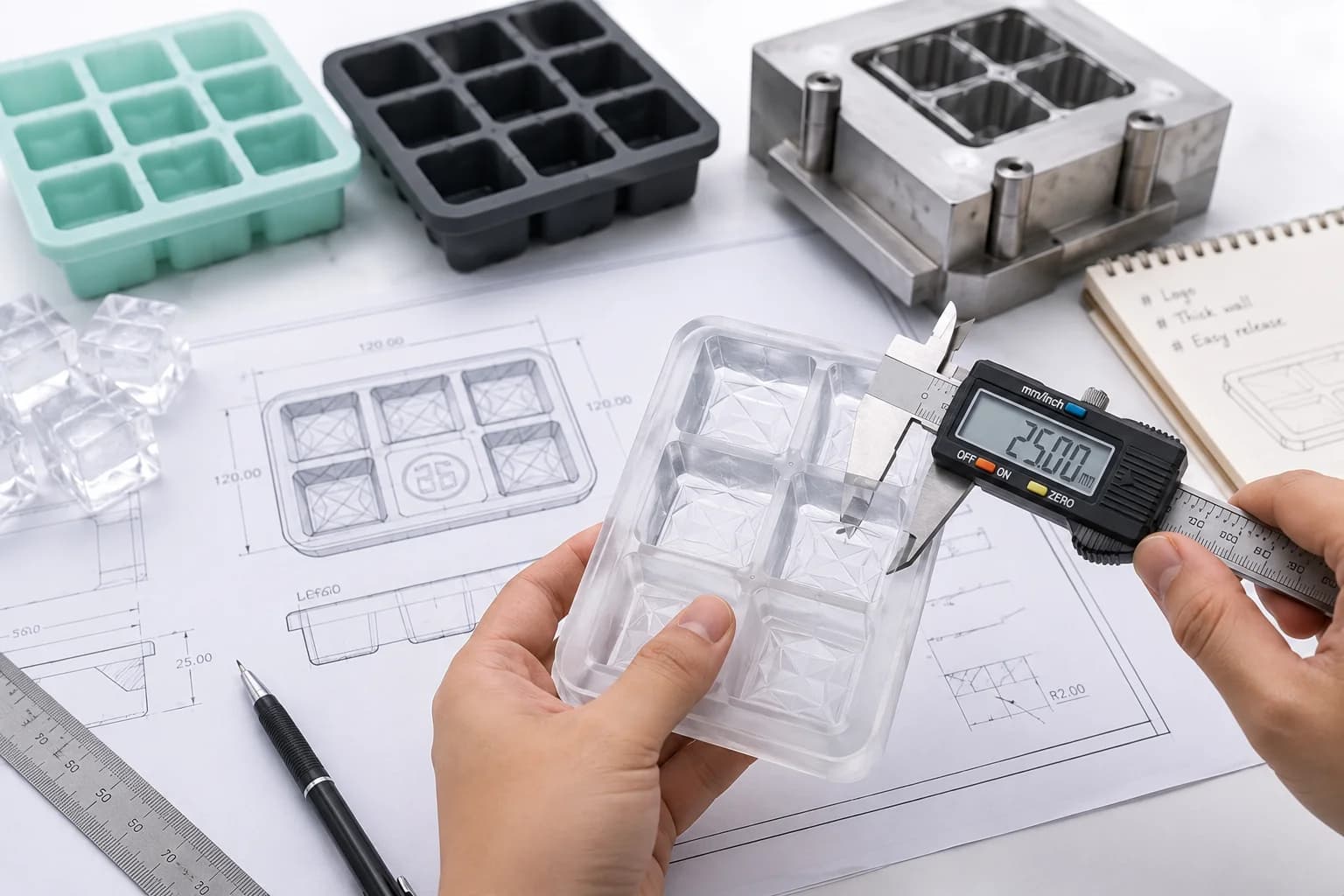
Silicone's flexibility is the main advantage here. Press the bottom of each cavity upward, and most pebbles will pop out without the levering or hot-water bath required for rigid plastic trays.
Step 5: Adjust texture if needed
The term "crushed-style" covers a range of textures. If you want pieces slightly smaller than the pebble shape, transfer freshly released ice into a bowl and apply gentle pressure with the bottom of a mug. You do not need a violent crushing process — pebble ice is already close to crushed-drink texture and needs only light breaking for a finer finish.
Step 6: Store in the freezer in a sealed container
Loose pebble ice in an open bowl will absorb odors from the freezer and may stick together. Use a covered container or a zip-top bag, and always note that small ice has a higher surface area and will clump faster than large cubes.
Practical cautions:
- Small ice melts faster, so pre-chill your glass if you want a longer-lasting drink.
- For sweet or creamy drinks, account for dilution when measuring syrup, milk, or liqueur.
- Do not use a pebble ice tray for hot liquids unless the product's stated temperature range clearly supports it. The referenced spec of up to 240°C is a specification point, not a universal guarantee for every mold on the market [K5][K4].
5. What to Look for When Buying or Sourcing Ice Molds
Core conclusion: Whether you are buying one tray for your kitchen or developing a private-label ice mold line, the same factors matter most: material transparency, confirmed dimensions, customization scope, and realistic lead-time planning.
Buying checklist for a home pebble ice tray
- Material statement: Does the manufacturer explicitly state food-contact-grade silicone? [K5]
- Temperature resistance: Can it handle normal freezer and dishwasher use?
- Cavity size: Are the pebbles the size you actually want for your glassware?
- Tray flexibility: Will it release ice easily without cracking?
- Cleaning guidance: Can you wash it without damaging the product?
What to ask if you are sourcing custom molds
According to the content scope for silicone OEM/ODM projects, buyers commonly need to plan around MOQ, tooling, sampling, and lead time [K3]. In practical terms, this means asking at least three questions before committing:
- What are the mold cavity options — pebble, ball, cylinder, cube, or fully customized shapes? [K1]
- Which customizations are available, including color, size, product shape, logo, and packaging? [K1]
- What are the sampling, tooling, and production timelines for the specific quantity you need? [K3]
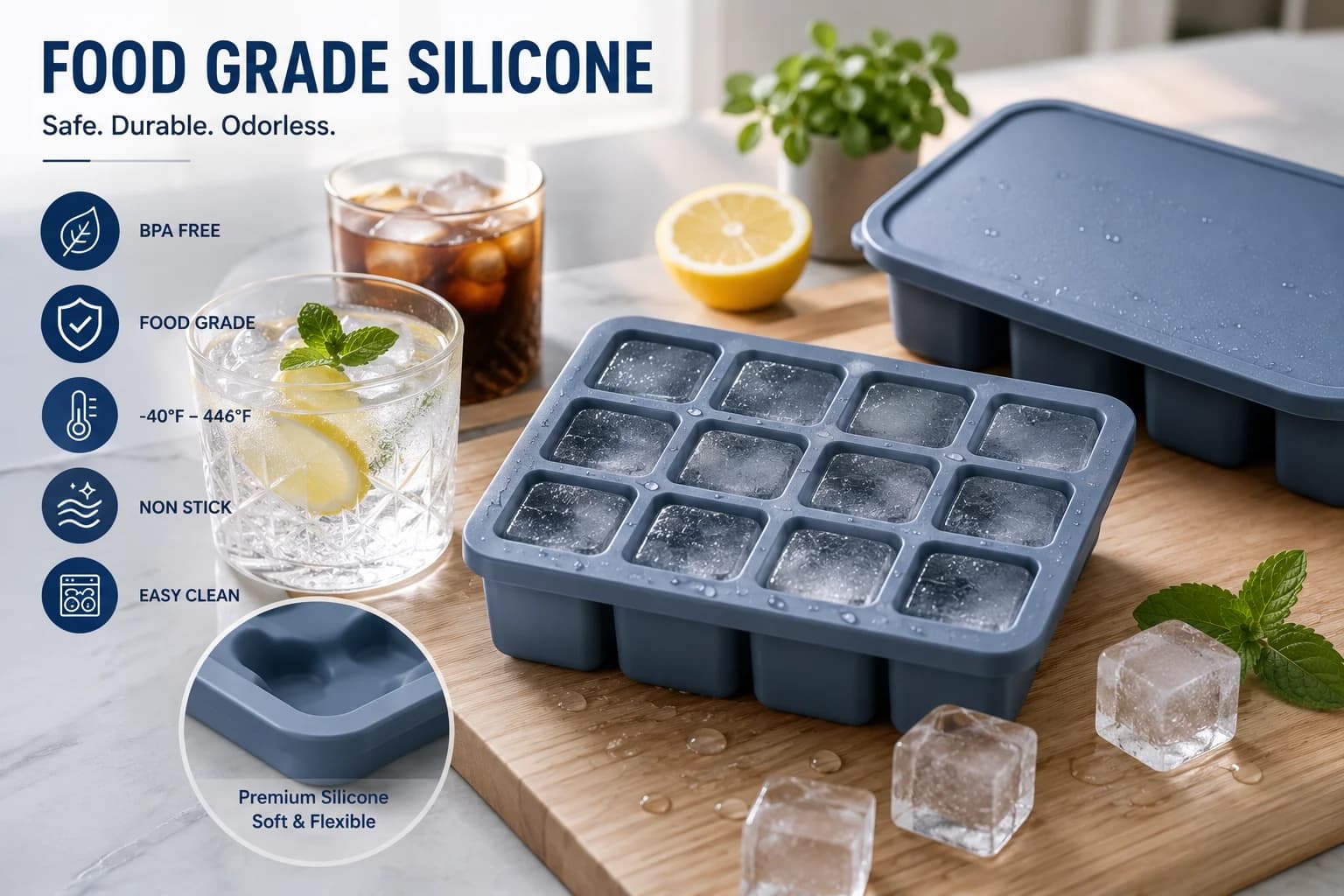
A structured material reference block can help summarize what a verified specification typically includes:
Before finalizing the specification, use buying as an additional planning reference.
| Attribute | Shared reference specification |
|---|---|
| Material | Silicone material |
| Food-contact grade | Food-grade |
| Odor | Odorless |
| Temperature resistance | -40°C to 240°C (-40°F to 464°F) |
| Core specification | Custom sizes available |
| Customization options | Custom colors, custom sizes, custom shapes, custom packaging |
Source basis: Renjia Company & Product Knowledge v2, public verified shared specifications [K5].
One important boundary: product portfolio maps are evidence of a manufacturer's reported product range, not proof that every item is stocked and certified for every market at all times [K4]. If you are planning a branded or bulk purchase, verify current availability, composition, certifications, MOQ, and lead time directly with the supplier before assuming a product can be produced [K4][K3]. The same logic applies to consumer purchases: rely on product-specific labeling rather than a previous version of a product page or a general company diagram.
6. FAQ
Q1. Is pebble ice the same as crushed ice?
Pebble ice is a specific form of small, rounded ice, while crushed ice is a looser category that includes irregular fragments created by breaking larger ice. Pebble ice gives a similar fast-chill effect but is more uniform, easier to scoop, and tends to stick together less than sharp, angular crushed ice. When a drink recipe calls for crushed ice, pebble ice can often substitute successfully, especially in cocktails and cold beverages.
Q2. Can I use a cylinder ice cube mold for crushed-style drinks?
You can, but it will require extra steps. Cylinder ice cubes have lower surface area relative to their volume, so they melt more slowly and chill the drink less aggressively. To approximate crushed-style texture, you would need to break the cylinders after freezing. A dedicated pebble ice tray is the more practical tool when the goal is frequent, consistent crushed-style ice.
Q3. How can I tell whether a silicone ice tray is food-grade?
Look for an explicit food-grade or food-contact statement on the product listing or packaging. A shared specification can list food-contact-grade silicone and an odorless finish, as in the public verified product specification for Renjia's silicone molds [K5]. However, a general category description should not replace product-specific verification [K4]. If the seller does not clearly state the material and compliance details, treat the claim as unconfirmed and ask for the specific document before using it with food or drink.
Q4. Why does silicone ice melt differently from plastic-tray ice?
The material of the mold does not meaningfully change the melting speed of the ice once it is removed from the tray. What changes the drinking experience is the shape and size of the ice. Silicone's real advantage is in the release step: flexible silicone molds make it easier to remove small or detailed shapes without breaking them. Temperature resistance matters more for cleaning and use range than for the ice itself [K5].
7. Conclusion
Crushed-style drinks do not require a commercial ice machine. A well-chosen pebble ice tray gives you the fast-chilling, textured ice that makes sodas, cocktails, and iced coffee feel noticeably better, and it does so without the mess of a mallet or the expense of a dedicated appliance.
The practical decision comes down to drinking habits. If you reach for refreshing, fast-consumed drinks, a pebble ice tray is the better fit. If you prefer spirits that benefit from slow, controlled dilution, a cylinder ice cube mold will serve you better. For many home bars, the smart move is to own both and use each according to the drink.
When buying, focus on verifiable details: food-contact-grade silicone, a realistic temperature range, and a cavity size that matches your glassware. And if you are considering custom molds for a brand, home-based business, or promotional program, remember that reputable manufacturers offer customization across shape, size, color, logo, and packaging [K1], while planning around MOQ, tooling, sampling, and lead time [K3]. Verify the specific product before you order [K4], and the mold you choose will likely become one of the most-used tools in your kitchen.