Key Takeaways
- Ice shape is a functional choice, not just a visual one: spheres and large cubes melt more slowly, while nugget-style pieces chill a drink quickly because they expose more surface area.
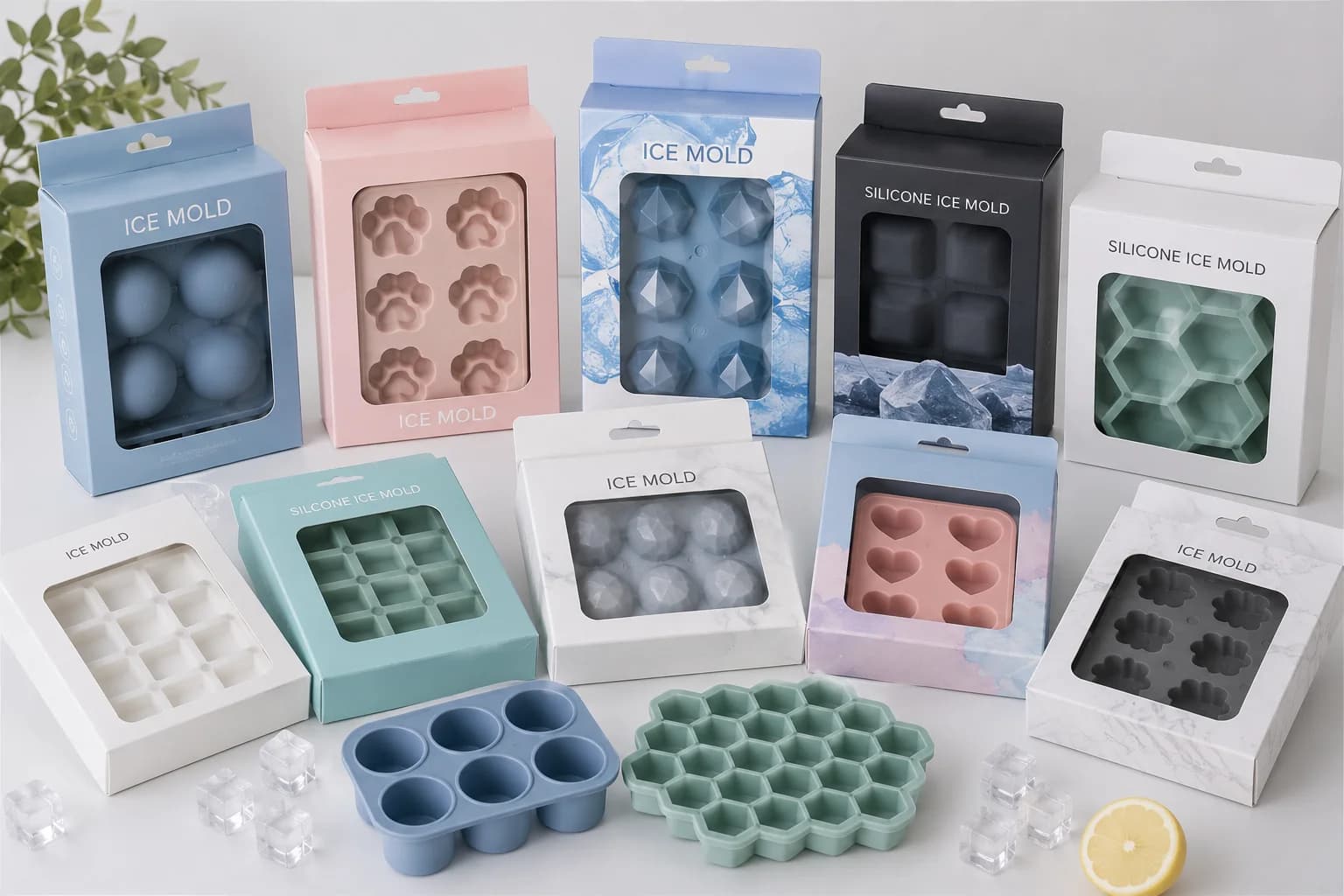
- A “round ice cube tray” can mean small round cubes, hemispherical pieces, or full spheres. Check cavity geometry and dimensions before comparing products.
- Nugget-style silicone trays can make small, fast-chilling ice pieces, but they do not automatically reproduce the texture of a commercial nugget ice machine.
- Large silicone ice cube trays are useful for batch freezing and easy release, but lid fit, base stability, stackability, and freezer footprint matter as much as cavity count.
- For custom or private-label projects, cavity design, shape, size, color, logo, and packaging can be customized, but current availability, material composition, dimensions, certifications, MOQ, and lead time must be confirmed before quoting [K2][K3].
1. Introduction
Ice is not a neutral ingredient. In a spirit-forward drink, a fast-melting cube can turn a carefully balanced pour watery within minutes. In a soda or iced coffee, a large, slow-freezing block may be more ice than the glass needs. The labels on retail and wholesale listings make the choice harder: “round ice cube tray,” “silicone sphere ice cube trays,” and “nugget ice cube tray” sound like variations of the same product, but they produce different ice geometry, different melt behavior, and different drinking experiences.
For home buyers, the common pain points are practical: the tray is too wide for the freezer shelf, the lid does not seal, the spheres crack, or the ice picks up freezer odors. For private-label buyers and foodservice operators, the risks are commercial: a mold that looks right in a photo may release poorly, pack inefficiently, or fail sample approval. This guide compares the main formats by use case, explains what silicone changes, and gives practical checks for buying or customizing large silicone ice cube trays [K2][K4].
2. Round Ice Cube Tray vs. Silicone Sphere Ice Cube Trays: Same Word, Different Jobs
Core conclusion: “Round” is a shape description, not a standard specification. A round ice cube tray may produce small cylinders, hemispheres, or full spheres. Silicone sphere ice cube trays are a more specific category, and they are usually chosen for slow melting and presentation rather than for maximum chilling speed.
The physics is straightforward. A sphere has a lower surface-area-to-volume ratio than a cluster of small cubes of the same total weight, so it tends to melt more slowly and dilute a drink more gradually. That is why a large sphere is often used for whiskey, rum, or spirit-forward cocktails where the drink is sipped slowly. Small round cubes, by contrast, chill faster and are better for soda, iced tea, or shaken cocktails that are already diluted by shaking.
Silicone changes the release experience. A flexible mold can be twisted or pushed from the base to pop out ice that would be difficult to remove from a rigid plastic tray. But flexibility has a trade-off: a large silicone tray filled with water can be unstable when carried. Look for a rigid frame, a reinforced base, or a design that sits flat on a sheet pan during transport. In large silicone ice cube trays, the same principle applies at batch scale: the bigger the cavities, the more important the base support and lid fit become.
Practical advice:
- For whiskey and slow sipping, choose one large sphere cavity per glass rather than many small cavities.
- For cocktails and everyday soda, small round or square cubes are more flexible and chill faster.
- For iced coffee or batch cold brew, large cubes reduce dilution over a longer drinking window.
- Check whether the lid is designed for stacking or only for splash protection; not every lid is leakproof.
- Cloudy or cracked ice can come from trapped air, freezing direction, or temperature shock. Slower freezing and leaving headspace can help, but results vary by freezer and water.
If the shape is being adapted for a brand or a specific glass, the custom silicone ice molds development process usually starts with cavity design and a physical sample, not a catalog name [K2].
3. Nugget Ice Cube Tray: Fast-Chill Pieces, Not a Commercial Nugget Machine
Core conclusion: A nugget ice cube tray is best understood as a small-piece ice tray. It can make chewable, fast-chilling ice pieces for home use, but buyers should not assume it will match the soft, compacted texture of a commercial nugget ice machine.
Commercial nugget ice is produced by a machine that scrapes and compacts flaked ice into small, soft pellets. A silicone tray works differently: water freezes in small cavities, and the resulting pieces are released by flexing the mold. The texture depends on cavity shape, water content, freezing speed, and how the pieces are handled after demolding. A home “nugget-style” tray may produce small rounded or irregular pieces that work well in sodas, cocktails, and smoothies, but the chew and density can differ from machine-made nugget ice.
The functional advantage is speed. Small pieces have more surface area in contact with the drink, so they chill faster than a single large sphere. The trade-off is dilution. In a light mixer, fast-melting small ice can water down the drink quickly. Use nugget-style ice with stronger mixers, citrus, or drinks that are consumed soon after pouring. For children or guests who chew ice, texture and hardness should be considered, but the product should not be described as “soft” unless the specific mold and freezing method have been tested.
For a private-label program, the silicone OEM/ODM sourcing process should define the piece shape, target drink, packaging, and sample approval criteria before tooling [K2][K4]. A buyer should also clarify whether the product is positioned as “nugget-style,” “crushed-style,” or “small round ice,” because those terms imply different cavity designs and different consumer expectations.
Practical advice:
- Use nugget-style trays for fast chilling, not for long, slow sipping.
- Pre-chill the glass or use chilled liquid to reduce the amount of ice needed.
- Avoid filling small cavities above the recommended line if the tray lacks a rigid frame.
- For gifting or retail, packaging should explain the texture difference clearly to prevent returns.
4. Large Silicone Ice Cube Trays: Capacity, Release, and Freezer Fit
Core conclusion: Large silicone ice cube trays solve two problems well—batch freezing and easy release—but they require more planning than small trays. The best choice is the one that fits the freezer, supports the filled mold, and releases ice without cracking.
Large cavities hold more water, which means more weight and longer freezing time. A full tray may need to sit level during transport, and a flexible tray without a rigid base can spill. A lid helps with stacking and odor protection, but it should be evaluated for fit rather than assumed to be airtight. If the tray is stored on a freezer shelf with limited headroom, measure the shelf and door clearance before buying. Cavity count is less useful than cavity dimensions and tray footprint.
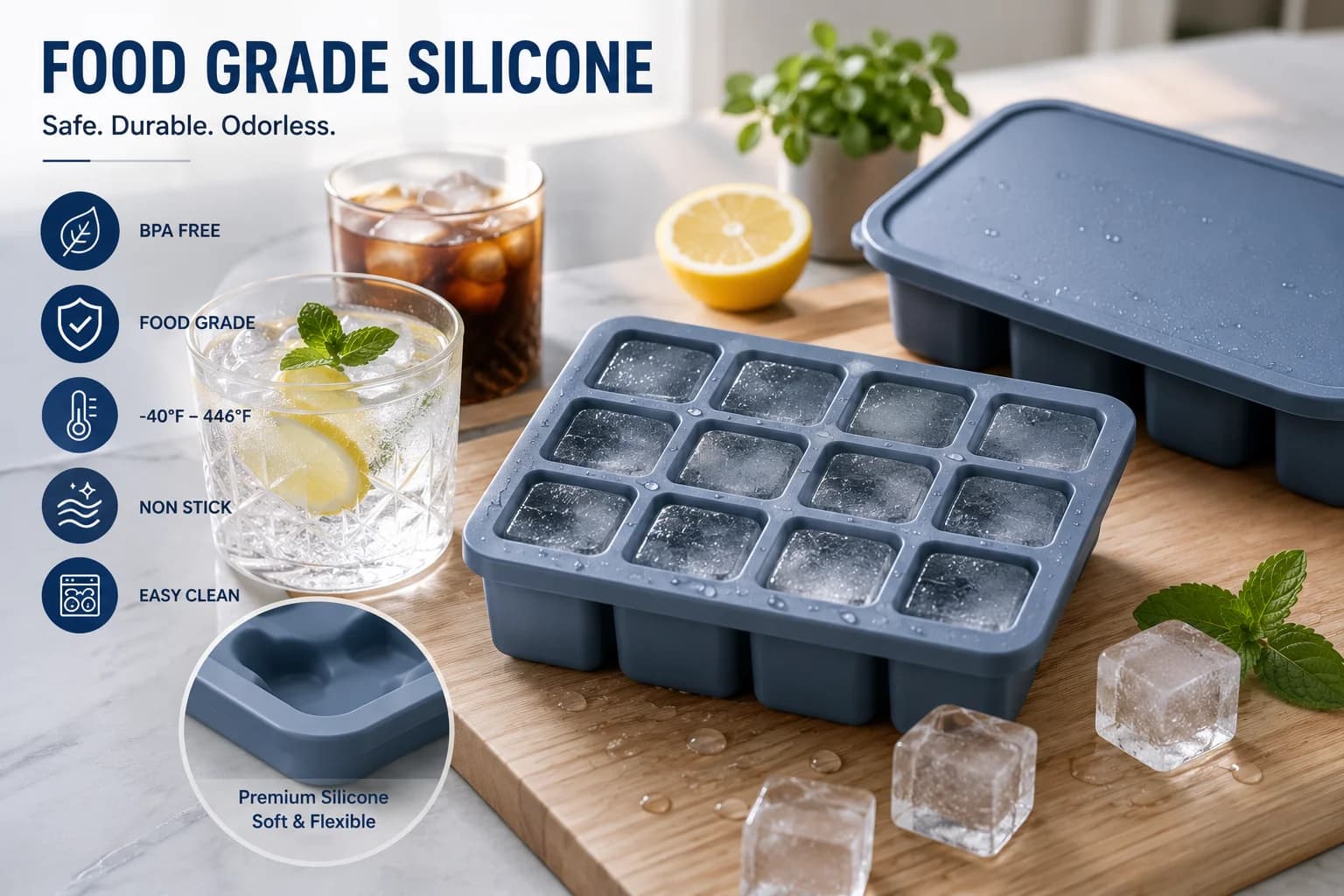
Material and construction also matter. Silicone is valued for flexibility and release, but not all silicone products are identical. Buyers should confirm food-contact suitability, temperature range, wall thickness, and cleaning instructions for the specific product. A very soft mold may release ice easily but feel unstable when full; a stiffer mold may be easier to carry but harder to demold. For large silicone ice cube trays, the balance between softness and support is a key sample-approval point.
Renjia’s reported product portfolio maps ice block molds under household products and ice cube trays and ice ball trays under promotional products [K1]. The same knowledge base notes that ice molds can be tagged under household, kitchen, and promotional use cases, so a single product can serve multiple channels [K3]. That is useful for product planning, but it is not a stock guarantee. A silicone product portfolio can help shortlist categories, but current availability, material composition, dimensions, certifications, MOQ, and lead time must be confirmed before publishing a product-specific page or quotation [K3].
Practical advice:
- Measure the freezer shelf, door clearance, and stacking height before choosing a large tray.
- Prefer a tray with a rigid frame or place the filled mold on a sheet pan.
- Check whether the lid is for stacking, odor protection, or leak resistance; these are different functions.
- For private label, request a sample and test release, cracking, lid fit, and cleaning before approving tooling.
5. Key Comparison: Choosing by Use Case and Verification
The fastest way to choose is to start with the drink and the freezer, not the product name.
| Format | Best for | Melt behavior | Main watch-out |
|---|---|---|---|
| Small round cube tray | Soda, iced tea, shaken cocktails | Moderate to fast | Can dilute light drinks quickly |
| Silicone sphere tray | Whiskey, rum, spirit-forward cocktails | Slow | Bulky; can crack if frozen or handled poorly |
| Nugget-style tray | Fast chilling, small-piece texture, sodas | Fast | Texture differs from commercial nugget ice |
| Large cube tray | Pitchers, batch cold brew, punch, display | Slow | Needs freezer space and a stable base |
Use this buyer checklist before ordering:
- Define the primary drink and desired melt speed.
- Measure freezer shelf, door, and stacking clearance.
- Confirm cavity shape, dimensions, count, and tray footprint.
- Check lid function: splash protection, stacking, or leak resistance.
- Verify food-contact suitability and temperature range for the specific product.
- For custom projects, confirm cavity design, color, logo, and packaging options [K2].
- Ask about MOQ, tooling, sampling, and lead time before committing [K4].
- Approve a physical sample for release, cracking, odor, and lid fit.
- Confirm current availability rather than assuming every portfolio item is stocked [K3].
6. FAQ
Q1. Are round ice cube trays and sphere ice cube trays the same?
Not necessarily. “Round” can describe small cylinders, hemispheres, or full spheres. A sphere tray is a more specific shape. Check the cavity geometry and dimensions, because a small round cube and a large sphere behave differently in a drink.
Q2. Do silicone nugget ice trays produce the same ice as a commercial nugget ice machine?
No. A home tray freezes water in small cavities, while a commercial nugget machine produces compacted flake ice. A tray can make small, fast-chilling pieces, but the texture and chew may be different. Position the product honestly as “nugget-style” unless the specific result has been tested.
Q3. What should I verify before sourcing large silicone ice cube trays?
Verify cavity design, dimensions, material composition, food-contact claims, temperature range, MOQ, tooling, sample approval, packaging, and lead time [K2][K4]. Also confirm current availability; a portfolio diagram is evidence of reported range, not proof that every item is stocked for every market [K3].
Q4. Why do large ice spheres crack?
Cracking can come from freezing expansion, trapped air, or temperature shock when the ice is removed or placed into a warm drink. Leaving appropriate headspace, using a lid, and tempering the ice briefly before use can help, but some cracking is normal and does not always indicate a mold defect.
7. Conclusion
The right ice format depends on how you drink, how much freezer space you have, and whether you are buying for home use or for a private-label program. For slow-sipping spirits, a silicone sphere tray is the more logical choice. For soda, cocktails, and fast chilling, a nugget-style or small-cube tray is more practical. For pitchers, batch cold brew, and entertaining, large silicone ice cube trays offer capacity and release—provided the tray is stable, the lid fits, and the footprint matches your freezer.
For commercial buyers, the decision should move from product name to specification: cavity design, sample approval, material verification, packaging, MOQ, and lead time [K2][K4]. “Perfect chill” is not a universal mold; it is the format that fits the drink, the freezer, and the verification process behind the product.