Key Takeaways
- A small ice ball mold produces spheres sized for small glassware — rocks glasses, 8–10 oz tumblers, and narrow whiskey nosing glasses — so the ice chills the drink without filling the glass or touching the rim.
- Shape is only part of the melt story. A sphere has a lower surface-area-to-volume ratio than a cube of the same volume, which generally means slower, more gradual dilution — but total ice volume, freezer temperature, and how long the drink sits matter just as much.
- For whiskey tasting, the useful rule is control: one small ball when you want a chilled pour with restraint, and no ice at all when you are evaluating a spirit neat.
- For buyers and brand owners, a custom small ice ball mold is a product-development project, not a catalog order. Cavity design, sampling, tooling, packaging, and inspection are the normal path from concept to production [K1][K2].
- Verified baseline specifications for food-contact silicone molds in the Renjia knowledge base include food-grade silicone, odorless material, −40°C to 240°C (−40°F to 464°F) temperature resistance, and custom sizes, colors, shapes, and packaging [K5].
1. Introduction
Whiskey drinkers and small-glass hosts run into the same problem: standard ice is the wrong size for the glass. A full-size cube from a domestic tray wedges into a rocks glass, pushes the liquid level up, and often hits the nose of the drinker. Crushed ice chills fast but dilutes fast too. The result is a pour that is either too warm or too watery within a few minutes.
A small ice ball mold addresses this by changing the geometry and the footprint at the same time. The sphere is compact enough for small glassware, and because a sphere exposes less surface area per unit of volume than a blocky shape of equal volume, it tends to release water more gradually.
This article explains three things for two different audiences. For drinkers and home hosts, it covers why a small ball suits whiskey tasting and small glasses, what it realistically does to flavor, and how to choose a mold that actually releases the ice. For brand owners and sourcing teams, it covers how a whiskey ice cube maker or ice ball mold moves from design review to production, what to confirm before quoting, and where the common failure points are [K1][K2].
2. Why a Small Ice Ball Fits Small Glasses Better
Core conclusion: for glasses in the 8–10 oz range, ice diameter is a fit problem before it is a chilling problem. A sphere that is too large for the glass cannot be fixed by any other feature.
The practical constraints are simple geometry:
- Rim clearance. Ice should sit below the rim so the drinker's nose is not blocked and the glass can be tilted for sipping.
- Liquid displacement. Every unit of ice volume displaces liquid volume. In a small glass, a large ball can raise the level enough to make the pour look fuller than it is.
- Surface contact. A sphere touches the glass at one point rather than along a flat face, which leaves room for the liquid to circulate and reduces the "ice wedged in the glass" effect.
This is why a small ball mold is usually a better match for a rocks glass or a small tumbler than a large-format sphere mold designed for punch bowls or wide cocktail glasses. It is also why ice molds are treated as cross-category products in the Renjia portfolio map — they appear under household, kitchen, and promotional use cases, and the category placement should not limit where they are positioned in a product line [K3][K4].
For a manufacturing view of mold structure, branding, and production planning, review RENJIA’s custom silicone ice mold manufacturing capabilities.
Scenario-based advice: measure the glass before choosing a mold. Pour the intended serving of liquid into the glass, then estimate the remaining headroom. If the headroom is less than the intended ball diameter, step down a size or accept that the pour must be shorter. For tasting flights, a smaller ball also lets you serve several glasses with consistent chill without overfilling any of them.
3. What a Sphere Does — and Does Not Do — for Whiskey Tasting
Core conclusion: ice in whiskey is a tool for controlling temperature and dilution, not a measure of quality. Understanding the trade-off lets you choose deliberately.
Whiskey responds to temperature in ways that matter to tasting. Chilling tends to mute volatile aromatics, which can soften harsh edges on young or high-proof spirit but can also flatten the complexity of an older whiskey. Adding ice also adds water over time, and a small amount of water can open up certain whiskies while too much dilutes them into a thin, flat pour.
A sphere's contribution is pacing. Because a sphere has a lower surface-area-to-volume ratio than a cube of the same volume, water enters the drink over a longer period, giving the drinker more control. That said, three caveats keep this claim honest:
- Volume dominates. A large cube can still dilute more slowly than a tiny ball. If the ball is small, it will melt faster than a big block regardless of shape.
- Temperature dominates. Ice from a very cold freezer (and a pre-chilled glass) melts more slowly than ice from a marginal freezer.
- Agitation and time dominate. Swirling, sipping, and letting a glass sit on a warm table all accelerate melt more than shape does.
Scenario-based advice:
| Tasting intent | Recommended approach | Why |
|---|---|---|
| Evaluating a spirit neat | No ice; small splash of water if needed | Preserves aromatics and avoids dilution drift |
| Wanting a chilled but structured pour | One small ice ball, remove after 2–3 minutes | Chill without turning the pour watery |
| High-proof or cask-strength whiskey | One small ball, added slowly | Gradual dilution can open up the spirit |
| Warm room or slow sipping session | Larger ball or a pre-chilled glass and small ball | Extends the window before over-dilution |
4. Choosing a Small Ice Ball Mold: What to Check Before You Buy
Core conclusion: the difference between a mold that works daily and one that sits in a drawer usually comes down to release behavior, material quality, and how the mold is stored.
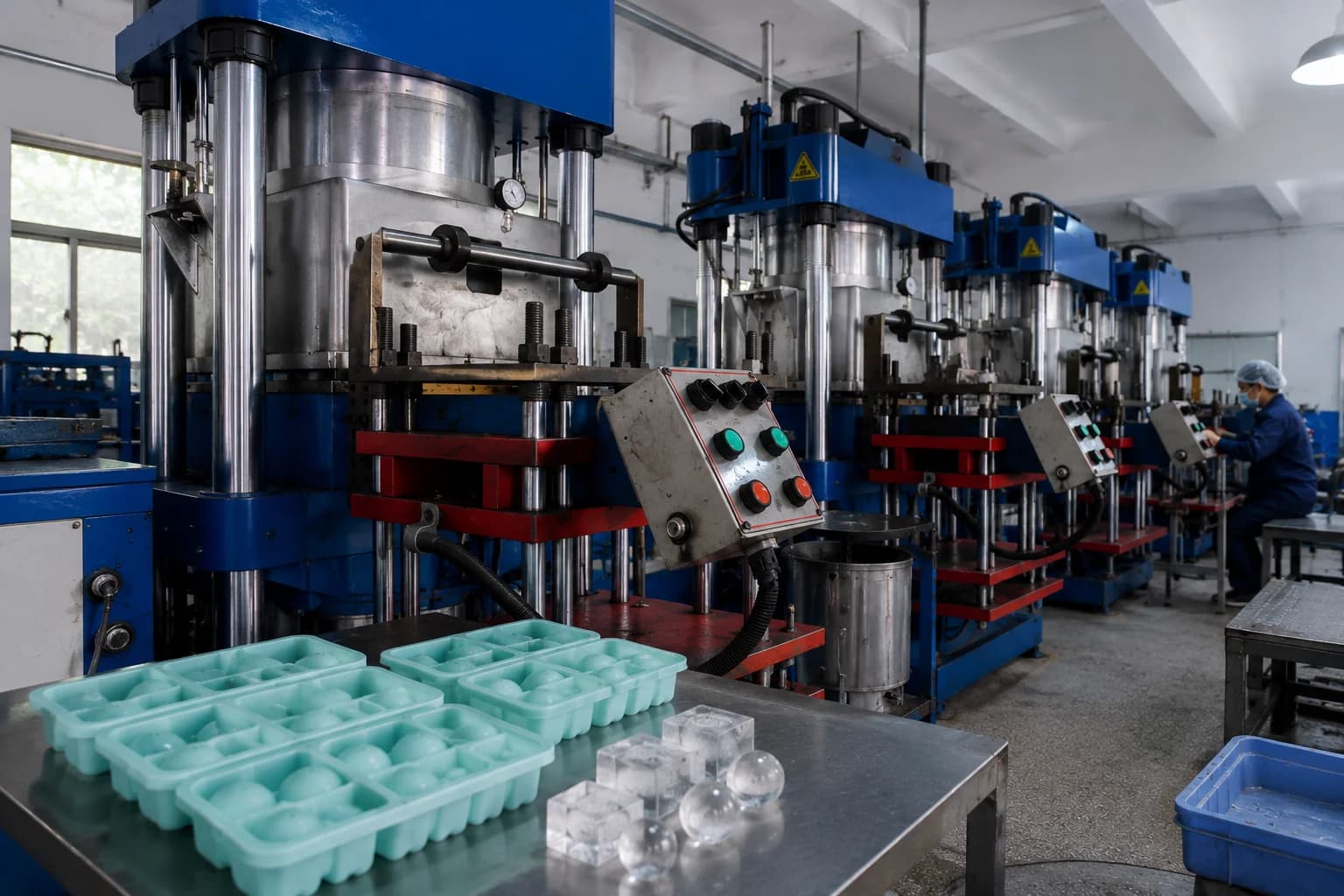
Silicone is the common material for ice ball molds because it flexes, which lets you push the sphere out without cracking it. The verified baseline for food-contact silicone in the Renjia knowledge base includes food-grade silicone, odorless material, and temperature resistance from −40°C to 240°C (−40°F to 464°F) [K5]. That range covers both freezer use and dishwasher cycles, which matters for hygiene.
Buyers turning a concept into an RFQ can compare these decisions with RENJIA’s OEM silicone product customization process.
A practical buyer's or user's checklist:
- Release design. Look for a mold that opens or peels rather than one that requires twisting. A seam line across the sphere is normal but should not be so deep that the ball splits.
- Cavity count and format. Single-ball molds, multi-cavity trays, and lidded trays each serve different users. A lidded tray stacks better and reduces freezer odor pickup; a single mold is easier to fill and unmold.
- Water and filling. Fill to the marked line and leave expansion room. Overfilled cavities produce flat-topped "balls" and overflow in the freezer.
- Odor neutrality. Ice absorbs odors from the freezer. An odorless material [K5] plus a closed container or lid reduces this risk.
- Size confirmation. "Small" is not a specification. Confirm actual cavity dimensions before ordering, especially if the mold is intended for a specific glass [K4].
- Cleaning. Check whether the mold is dishwasher-safe in practice and whether residue collects in the seam.
Important boundary condition: the Renjia portfolio map is evidence of a reported product portfolio, not proof that every item is currently stocked or available in every market. Availability, material composition, dimensions, certifications, MOQ, and lead time must be confirmed before publishing a product-specific page or issuing a quotation [K4].
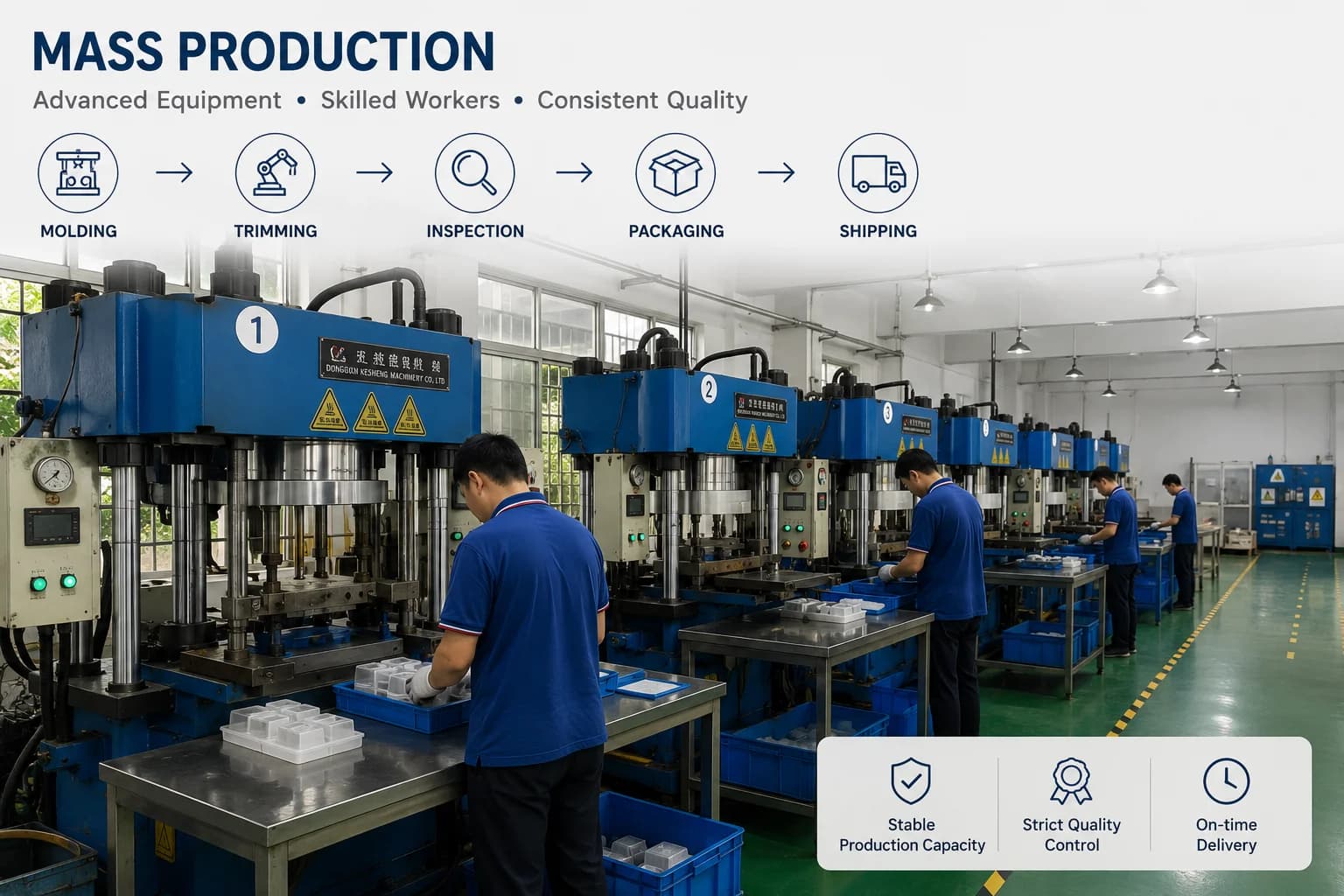
5. From Concept to Production: How a Custom Ice Ball Mold Project Runs
Core conclusion: a custom small ice ball mold is developed the same way as other custom silicone products — through cavity design, sampling, tooling, and inspection — and the timeline is driven by those stages, not by the mold's small size.
The customization levers are well defined. Typical customization for custom silicone ice molds includes cavity design, product shape, size, color, logo, and packaging, with an internal reference framework such as RJ-CIM-001 for the product category [K1]. For a whiskey ice cube maker aimed at a specific brand, the same levers apply.
A typical development sequence:
- Design review. Confirm the intended ball diameter, the target glassware, cavity count, and whether the mold will be sold as a tray, a single mold, or a kit with a storage box.
- Design-file preparation. Provide artwork, logo placement, and packaging specifications. Content topics supported by the knowledge base include design-file preparation and packaging development for custom silicone products [K2].
- Sampling. A sample lets you test release behavior, seam quality, and dimensional accuracy before committing to tooling. Sample approval is a distinct step from pre-shipment inspection [K2].
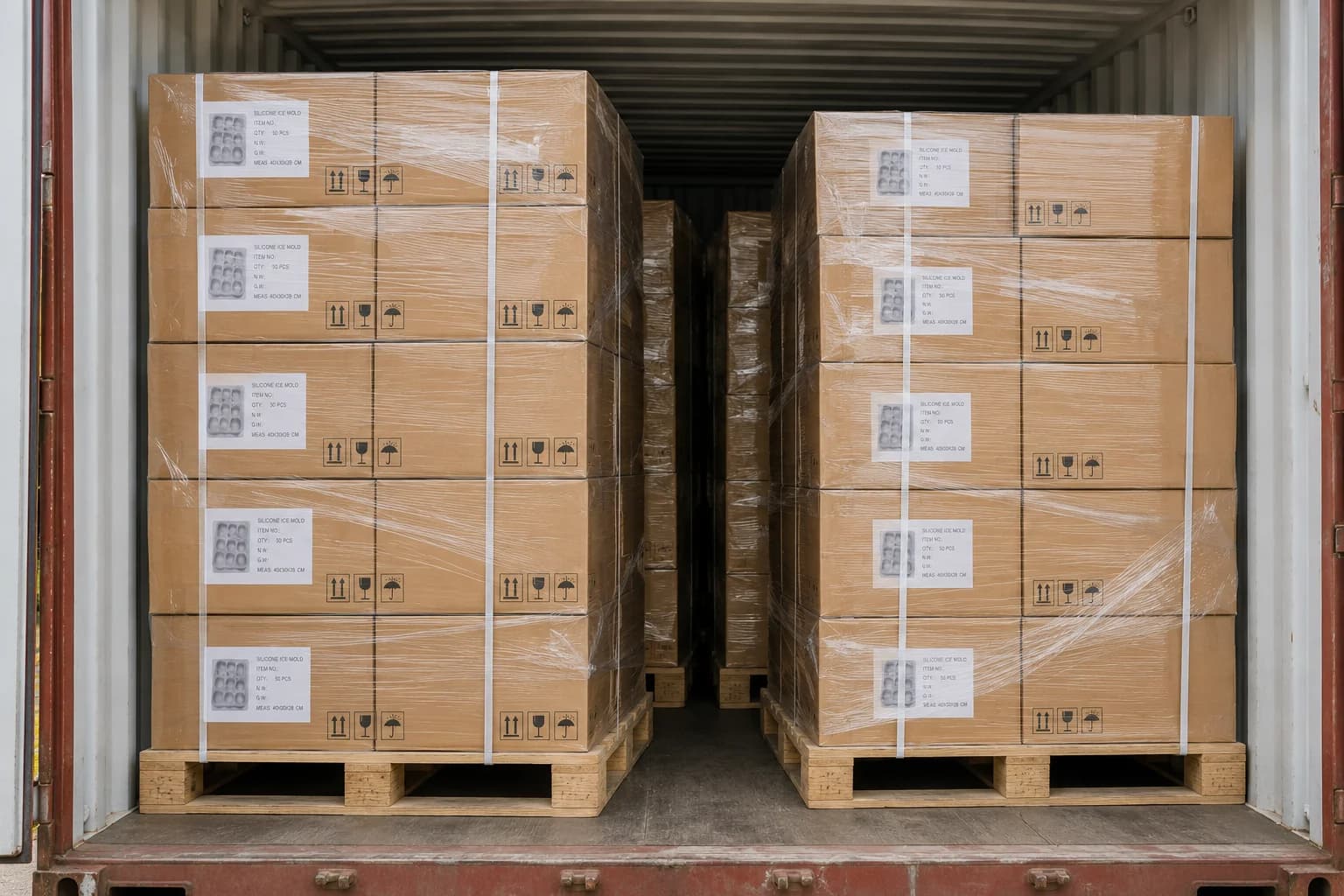
- Tooling. Tooling decisions follow the approved sample. Tooling, sampling, and lead-time planning are separate line items in project planning, and MOQ should be discussed at this stage rather than after tooling [K2].
- Production and packaging. Private-label development, custom colors, shapes, sizes, logos, artwork, and packaging are all in scope for silicone OEM/ODM projects [K1][K2].
- Inspection. Use a buyer checklist for sample approval and pre-shipment inspection so that the standard is defined in writing before mass production [K2].
Two cautions worth stating plainly. First, market-specific compliance planning should be handled without unsupported certification claims — confirm what applies to your destination market rather than assuming a claim carries over [K2]. Second, ice molds sit across household, kitchen, and promotional categories, so a single product can support multiple go-to-market positions; do not let one category label restrict the merchandising plan [K4].
Before approving mass production, align the specification with a documented silicone product quality control plan.
6. Key Comparison: Ice Formats at a Glance
| Format | Typical fit | Dilution behavior | Best use |
|---|---|---|---|
| Small ice ball | Small glasses, 8–10 oz tumblers, tasting flights | Gradual; controlled by ball size and freezer temperature | Whiskey tasting, sipping sessions, small pours |
| Standard cube | Most glasses | Moderate; flat faces melt along edges | Everyday drinks, mixed drinks |
| Large sphere / block | Wide cocktail glasses, punch bowls | Slowest of the three, at equal volume | Long sipping, presentation pours |
| Crushed or nugget ice | Any glass | Fastest | Rapid chilling, iced cocktails, non-spirit drinks |
The table reflects general geometry and use-case logic, not measured performance data. Actual melt rate depends on volume, freezer temperature, glass temperature, and how long the drink is left standing.
7. FAQ
Q1. Does a whiskey ball actually melt more slowly than a cube?
At the same volume, yes in principle — a sphere has less exposed surface area per unit of volume than a cube, so water enters the drink more slowly. In practice, volume and freezer temperature matter more than shape. A small ball will melt faster than a large cube. The reliable approach is to control total ice volume and start with well-frozen ice and a chilled glass.
Q2. Is silicone safe for freezing and for contact with drinks?
For food-contact silicone products, the verified baseline in the Renjia knowledge base is food-grade silicone, odorless material, and temperature resistance from −40°C to 240°C (−40°F to 464°F), with custom sizes available [K5]. Buyers should still confirm the specific product's material composition and documentation for their target market before making claims [K4].
Q3. Can I order a custom small ice ball mold with my logo and packaging?
Yes — customization for custom silicone ice molds typically covers cavity design, shape, size, color, logo, and packaging, and private-label development, artwork, and packaging preparation are supported project types [K1][K2]. Expect MOQ, tooling, sampling, and lead-time planning to be part of the discussion [K2].
Q4. What size ball should I choose for a small glass?
There is no universal number, because glassware varies. Measure the headroom above your intended pour, then select a cavity size that leaves rim clearance and does not push the liquid above a comfortable level. Confirm the actual cavity dimension with the supplier rather than relying on a size label [K4].
8. Conclusion
A small ice ball mold earns its place for one straightforward reason: it matches the geometry of the glass. In small tumblers and rocks glasses, fit and rim clearance decide whether the drink works, and a compact sphere solves both while delivering a slower, more controllable release of water than an equal volume of cubed ice.
For drinkers, the practical next step is to pick one ball size that fits your usual glassware, pre-chill the glass, and use a single ball when you want a chilled pour with restraint — no ice when you want the spirit neat.
For brand owners and sourcing teams, treat the mold as a developed product rather than a purchased item. Define the cavity, approve a sample, plan tooling, MOQ, and lead time, and set an inspection standard before production starts [K1][K2]. Confirm current availability, material composition, dimensions, certifications, MOQ, and lead time for the specific item, since the portfolio map describes a reported product architecture rather than a live stock list [K4]. Begin with a verified specification set — food-grade silicone, odorless, −40°C to 240°C, custom sizes, colors, shapes, and packaging [K5] — and build the product brief from there.