Key Takeaways
- A large-format ice cube tray is usually the better choice for volume and batch prep, while a 20-sided dice ice mold is better for theme, novelty, and photo-friendly serves.
- “Largest” is not a universal specification. Compare usable water capacity, cavity count, freezer footprint, and demolding difficulty before buying.
- Diamond ice golf balls and other premium shapes can lift the look of a party, but they require more careful filling, freezing, and release than standard cubes.
- Custom silicone ice molds can be developed around cavity design, shape, size, color, logo, and packaging, with typical custom-order MOQ around 500 pcs [K1][K3].
- Food-contact claims should be matched to the exact material, finished product, intended use, and target market; a test report for one silicone sample is not automatic approval for every ice mold [K4][K5].
1. Introduction
Party ice is rarely just “frozen water.” It affects drink temperature, dilution, presentation, and the pace of service. Hosts often run into the same problems: the freezer is full of small trays, cubes come out cloudy or cracked, novelty molds are difficult to release, and the ice runs out before the toast. Event planners and beverage teams face a second layer of complexity: they need consistent shapes, reliable supply, and documentation that fits the target market.
This guide compares two attention-grabbing formats—the largest ice cube tray and a 20-sided dice ice mold—and explains where diamond ice golf balls and other specialty shapes fit into a practical party ice plan. It is written for home hosts, bar operators, promotional product buyers, and private-label teams who want a clear decision framework rather than vague product claims. The goal is to help you choose the right format, plan enough ice, avoid common demolding failures, and ask better sourcing questions.
2. Format Strategy: When a Large Tray Beats a Novelty Mold
Core conclusion: Use a large-format tray when volume, uniformity, and fast batch preparation matter. Use a 20-sided dice ice mold when the ice is part of the entertainment, theme, or brand experience.
A large ice cube tray earns its place at parties because it produces multiple large pieces in one freeze cycle. Large cubes are often preferred for whiskey, highball-style drinks, punch bowls, and self-serve bars because they look substantial and can reduce the frantic refill rhythm of small-cube trays. The trade-off is freezer space. A tray that is “largest” by cavity count may not fit a compact freezer once the door closes, and a tray with very large cavities may take longer to freeze fully. Before buying, measure the usable interior of the freezer, including door clearance and shelf height.
The 20-sided dice ice mold is a different tool. Its value is visual and social: the shape signals game night, tabletop events, launch parties, or themed cocktails. It is not usually the most efficient way to make two hundred drinks. Novelty molds often have narrow details, undercuts, or deep cavities that trap air and make release harder. For a party, test one full batch at least 48 hours ahead. If the dice edges break or the center stays cloudy, adjust fill level, water temperature, and freeze time before the event.
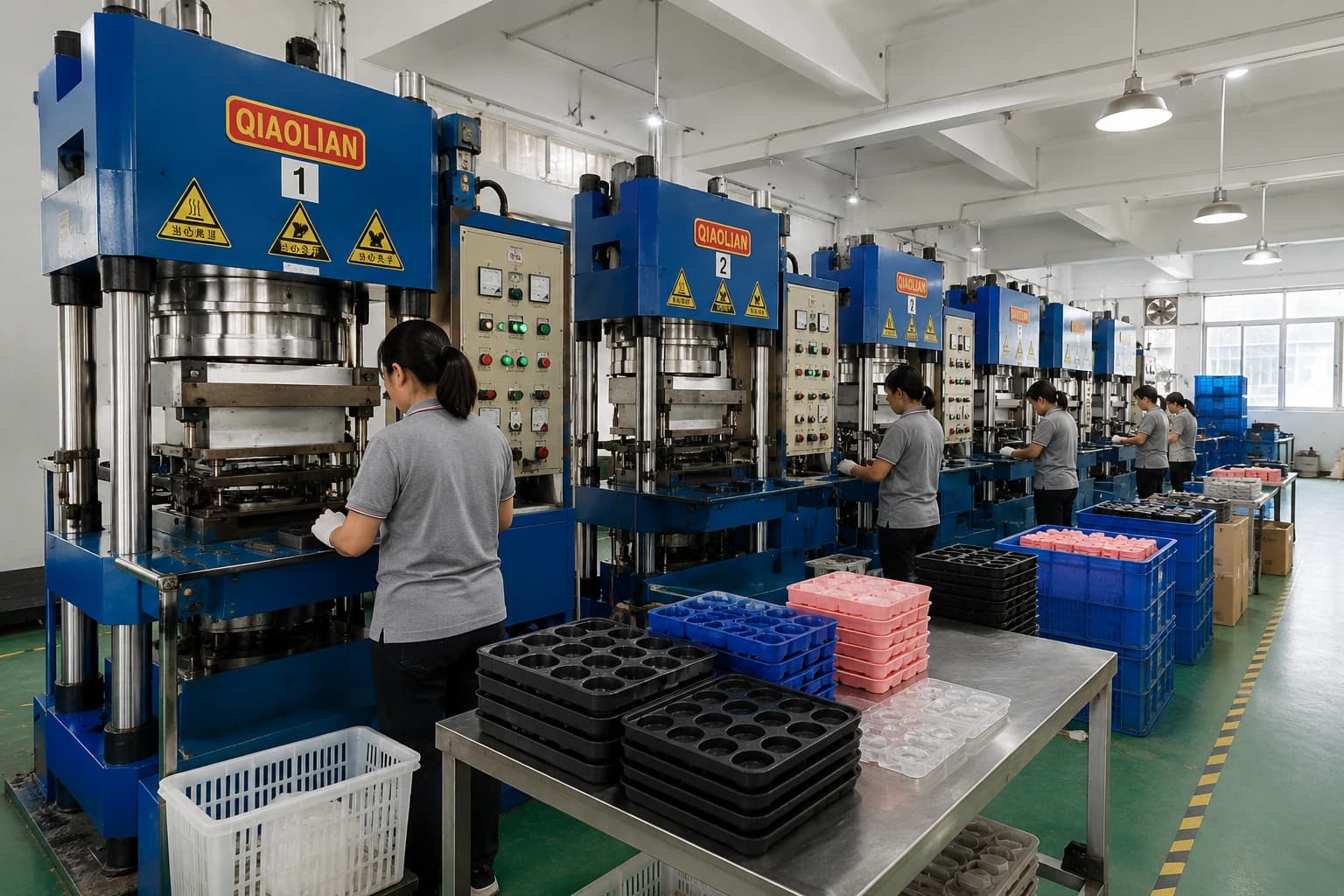
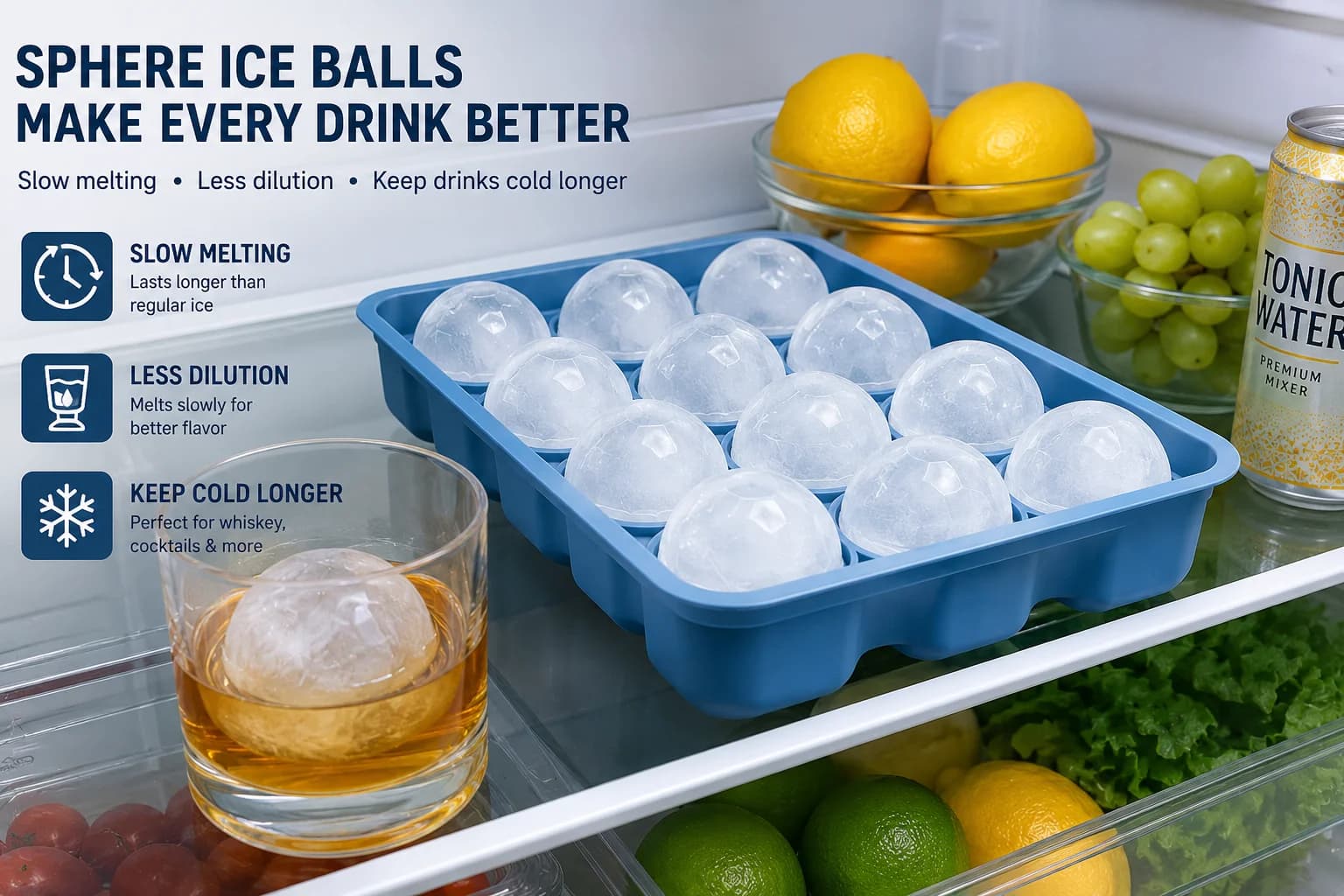
Diamond ice golf balls occupy a similar premium/novelty space. They are often chosen for upscale bars, golf-themed events, and gift-ready drink service because the faceted shape reads well in a glass. The practical caution is consistency: faceted or spherical molds can be harder to fill without air pockets, and release requires patience. Tempering the mold for a minute or two at room temperature—without forcing the ice—often helps. For buyers exploring shaped formats, a custom silicone ice mold development program can define cavity design, product shape, size, color, logo, and packaging before tooling [K1].
Recommendation: For a mixed-party menu, use one large tray for service volume and one novelty mold for presentation. Do not rely on a single dice mold to carry the whole event.
3. Design and Material Decisions That Affect Party Ice
Core conclusion: The mold material, cavity geometry, and fill line matter more than the marketing name on the box.
Silicone is popular for ice molds because it flexes during demolding. However, not all silicone molds behave the same way. Wall thickness, cavity depth, surface texture, and the rigidity of the supporting frame affect how easily ice releases. A very deep dice cavity may need a slower freeze and a longer tempering step than a shallow cube cavity. A large tray with a thin rim can twist and spill if it is carried full from the sink to the freezer. Look for a stable base or place the mold on a sheet pan before filling.
For custom projects, the product knowledge base for Renjia’s custom silicone ice molds identifies typical customization areas: cavity design, product shape, size, color, logo, and packaging [K1]. That means a buyer can move beyond a generic cube tray toward a branded dice mold or a diamond ice golf ball format, but the design file should be reviewed for demolding angles, fill capacity, and packing method. The same source lists ice cube trays, ice ball trays, popsicle molds, soap molds, and silicone bracelets as promotional products, while ice block molds appear in household products [K2]. This portfolio context is useful: it shows that ice-format sourcing sits within a broader silicone product environment, not an isolated category.
Clarity is a separate issue. Cloudy ice usually comes from dissolved air, impurities, or fast freezing. Practical controls include filtered water, filling molds slightly below the rim, and freezing on a level surface. Directional freezing—freezing in an insulated cooler with the top open, then cutting into cubes—can improve clarity, but it is a batch process rather than a tray process. For party service, clear ice is a presentation choice; food safety and proper freezing remain the priority.
Recommendation: Ask for a physical sample before a large order. Test release, fill line, freezer fit, and washing method. For a silicone OEM/ODM production planning discussion, bring your target cavity size, expected order quantity, packaging format, and target market so the factory can assess tooling and scheduling [K3].
4. Party Planning and Custom Sourcing Workflow
Core conclusion: Plan ice by service style, not by tray count alone, and confirm compliance wording before publishing product claims.
A useful party ice estimate starts with the drink format. A highball or mixed drink served over large cubes may need two to three pieces per guest, plus backup for refills. A punch bowl or bottle-service setup may need a larger block or a dedicated ice bucket. A dice-mold cocktail garnish may need only one piece per drink, but breakage and rejects reduce usable output. A practical rule is to produce 20% more novelty pieces than you expect to serve, then store them in a freezer bag or insulated container so they do not absorb odors.
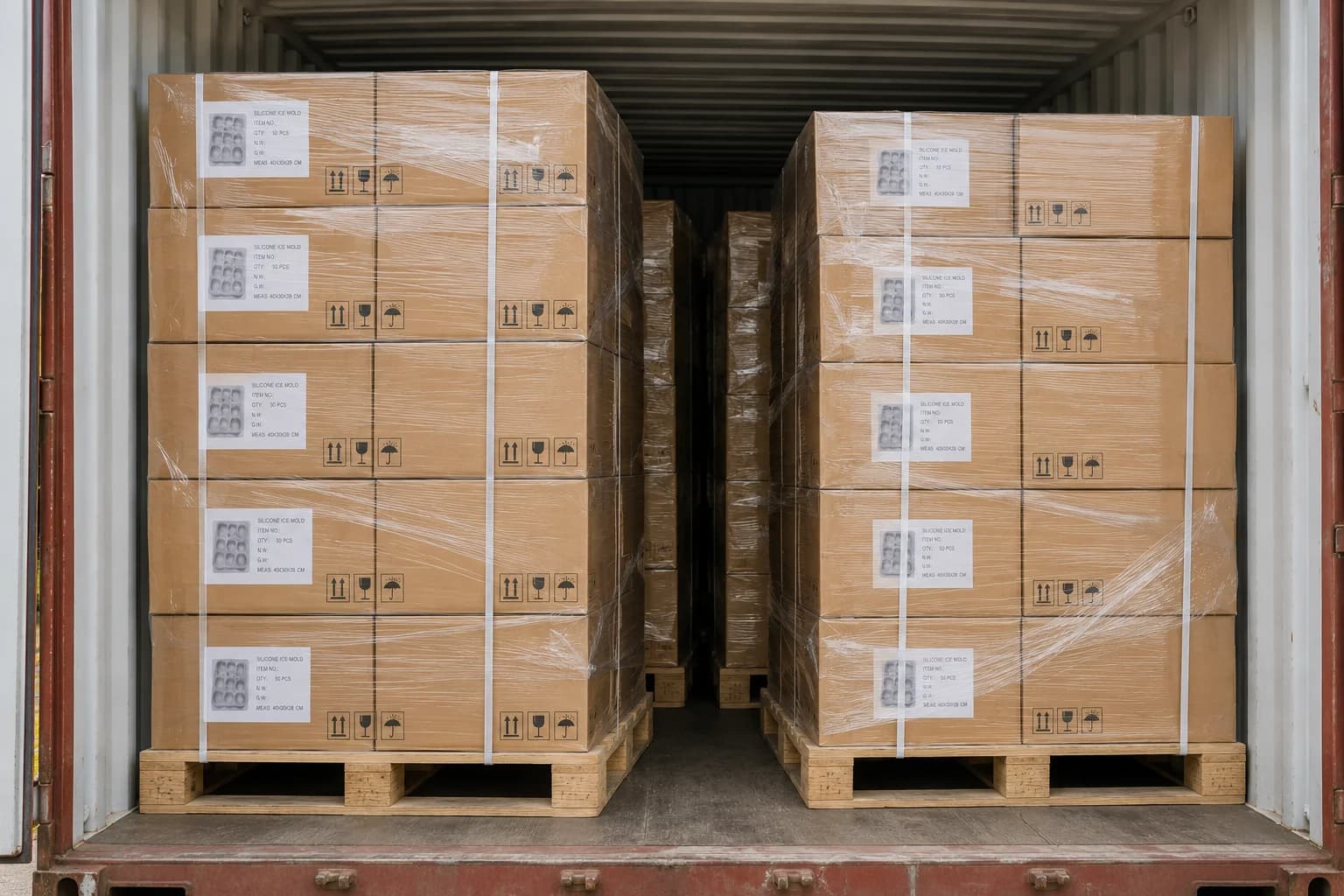
For a custom order, the commercial sequence is usually design review, sample, tooling, mass production, and packaging. Renjia’s published commercial terms state that custom-order MOQ is typically 500 pcs, with final MOQ varying by design, tooling, packaging, product requirements, and production scheduling [K3]. Stock-sample lead time is usually 1–2 working days, custom-sample lead time is usually 7–10 working days after design and specification confirmation, mold lead time is about 15 working days after 3D design confirmation, and mass-production lead time is usually 15–20 working days after order and production details are confirmed [K3]. These are planning ranges, not guarantees; confirm them against your event date and shipping route.
Compliance deserves its own checkpoint. Renjia’s product-specific evidence includes BACL report 2601R31742E, issued 2026-03-27, for a submitted sample described as LFGB silicone material; the report lists an overall food-contact test program pass, including sensorial examination, color release, total lead and cadmium, platinum catalyst residue, polycyclic aromatic hydrocarbons, and volatile organic matter [K4]. The report file name describes a silicone baking mold, but the report itself identifies the submitted sample as LFGB silicone material, so public wording should follow the report description unless the exact finished-product linkage is confirmed [K4]. For general marketing, the reviewed safe wording is that compliance testing and documentation can be supported according to product type and target market [K5]. Buyers should request food-contact compliance documentation for the specific material, finished product, intended use, production order, and target market rather than reusing a report for an unrelated mold [K5].
Recommendation: Build a simple ice plan: volume format, novelty format, backup quantity, storage method, and compliance review. Assign one person to test demolding and one person to confirm documentation before the event or launch.
5. Key Comparison / Method / Considerations
| Format | Best party role | Planning advantage | Main caution |
|---|---|---|---|
| Largest ice cube tray | Batch service for highballs, whiskey, punch, self-serve bars | Produces multiple large pieces per freeze cycle; easy to standardize | Freezer footprint and fill weight; large cavities need full freeze time |
| 20-sided dice ice mold | Game night, themed cocktails, photo moments, branded activation | Strong visual identity; encourages social sharing | Air pockets, narrow details, and demolding breakage |
| Diamond ice golf balls | Premium bar service, golf events, gift sets, upscale garnish | Faceted shape adds perceived value and visual interest | Consistency and release are harder than standard cubes; test before volume production |
| Standard cube tray | Everyday backup and fast refills | Low cost, flexible, easy to store | Less visual impact; faster dilution in large drinks |
Method for choosing a format:
- Define the drink service: batch dispenser, seated table service, cocktail bar, or bottle service.
- Measure freezer space and estimate usable output per freeze cycle.
- Test one sample batch for fill line, freeze time, clarity, and release.
- Calculate backup quantity, especially for novelty shapes with breakage risk.
- For custom orders, confirm MOQ, sample timing, mold timing, mass-production timing, packaging, and compliance documents [K3][K5].
6. FAQ
Q1. How much ice should I plan per guest?
A practical starting point is two to three large pieces per guest for mixed drinks, plus a 20% backup for refills, breakage, and warm weather. Novelty pieces such as a 20-sided dice cube or diamond ice golf balls may need a higher backup rate because demolding losses are more common. Adjust upward for outdoor events, punch bowls, and self-serve stations.
Q2. Can I order a custom dice ice mold with my logo?
Yes, custom silicone ice molds can be developed with cavity design, shape, size, color, logo, and packaging customization [K1]. Typical custom-order MOQ is around 500 pcs, but the final MOQ depends on design, tooling, packaging, product requirements, and production scheduling [K3]. Request a sample before committing to a full production run.
Q3. Does a food-contact test report cover every silicone ice mold?
No. A report applies to the sample and scope described in that report unless the exact finished-product linkage is confirmed. The BACL report 2601R31742E describes a submitted LFGB silicone material sample and lists food-contact tests passing, but it should not be presented as blanket certification for every finished ice mold [K4]. Compliance testing and documentation can be supported according to product type and target market, with applicability confirmed for the selected material, finished product, intended use, production order, and target market [K5].
Q4. How long does a custom ice mold project take?
Plan around 7–10 working days for a custom sample after design and specification confirmation, about 15 working days for mold lead time after 3D design confirmation, and 15–20 working days for mass production after order and production details are confirmed [K3]. Stock samples usually take 1–2 working days, subject to availability and shipping arrangements [K3]. Event dates and shipping routes should be built into the schedule.
7. Conclusion
The largest ice cube tray and the 20-sided dice ice mold solve different party problems. The large tray is a volume tool: it helps you prepare a batch of substantial cubes for service, punch, or self-serve bars. The dice mold is a presentation tool: it creates a theme, a photo moment, or a branded experience. Diamond ice golf balls sit in the premium novelty space, where shape and perceived value matter more than raw output.
A sensible party ice plan uses both logic and testing. Measure the freezer, calculate output per cycle, test demolding before the event, and keep a backup format such as standard cubes. For custom sourcing, confirm the cavity design, sample timing, MOQ, packaging, and compliance documents against the exact product and market. That approach keeps the ice interesting without turning it into the weakest part of the party.