Key Takeaways
- The size and shape of your ice changes how fast a pour dilutes. A single large cube has less surface area per unit of volume than several small cubes, so it releases water into the whiskey more slowly.
- Silicone molds release large cubes and spheres more reliably than rigid trays, which matters because a cracked or stuck cube usually gets thrown away.
- The mold material affects release, freezing speed, and durability — it does not change how fast the finished cube melts once it is in the glass.
- For brands, custom silicone ice molds are developed through cavity design, shape, size, color, logo, and packaging decisions, followed by design review, sampling, tooling, and production [K1].
- Commercial terms such as MOQ, tooling fees, sampling, and lead times vary by project and should be confirmed in writing before they are published or promised [K4].
1. Introduction
Whiskey is a drink where small variables matter. A few degrees of temperature, a few milliliters of water, and a few minutes of waiting all change what you smell and taste. Ice sits right at the center of that balance. Add too much of it, or the wrong shape, and a pour that started bright and aromatic turns thin and flat before you reach the last third of the glass.
This is why attention has shifted from ice as an afterthought to ice as equipment. An ice tray whisky drinkers actually rely on is not just a freezer accessory. It is the tool that decides how fast dilution happens, how the glass looks on the table, and whether the last sip resembles the first.
Two groups care about this. The first is the home drinker who wants a large, clean cube without buying specialty ice. The second is the brand, bar, or retailer sourcing custom silicone ice molds at volume — for packaging, promotions, or a private-label product line [K1][K3]. Their questions are different, but they overlap: what shape works, what material holds up, and how do you plan a project without guessing at costs and timelines?
This article answers the practical questions: why ice geometry changes the drinking experience, how silicone compares with plastic and metal, how to make clearer ice at home, and how custom ice mold projects move from a design file to production.
2. Why Ice Geometry Changes What You Taste
Core conclusion: The single most important ice decision is not "how cold" but "how much surface area." Larger, fewer pieces chill a pour while diluting it more slowly.
Ice melts from its surface inward. A shape with a low surface-area-to-volume ratio — a large cube or a sphere — exposes less ice to the liquid at any moment than the same volume of water frozen into small crescent or chip shapes. That geometric difference is the main reason a 2-inch cube behaves differently from six small ones in the same glass.
There are three practical consequences:
- Dilution control. Whiskey often benefits from a small amount of water, which can soften harsh alcohol notes and open up aromatics. The goal is not zero dilution — it is controlled dilution. A large cube gives you a slower, more predictable curve, so the drink changes gradually while you sip.
- Temperature stability. A larger mass of ice holds its temperature longer and keeps the pour cold without a rapid temperature crash followed by a watery finish.
- Glass fit and presentation. A single clear cube or sphere reads as intentional. That has real value in a bar setting and in product photography for a private-label ice tray [K2].
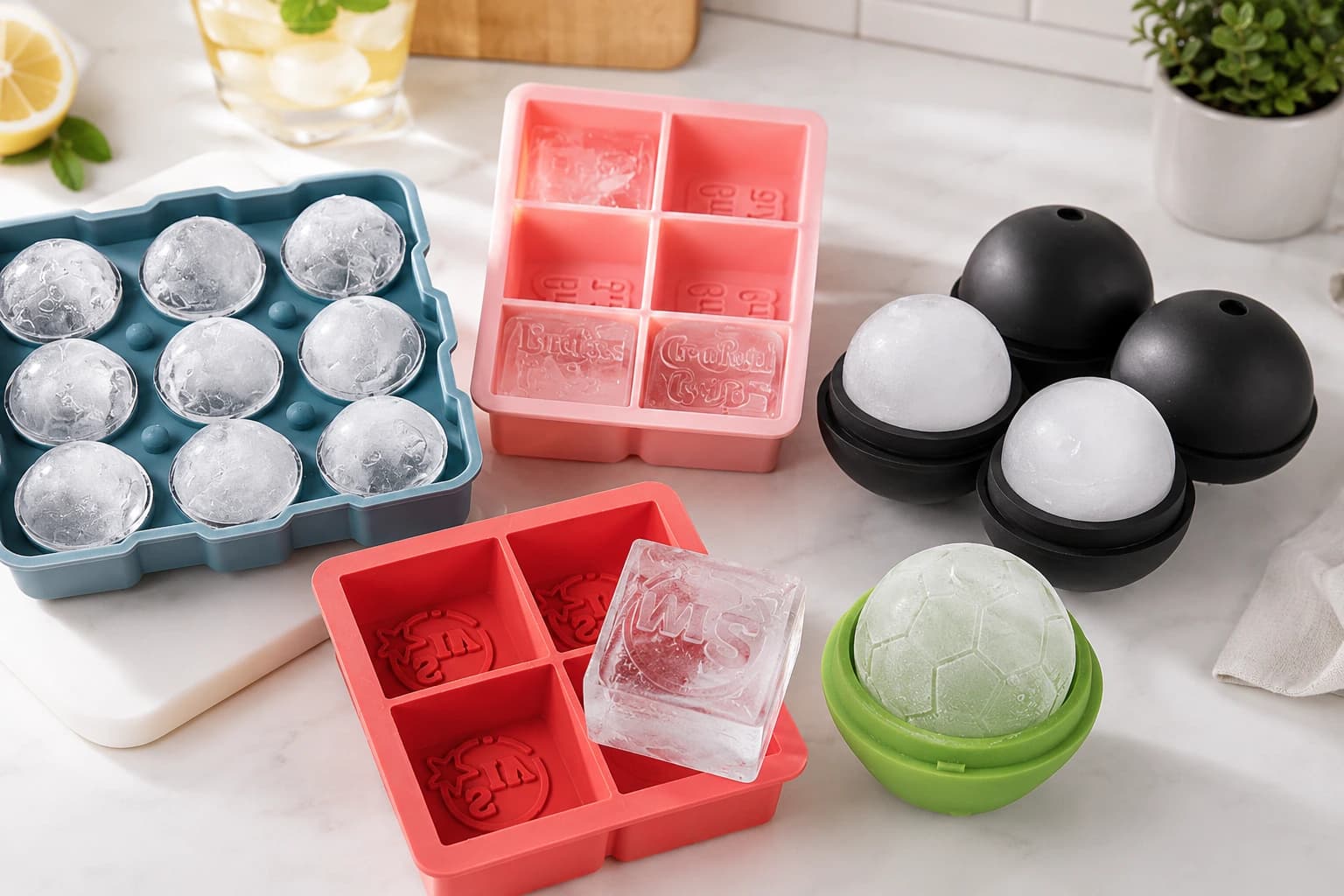
Scenario-based advice: If you drink whiskey slowly over 20–30 minutes, choose one large cube or sphere per pour and stop adding ice once the level is right. If you finish a drink in five minutes, geometry matters less — a medium cube is fine. If you are serving a high-proof whiskey neat but want it slightly chilled, a single large cube that you remove after a few minutes gives you temperature without much water.
For a manufacturing view of mold structure, branding, and production planning, review RENJIA’s custom silicone ice mold manufacturing capabilities.
One caution: bigger ice is not automatically better for every pour. A very large cube in a small glass can raise the liquid level and change the mouthfeel of the first sip. Measure your glass before you commit to a mold size.
3. Material and Design: Silicone vs. Plastic vs. Metal
Core conclusion: Silicone is usually the most practical material for large-cube and sphere molds because flexible walls release the ice without force. Plastic and metal have their own trade-offs, and the mold material does not meaningfully change how fast the finished cube melts in the glass.
Whiskey ice is demanding on a mold in two ways. First, large cubes are heavy and awkward — a rigid tray must be twisted or pried to release them, which is when cubes crack. Second, molds spend hours at a time in sub-zero conditions and then get rinsed in warm water, a cycle that stresses seams and coatings.
| Mold type | Release behavior | Typical shapes | Practical notes |
|---|---|---|---|
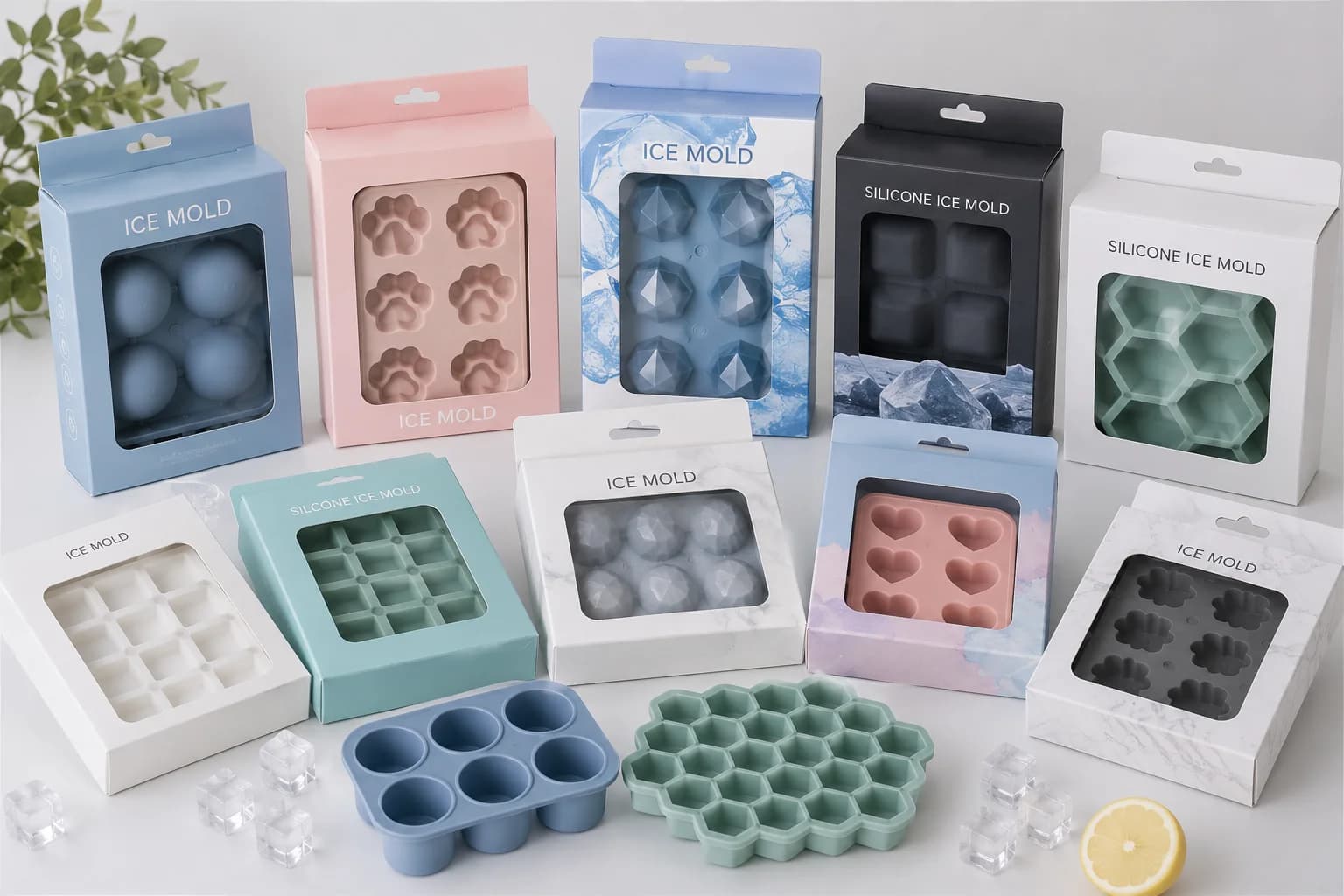
| Silicone | Flexible walls peel away; single-cube release is easy | Cubes, spheres, large blocks, novelty shapes | Tolerates freeze–thaw cycles; handles complex cavity designs [K1] |
| Rigid plastic | Requires twisting or prying; large cubes can crack | Cubes, crescents, some spheres | Low cost; seams and latches are common failure points |
| Metal | Rigid; conduction chills water faster | Cubes, some ball presses | Good for speed; harder release for big pieces; can frost and stick |
| Hybrid (silicone lid + rigid frame) | Balanced — structure plus flexible release | Cubes, spheres | Useful for stackability in a crowded freezer |
What material does not do: Once a cube is out of the mold and in the glass, its melt rate is governed by shape, size, and the temperature of the drink — not by whether the tray was silicone or plastic. Claims that a mold material slows melting in the glass should be treated with skepticism.
What material does do: It determines how often you actually get a whole cube, how easy the tray is to wash, and whether the mold survives a year of daily use. It also determines what is possible in a custom project. Deep cavity designs, undercuts, and complex novelty geometry generally favor silicone, which is why custom silicone ice molds cover cavity design, product shape, size, color, logo, and packaging as standard customization levers [K1].
Scenario-based advice: For home use, one or two silicone molds plus a flat storage bag covers most needs. For bars, prefer molds you can stack and release one-handed during service. If you are specifying a mold for a brand, confirm material composition and dimensions against a product-specific specification rather than assuming a category-wide standard [K5].
4. Practical Technique: Clearer, Slower-Melting Ice at Home
Core conclusion: Cloudy ice is usually caused by dissolved air and minerals freezing in place. Slower freezing and cleaner water improve clarity, and clarity is not only cosmetic — trapped air and cracks make a cube break down faster.
Buyers turning a concept into an RFQ can compare these decisions with RENJIA’s OEM silicone product customization process.
You do not need laboratory equipment to get noticeably better ice. The method matters more than the mold.
- Start with cleaner water. Boiled-then-cooled water or filtered water reduces the dissolved gases that form cloudy centers. This is the single highest-impact change.
- Freeze slowly and insulate. Placing the mold inside a small cooler or an insulated sleeve slows the freeze. Slower freezing pushes impurities and air toward one end instead of trapping them throughout the cube.
- Freeze in the coldest part of the freezer. A stable, consistently cold zone produces more uniform results than a spot near the door that cycles with every open.
- Plan for time. Large cubes and spheres need many hours — often overnight — to freeze solid. A partially frozen core cracks when it hits the whiskey.
- Release with patience. Let a silicone mold sit at room temperature briefly, then peel the walls back. Running warm water over the outside helps with rigid trays, but it also starts melting the cube's surface.
- Store properly. Keep finished cubes in a sealed bag or container. Ice absorbs freezer odors, and a cube that smells like last week's leftovers ruins an expensive pour.
Reality check on clarity: Home methods improve clarity but rarely match commercially produced clear ice, which typically uses directional freezing. Decide how much effort your routine supports. A slightly cloudy large cube still beats six small cloudy ones, because the geometry advantage remains.
Scenario-based advice: If you serve whiskey a few times a week, batch-freeze once and store. If you serve guests often, keep two molds in rotation so you always have a set ready — and confirm your freezer has the vertical space before buying a tall mold.
5. Custom Ice Tray Whisky Projects for Brands: Process and Planning
Core conclusion: A custom silicone ice mold project is a development process, not a catalog order. The work moves through design review, sampling, tooling, and production, and each stage has information you need to gather before quoting.
Brands come to custom molds for different reasons: a distillery that wants a logo cube in its tasting room, a retailer building a private-label ice tray whisky gift set, or a promotional campaign that needs a shaped mold in a specific color and packaging format [K2][K3].
The typical project flow looks like this:
- Brief and design review. Define the intended use (home, bar, promotional), target cube or sphere size, and the glass it must fit.
- Design-file preparation. Confirm artwork, logo placement, cavity layout, and any multi-cavity configuration.
- Sampling. Evaluate release behavior, cube clarity from the tool, and surface finish — not just appearance.
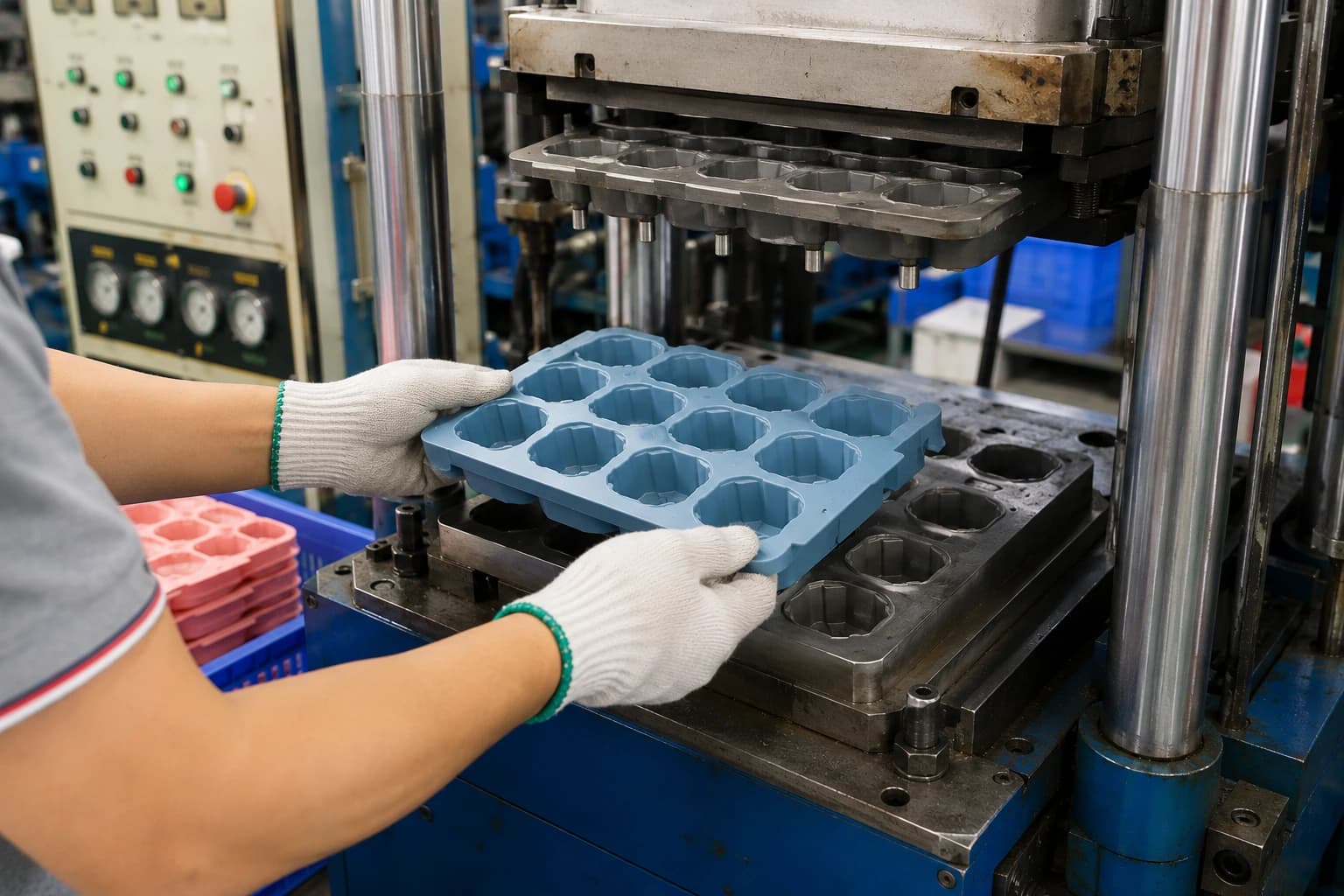
- Tooling and production planning. Tooling decisions follow the design, because cavity geometry drives how a mold is built.
- Production and quality inspection. Agree on inspection criteria and sample approval before shipment.
- Packaging. Retail packaging, inserts, and gift-box formats are part of the specification, not an afterthought.
Where projects go wrong: Buyers often request a quotation without a finalized design, then discover that the cavity geometry they want changes the tooling plan. Others assume a standard minimum order quantity, free samples, or a fixed tooling fee before any design evaluation has happened.
Before approving mass production, align the specification with a documented silicone product quality control plan.
These assumptions are the reason commercial terms should never be published as blanket promises. MOQ, sampling costs, freight, tooling fees, and production dates all depend on the specific project, and they should be confirmed in writing after review rather than stated as universal figures [K4].
Category placement is flexible. Ice molds sit naturally across household, kitchen, and promotional use cases, and that overlap should not restrict how a brand positions the product [K5]. What does need verification before publication is current availability, material composition, dimensions, certifications, MOQ, and lead time — these must be confirmed against the actual product rather than inferred from a portfolio diagram [K5].
6. Key Comparison / Method / Considerations
Choosing a mold for personal use
| Priority | Recommended approach |
|---|---|
| Slower dilution | One large cube or sphere per pour; silicone mold for reliable release |
| Clearer ice | Filtered or boiled-cooled water, insulated slow freeze, sealed storage |
| Easy daily use | Stackable silicone mold, batch-freeze, store cubes in a bag |
| Crowded freezer | Measure footprint and height first; hybrid molds stack better |
Buyer checklist for a custom silicone ice mold project
- Intended use case and target glass size confirmed
- Cavity design, shape, size, color, logo, and packaging specified [K1]
- Artwork and design files reviewed before sampling
- Sample approval criteria agreed in writing
- Tooling plan tied to the approved design
- MOQ, sampling cost, freight, and lead time confirmed per project, not assumed [K4]
- Current availability, material composition, dimensions, certifications, MOQ, and lead time verified before any product page or quotation is published [K5]
- Pre-shipment inspection criteria agreed
7. FAQ
Q1. Does a bigger ice cube really stop whiskey from getting watery?
It slows dilution rather than preventing it. A larger cube exposes less surface area to the liquid for the same volume of ice, so water enters the drink more gradually. You still get dilution over time — the difference is that the change is gentler and easier to track while you sip. If you want almost no dilution, use a chilled glass or a whiskey stone and accept that the drink will not stay cold for long.
Q2. What is the difference between an ice cube mold and an ice ball mold for whiskey?
A sphere has the lowest surface-area-to-volume ratio of the common shapes, so it melts more slowly than a cube of the same volume and looks distinctive in a rocks glass. A cube is easier to stack and store, and it fits more glass shapes. Many drinkers keep both: spheres for slow sipping, cubes for everyday pours and for chilling a mixing glass.
Q3. Can I order custom-branded ice trays in small quantities?
Possibly, but it should not be assumed. MOQ, tooling requirements, sampling terms, and lead times depend on the cavity design, the number of colors, and the packaging format. An unconditional minimum order quantity should not be published or relied upon before the project is reviewed and the terms are confirmed in writing [K4].
Q4. Is silicone the right material for a whiskey ice mold?
Silicone is widely chosen because flexible walls release large cubes and spheres without prying, which reduces breakage. That said, material composition, dimensions, and compliance documentation should be verified against the specific product specification rather than assumed from the general category [K5]. Ask your supplier for the current specification of the exact product you are considering.
8. Conclusion
An ice cube mold for whiskey earns its place in your kitchen or product line by solving a specific problem: managing dilution without giving up chill. The mechanism is straightforward — larger, fewer pieces of ice expose less surface area, so they release water more slowly. Silicone is usually the practical material choice because it releases big cubes and spheres cleanly and survives repeated freeze–thaw cycles.
For home drinkers, the next step is simple: pick one mold sized to your favorite glass, freeze with filtered or boiled-cooled water, and store cubes in a sealed bag.
For brands and buyers, the next step is a conversation, not a quotation request. Define the use case, cavity design, shape, size, color, logo, and packaging [K1], then work through design review, sampling, and tooling before committing to commercial terms. Confirm current availability, material composition, dimensions, and lead time for the exact product [K5], and treat MOQ, tooling fees, sampling, and delivery dates as project-specific items to be confirmed in writing [K4]. That sequence is what separates a mold that gets used every week from one that sits in a drawer.