Key Takeaways
- Silicone ice cube tray safety depends on the raw material grade, production process, and target market compliance — not on a single blanket claim.
- Reputable suppliers can provide third‑party SGS test reports for specific silicone raw‑material grades, but these reports cover raw materials, not every finished product lot.
- Buyers should always confirm compliance documentation for their specific project (material, intended use, destination market) rather than rely on generic “food‑safe” labels.
- Customization options (shape, color, logo) introduce variables that can affect overall compliance, so project‑level verification is essential.
- Working with an experienced OEM/ODM manufacturer that maintains verified material evidence helps reduce risk.
1. Introduction
Consumers and businesses are asking with growing frequency: are silicone ice cube trays safe? The question is understandable. Silicone has become a popular alternative to rigid plastic and metal ice trays, praised for its flexibility, non‑stick release, and dishwasher safety. But beneath the convenience lies a series of real concerns: What exactly is silicone made from? Are all silicone ice cube trays the same? How do you know if a specific tray has been tested for food contact?
The truth is that “silicone” is a broad category. Its safety depends on the chemical composition of the raw material, the manufacturing controls, additive usage, and — crucially — whether the finished product meets the regulatory standards of the country where it will be sold. No single certification or claim applies universally. This article breaks down the material science, the testing landscape, and the practical questions to ask when sourcing silicone ice cube trays — whether you are a consumer buying a single tray or a business developing a custom branded product.
2. What Determines the Safety of Silicone Ice Cube Trays?
Material Grade Is the First Gate
The safety of any silicone ice cube tray begins with the raw material. Platinum‑cured silicone (also called addition‑cure silicone) is widely regarded as the gold standard for food contact because it uses a platinum‑based catalyst and produces minimal byproducts. Peroxide‑cured silicone, while still used in many industrial applications, may leave trace residues that require post‑cure treatment to be considered safe for food.
But material type alone is not enough. The specific grade — including its purity, filler content, and additive package — determines whether it is suitable for repeated contact with ice (which is frozen water) and for the higher temperatures of dishwasher cleaning. Suppliers that maintain documented evidence of raw‑material compliance can provide their buyers with third‑party SGS test reports for specified silicone raw‑material grades [K1]. These reports typically cover food‑contact total‑extractives limits (e.g., US FDA 21 CFR 177.2600), heavy‑metal migration, and restricted‑substance tests like EU RoHS, REACH SVHC, and PFAS screening [K5].
For a related manufacturing reference, review custom silicone ice mold manufacturing.
Manufacturing Consistency Matters
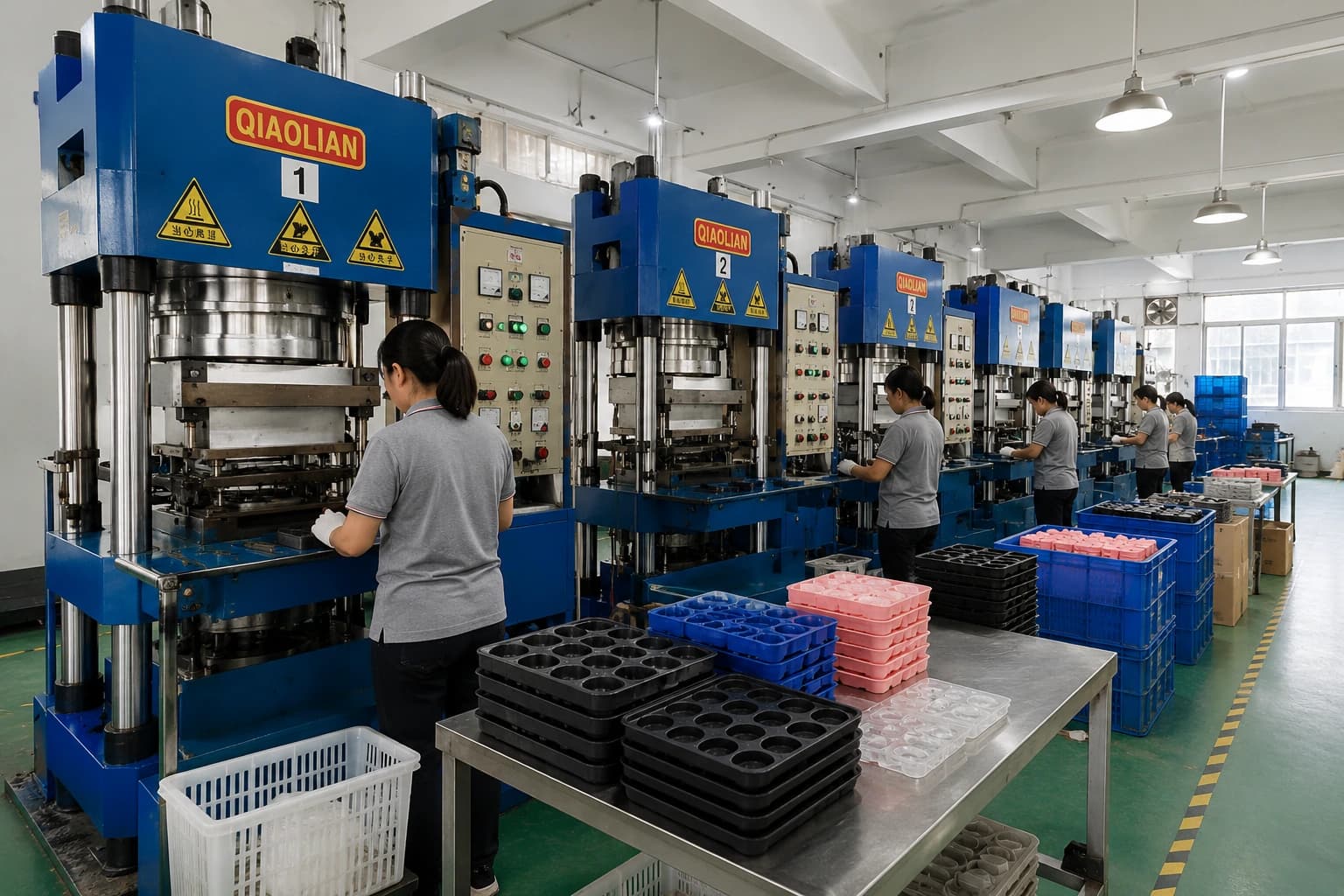
Even if the raw material passes testing, the manufacturing process must be controlled to avoid contamination, improper curing, or unexpected additives. For example, colored silicone ice cube trays require pigments that must themselves be food‑grade and thermally stable. If a supplier uses low‑cost pigments to reduce cost, those pigments could leach into the ice.
A reputable OEM/ODM manufacturer will have documented processes for mixing, molding, post‑cure, and inspection. Custom projects — such as a branded ice tray with a unique cavity design or a custom color — introduce additional variables that should be evaluated for each specific project [K2].
3. The Role of Third‑Party Testing and Compliance Documentation
What Third‑Party Reports Actually Cover
Many consumers and buyers are misled by generic claims like “food‑grade silicone” or “BPA‑free.” While BPA‑free is a truthful statement for silicone (silicone contains no BPA), it does not address other potential contaminants. The more reliable signal is a third‑party test report from an accredited laboratory such as SGS, TÜV, or Bureau Veritas.
As noted in the verified knowledge base, Renjia can support product‑specific compliance planning and provide relevant material test documentation according to the selected material, intended use, and target market [K3]. These test reports are typically supplier raw‑material test reports — they demonstrate that a specific batch of silicone rubber meets certain regulatory limits. They are not proof that every finished product, component, color, or production lot has been tested or certified [K5]. That distinction is critical.
What to Ask for in Practice
When evaluating a silicone ice cube tray supplier, the question should not be “Do you have a certificate?” but rather: “Please share the SGS report for the specific raw‑material grade used in this project, and explain how it applies to my finished product and target market.”
A responsible supplier will respond by requesting your project details: the product type (ice tray), the destination market (e.g., US, EU, Japan), and the intended use (e.g., household ice, possibly also hot water contact). Only then can they confirm which test scopes are relevant — food‑contact total extractives, migration limits, toy‑safety standards if the product will be used by children (e.g., EN 71‑3), and restricted‑substance lists [K3].
For additional context on this decision, see Food-Grade Silicone Ice Cube Trays: What B2B Buyers Should Verify.
4. What Buyers Should Ask a Silicone OEM/ODM Supplier
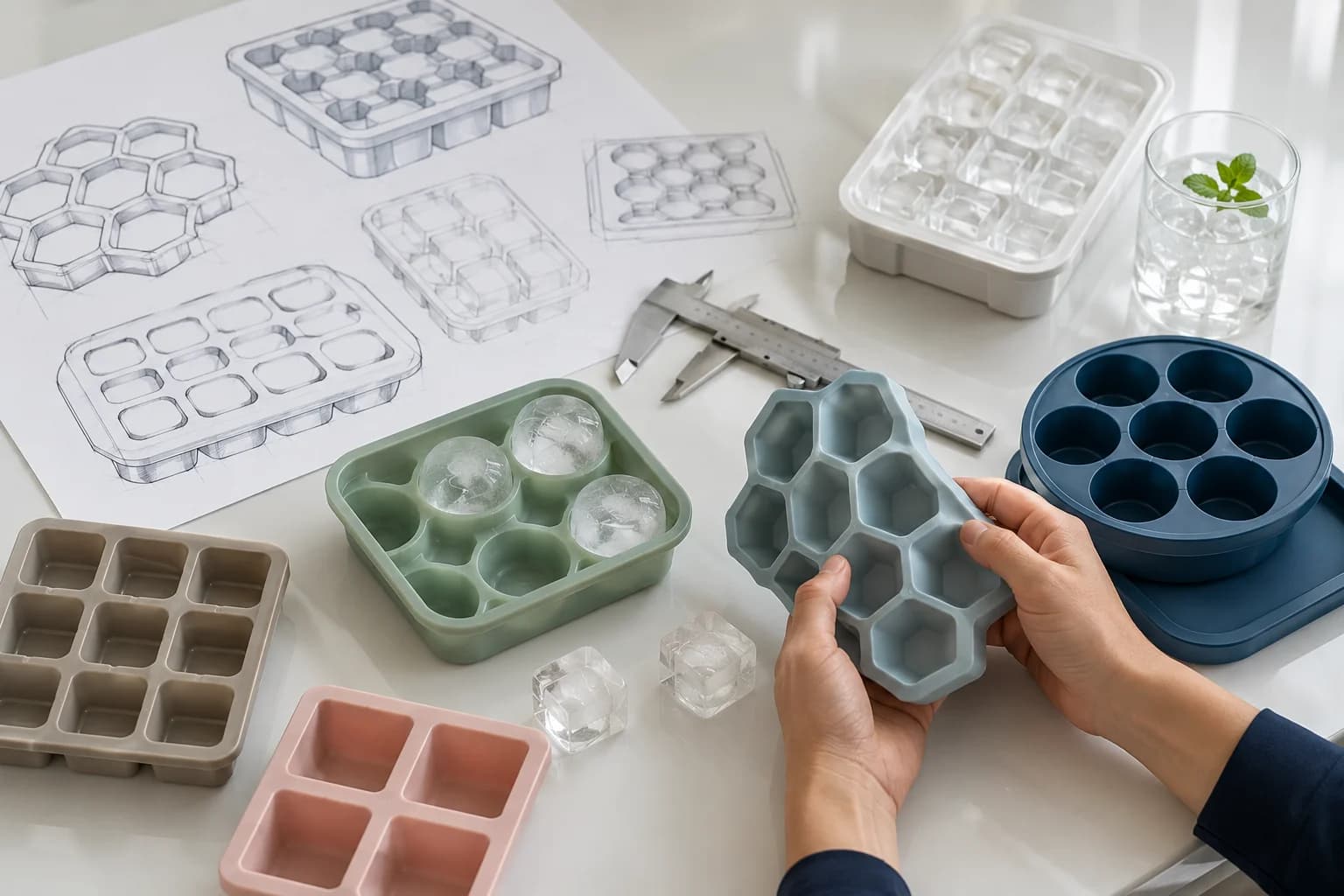
For businesses sourcing custom silicone ice cube trays, safety is a sourcing‑chain responsibility. A buyer who simply picks a supplier based on price without verifying compliance documentation risks market rejection or liability.
A Practical Supplier Verification Checklist
Based on the reference knowledge for custom silicone ice molds and OEM/ODM projects, here is a structured set of questions to ask:
| Question | Why It Matters |
|---|---|
| What raw‑material grade(s) do you use for food‑contact ice trays? | Confirms the starting material and allows cross‑check with test reports. |
| Can you provide the SGS test report for this specific raw‑material grade? | Verifies independent testing for the relevant scopes [K1][K3]. |
| Which regulatory standards does the report cover? (e.g., FDA, EU 10/2011, EN 71‑3) | Matches the target market’s requirements. |
| Is the test report a raw‑material report or a finished‑product report? | Understand the scope of coverage — raw material vs. final product. |
| Do you test each production lot, or is this a one‑time material qualification? | Determines consistency across batches. |
| What documentation can you provide for my specific project (custom color, logo, packaging)? | Customization may affect overall compliance; project‑specific confirmation is needed [K2]. |
Scenario Example: Developing a Branded Ice Tray for the US Market
Suppose a beverage brand wants to produce custom ice trays in the shape of its logo, in a pastel blue color, for retail sale in the US. The supplier should:
- Select a platinum‑cured silicone grade that has an SGS report covering FDA 21 CFR 177.2600 total‑extractives limits.
- Confirm that the blue pigment is food‑grade and does not contain restricted substances (e.g., lead, cadmium, PFAS) based on the raw‑material report’s scope.
- Provide a written statement that the finished product meets FDA requirements for food contact based on the raw‑material evidence and process controls.
- Be prepared to share the report with the buyer’s own compliance team or retailer for review.
5. Key Comparison: What Safety Signals Are Credible?
The table below contrasts common safety signals and their real‑world reliability when evaluating silicone ice cube trays.
Before finalizing the specification, use BPA-Free Silicone Ice Cube Trays: A Documentation and Claim-Review Checklist as an additional planning reference.
| Signal | What It Means | Credibility Level | What to Do Next |
|---|---|---|---|
| “Food grade silicone” on label | Unregulated claim; seller defines the term | Low | Ask what standard they used and request test report. |
| “BPA‑free” | True for all silicone, but irrelevant to safety of other substances | Low (redundant) | Do not take as a proxy for overall safety. |
| Company website says “FDA compliant” | Statement may be generic; no proof of testing | Medium | Ask for test report number and verify scope. |
| Third‑party SGS test report for raw material | Independent lab tested the silicone rubber; shows specific test limits | High (for raw material) | Confirm the report covers your target market’s requirements and that the finished product uses the same grade. |
| Finished‑product test report from accredited lab | Direct testing of the exact product | Highest | Most expensive; project‑specific; ideal for high‑volume production. |
6. FAQ
Q1. Are all silicone ice cube trays food‑safe?
No. Safety depends on the raw‑material grade, curing method, additives (including colorants), and manufacturing process. Trays made from low‑cost, poorly cured silicone or with non‑food‑grade fillers may not meet food‑contact limits. Always request verified test documentation from the supplier.
Q2. How can I check if a silicone ice cube tray has been tested?
Ask the supplier for the third‑party test report. Look for a report from an accredited lab such as SGS. The report should indicate the standard tested (e.g., FDA 21 CFR 177.2600 for the US, EU 10/2011 for Europe) and the result for each test parameter (e.g., total extractives, heavy metals). If the supplier cannot provide such a report, treat the product with caution.
Q3. Does custom color affect safety?
Yes. Colorants (pigments) are additives that must also be chosen for food‑contact suitability and must not contain restricted heavy metals or other prohibited substances. A raw‑material test report covering the natural (uncolored) silicone does not automatically cover a colored version. For custom projects, confirm that the selected pigment has been included in the compliance documentation [K2][K5].
7. Conclusion
The answer to “Are silicone ice cube trays safe?” is not a simple yes or no. Safety is conditional — it depends on the specific raw material, the manufacturing quality, and the relevance of third‑party testing to the intended market and use.
For consumers: choose trays from brands that openly share their compliance documentation or can point to a specific test report. Be skeptical of vague “food‑safe” claims.
For businesses developing custom silicone ice cube trays: work with an OEM/ODM manufacturer that maintains documented material evidence and can support project‑specific compliance planning [K1][K5]. Do not rely on generic certificates. Ask the questions in Section 4, and request the SGS report for the chosen raw‑material grade.
By focusing on verifiable test documentation rather than marketing language, both consumers and businesses can make informed decisions — and avoid the real risk of using a product that was never validated for its intended purpose.