Key Takeaways
- A sellable custom ice mold is a manufacturing project, not just a drawing: cavity design, shape, size, color, logo, and packaging all need to be specified and approved before production [K1].
- Silicone ice molds in this product family are described as food-grade, odorless, and temperature resistant from -40°C to 240°C, with custom sizes, colors, shapes, and packaging available [K5].
- The sequence that keeps projects on schedule is design review → sample approval → tooling → production → inspection → packaging, not the reverse [K2].
- Most launch delays come from unclear design files, late logo or packaging decisions, and MOQ assumptions that were never confirmed in writing [K1][K2].
- Buyers should plan compliance per destination market and avoid vendor claims that cannot be documented [K2].
1. Introduction
Personalized ice trays look like a simple product from the outside: a silicone shape that freezes water. In practice, a custom ice mold is a small manufacturing program with its own design review, sampling loop, tooling decision, and packaging specification. That gap between "simple product" and "multi-step project" is where most first-time buyers lose time and money.
The demand side is easy to understand. Bars want branded ice for events and photography. Retailers want private-label trays with their own color palette. Promotional buyers want shapes that match a campaign. Household and kitchen product lines want molds that fit an existing catalog aesthetic. All of these are variations of the same request: custom cavity design, product shape, size, color, logo, and packaging on a silicone ice mold platform [K1].
The supply side is where the questions get harder. What file format should a design start as? How many samples should be approved before tooling? When does the logo decision need to be locked? Which item — the mold or the box — usually causes the shipment delay? Those are the questions this guide answers, using a production-oriented view of how custom silicone ice cube molds move from concept to a sellable, repeatable product.
The article is written for brand owners, private-label buyers, promotional distributors, and product managers who are sourcing rather than molding in-house. It focuses on decisions you control: specification, sampling, tooling, quality inspection, and packaging.
2. What "Custom" Actually Covers in Personalized Ice Trays
Core conclusion: customization is a menu of separate decisions, and each one has a different cost and lead-time impact. Treating them as a single "custom mold" line item is the fastest way to get a mismatched quote.
The verified customization scope for this product category includes cavity design, product shape, size, color, logo, and packaging [K1]. Public product specifications add that the base material is food-grade silicone, odorless, temperature resistant from -40°C to 240°C (-40°F to 464°F), and available in custom sizes, colors, shapes, and packaging [K5]. In practice these fall into three tiers of effort:
- Low-complexity changes: color, packaging artwork, and logo placement on an existing shape. These usually move fastest because the mold geometry already exists.
- Medium-complexity changes: a new cavity shape (a cube, a sphere, a logo-shaped block) built on an existing tray format. These require a design review and a new sample round.
- High-complexity changes: a full new product architecture — new tray dimensions, new cavity count, new lid or stacking system, new retail packaging format. These are genuine development projects and should be planned as such.
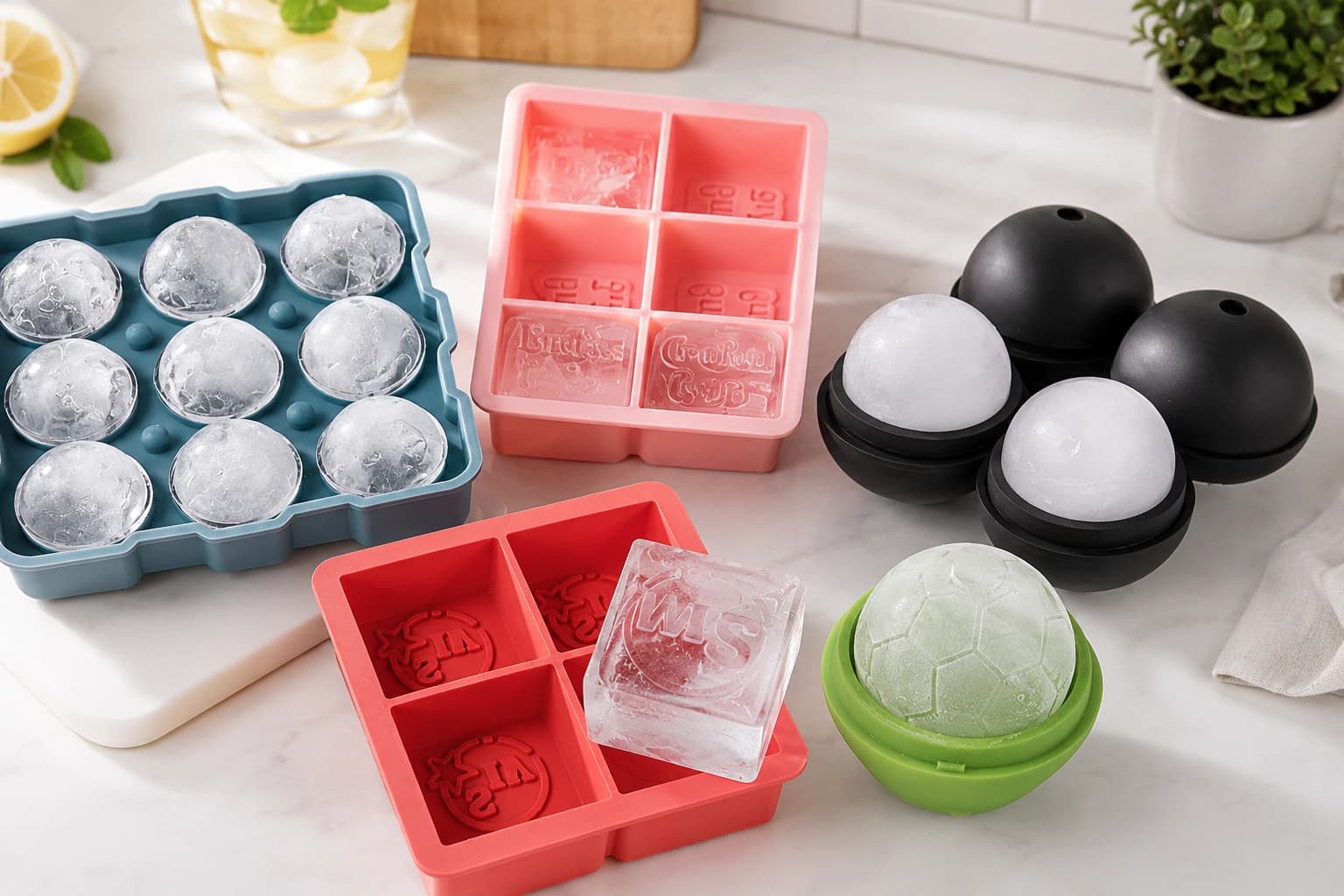
A practical scenario: a beverage brand wants ice cubes with its logo embossed on one face. That is not a new tray — it is a cavity-face modification. A hotel group wants a 2-inch sphere for whiskey service with a branded outer sleeve. That is a cavity redesign plus packaging work, and it should be quoted and scheduled as two workstreams.
Recommendation: write your customization request as a numbered list, one line per decision (shape, cavity count, finished ice size, color, logo, packaging, target market), and ask for confirmation on each line. This is also the fastest way to compare quotes from different suppliers on equal terms. If you are still mapping the broader product family before committing, the custom silicone ice mold product line overview at Renjia shows how ice trays, ice ball trays, and popsicle molds sit alongside each other in the same manufacturing program [K3].
3. From Design File to Approved Sample: The Real Project Timeline
Core conclusion: sample approval is the control point. Everything before it is reversible; everything after it is expensive to change.
The supported project path for custom silicone mold work runs from design review to sampling to tooling and production [K2]. A workable sequence for an ice mold program looks like this:
- Brief and design review. You supply the concept and any drawings or reference models. The supplier reviews feasibility: draft angles, wall thickness, cavity spacing, de-molding, and how the frozen cube will release.
- Design file preparation. Artwork for the logo and packaging is separated from the mold geometry, because they are produced by different processes and often by different vendors.
- Sampling. A physical sample is produced so the shape, surface finish, color, and logo depth can be evaluated. Sample approval is a documented decision, not a verbal "looks good."
- Tooling. Once the sample is approved, the mold is finalized. Changes after this point usually mean rework of the tool.
- Production, inspection, and packaging. Mass production, pre-shipment inspection, and packing to the approved specification [K2].
Two practical cautions. First, approve the sample against a written checklist — cavity dimensions, finished ice weight or volume, color match, logo legibility, release behavior, and packaging mock-up — so approval is comparable across rounds. Second, keep the logo and packaging artwork on a parallel track from day one. Many projects finish molding on time and then wait weeks for a printed box.
If your project also involves flat silicone goods, the same design-review logic applies to silicone drawing mat private-label development, where artwork approval drives the schedule just as much as the material does.
For buyers who want a single reference point for how these stages connect across product categories, the silicone OEM/ODM manufacturing process documentation is a useful companion to this guide. The key discipline is the same in every category: nothing moves to tooling until the sample is signed off in writing.
4. MOQ, Tooling, Sampling, and Lead-Time Planning
Core conclusion: plan the commercial terms before the design work, because MOQ and tooling decisions constrain which design options are realistic.
MOQ, tooling, sampling, and lead-time planning are treated as one planning block in custom silicone projects, not four separate negotiations [K2]. That grouping matters because the variables interact:
| Decision | What it drives | Practical guidance |
|---|---|---|
| Cavity / shape complexity | Tooling effort and sample rounds | Start with a shape that can be demolded cleanly; add complexity after the first approval |
| Color | Whether stock or custom compound is needed | Confirm color against a physical sample, not a screen rendering |
| Logo method | Sample round count | Confirm depth and legibility at the finished-ice scale, not on the flat drawing |
| Packaging format | Final assembly and shipping schedule | Lock the box or sleeve artwork while the mold is still in sampling |
| Order quantity | Unit economics and production slots | Ask for the MOQ in writing at the quotation stage, before design lock |
A realistic planning approach is to work backwards from your in-store or launch date:
- Launch date minus shipping time = ex-factory date.
- Ex-factory date minus production time = production start.
- Production start minus tooling time = tooling start.
- Tooling start minus sample round time = design lock date.
Most schedule risk sits in the last two steps. If you have a fixed launch date, protect it by simplifying the shape rather than by compressing inspection. Buyers who reduce scope at the design stage generally ship on time; buyers who reduce scope at the inspection stage generally ship problems.
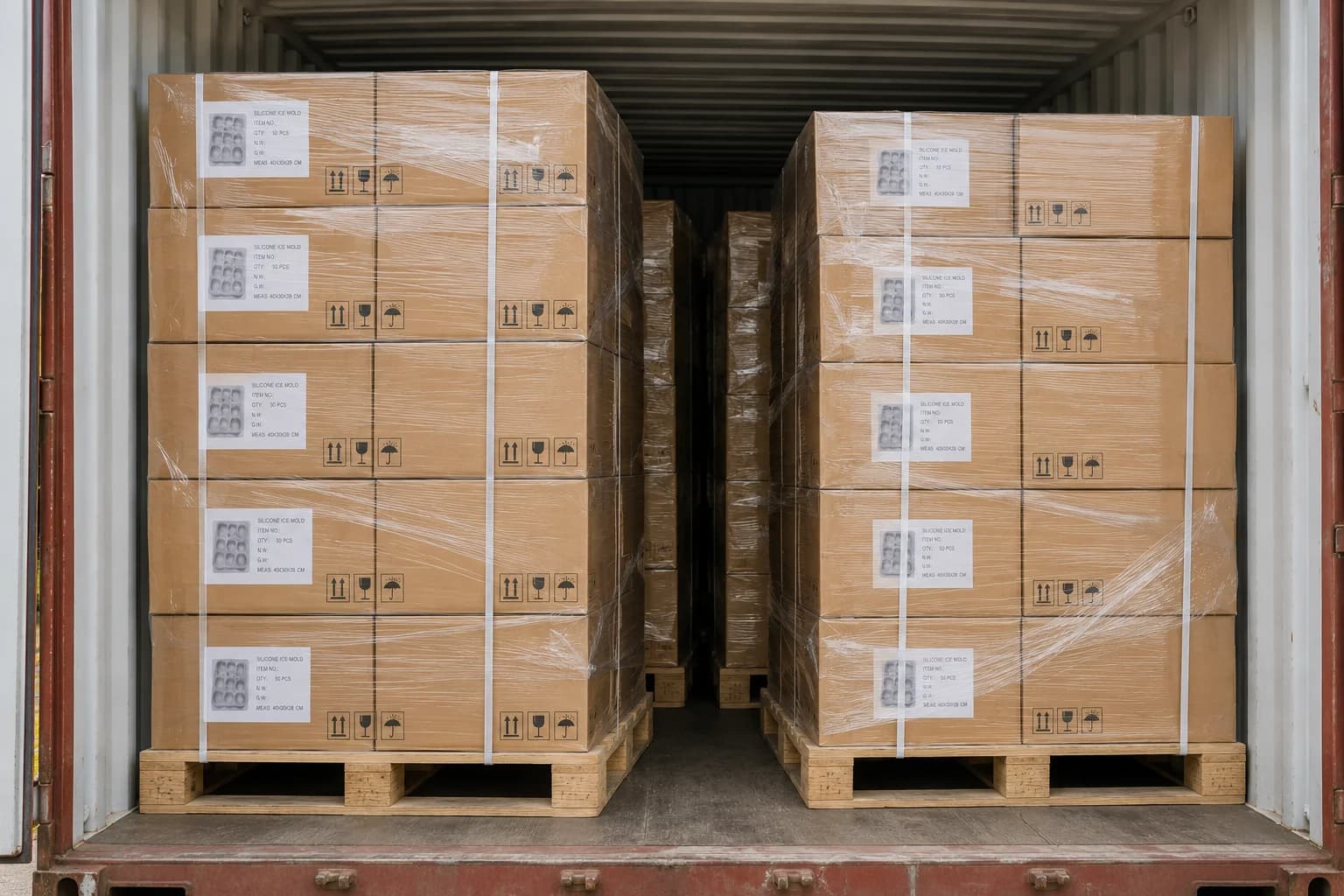
It is also worth deciding early whether your packaging is a printed retail box, a hang card, or a simple sleeve, because custom packaging is a listed customization option [K5] and it usually has its own minimum quantity and proofing cycle. A short, specific custom packaging and design-file preparation brief saves a full revision round more often than any other single document.
5. Quality, Compliance, and Packaging: What "Sells" Really Means
Core conclusion: a mold sells because it releases cleanly, looks consistent batch to batch, and arrives in packaging that survives retail handling — not because the design is unusual.
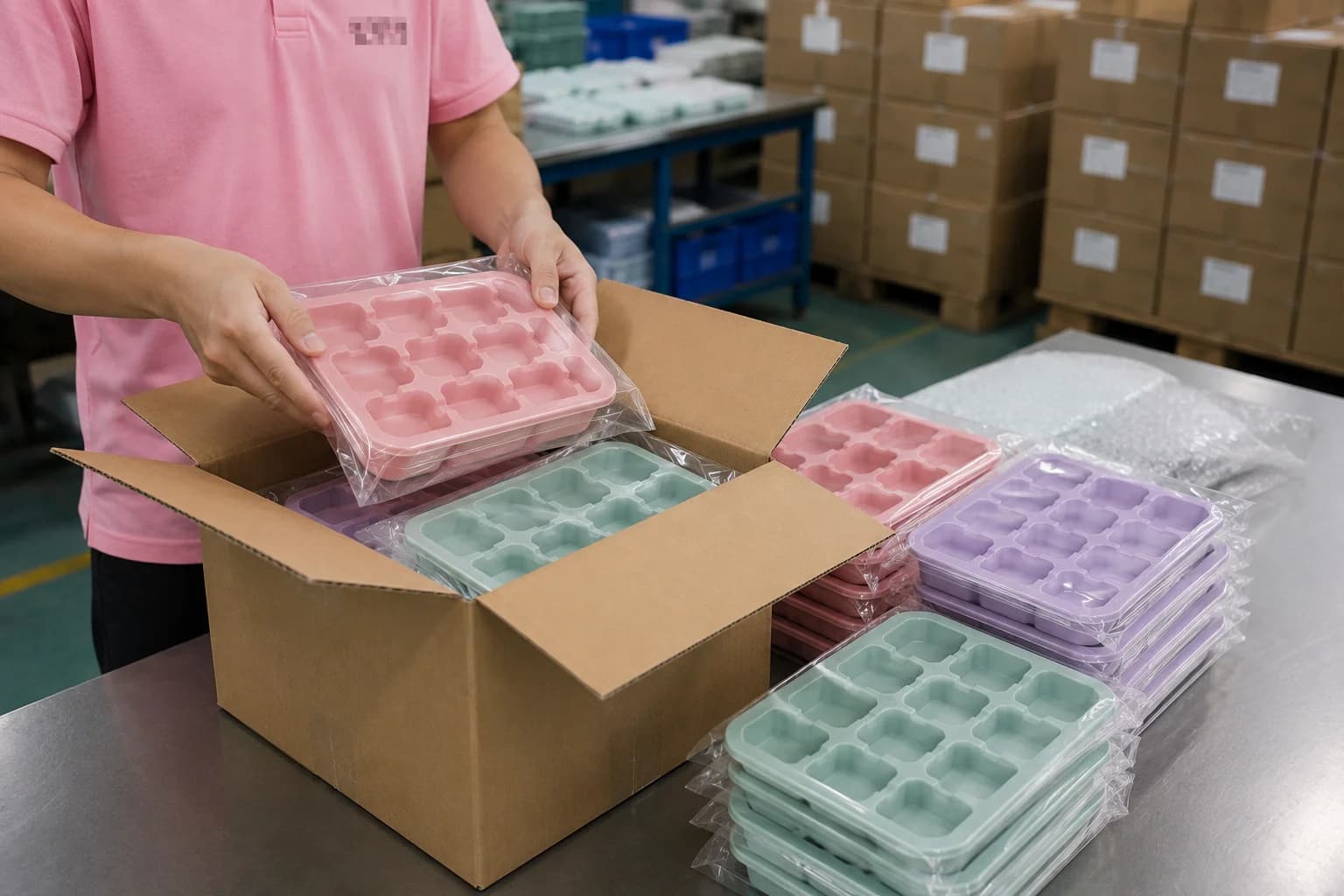
Three verification layers matter before a first shipment:
- Product performance. Cube release, cavity definition, lid fit if applicable, and dimensional consistency between cavities. These are the properties a repeat buyer notices first.
- Material documentation. The public specification for this product family states food-grade silicone, odorless material, and a -40°C to 240°C (-40°F to 464°F) temperature range [K5]. Ask for the documentation that supports what you plan to print on the packaging, and print only what you can support.
- Market-specific compliance. Compliance planning should be handled per destination market, and vendors should not assert certifications that cannot be documented [K2]. This is a boundary condition, not a detail: certification language on retail packaging carries legal weight in most markets.
A buyer checklist for sample approval and pre-shipment inspection is one of the standard support topics in this manufacturing context [K2], and it is worth building your own version with a column for "approved / rejected / needs rework" so that decisions are recorded rather than remembered.
A useful mindset shift: treat the first production run as a validation batch even if the volume is commercial. Photograph the unpacked product, weigh a finished cube, measure a cavity, and store the approved sample physically. When the second order arrives, you have an objective baseline for comparison instead of a memory.
6. Key Comparison: Which Customization Path Fits Your Goal?
| Your goal | Recommended path | Main risk to manage |
|---|---|---|
| Branded ice for events, bars, or campaigns | Logo-modified cavity on an existing tray format, plus a printed sleeve | Logo legibility at finished-ice scale |
| Private-label retail tray | Custom color and packaging on a proven cavity design | Color match and packaging proofing cycle |
| Gift or promotional set | Custom shape plus rigid or printed packaging | Packaging minimum quantity and assembly time |
| New product line launch | Full design review, multiple sample rounds, new tooling | Schedule compression after design lock |
| Test-market entry | Standard cavity with custom packaging first, shape second | Over-investing in tooling before demand is validated |
The pattern in this table is consistent: the more of the product you change at once, the more sample rounds and approval steps you should budget. Buyers who sequence packaging and color first, then shape, usually reach market faster than buyers who change everything in a single round.
7. FAQ
Q1. What information do I need before requesting a quote on personalized ice trays?
At minimum: the finished ice shape and size, approximate cavity count per tray, target material color, whether a logo is needed and where, packaging format, destination market, and target order quantity. The customization scope for this category covers cavity design, shape, size, color, logo, and packaging [K1], so a request that addresses each of those points gets a comparable, actionable quote rather than a range.
Q2. How many samples should I approve before production?
Plan for at least one formal sample round, and expect a second if the logo depth, color, or packaging changes after the first review. The stated project path is design review, then sampling, then tooling and production [K2] — so each sample round is a gate, not a formality. Approve against a written checklist and keep the approved sample on file.
Q3. What temperature range can these silicone molds handle?
Public product specifications state a temperature resistance of -40°C to 240°C (-40°F to 464°F), with food-grade, odorless silicone as the base material [K5]. Confirm the specification against your intended use — freezer, beverage service, or decorative retail — and make sure any packaging claim matches the documentation you actually hold.
Q4. Can I get custom colors and packaging without a new mold shape?
Yes. Custom colors, sizes, shapes, and packaging are all listed customization options [K5], which means color and packaging changes can be made independently of the cavity geometry. For a fast test-market launch, combining an existing cavity design with custom color and packaging is usually the shortest path to a sellable product.
8. Conclusion
Custom silicone ice cube molds sell when the manufacturing decisions behind them are made in the right order. Specify the customization scope line by line [K1], lock the design through a documented sample approval, confirm MOQ and tooling terms before design lock [K2], and treat compliance language as something you must be able to support rather than something you add at the printer [K2].
For a first project, the most reliable route is a proven cavity design with custom color, logo, and packaging — it validates your market with limited tooling exposure. Move to a fully custom shape once you have sales evidence. For a brand with an established channel, a full development program with multiple sample rounds is justified, provided the launch date is planned from the design-lock date backwards rather than from the shipment date forwards.
The next step is concrete: write your one-page specification, request confirmation on each customization line, and ask for the sample and inspection checklists before the first sample round begins. That single package of documents removes most of the ambiguity that makes custom ice mold projects run late.