Key Takeaways
- Shape matters for melt rate and presentation: Spheres melt slower due to lower surface-area-to-volume ratio; cubes chill quickly; branded shapes add promotional value.
- Food-grade silicone is essential: Any custom whiskey ice ball mold must be made from food-grade, odorless silicone to ensure safety and no flavor transfer [K4].
- Customization is fully supported: Renjia's silicone OEM/ODM capabilities allow custom cavity design, shape, size, color, logo, and packaging for any whiskey ice mold [K1].
- Material specs are verified: Typical food-grade silicone withstands -40°C to 240°C, is odorless, and available in custom sizes [K4].
- Sourcing guidance available: The full project lifecycle—from design review to sampling, tooling, and pre-shipment inspection—is documented for buyers [K2].
1. Introduction
Pouring a great whiskey deserves the right ice. But not all ice is created equal. Whether you are a home enthusiast, a bar owner, or a brand manager planning a promotional giveaway, the shape of your ice mold directly impacts both the drinking experience and your marketing message.
Three popular options dominate the custom whiskey ice mold market: spheres, cubes, and branded shapes. Each serves a different purpose. Spheres are celebrated for their slow melt, cubes for their rapid chilling, and branded shapes for their visual impact at events or retail.
If you are sourcing custom whiskey ice molds—especially a whiskey ice ball mold—you need to understand not just the shapes, but also the manufacturing process, material specifications, and customization possibilities. This article draws on verified product knowledge from Renjia, a silicone OEM/ODM manufacturer, to help you make an informed decision [K1][K4].
2. Sphere Molds: The Slow-Melt Champion
Core Conclusion
A sphere is the optimal shape for whiskey drinkers who want maximum chilling with minimum dilution. The round shape has the smallest surface area relative to volume, which means the ice melts more slowly than any other common shape.
Why It Works
Ice melts from the surface. A sphere of a given volume exposes less surface area than a cube or cylinder. For a 2-inch diameter sphere, the surface area is approximately 50.3 cm², while a 2-inch cube of identical volume has 96 cm²—nearly double. This translates directly to a slower melt rate, keeping your whiskey cold longer without watering it down.
For a related manufacturing reference, review custom silicone ice mold manufacturing.
Practical Advice for Sourcing a Whiskey Ice Ball Mold
- Cavity size: Standard sphere diameters range from 1.5 to 2.5 inches. Confirm the cavity dimensions match your intended ice size.
- Mold type: Look for a whiskey ice ball mold with a tight-fitting lid or a two-part design that prevents overflow and ensures a perfect round shape.
- Material: Food-grade silicone with no odor is non-negotiable. Renjia's standard silicone meets this requirement across all custom molds [K4].
- Customization: You can order a custom sphere mold with your logo or brand color embedded in the silicone, or with custom packaging for retail sale [K1].
Scenario: A premium whiskey brand wants to distribute custom molds at a tasting event. A sphere mold, printed with the brand logo on the lid, reinforces the idea of slow, deliberate enjoyment.
3. Cube Molds: Reliable and Versatile
Core Conclusion
Cubes are the classic ice shape. They chill beverages quickly and are easier to produce in large volumes. For commercial kitchens, bars, or promotional items where speed and affordability matter, cubes are a solid choice.
Why It Works
A cube has a higher surface-area-to-volume ratio than a sphere, so it melts faster. For cocktails where the ice is meant to dilute the drink slightly (like an old-fashioned or highball), cubes provide a controlled dilution that many bartenders prefer. Additionally, cube molds are easier to stack, store, and pack for shipping.
Practical Advice for Custom Cube Molds
- Size options: Standard cube sizes range from 1 inch to 2 inches. Larger cubes (king cubes or "whiskey cubes") offer a balance between slow melt and rapid chill.
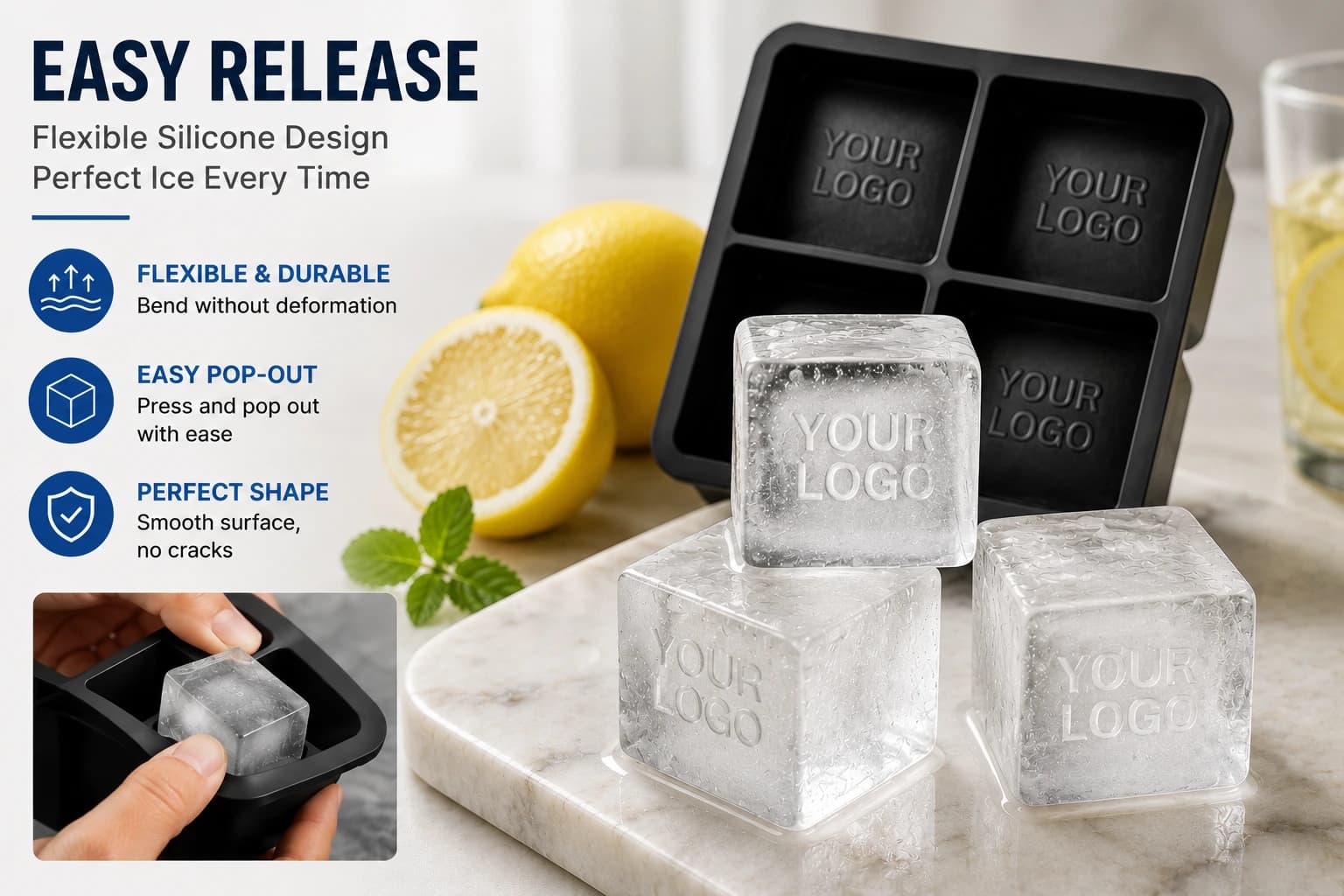
- Custom cavity shapes: Even within a "cube" category, you can add subtle design features like rounded edges, a beveled top, or a logo embossed on each cube face.
- Production efficiency: Cube molds typically have more cavities per mold than sphere molds, reducing per-piece cost. This is important for high-volume orders.
- Durability: Silicone cube molds are flexible, making it easy to release ice without cracking. Renjia's molds are rated from -40°C to 240°C, safe for freezer and dishwasher [K4].
Scenario: A hotel chain orders 10,000 custom cube molds as branded amenities for guest mini-bars. Each cube has the hotel logo embossed, and the molds are packed in gift boxes with a thank-you note. Cube molds keep unit costs low while delivering consistent branding.
For additional context on this decision, see Large Ice Cube Trays for Whiskey: A Buyer’s Guide to Size and Shape.
4. Branded Shapes: Marketing That Melts Slowly
Core Conclusion
Branded shape molds—such as letters, logos, geometric designs, or novelty shapes—offer the highest marketing impact. They turn a simple ice cube into a talking point at parties, trade shows, or retail displays.
Why It Works
Custom shapes create a visual connection with your brand every time someone uses the mold. The silicone itself can be molded into your exact design, including intricate details like a company mascot or a product silhouette. Because the shape is part of the ice, the brand message stays visible as the ice melts (at least partially). This is a proven promotional tactic in the houseware and promotional product categories, where ice cube trays and ice ball trays are commonly offered [K3].
Practical Advice for Custom Branded Shapes
- Design-file preparation: You need a 3D model or a detailed 2D vector file. Renjia's knowledge base includes guidance on preparing design files for custom mold tooling [K2].
- Complexity trade-off: Very detailed shapes may require more complex tooling (machined aluminum or 3D-printed master), increasing upfront costs. Simple shapes with bold outlines are cost-effective.
- Logo placement: You can embed the logo on the mold itself (the silicone forms a cavity in the shape of your logo) or print the logo on the mold's exterior. Both are standard customizations [K1].
- Packaging: Branded molds often sell as gift sets. Custom packaging—boxes, inserts, or even a branded sleeve—can be included [K1].
Scenario: A craft whiskey distillery launches a limited-run "barrel-proof" whiskey. They commission a branded silicone ice mold shaped like a miniature barrel. Each mold is sold as a set with a bottle of the whiskey, creating a premium unboxing experience.
5. Key Comparison: Spheres vs. Cubes vs. Branded Shapes
| Feature | Sphere | Cube | Branded Shape |
|---|---|---|---|
| Melt rate | Slowest | Medium | Varies (longest dimension matters) |
| Surface area (relative) | Lowest | High | Depends on shape |
| Best for | Sipping whiskey | Cocktails, fast chill | Promotions, gifts, events |
| Customization level | Moderate (size, color, logo on lid) | High (embossing, size, color, packaging) | Highest (any shape, logo integration) |
| Tooling complexity | Low to medium | Low | High for complex designs |
| Typical mold cavity count | 1–4 | 4–12 | 1–6 |
| Per-unit cost (low volume) | Medium | Low | High |
Process Guide: From Design to Production
If you are sourcing custom whiskey ice molds from a silicone OEM like Renjia, the typical project flow is:
Before finalizing the specification, use How We Developed a Funnel-Fill Branded Sphere Ice Mold for a German Gift Company as an additional planning reference.
- Design review – Share your 3D file or product description. The manufacturer evaluates mold feasibility, cavity layout, and tooling requirements.
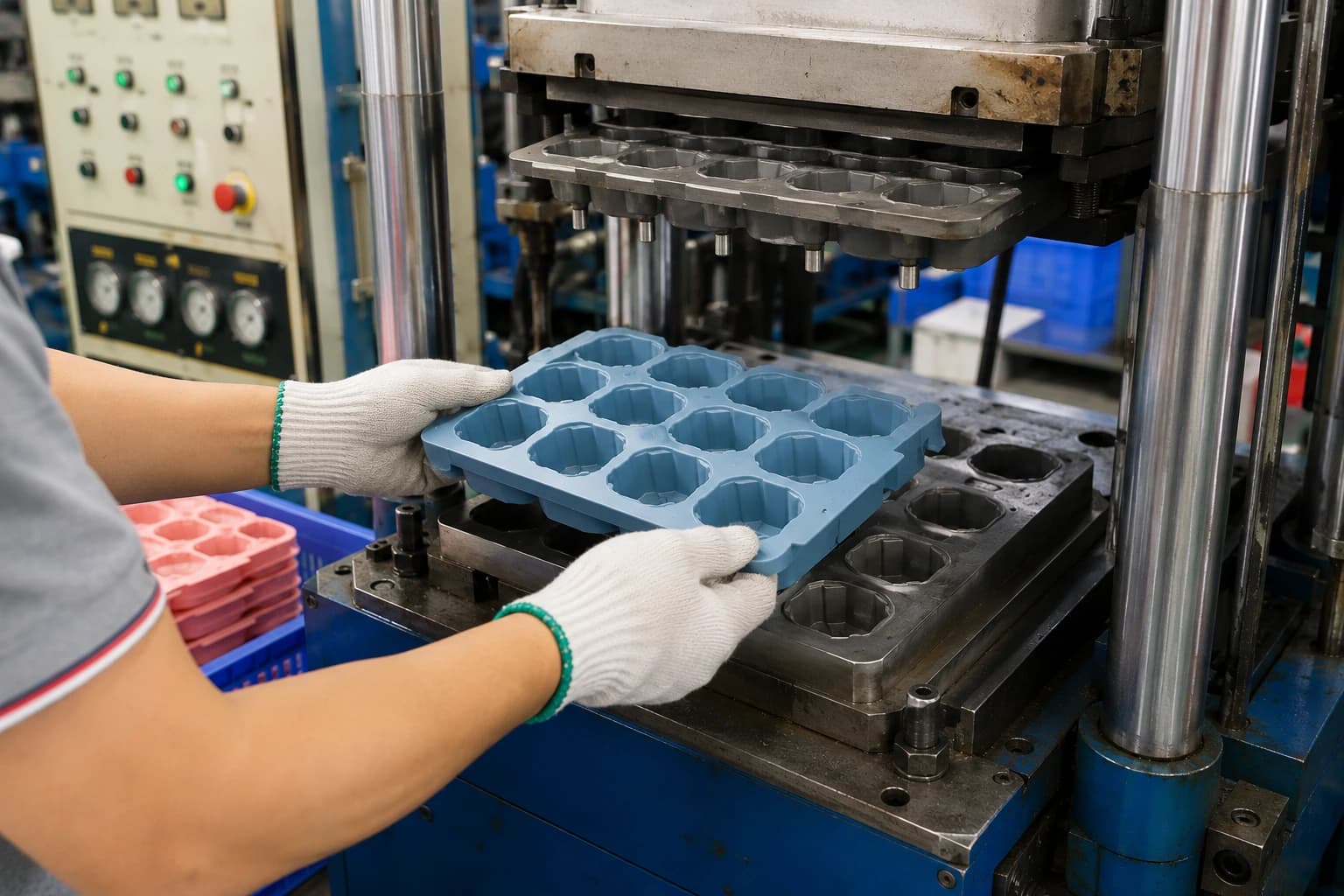
- Tooling and sampling – A prototype (sample) is produced for your approval. Adjustments to shape, size, or logo placement are made here [K1].
- Material and color confirmation – Choose a food-grade silicone color (Pantone match available). Confirm odorless and temperature ratings [K4].
- Packaging design – Select boxes, inserts, or poly bags. Custom printing is available.
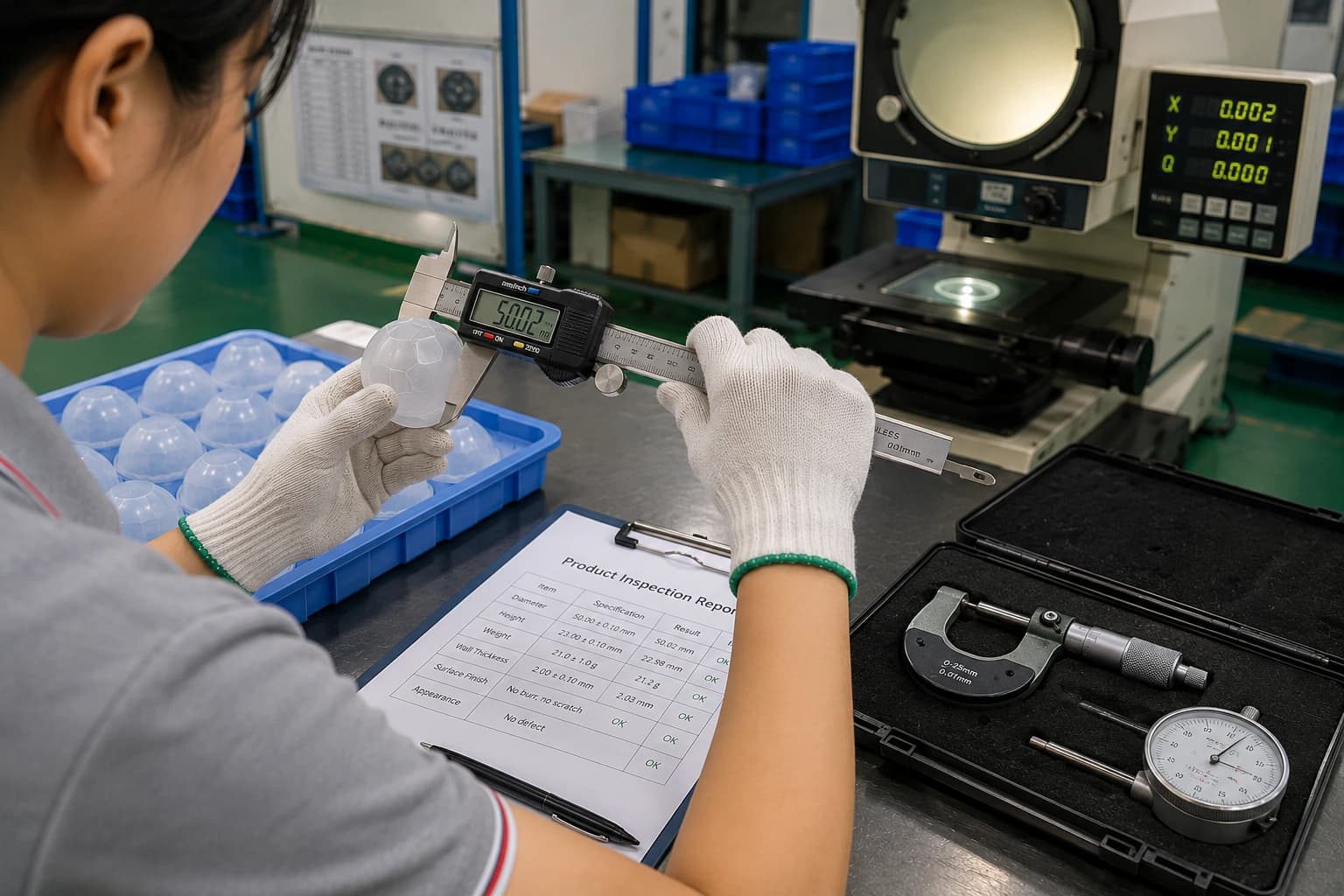
- Pre-shipment inspection – Check cavity dimensions, color consistency, and packaging quality before mass production [K2].
6. FAQ
Q1. Is the silicone in custom whiskey ice ball molds safe for food contact?
Yes. Reputable manufacturers like Renjia use food-grade, odorless silicone that complies with food-contact standards. The material is tested to withstand temperatures from -40°C to 240°C, making it safe for freezers, ice makers, and dishwashers [K4].
Q2. What is the minimum order quantity (MOQ) for a custom whiskey ice ball mold?
MOQ varies by manufacturer and complexity. For a custom mold with a unique shape and logo, typical MOQ starts around 500–1,000 pieces. Simpler molds (like spheres or cubes without custom shape) may have lower MOQs. Always confirm current MOQ with the supplier before budgeting [K1][K2].
Q3. Can I get a sample before placing a bulk order?
Yes. Most silicone OEM/ODM manufacturers, including Renjia, offer sampling after design review. The sample allows you to verify the shape size, feel, and logo placement. Sampling costs usually apply but are credited toward the first production order [K2].
Q4. How long does a typical custom mold project take?
From design approval to sample delivery, expect 15–30 working days. Mass production adds another 20–30 working days, depending on order volume and factory capacity. Lead time should be confirmed with your supplier [K2].
7. Conclusion
Choosing the right custom whiskey ice mold comes down to your primary goal:
- Maximize slow melt and pure presentation → Choose a whiskey ice ball mold (sphere shape).
- Balance chill speed and cost for high-volume use → Choose cube molds.
- Create a branded, memorable experience → Choose custom branded shapes.
All three options are available through silicone OEM/ODM suppliers like Renjia, with full customization in size, color, logo, and packaging. Start by defining your audience and budget, then work with a manufacturer to review your design files, tooling requirements, and sampling plan.
Whether you are a distillery, a bar chain, or a promotional goods buyer, investing in a high-quality, food-grade custom ice mold ensures that every pour—and every brand impression—is worth remembering.