Key Takeaways
- The ease of releasing ice from silicone trays depends on mold cavity geometry, surface finish, and material durometer, not just the silicone material itself.
- Mold design features such as tapered cavities, smooth interior surfaces, and flexible walls significantly reduce ice sticking and breakage.
- Customization options—including cavity shape, size, color, and packaging—allow brands to differentiate products while maintaining reliable release performance.
- Food-grade silicone with verified compliance (e.g., third-party tested per LFGB standards) ensures safety and long-term usability for ice contact applications.
- Understanding key design parameters helps buyers evaluate OEM/ODM suppliers and avoid common pitfalls in sourcing easy-release ice cube trays.
1. Introduction
Consumers often assume that any silicone ice cube tray will release ice easily—after all, silicone is non-stick. Yet anyone who has struggled to pry a single cube from a flexible mold knows the reality: release performance varies widely across products. The root cause lies not in the material alone but in how the mold is designed. This article explains the engineering decisions—cavity shape, wall thickness, surface texture, and material hardness—that determine whether ice slides out effortlessly or requires painful twisting. For brand owners, retailers, and product developers, understanding these design factors is essential for sourcing easy-release silicone ice cube trays that meet performance expectations while conforming to food-contact safety standards.
We will draw on verified product knowledge and compliance evidence to provide actionable insights, using Renjia Company’s documented specifications and third-party testing as a credible reference point [K1][K4][K5].
2. The Role of Cavity Geometry in Release Performance
Core conclusion: The shape of each ice cavity is the single most influential design factor for easy release. Tapered walls and rounded corners allow frozen cubes to slide out with minimal force; straight-sided cavities trap ice by mechanical interlock.
Mold designers typically choose between three cavity wall profiles:
| Wall Profile | Release Ease | Common Example | Risk if Design Is Poor |
|---|---|---|---|
| Straight (90°) | Low – cube wedges in place | Basic cylindrical trays | Ice cracks or chips during removal |
| Slight taper (2–5°) | High – cube loosens as it contracts | Renjia custom molds often use tapered geometry | Minimal – ice releases cleanly |
| Inverted taper | Very low – cube is locked in | Rare, sometimes in novelty shapes | Requires warm-water rinse to remove |
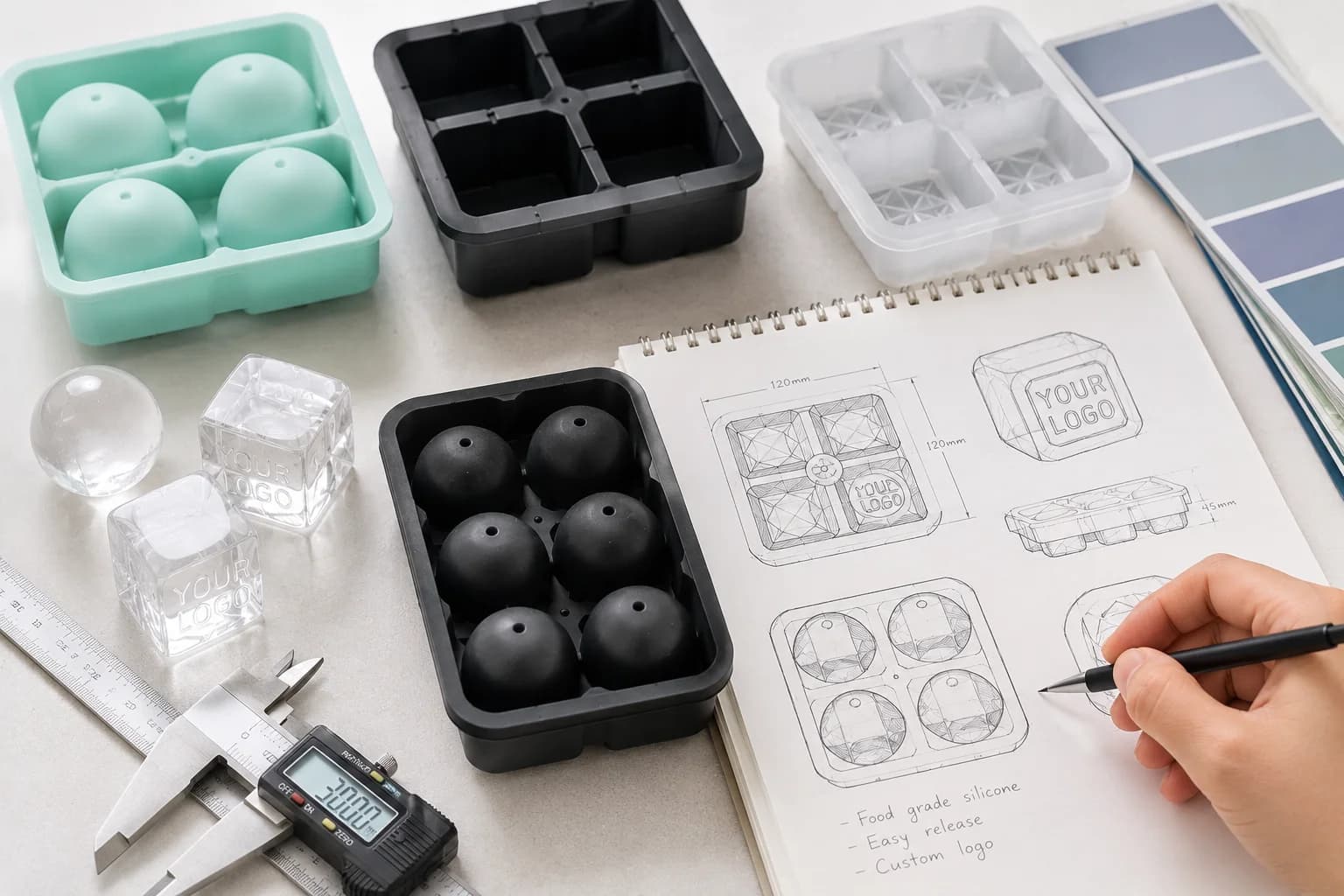
When water freezes, it expands by roughly 9%. In a straight-walled cavity, expansion presses the ice against all vertical surfaces, creating a tight seal. A tapered cavity—wider at the top and narrower at the bottom—allows the expanding ice to push upward slightly, breaking the surface adhesion. The result is a cube that lifts out with a light flex of the tray.
For a related manufacturing reference, review custom silicone ice mold manufacturing.
Practical recommendation: When sourcing custom silicone ice cube trays, request a sample with tapered cavities and compare release force against a straight-wall version. Many OEM suppliers, including Renjia, accommodate custom cavity shapes as part of their product development workflow [K2]. Specify a taper angle of 3–5° for standard cube applications; for spherical or novelty shapes, consider a full draft angle on the upper half.
3. Surface Finish and Material Hardness: Friction and Flexibility
Core conclusion: A smooth interior surface combined with the right silicone durometer (hardness) minimizes friction and allows the tray to flex without tearing.
Silicone trays are typically made from food-grade silicone with a durometer between 30 and 70 Shore A. Softer silicones (30–40 Shore A) offer more flexibility, making it easier to invert the mold and pop out cubes. However, if the silicone is too soft, the tray may deform during filling or handling, causing uneven ice shapes. Harder silicones (60–70 Shore A) hold shape better but require more force to release ice unless the cavity geometry is optimized.
Surface finish also matters. A polished mold surface reduces the microscopic area where ice can bond. Many inexpensive trays have a matte or textured interior, which increases friction after freezing. High-quality easy-release trays are typically produced with a glossy cavity surface, achieved through precise tooling and controlled molding conditions.
Practical recommendation: Specify a silicone durometer of 40–50 Shore A for standard ice cube trays. This range balances flexibility and dimensional stability. Confirm with the supplier that the interior of each cavity is finished to a smooth (preferably polished) surface. Renjia’s product specifications indicate food-grade, odorless silicone with a temperature range of -40°C to 240°C—well suited for freezing applications [K4]. Request a sample to evaluate both flex and release feel at -18°C (typical home freezer temperature).
4. Cavity Depth, Wall Thickness, and Lid Design
Core conclusion: Deeper cavities and thinner walls improve release flexibility but may reduce ice cube uniformity or increase spill risk. A snug-fitting lid can also affect how easily cubes are removed.
For additional context on this decision, see Silicone Hardness for Ice Molds: How Shore A Affects Release and Durability.
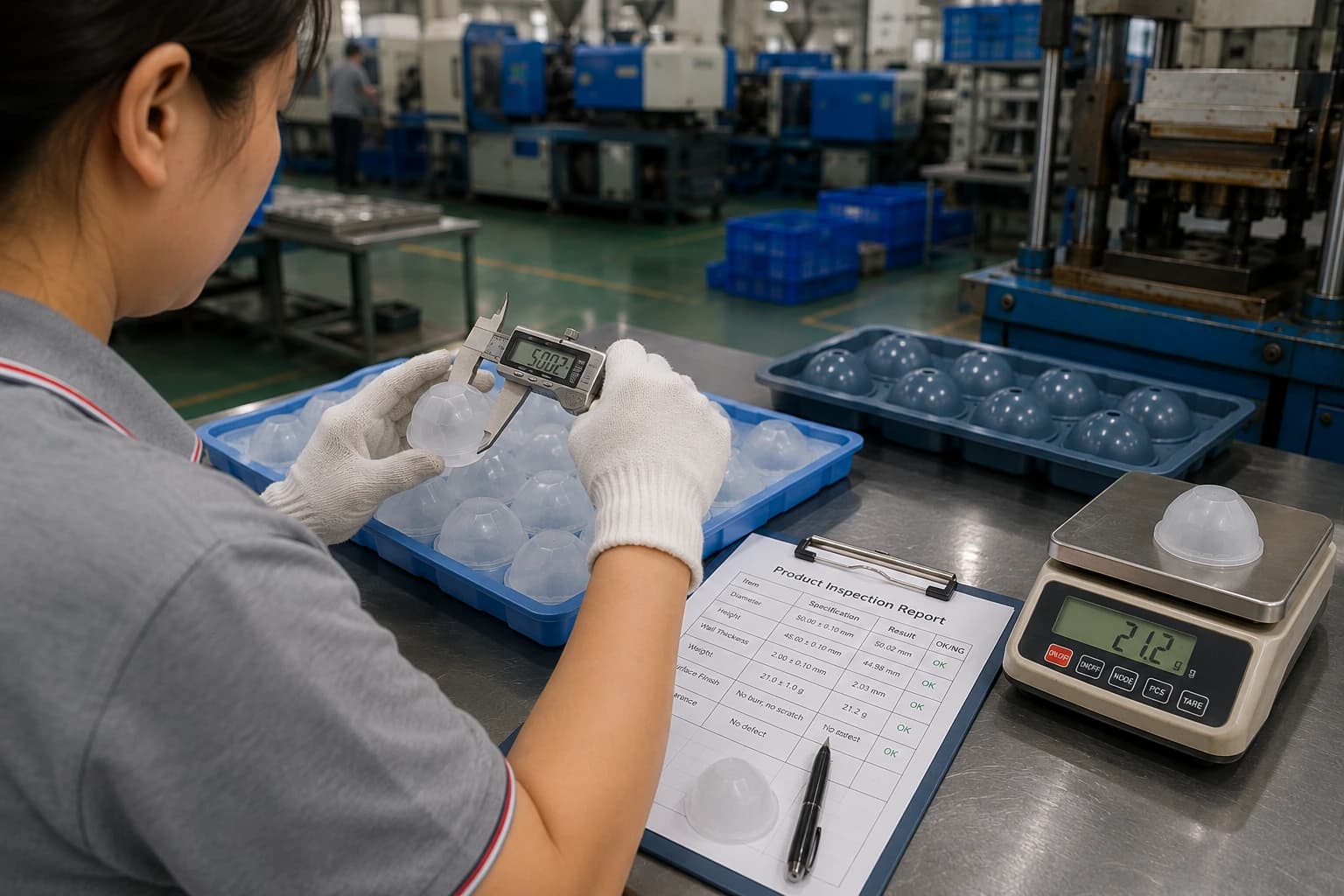
Cavity depth influences how the ice contracts. Shallow cavities (e.g., 10–15 mm deep) release easily but produce small cubes. Deep cavities (25–35 mm) are more challenging because the cube has a larger contact area. To compensate, designers often increase the taper or reduce the wall thickness between cavities. Thin walls (1.5–2.5 mm) flex more, allowing the whole tray to twist and release multiple cubes at once. Thick walls (3–4 mm) are stiffer and may require individual cube removal.
Lids serve two purposes: preventing spills during transport and sealing the cavity to avoid freezer odor absorption. However, a tight-fitting lid that extends into the cavity can create a mechanical lock after freezing. The best lid designs have a flat top that sits flush with the tray rim, leaving a small air gap above the water line so the ice surface does not contact the lid.
Practical recommendation: For easy-release performance, choose trays with cavity depth of 18–22 mm and wall thickness of 2.0–2.5 mm. If a lid is required, ensure it does not protrude into the cavity. Many OEM custom projects can be adjusted: Renjia’s product knowledge base supports customization of cavity shape, size, and overall dimensions [K1][K2]. Ask your supplier for a design review before tooling begins to verify these parameters.
5. Material Compliance and Quality Assurance—Why It Matters
Core conclusion: Even the best mold design fails if the silicone is not food-safe and durable. Verified third-party compliance distinguishes a reliable supplier from a commodity vendor.
All silicone ice cube trays intended for food contact must meet regional safety standards. For example, the EU requires LFGB compliance, while the US FDA sets limits for volatile organic compounds (VOCs) and heavy metals. Renjia has demonstrated compliance via a third-party report from BACL (report number 2601R31742E) covering sensorial examination, color release, total lead and cadmium, platinum catalyst residues, polycyclic aromatic hydrocarbons, and volatile organic matter [K5]. These tests ensure that the material will not impart off-tastes or odors to ice, and will not degrade when repeatedly frozen or microwaved.
A trustworthy supplier should provide:
- Material data sheets specifying food-grade silicone.
- Third-party test reports for the final product (not just raw silicone).
- Documentation that the manufacturing facility follows good manufacturing practices (GMP).
Before finalizing the specification, use How Cavity Layout Affects Filling, Freezing, and Release in Silicone Ice Trays as an additional planning reference.
Practical recommendation: When sourcing easy-release silicone ice cube trays, request a copy of the food-contact test report corresponding to your target market. Confirm that the report covers the finished product, not just a generic material sample. Use the report to verify that the supplier’s production is consistent with the tested material.
6. Frequently Asked Questions
Q1. Why do some silicone ice cube trays still stick after freezing?
Sticking is most often caused by a straight-walled cavity or a rough surface finish. Even food-grade silicone will adhere to ice if the contact area is large and the walls cannot flex away. Look for trays with tapered cavities and a smooth interior.
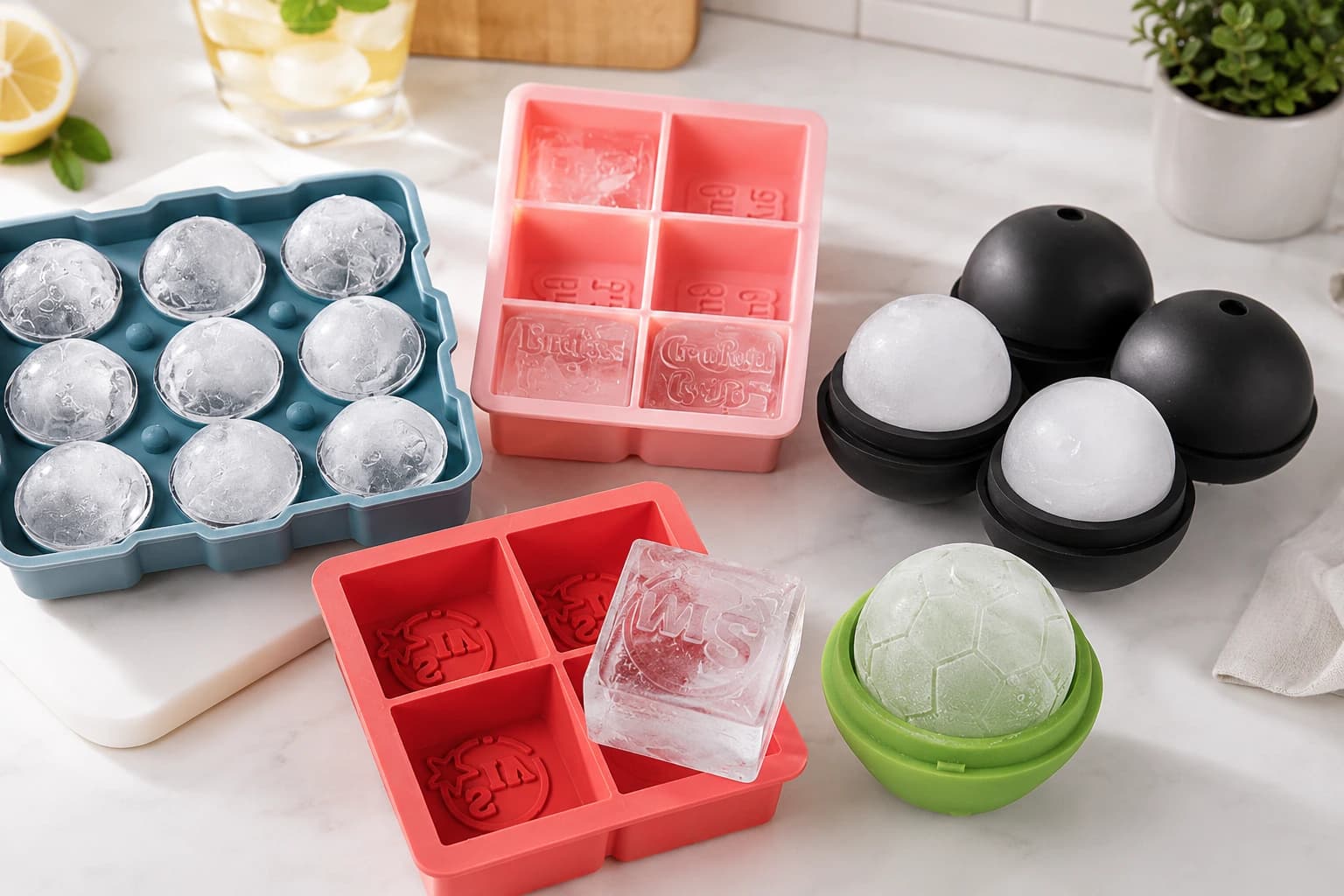
Q2. Can I get custom shapes (e.g., spheres, diamonds, logos) and still expect easy release?
Yes, but the design must account for the shape’s draft angle. Round or dome shapes naturally release better than angular ones. Custom molds can be engineered with appropriate tapers and surface finishes. Renjia’s product line includes custom silicone ice molds for branded ice and promotional trays [K1][K3].
Q3. How do I verify that a manufacturer uses food-grade silicone?
Ask for a third-party food-contact test report (e.g., LFGB or FDA). The report should list the material as food-grade silicone and show passing results for migration, heavy metals, and odor. Cross-check that the manufacturer is named in the report. For example, Renjia’s BACL report specifically identifies “Shenzhen Renjia Technology Co., Ltd.” as the manufacturer [K5].
Q4. What is the typical lead time for a custom silicone ice cube tray project?
Customization includes design review, tooling, sampling, and production. According to Renjia’s knowledge base, typical steps are: design-file preparation, sampling, tooling, packaging, and final quality inspection [K1][K2]. Lead times vary by complexity—expect 4–8 weeks for initial samples, plus 3–5 weeks for production after sample approval. Always confirm with your supplier.
7. Conclusion
Easy-release silicone ice cube trays are the result of deliberate mold design decisions, not a simple byproduct of silicone material. Tapered cavities, polished interiors, optimal durometer, and appropriate wall thickness all contribute to effortless ice removal. For brands and product developers, these parameters can be specified during OEM/ODM sourcing. Rely on verified suppliers with documented food-contact compliance—such as those backed by third-party test reports—to ensure both performance and safety.
When evaluating potential sources, treat the mold design as the primary lever for release performance. Request samples, compare release at freezer temperature, and insist on compliance documentation. With the right design specifications, easy release becomes a predictable feature, not a hopeful promise.