Key Takeaways
- Shore A hardness is one of the most useful specifications to check before buying or ordering a silicone ice mold, because it directly controls ice release and product lifespan.
- Very soft silicone releases ice easily but can stretch, flop, and tear; very firm silicone lasts longer but may require more force to pop out the ice, especially at freezer temperatures.
- Release performance is not caused by hardness alone. Cavity geometry, wall thickness, taper, and the internal surface finish all interact with the hardness value.
- When ordering a custom silicone ice mold, hardness should be tested in a real freezer during the sampling stage, together with food-grade approval and temperature resistance. [K2][K5]
- Ice molds serve household, kitchen, and promotional use cases, so the optimal hardness for a home cube tray may not be the right choice for a branded promotional mold or a heavy-duty commercial mold. [K3][K4]
1. Introduction
Silicone ice molds have become a standard item in home kitchens, bars, and commercial beverage service. They make oversized cocktail cubes, round ice balls, popsicles, and custom-branded ice for events. Compared with rigid plastic trays, silicone is flexible, food-safe, odorless, and survives freezer and dishwasher conditions with less cracking. [K5]
But one specification is often overlooked at the point of purchase: hardness. Silicone is sold in many firmness levels, and the number that describes that firmness — the Shore A value — has a major effect on the daily experience of using an ice mold. A mold that is too soft can distort when filled, feel floppy in the hand, and tear at thin areas after a few weeks of use. A mold that is too hard can be difficult to twist, release ice in fragments, and feel brittle when it comes out of a deep freezer.
This article explains what Shore A means for a silicone ice mold, how hardness affects release and durability, how it interacts with cavity design, and how to pick the right range for home, commercial, or custom OEM/ODM projects. It also points out what to confirm with a manufacturer before committing to a specific formulation. [K1][K2]
2. What Shore A Hardness Means for a Silicone Ice Mold
Core conclusion
Shore A measures how resistant a material is to indentation. In simple terms, it tells you how soft or firm a finished silicone product feels. For a silicone ice mold, the Shore A value predicts flexibility, elasticity, and how much physical stress the mold can absorb.
How the scale works
The Shore A scale runs from 0 to 100, where lower numbers represent softer, more elastic materials and higher numbers represent stiffer, more rigid ones. As a general industry reference, food-contact silicone products such as ice molds are typically compounded roughly in the 30 to 70 Shore A zone. A formulation near the lower end feels gentle, stretchy, and almost rubber-band-like. A formulation near the upper end feels solid, holds its shape, and resists deformation.
No exact hardness value should be assumed for a specific brand without checking its specification. The right starting point depends on the cavity shape, the wall thickness, the intended user, and the production environment. [K3]
Why hardness matters more in the freezer
Silicone becomes stiffer as temperature drops. A mold that feels soft and pliable at room temperature will feel firmer when removed from a freezer. This cold-stiffening effect matters because the moment of release — pulling, twisting, or pressing the mold — always happens at low temperature. If the base hardness is already high, the cold makes the cavity walls even more rigid, and the ice is harder to push out without force.
Hardness also interacts with the material's temperature tolerance. Food-grade silicone used for ice molds is commonly rated for a wide service range, for instance from -40°C to 240°C (-40°F to 464°F), which covers freezing, boiling-water cleaning, and oven use. [K5] But the temperature rating describes the compound's survival limits, not its firmness. A compound rated for -40°C can still hold a Shore A value that is too hard for comfortable ice release.
For a related manufacturing reference, review custom silicone ice mold manufacturing.
What to check before buying
When a product listing does not mention hardness, ask the supplier directly. The same applies to custom projects: the hardness of a silicone ice mold should be confirmed during sampling rather than assumed from the product photo. [K2][K3]
3. Soft vs. Firm: The Trade-Off Between Release and Durability
Core conclusion
There is no single "best" Shore A for every silicone ice mold. Softer silicone tends to release ice more easily but wears out faster. Firmer silicone tends to last longer but demands more from the user at release time. The right choice is a balance, not an extreme.
Low Shore A: easy release, lower durability
A soft mold, roughly in the 30-to-45 Shore A zone, is extremely flexible. When you twist it, the cavity walls bend away from the ice cube, which makes release almost effortless. Soft silicone also works well for one-piece molds with narrow openings or complex details, because the walls can stretch around the frozen shape without tearing.
The weakness is mechanical. Soft silicone lacks the structural strength of a firmer compound. Thin edges, small details, and the area around the mold opening can tear after repeated twisting. The mold also tends to flop when full, which makes it awkward to fill with water and move into the freezer without spilling. It may also deform over time if the silicone does not return to its original shape.
Medium Shore A: the practical balance
Most household silicone ice molds work best in the medium zone of around 45 to 60 Shore A. The material is still flexible enough to release ice with a moderate twist, but it holds its shape during filling and transport. Medium hardness also gives better dimensional stability, which improves the consistency of the finished ice and the legibility of any raised or recessed branding. [K1]
High Shore A: durability at the cost of flexibility
A firm mold in the roughly 60-to-70 Shore A zone is strong. It resists deformation, holds complex geometry, and can handle repeated production cycles in a commercial setting. If the mold is designed with thick walls and simple, tapered cavity openings, a high-hardness formulation can last for years.
The main problem is release. A firm cavity does not bend away easily, and the material becomes even stiffer at freezer temperatures. Aggressive twisting to remove ice can strain the mold, and if the cavity walls are thin, the repeated stress can cause stress marks or cracking over time.
Summary comparison
| Shore A zone (general industry reference) | Flexibility | Ice release | Durability | Common applications | Main risk |
|---|---|---|---|---|---|
| Low (~30–45) | High | Easy; walls bend away quickly | Lower; teardrops at thin sections | Simple home cube trays, one-piece novelty molds | Floppy filling, tearing |
| Medium (~45–60) | Balanced | Good; moderate twist required | Good for regular home use | Everyday silicone ice molds, branded gift molds | Minimal, if wall thickness matches |
| High (~60–70+) | Low | Requires firm twisting; undercuts are hard to release | High; resists repeated and heavy use | Commercial production, thick-walled reusable molds | Ice stuckness, cracks from forced release |
This table is a guide, not a specification. The final hardness must be selected with the specific cavity design in mind, and, for a custom project, verified through physical samples. [K2][K3]
4. How Hardness Interacts with Cavity Design and Customization
Core conclusion
Hardness should not be chosen in isolation. Cavity shape, product size, and branding requirements all determine what hardness will actually work.
Cavity shape
Deep cavities, narrow openings, and undercut shapes put more stress on a mold wall. Popsicle molds and vertical ice block molds, for example, require the user to pull the frozen product out over the full length of the cavity. [K4] If the silicone is too soft, the mold may tear at the opening during removal. If it is too hard, the frozen product may shear or break before the wall flexes enough to release it.
For additional context on this decision, see Custom Ice Mold Wall Thickness: Balancing Flexibility, Stability, and Cost.
Shallow cavities, such as standard cube trays, tolerate a wider range of hardness because the release distance is short. For this reason, suppliers typically recommend different hardness ranges for different mold formats. [K1]
Size and wall thickness
A large-format ice mold for cocktail spheres or tall cubes needs thicker walls simply to support its own weight when full. [K4] With thick walls, the material can be softer overall without losing stability. Conversely, a thin-walled tray needs a firmer compound to hold its shape, but the increased hardness must be offset by a smooth internal surface and a slight taper so that the ice can still be released.
Branding and logo work
Custom silicone ice molds are often ordered with a logo, custom color, or embossed detail. [K1] Soft silicone deforms around the logo area during handling and repeated flexing, which can shorten the visible life of the imprint. A medium-to-firm formulation keeps the branding area stable and legible. If the design includes a raised logo on the mold surface, the surrounding wall should not be so thick that the logo pocket collects ice residue. [K1][K2]
Sampling and tooling
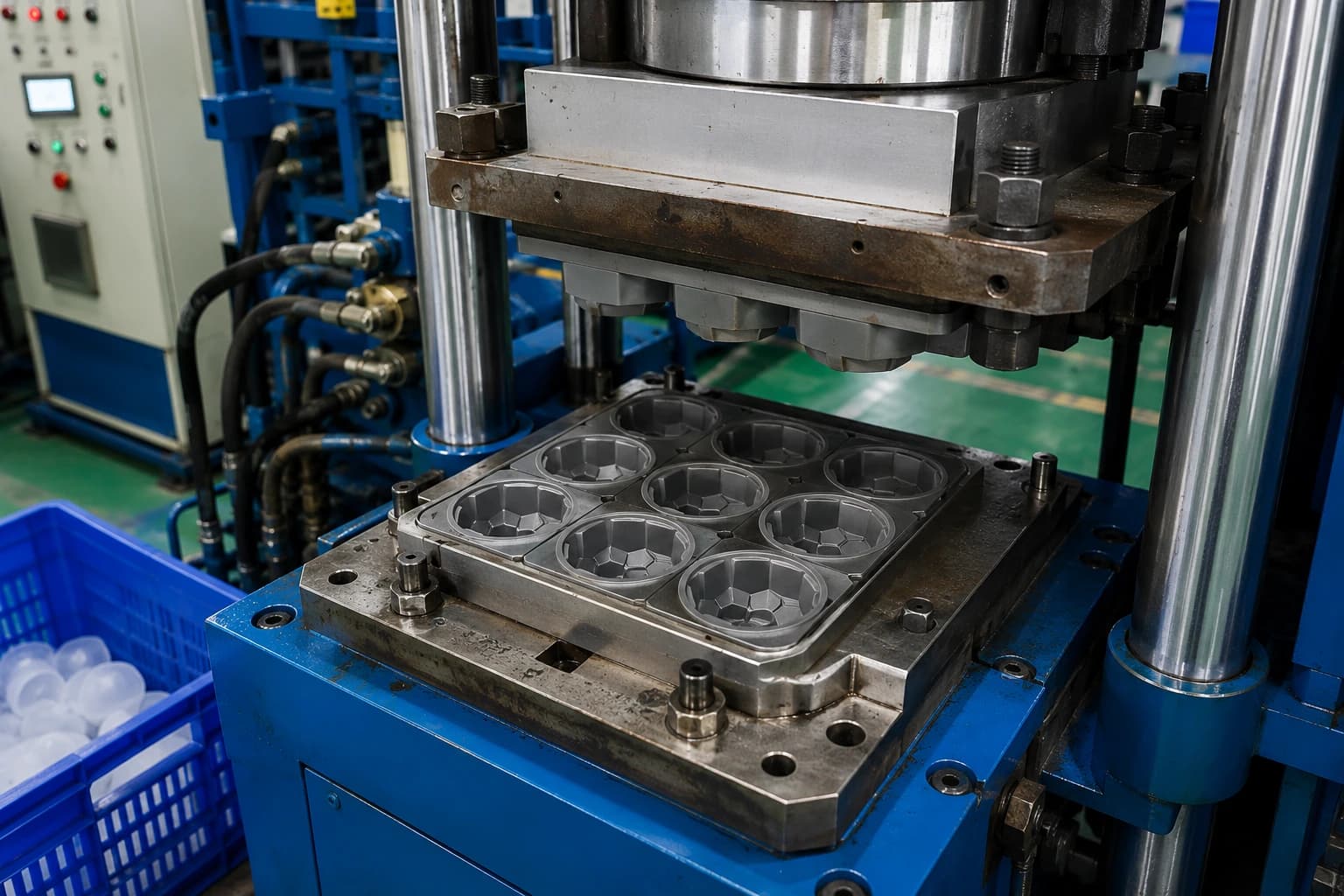
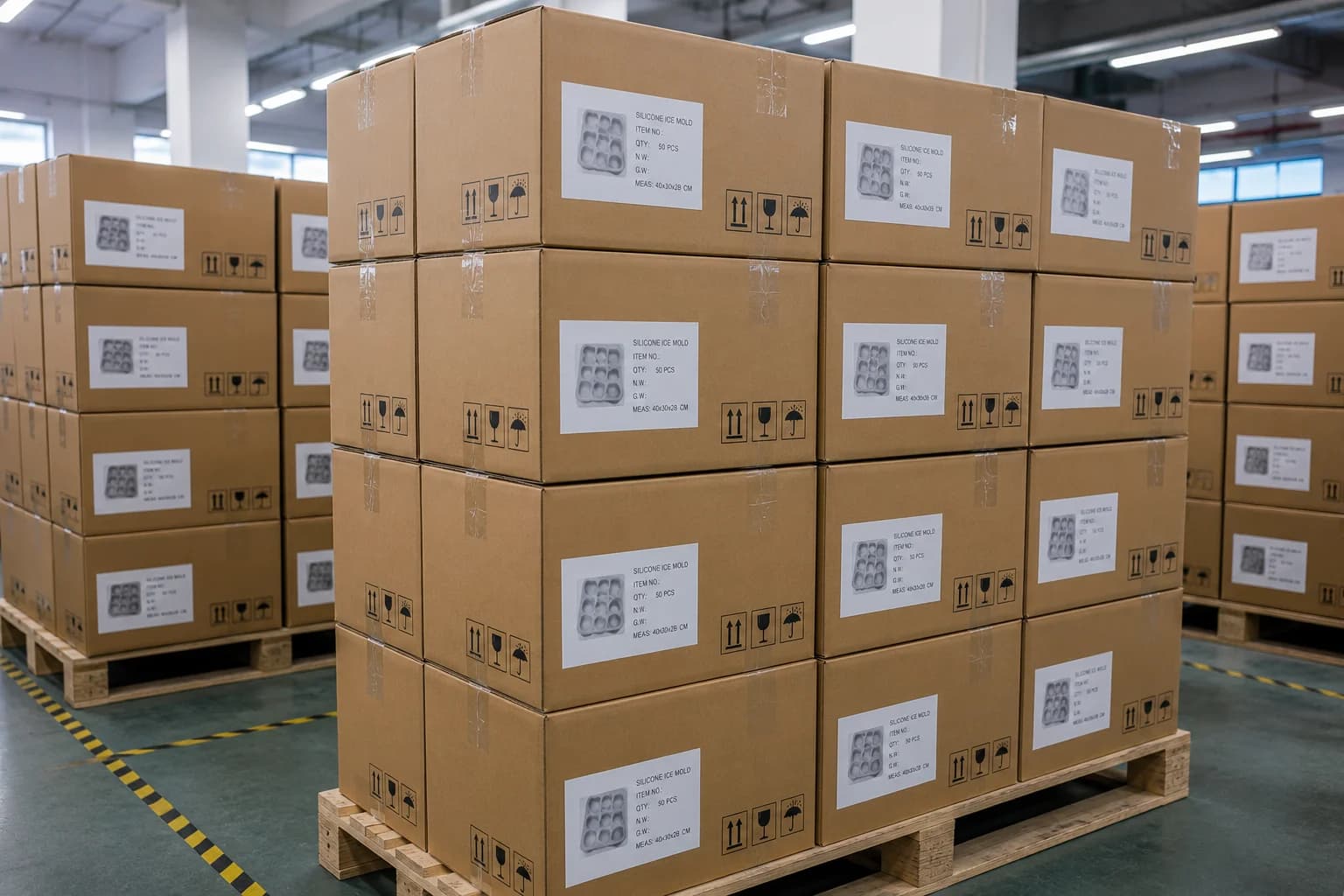
For an OEM/ODM project, sampling is the step where hardness decisions should be tested. The typical project flow moves through design review, sampling, tooling, and production planning. [K2] A practical approach is to request two or three samples in different Shore A values and test them in an actual freezer:
- Fill the samples with water and freeze them for the planned cycle time.
- Twist and release the ice exactly as the end user would.
- Repeat the test several times to check for tearing, deformation, or stress marks.
- Review the mold after cleaning and drying to see whether the surface has changed.
This test is also the moment to confirm that the formulation is food-grade, odorless, and within the required temperature range, because these properties affect the final product specification. [K5]
5. How to Choose Shore A for Your Use Case
Core conclusion
Match the hardness to the user, the mold format, and the volume of use. A few common scenarios cover most sourcing decisions.
Scenario 1: Home ice cube trays
For everyday cubes, a medium Shore A in the roughly 45-to-60 zone is usually the most comfortable choice. It is firm enough to fill and carry, flexible enough to release ice with one or two gentle twists, and durable enough for normal weekly use.
Scenario 2: Popsicle and novelty molds
Popsicle molds and novelty shapes require more careful handling because the frozen product is pulled through the full cavity length. [K4] A medium-to-soft formulation with adequate wall thickness usually works best. The softer material reduces the risk of the popsicle breaking during removal, while the wall thickness protects against tearing.
Scenario 3: Ice ball trays and two-piece molds
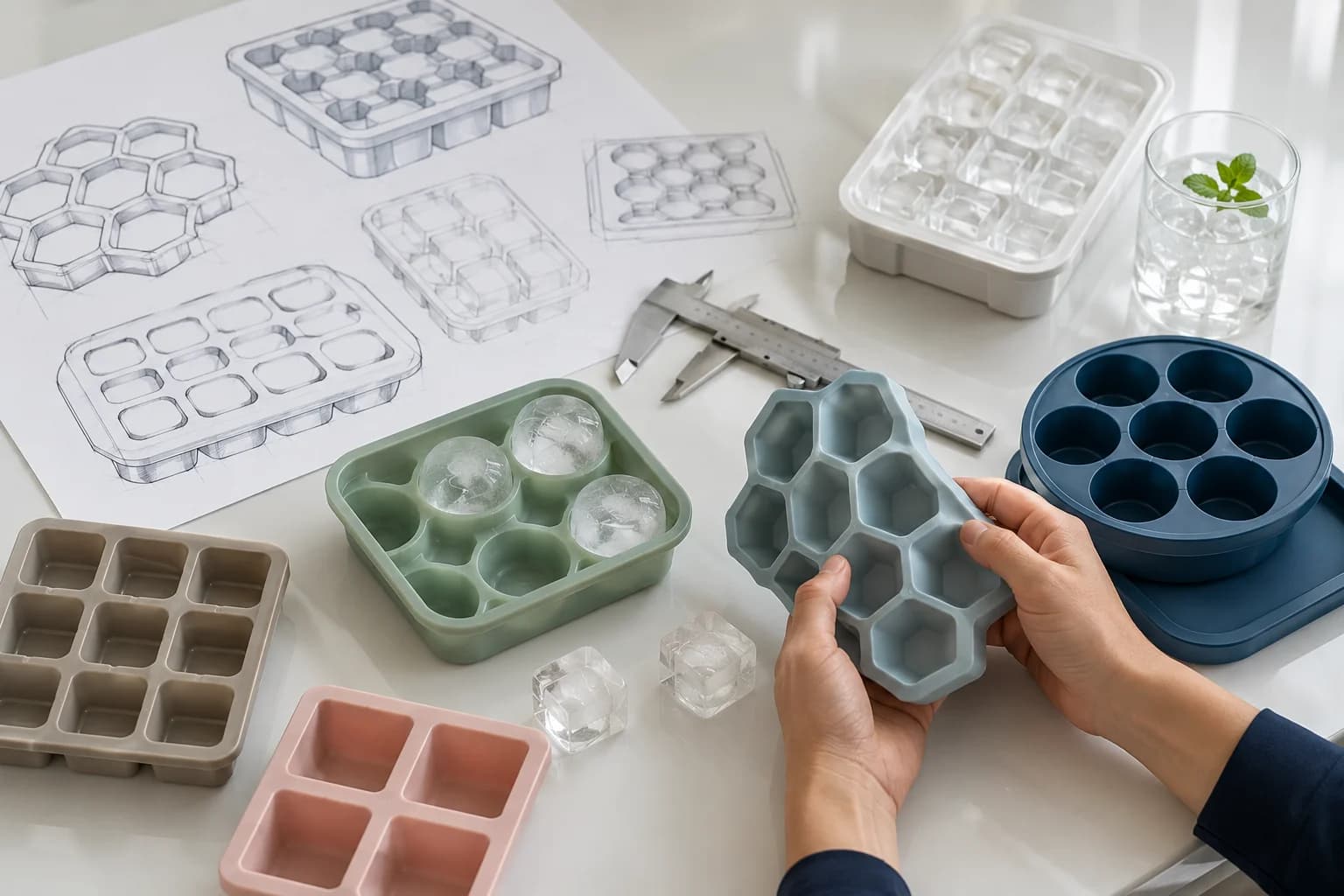
Ice ball and sphere molds are typically assembled from two halves, then opened after freezing. [K4] This format needs flexible walls so the seam can open without cracking. A firm material can work, but only if the seam design and hinge geometry are engineered for it. If in doubt, choose the flexible end of the medium zone and test the seam under repeated opening.
Before finalizing the specification, use Easy-Release Silicone Ice Cube Trays: How Mold Design Affects Performance as an additional planning reference.
Scenario 4: Commercial or high-frequency use
Commercial kitchens and high-volume bars need molds that survive hundreds of cycles, frequent dishwasher exposure, and stacking. In this case, a firmer formulation protects the product's lifespan. The release problem should be solved by design: wider mouths, tapered cavity walls, smooth internal finish, and a mold shape that can be pressed from the base rather than twisted violently.
Scenario 5: Promotional and branded molds
Promotional ice molds are shipped as gifts, event giveaways, or retail items. The buyer expects both good performance and a clean finished appearance. [K3][K4] Medium hardness, a simple cavity design, and a visible but protected brand area are the safest combination. Soft, floppy molds look low-quality on a shelf and damage more easily in transit.
Questions to ask a manufacturer
When sourcing a custom silicone ice mold, these questions help convert a general requirement into a concrete specification: [K1][K2]
- What Shore A hardness do you recommend for this cavity shape and size?
- What is the temperature resistance range of the food-grade compound? [K5]
- Can I receive samples in two different hardness levels before tooling?
- How does the hardness choice affect the estimated mold lifespan?
- What is the MOQ, and how does the hardness change the sampling or production timeline? [K2]
6. FAQ
Q1. What Shore A hardness is best for a silicone ice mold?
For most household use, a medium Shore A value in the roughly 45-to-60 zone is a good working range. Use softer material for complex or deep cavities that need easier release, and firmer material for thick-walled, high-durability commercial molds. The exact number should be confirmed with the manufacturer and tested with a physical sample in an actual freezer. [K2][K3]
Q2. Does softer silicone always release ice better?
Generally yes, because flexible walls bend away from the ice more easily. But hardness is only one variable. A well-designed cavity with tapered walls, a smooth internal surface, and moderate wall thickness can release ice well even with a firmer compound. A soft mold without adequate thickness may feel floppy and still tear around the cavity opening.
Q3. Can hardness affect how long a silicone ice mold lasts?
Yes. Directly. Soft silicone has lower mechanical strength and tends to tear at thin edges, hinge points, and corners. Firmer silicone resists wear better and maintains its shape across many more cycles. The trade-off is release force: a firmer mold that requires aggressive twisting can generate stress in the material, so the mold must be designed to release cleanly without excessive force.
Q4. Is Shore A hardness always listed in product specifications?
Not always. Many retail listings omit it. For a custom silicone ice mold project, the Shore A value should be confirmed during the sampling stage, along with the food-contact grade, odor requirements, and temperature resistance range. [K5] If a supplier will not state the hardness or provide a sample, treat the specification as unverified. [K3]
7. Conclusion
Shore A hardness determines the personality of a silicone ice mold: how it feels in the hand, how cleanly it releases ice, and how long it survives repeated use. Soft molds win on release but lose on durability. Firm molds win on strength but punish poor design with stubborn release and stress cracking.
The practical answer for most buyers and sourcing teams is the medium zone: flexible enough for easy release, structured enough for stable handling, and durable enough for regular use. For custom projects, the decision should be made through the sampling process, where cavity design, wall thickness, branding, and the physical freezer test come together. [K2]
When you source a custom silicone ice mold, treat hardness as a core specification, not a side detail. Confirm the material's food-grade status and temperature resistance, request samples at different hardness values, and verify performance under realistic conditions. [K1][K5] That discipline separates a mold that produces clean ice for years from one that is frustrating from the first use.