Key Takeaways
- The market is moving from generic cube trays toward personalized ice trays where cavity shape, size, color, logo, and packaging are all part of the product design, not afterthoughts.
- Silicone is the usual material for this category because it is food-grade, odorless, and rated for roughly -40°C to 240°C (-40°F to 464°F), which covers both freezing and dishwasher/oven-adjacent handling conditions [K5].
- A custom shape project follows a predictable sequence: design review → tooling → samples → mass production, with typical lead times of about 15 working days for the mold, 7–10 working days for custom samples, and 15–20 working days for bulk production after confirmation [K2].
- Commercial planning usually starts at a custom-order MOQ of around 500 pcs, though the final number depends on design, tooling, packaging, and scheduling [K2].
- Buyers who treat shape, packaging, and sample approval as one project from the start avoid most of the cost and delay problems in this category.
1. Introduction
A few years ago, buying an ice mold was a commodity decision: you picked a tray size, checked the price, and moved on. That has changed. Bars want a single large clear cube with a logo on the tray. Coffee brands want ice in the shape of their cup. Hotels want trays that match their glassware. Promotional buyers want a shape that carries a campaign. The result is a steady migration from "custom manufacturing ice mold" as a generic request toward custom shape ice mold development — and, at the consumer end, the rise of personalized ice trays.
The shift creates a new set of questions for buyers. What can actually be customized? How long does a new shape take? What is the minimum order? Where does cost really come from — the mold, the material, or the packaging? And how do you approve a sample for a product that only reveals its real quality after it has been filled, frozen, twisted, and washed a few dozen times?
This article answers those questions in practical terms. It explains what "custom shape" means in a silicone ice mold project, how the development path runs from design file to production, what commercial terms usually look like, and which checks separate a smooth launch from an expensive lesson. The focus is on food-grade silicone molds, since that is where most shape-led innovation in personalized ice trays currently happens [K1][K5].
2. Why the category moved from "a mold" to "a designed object"
Core conclusion: the value of an ice mold now sits as much in the shape and the brand surface as in the freezing function. Once a buyer stops treating the tray as packaging and starts treating it as a branded touchpoint, the specification list expands — and so does the reason to work with a development partner rather than a catalog.
Three forces drive this.
First, differentiation at the point of use. Ice is visible. In a glass, on a bar top, in a product photo, the shape is the message. A cavity that produces a sphere, a faceted cube, a monogram, or a two-part animal silhouette reads differently than a standard grid of blocks.
Second, brand surfaces on the product itself. A silicone tray can carry a debossed or embossed logo, a custom color, and printed or custom packaging. These are standard customization options within custom silicone ice mold development, alongside cavity design, product shape, size, and packaging [K1]. That combination lets a buyer ship a single SKU that works as a retail product, a gift, and a promotional item.
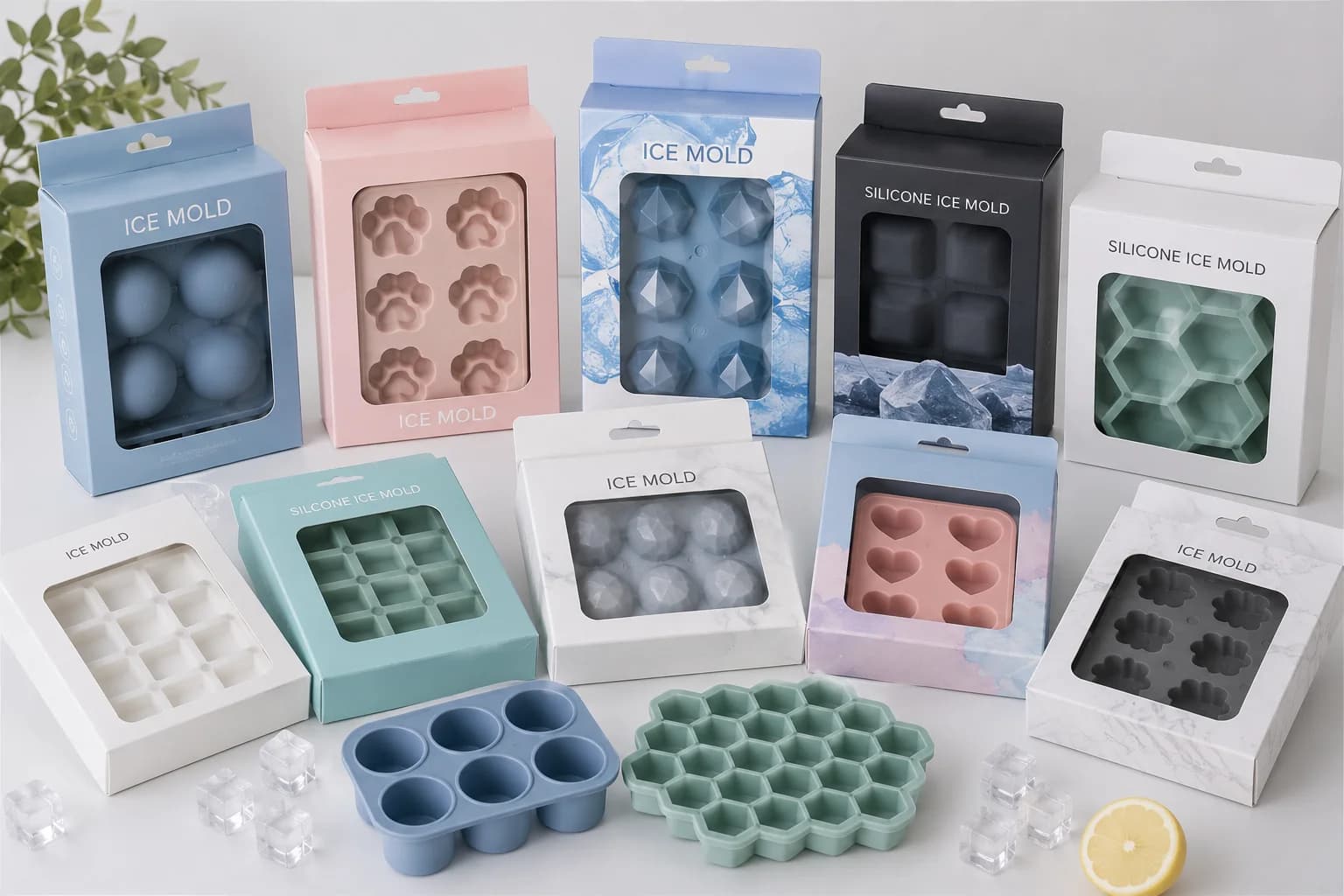
Third, material fit. Silicone is food-contact grade, odorless, and tolerant across a wide temperature range of about -40°C to 240°C (-40°F to 464°F) [K5]. Practically, that means the same mold family can handle freezer use and the kind of heat exposure that comes with washing or kitchen proximity without a material change forcing a redesign.
Practical advice: before requesting quotes, decide which of these three forces is the actual business case. A promotional run with a 6-week deadline has very different tolerances from a retail SKU that will be reordered for two years. Writing that down first prevents the most common project failure — a design that is beautiful in 3D and unbuildable within the buyer's timeline.
For buyers who want to see how the full silicone OEM/ODM scope is organized, the custom silicone ice mold development overview at Renjia is a useful starting point [K1].
3. What "custom shape" actually includes
Core conclusion: a custom shape is not a single decision about the cavity outline. It is five or six linked decisions — cavity geometry, overall size, color, logo, artwork, and packaging — and each one affects tooling, sampling, and cost.
| Customization dimension | What it changes | Typical buyer decision |
|---|---|---|
| Cavity design | The shape and finish of the ice itself | Cube, sphere, faceted, novelty, logo-form |
| Product shape and size | Tray footprint, cavity count, wall thickness | Retail shelf fit, freezer fit, portion size |
| Color | Silicone pigment, opacity, matching | Brand palette, gift vs. everyday line |
| Logo and artwork | Deboss, emboss, print, placement | Brand visibility vs. clean aesthetic |
| Packaging | Box, sleeve, insert, printed card | Retail, e-commerce, promotional distribution |
Two boundaries are worth stating plainly.
The cavity geometry drives the mold, so late shape changes are the most expensive changes. Adjusting a color or a packaging print late is comparatively cheap; re-cutting a cavity is not. Buyers should lock the ice shape and tray dimensions before approving anything downstream.
Not every dimension is independently free. A very thin wall paired with a very large cavity may not release cleanly, and a highly detailed novelty shape may need compromises on demolding or on how crisp the final ice edges appear. These are manufacturing conversations, not marketing ones, and they are best had while the design file is still editable.
Practical advice: prepare a design brief that covers cavity design, product shape, size, color, logo, and packaging together, because that is how the customization scope is normally quoted and reviewed [K1]. A brief with a drawing but no packaging direction tends to come back with either a provisional price or a delay. Also specify what the product must not do — for example, whether the tray must stack, hang, or fit a specific freezer drawer — since negative constraints catch more design problems than positive preferences do.
4. From design file to production: the development path
Core conclusion: custom shape silicone projects are predictable if you plan against four milestones — design confirmation, tooling, sample approval, and production — rather than against a single "delivery date."
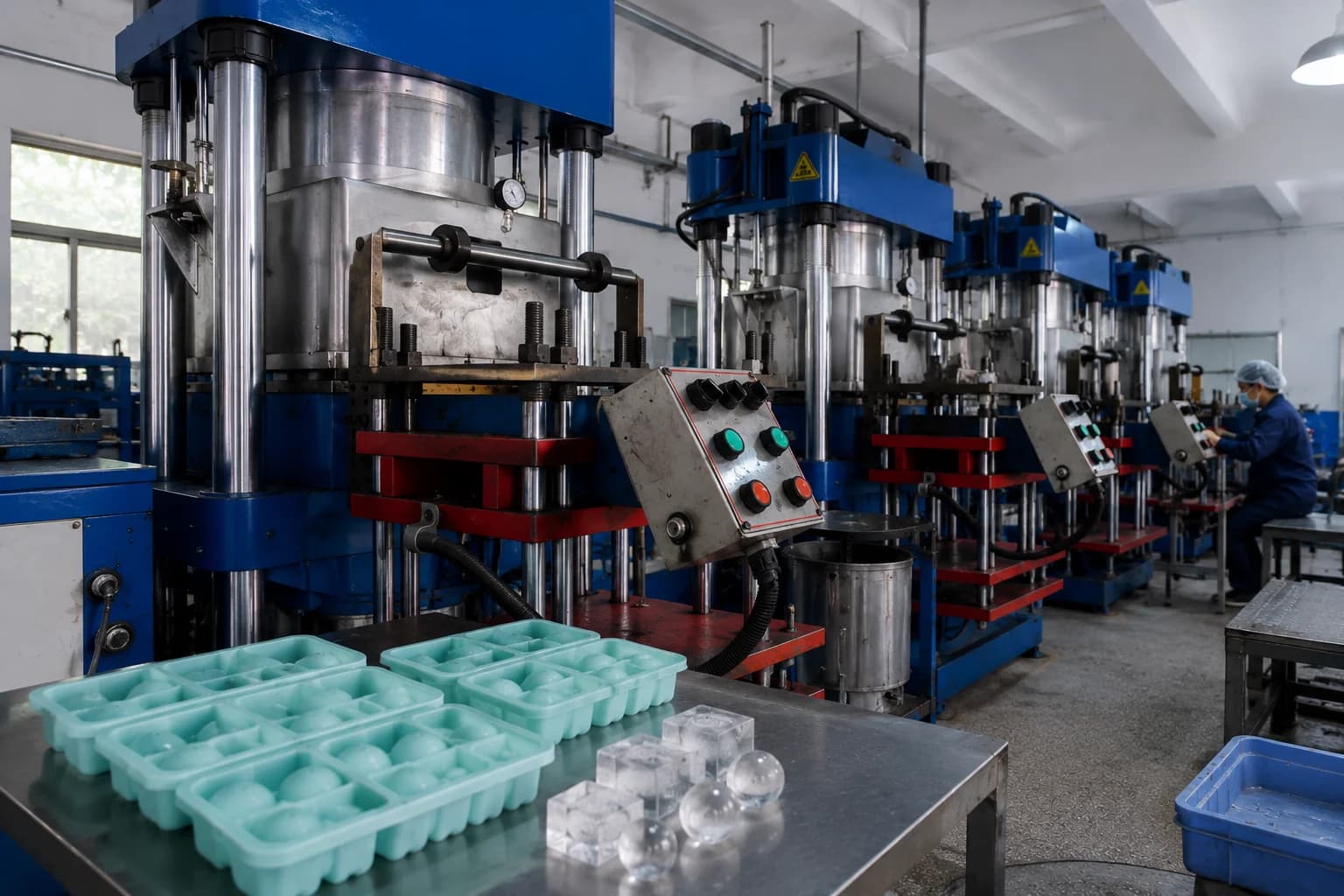
The sequence usually runs like this:
- Design review. The buyer submits design files and project requirements. The mold fee is quoted after this review, not before, because tooling cost depends on the actual geometry and specification [K2].
- 3D design confirmation. Once the 3D design is confirmed, mold lead time is typically about 15 working days [K2].
- Sampling. Custom samples usually take about 7–10 working days after design and specification confirmation. Where an existing stock sample is available, that can be dispatched in roughly 1–2 working days, subject to stock and shipping arrangements [K2].
- Sample approval. The buyer evaluates the physical sample against the brief — shape fidelity, release behavior, finish, logo legibility, color match, packaging fit — and either approves or requests changes.
- Mass production. Bulk production typically runs 15–20 working days after the order and production details are confirmed [K2].
- Inspection and shipment. Pre-shipment checks against the approved sample and the agreed packaging specification.
Practical advice: do not compress the sample stage to save a week. The sample is the only point where the ice shape, the demolding feel, and the packaging fit can be judged together, and it is far cheaper to change a cavity or a print position there than in a production run. Build the approval loop into the timeline explicitly, and keep the approved sample as the reference standard for pre-shipment inspection.
A detailed walkthrough of how custom silicone mold projects move from design review to production is available here, including where buyers typically need to give input [K3].
Two cautions belong in every plan. First, lead times are counted from confirmation milestones, not from the date of inquiry — a slow design sign-off shifts everything after it. Second, sample availability and any free-sample eligibility, freight, taxes, and custom-sample charges are confirmed case by case rather than assumed as a standard entitlement [K2].
5. Commercial terms and buyer considerations
Core conclusion: most surprises in this category come from three numbers — MOQ, mold fee, and the cost of packaging — and all three are negotiable only within the logic of the design.
| Item | Typical position | What buyers should confirm |
|---|---|---|
| Custom-order MOQ | Usually 500 pcs; final MOQ varies by design, tooling, packaging, product requirements, and production scheduling [K2] | Whether MOQ changes if packaging is simplified |
| Mold fee | Quoted after design files and project requirements are reviewed [K2] | What is included, and whether the tool is dedicated to the buyer |
| Stock sample | Usually 1–2 working days, subject to stock and shipping [K2] | Whether a suitable existing shape is close enough to evaluate |
| Custom sample | Usually 7–10 working days after design and spec confirmation [K2] | How many rounds of revision are included |
| Mass production | Usually 15–20 working days after order and details confirmed [K2] | Whether packaging is produced in parallel or in sequence |
| Mold lead time | Usually about 15 working days after 3D design confirmation [K2] | Who signs off on the 3D file, and when |
A few practical notes on each.
MOQ. The ~500 pcs figure is a planning anchor, not a universal rule. Multi-cavity designs, complex novelty shapes, and printed packaging all push the economic minimum in different directions. If a first order must be smaller, the realistic levers are usually simplifying the packaging or choosing an existing cavity family rather than negotiating the number in isolation [K2].
Mold fee. Because it is quoted after design review, a buyer who asks for a mold price before sending a drawing will get either a range or a delay. Send the file, the size, the color direction, and the packaging concept together.
Samples. Distinguish clearly between a stock sample used to judge material and finish, and a custom sample that verifies the actual shape. Stock samples can move in a day or two; a custom cavity cannot, because the tool has to exist first [K2].
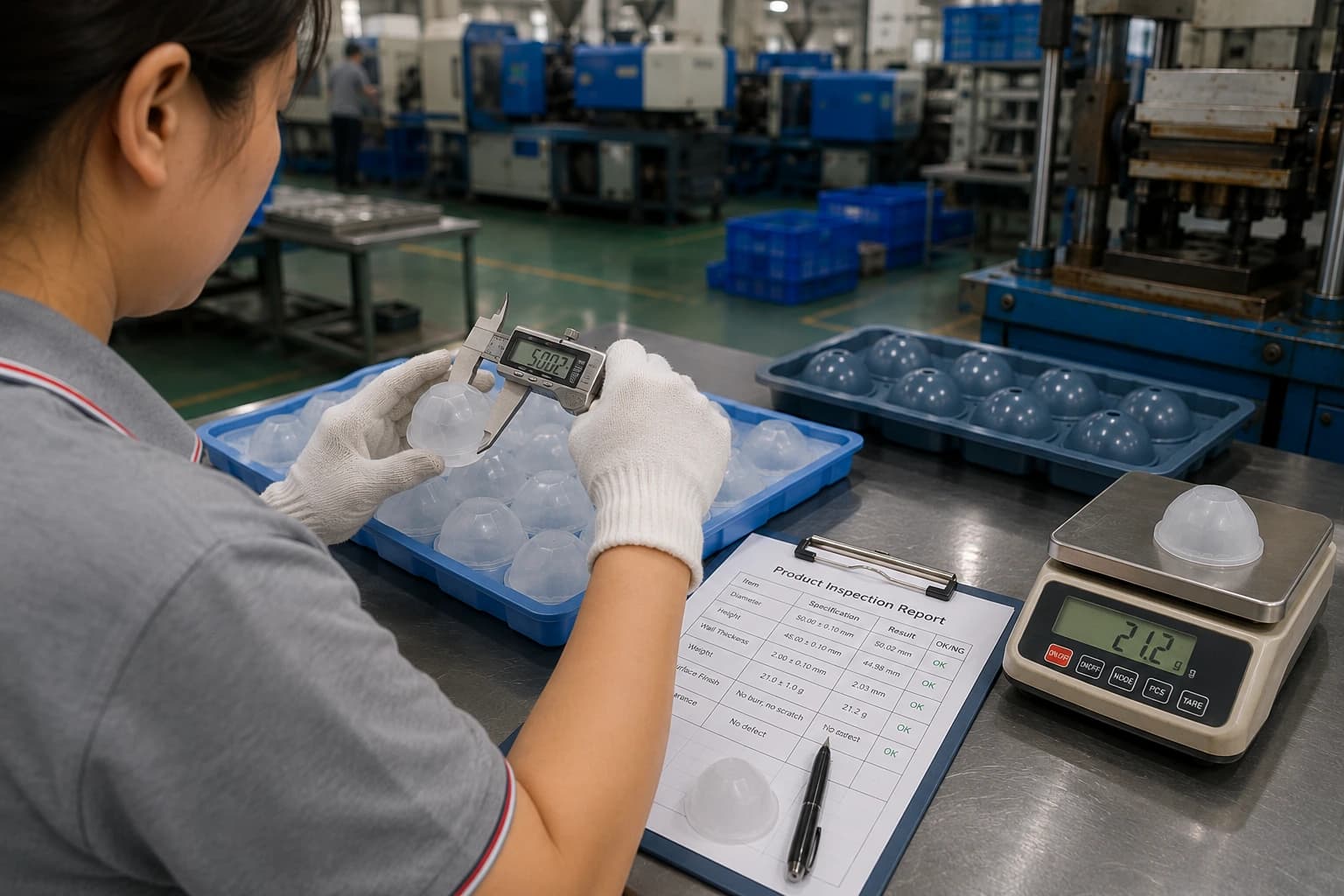
Compliance and documentation. Market-specific requirements should be planned rather than assumed. Ask what documentation the supplier can actually provide for your destination market, and treat unverified certification claims as a risk signal, not a selling point — the same discipline applies across silicone household categories [K3][K4].
Buyers preparing a first project can use a structured pre-order checklist covering tooling, sampling, and lead-time planning to keep these items in one place [K3].
6. FAQ
Q1. What is a realistic minimum order for personalized ice trays?
A custom-order MOQ is typically around 500 pcs, but the final figure may vary by design, tooling, packaging, product requirements, and production scheduling [K2]. If your first run is smaller, ask whether simplifying packaging or selecting an existing mold family changes the minimum before assuming the answer is no.
Q2. How long does a custom shape ice mold project take end to end?
Plan on roughly 15 working days for the mold after 3D design confirmation, about 7–10 working days for custom samples after design and specification confirmation, and 15–20 working days for mass production after order and production details are confirmed [K2]. Added together with approval time, a first project commonly spans several weeks to a couple of months depending on revision rounds and shipping.
Q3. What design files and information should I send to get an accurate quote?
Send design files plus project requirements: the intended ice shape, tray size and cavity count, color direction, logo or artwork placement, and packaging concept. The mold fee is quoted after the supplier reviews the design files and requirements [K2], so completeness directly shortens the quoting cycle.
Q4. Is silicone suitable for both freezing and washing?
Food-grade silicone used in these molds is odorless and rated for approximately -40°C to 240°C (-40°F to 464°F), which covers normal freezer use and typical washing conditions [K5]. Confirm handling and cleaning instructions with your supplier for your specific product and market.
7. Conclusion
The move from a generic custom manufacturing ice mold to a designed custom shape ice mold is really a shift in what buyers are purchasing: not a tray, but a small branded object with a shape, a surface, and a package that all have to work together. That makes the category more rewarding and less forgiving at the same time.
The practical judgment is straightforward. If your goal is a distinctive ice form for a bar program, a retail SKU, or a promotional campaign, the project is very achievable — provided you lock the cavity geometry early, treat the sample as a decision point rather than a formality, and plan MOQ, tooling, and packaging as one commercial package. If your timeline is tight and your shape is still undecided, start with a stock sample to evaluate material and finish while the custom design matures.
A sensible next step: write a one-page brief covering shape, size, color, logo, artwork, and packaging, and send it for design review and a tooling quote. That single document is what turns personalized ice trays from an idea into a schedule you can hold a launch date against.