Key Takeaways
- Cloudy ice is not a water-purity problem alone. It is mostly a freezing-direction problem: ice that freezes from all sides at once traps dissolved air and minerals in the center.
- Directional freezing (insulating everything except one surface) is the single most reliable home method for producing crystal clear cubes. Boiling or filtering water helps, but does not replace directional freezing.
- For whiskey, larger cubes and spheres in the 1.75–2.25 inch (45–57 mm) range dilute a drink more slowly than small cubes, because they have less surface area per unit of volume.
- Food-grade silicone molds are the practical choice for most home users because they release cleanly, tolerate temperature ranges such as -40°C to 240°C (-40°F to 464°F) [K5], and can be produced in custom shapes, sizes, colors, logos, and packaging for brands [K1].
- If you are sourcing molds for a brand rather than for your own freezer, confirm material composition, dimensions, certifications, MOQ, and lead time before publishing product claims or quotations [K4].
1. Introduction
A perfectly clear ice cube is one of those small details that changes how a drink looks and tastes. Cloudy, fractured ice melts fast, waters down whiskey within minutes, and reads as an afterthought on a bar cart. Clear ice melts visibly slower, releases far fewer trapped gases, and lets a whiskey or an iced coffee look the way it does in a good bar.
The frustration for most people at home is that the obvious solutions don't deliver. They buy filtered water. They buy the best ice molds for whiskey that reviews recommend. They still end up with milky, cracked cubes, and they conclude that clear ice requires professional equipment they don't have.
That conclusion is wrong, but it is understandable, because most advice skips the actual mechanism. Cloudiness comes from dissolved air and dissolved solids being pushed to the middle of a cube as it freezes from the outside in. If you control where freezing starts, you control where the cloudy material ends up — and you can leave it in a discardable slab instead of in the cube you serve.
This guide explains the mechanism in practical terms, compares the home methods that genuinely work, gives you selection criteria for whiskey-specific molds, and covers what to check if you are sourcing custom silicone ice molds for a product line rather than for your own kitchen.
2. Why Ice Turns Cloudy — and What Actually Controls It
Core conclusion: cloudy ice is a freezing-process artifact. Water quality is a secondary variable.
Reasoning: Tap water, filtered water, and even many bottled waters contain dissolved gases (mostly air) and trace minerals. When water freezes slowly and evenly from all directions, the advancing ice front pushes those dissolved substances ahead of it. The last pocket of water to freeze — usually the center of a cube — carries a high concentration of them. That pocket freezes last, under pressure, and appears as a white core, a cloudy streak, or a crack line.
Two things follow from this:
- Reducing dissolved gas helps. Boiling water and letting it cool reduces dissolved air, which is why double-boiled water produces noticeably clearer ice than straight tap water — but only noticeably, not perfectly.
- Controlling direction matters more. If you insulate five sides of a container and leave one side open to the freezer air, ice begins freezing at that exposed surface and grows downward. The bubbles and minerals get pushed down into the bottom layer, which you can cut off and throw away. The upper portion is clear.
Practical scenario: A home bartender who boils water twice and freezes it in a standard tray gets maybe 40–60% clarity — better than before, still visibly clouded. The same person who freezes that water in an insulated cooler with the lid off, for 18–24 hours, then lets the block temper and cuts it, gets essentially clear blocks with a cloudy bottom slab to discard.
For a related manufacturing reference, review clear ice cube.
Caution and boundary conditions:
- Freezing too fast is the enemy. A freezer set to its coldest setting, or a small tray placed against a freezer wall, defeats directional freezing. Aim for a moderate freezer temperature and keep the container away from the coldest airflow.
- Water expands roughly 9% when it freezes. Do not fill a rigid container to the brim.
- Very hard water with high mineral content will still leave some haze even under ideal freezing conditions. Filtering is a supporting measure, not a substitute for direction.
3. Home Methods Compared: What Works and What Doesn't
Core conclusion: there is a clear ranking of effort-to-result. The cooler method wins for volume; directional silicone trays win for convenience.
| Method | How it works | Typical result | Effort | Best for |
|---|---|---|---|---|
| Standard plastic tray, tap water | Freezes from all sides at once | Consistently cloudy | Very low | Everyday chilling, not presentation |
| Standard tray, boiled/cooled water | Fewer dissolved gases | Partly clearer, still cloudy core | Low | A quick improvement with no new equipment |
| Silicone tray with insulated shell | Lid and sides restrict heat flow, ice freezes from the open top | Clear to mostly clear cubes | Low–medium | Whiskey cubes in small batches |
| Sphere mold, slow freeze | Slow freezing plus directional design reduces trapped air | Clear spheres, often with a small cloudy base | Medium | Single large-format whiskey serves |
| Insulated cooler, lid removed | Strong one-direction freeze; cloudy material concentrates at the bottom | Large clear block, cut to size | Medium–high | Batch production, parties, cocktail programs |
| Commercial clear-ice machine | Continuous directional freezing with controlled agitation | Near-perfect clarity at scale | High cost | Bars and high-volume venues |
Reasoning: the cooler method produces the clearest results because the insulation is thick and the freezing column is tall, giving dissolved gas a long path to travel before it is trapped. Silicone trays with an insulated shell use the same principle in a smaller footprint, which is why they have become the default recommendation for home whiskey drinkers.
Practical advice:
- Give the cooler method 18–24 hours for a typical small cooler. A block that is still slushy in the middle will crack when you remove it.
- Let the block temper at room temperature for 5–15 minutes before cutting. Warm the outside, not the core. Cutting a block straight from the freezer is the most common cause of shattered cubes.
- Work on a folded towel over a cutting board. Use a serrated knife, an ice saw, or score a line and tap with a mallet. Wear a cut-resistant glove.
- Store finished cubes in an airtight bag or container in the freezer. Clear cubes left exposed will frost over within a day or two, which undoes the visual result.
4. Choosing the Best Ice Molds for Whiskey
Core conclusion: for whiskey specifically, size and melt rate matter more than shape novelty, and material quality determines whether the mold is still usable after 50 cycles.
For additional context on this decision, see best ice molds for whiskey.
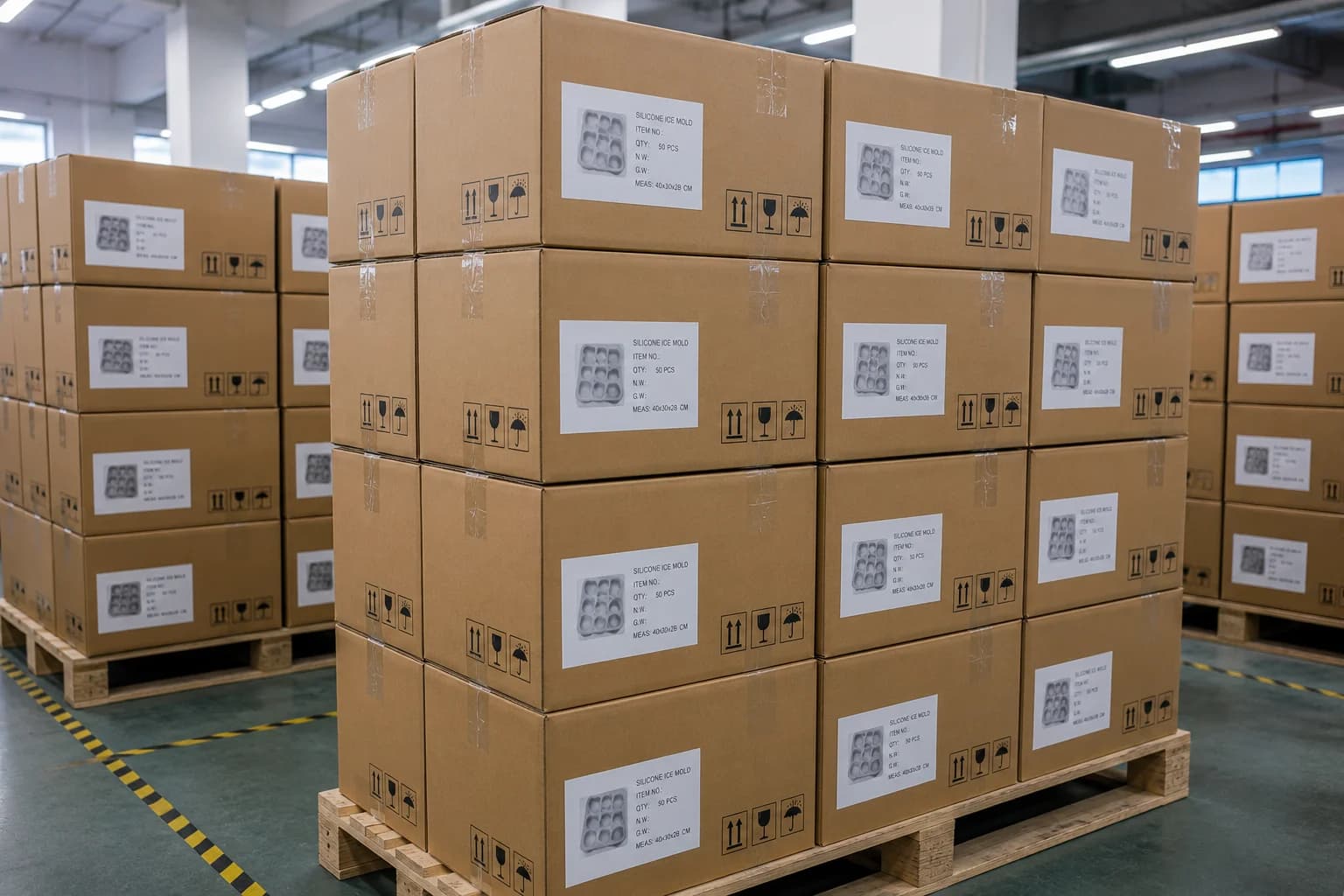
Reasoning: whiskey is usually served with one large cube or one sphere, not a handful of small cubes. Larger ice has a lower surface-area-to-volume ratio, so it melts more slowly and dilutes the drink more gradually. That is the whole point.
Selection criteria that actually matter:
- Cube size: 1.75–2.25 inches (approximately 45–57 mm) is the practical sweet spot for a rocks glass. Below 1.5 inches, melt rate climbs quickly. Above 2.5 inches, the cube may not sit comfortably in a standard glass.
- Shape: a sphere or a large faceted cube both work. A sphere has the lowest surface area for a given volume, so it melts slowest; a large cube is easier to produce at home and easier to stack in the freezer.
- Material: food-grade silicone is odorless and tolerant across a wide temperature range, commonly -40°C to 240°C (-40°F to 464°F) [K5]. That range matters if you also want to use the same mold for other kitchen tasks or clean it with hot water.
- Structure: a soft silicone tray with no frame is easy to release but hard to fill and carry. A rigid outer shell with a silicone insert gives you both directional freezing and clean release. This is the configuration most often recommended by experienced home bartenders.
- Lid design: a lid that seals and stacks prevents freezer odors from transferring into the ice. Ice absorbs odors readily.
- Cavity count: one large cavity per mold produces the best results. Multi-cavity trays freeze unevenly because cavities at the edges freeze faster than those in the middle.
- Release design: check whether the mold requires twisting, peeling, or a push-through base. Aggressive twisting shortens silicone lifespan.
Practical scenario: if you drink one or two whiskey pours a week, a single 2-inch cube mold plus a small insulated shell is sufficient. If you host regularly, a small cooler and a cutting routine will outproduce any tray at a lower cost per cube.
Note that "best" is conditional. A mold marketed for whiskey that produces 1-inch cubes is not a whiskey mold regardless of its label — it is a general-purpose tray.
5. If You Are Sourcing Ice Molds Rather Than Buying Them
Core conclusion: custom silicone ice molds are a standard OEM/ODM product category, and the decisions that determine quality happen before production, at the design and sampling stage.
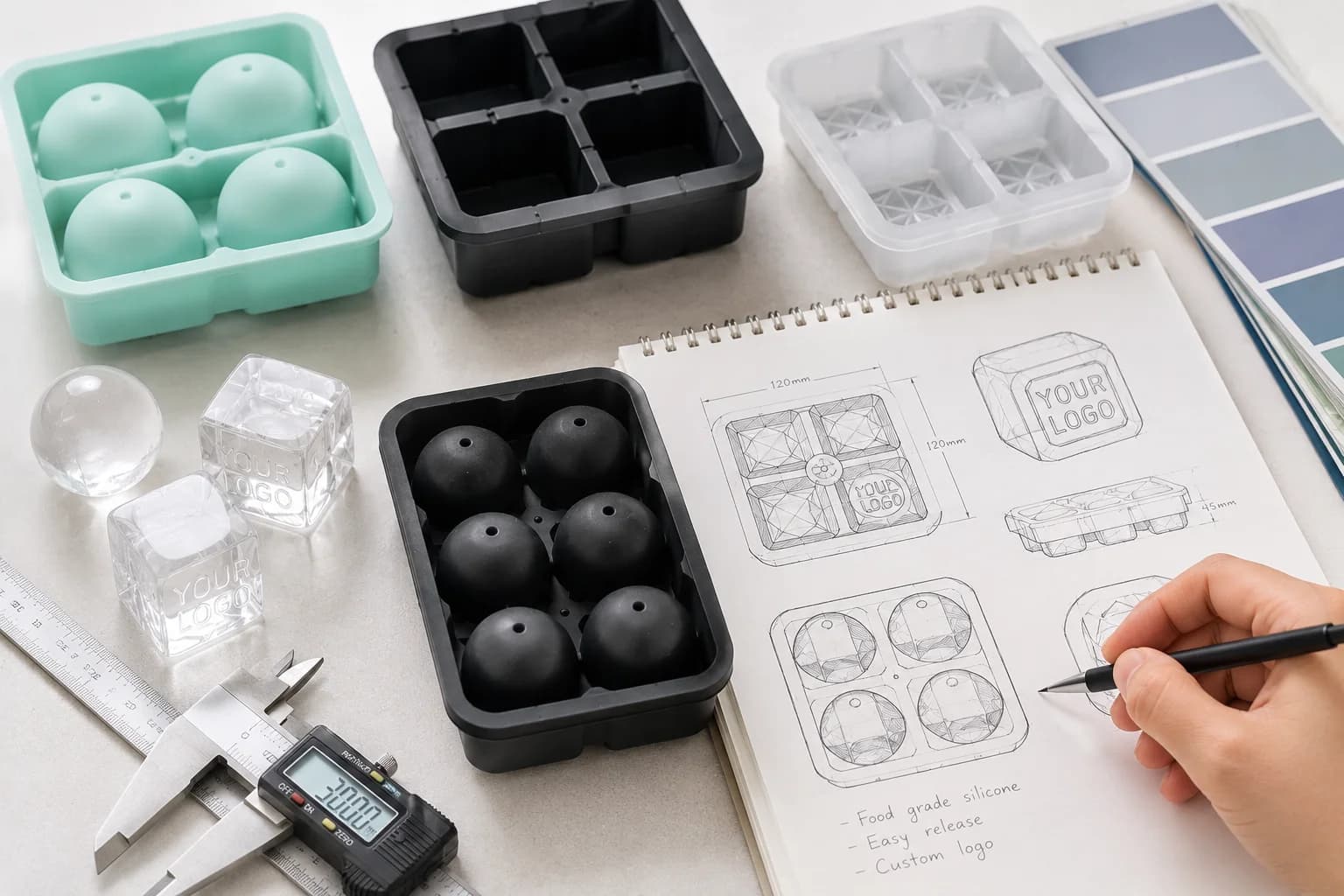
What is customizable: cavity design, product shape, size, color, logo, and packaging [K1]. Ice molds can also be positioned across household, kitchen, and promotional use cases rather than being locked into a single category [K4].
Before finalizing the specification, use custom silicone ice mold manufacturing as an additional planning reference.
Topics that a serious supplier should be able to discuss with you:
- How a project moves from design review to production, including tooling and sampling [K2]
- MOQ, tooling cost, sampling, and lead-time planning [K2]
- Custom colors, shapes, sizes, logos, artwork, and packaging [K2]
- Buyer checklists for sample approval and pre-shipment inspection [K2]
- Market-specific compliance planning — with the important caveat that certification claims should never be made without product-specific evidence [K2]
- Design-file preparation and packaging readiness [K2]
What to verify before publishing or quoting: product availability, material composition, dimensions, certifications, MOQ, and lead time should all be confirmed on a product-specific basis [K4]. A published portfolio map is evidence of what a supplier reports producing — it is not proof that every item is currently in stock or compliant for every market [K4]. Likewise, materials described as composite or non-silicone should not be presented as pure silicone without a specification confirming it [K4].
Practical advice for buyers: request a physical sample, test it through at least 10–20 freeze-thaw cycles, confirm release performance after repeated use, and run an odor check after the first hot-water wash. Odor retention is one of the most common failure points in low-grade silicone and it is easy to test before you commit to volume.
6. FAQ
Q1. Can I make clear ice with a normal tray and boiled water?
Partly. Boiling water and letting it cool reduces dissolved air, which improves clarity — but a standard tray freezes from all sides simultaneously, so a cloudy core still forms. You will see an improvement, not full clarity. Directional freezing is the missing step.
Q2. How long does clear ice take to freeze?
It depends on volume and freezer temperature. A standard small tray may freeze in 4–6 hours; a directional mold with an insulated shell typically needs 12–24 hours; a cooler-sized block usually needs 18–24 hours. Slower is better for clarity, so resist the urge to speed it up.
Q3. Is silicone or hard plastic better for clear ice cubes?
Silicone releases ice far more cleanly and tolerates a wide temperature range — commonly -40°C to 240°C (-40°F to 464°F) for food-grade silicone [K5]. Hard plastic holds shape better and is easier to insulate directionally. The strongest configuration combines both: a rigid insulating shell with a food-grade silicone insert.
Q4. Why do my clear cubes turn cloudy in the freezer?
Frost. Clear ice left exposed to freezer air slowly accumulates surface frost, which reads as cloudiness. Store finished cubes in an airtight bag or lidded container, and keep them away from strongly scented foods, since ice absorbs odors readily.
7. Conclusion
Clear ice at home is not a matter of buying the right water or the most expensive tray. It is a matter of controlling the direction of freezing, then letting the cloudy portion collect somewhere you can cut it away and discard. Once you internalize that, the equipment question becomes simple.
For most whiskey drinkers, the practical setup is a directional mold with an insulated shell, sized for 1.75–2.25 inch cubes or spheres, paired with a short tempering and handling routine. For hosts and small bars, a cooler-based block plus a cutting process delivers better clarity at lower cost per cube. Filtering or double-boiling water is a useful supporting step, not the main event.
If you are evaluating the best ice molds for whiskey for personal use, prioritize size, material quality, and release design over shape marketing. If you are sourcing molds for a brand, treat the project as a product development cycle: define the cavity design and packaging, confirm material composition and dimensions, request samples, test them through repeated freeze-thaw cycles, and verify availability, MOQ, lead time, and compliance claims on a product-specific basis before you publish anything or place a volume order [K1][K2][K4].