Key Takeaways
- Large-format ice improves a home cocktail mainly by slowing dilution and keeping the drink cold with less meltwater.
- A silicone whiskey ice cube tray is practical because flexible walls make large cubes easier to release than rigid trays.
- Clear ice is a freezing-process outcome, not a automatic benefit of silicone. Directional freezing and water quality matter.
- Choose large cubes for rocks glasses and spirits-forward drinks; choose large ice balls for premium presentation and slow sipping.
- For branded or retail ice molds, cavity design, sampling, tooling, MOQ, and packaging should be planned before production.
1. Introduction
The difference between a good home cocktail and one that feels closer to bar quality is often not the spirit. It is the ice. Small freezer cubes melt quickly, water down the drink, and can make a carefully mixed Old Fashioned taste thin within minutes. A giant ice cube tray and a large ice ball mold are two of the most practical upgrades a home bartender can make, because they change how the drink behaves in the glass.
The challenge is that “large ice” is easy to buy but not always easy to use well. Silicone trays vary in wall support, cavity size, lid design, and release behavior. Large ice balls look impressive but can roll, crack, or develop seams if the mold is poorly filled. Many home users also expect silicone alone to produce crystal-clear ice, then feel disappointed when the cubes come out cloudy.
This article explains how large ice affects dilution and chilling, what to look for in a silicone whiskey ice cube tray, when a large ice ball mold is the better choice, and how to build a simple home workflow. It also includes sourcing guidance for businesses considering custom silicone ice molds, using verified product and commercial information from Renjia’s knowledge base.
2. Why Large Ice Makes a Better Cocktail
Core conclusion: Large ice does not simply look more professional. It changes the drink’s dilution curve by reducing the amount of exposed ice surface relative to its volume.
A large cube or sphere has less surface area per unit of volume than several small cubes of the same total weight. That means less ice melts into the drink during the first few minutes, so the flavor stays more stable for longer. The larger mass of ice also helps the drink hold a low temperature with less rapid collapse. For a whiskey on the rocks, a spirit-forward Old Fashioned, or a slow-sipped Negroni, this difference is easy to notice.
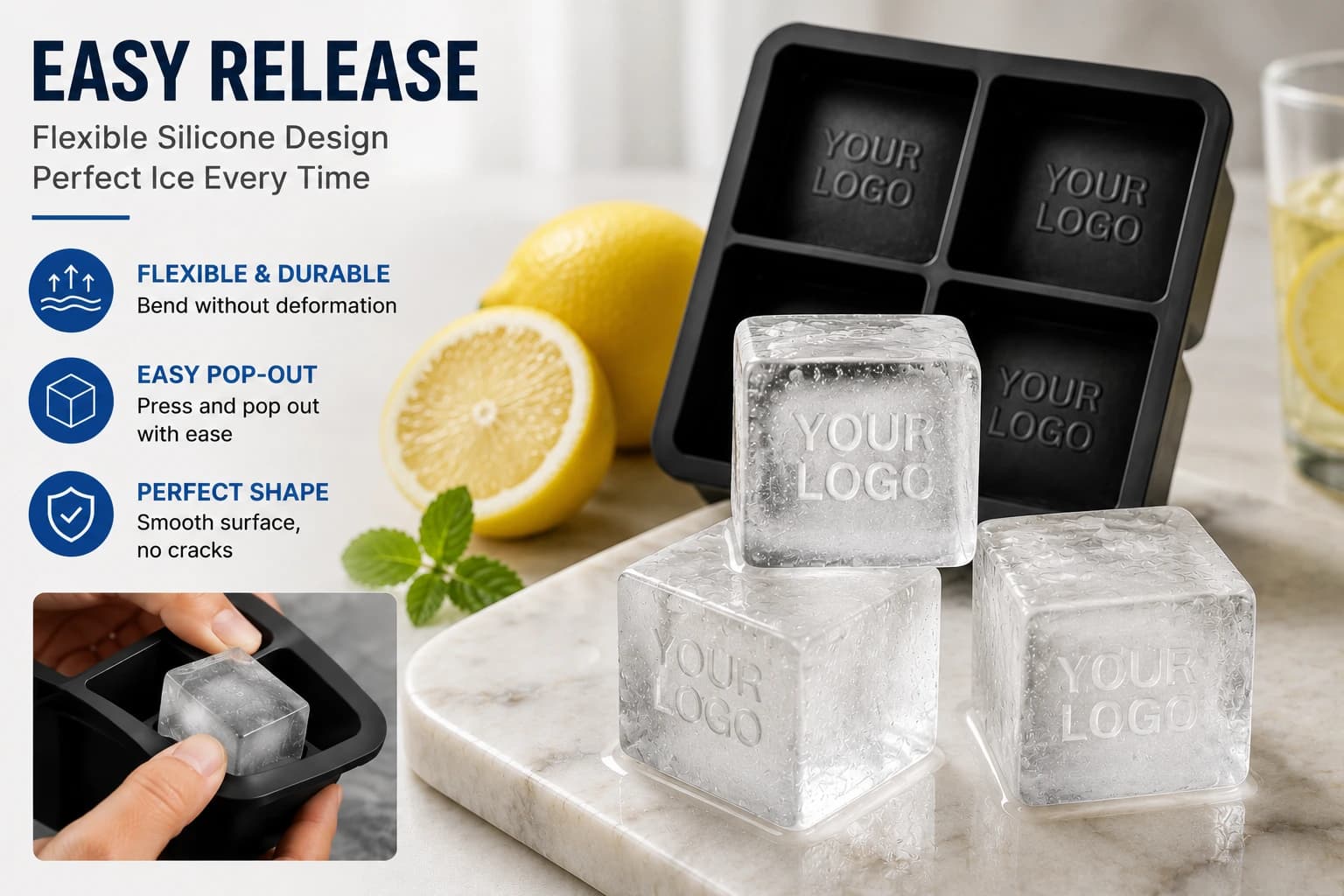
Large ice is not automatically better for every drink. Cocktails that are shaken need fast chilling and controlled dilution, so bartenders usually use separate shaking ice and then strain the drink over a large serving cube. A large cube also needs to fit comfortably in the glass; if it touches the sides too tightly or sits above the liquid line, it can crack or chill unevenly. For best results, pre-chill the glass, use ice straight from the freezer, and avoid pouring warm liquid directly onto a large cube when possible.
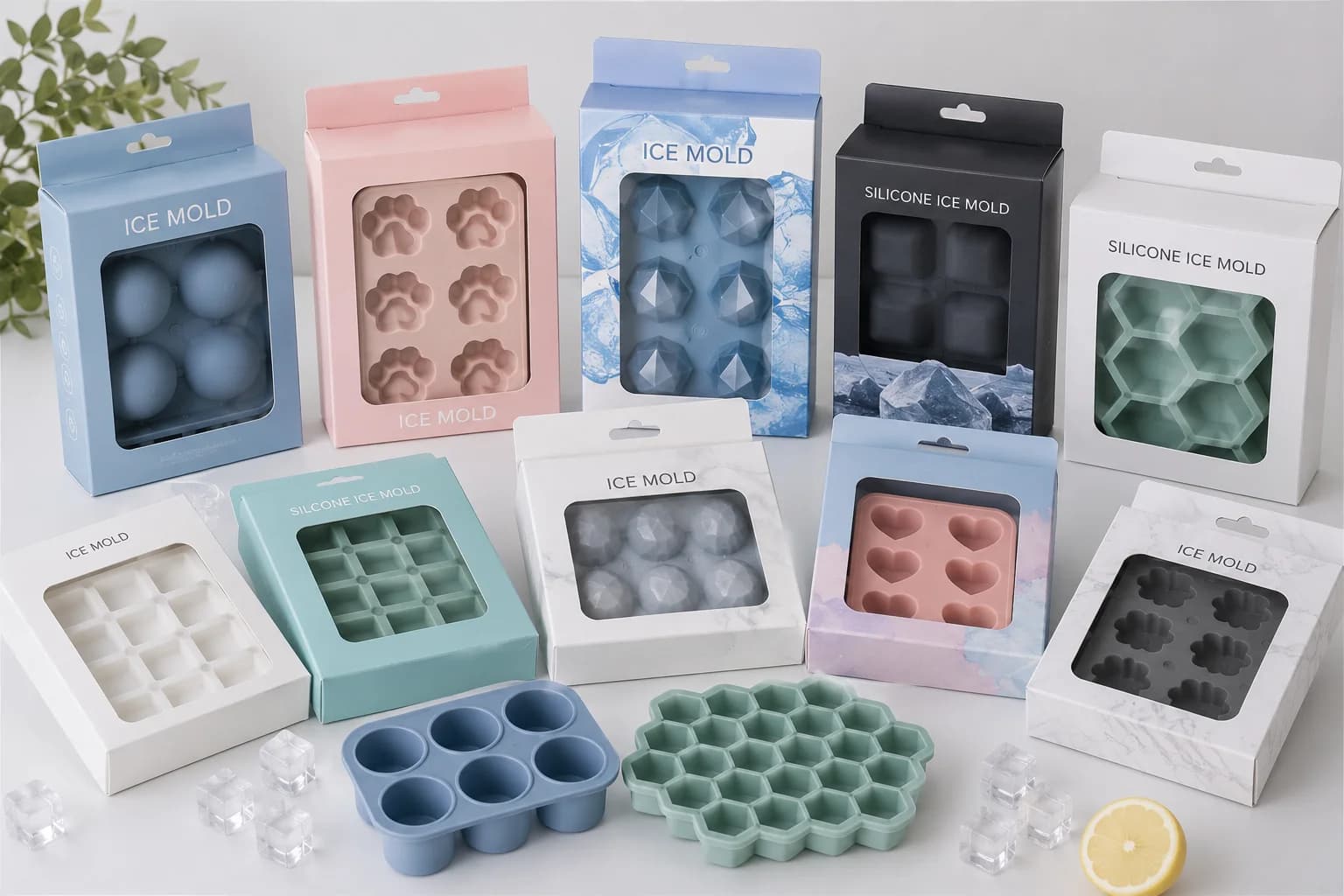
For buyers comparing mold formats, Renjia’s custom silicone ice molds reference covers cavity design, product shape, size, color, logo, and packaging options [K1]. That range matters because the best serving ice is not just “big”; it should match the glass, the drink style, and the way the ice will be stored and released.
3. Giant Ice Cube Tray: Why a Silicone Whiskey Ice Cube Tray Is the Practical Choice
Core conclusion: A silicone whiskey ice cube tray is the most practical home format for large cubes because flexible silicone allows the cube to be peeled out instead of forced out.
Rigid plastic trays can produce large cubes, but they often require twisting, tapping, or running under warm water to release the ice. That handling can crack the cube or melt its surface. Silicone molds avoid much of that friction: the walls flex, the cube releases with less force, and the mold can be turned inside out for cleaning. For home use, this is a meaningful convenience, especially when serving several drinks at once.
When choosing a giant ice cube tray, look beyond the word “large.” Check four things:
- Cavity size and glass fit: The finished cube should leave room around the sides of the glass, not wedge into it.
- Wall support: Very soft trays can bulge when filled and produce uneven cubes. A reinforced or thicker wall helps the mold hold its shape.
- Lid or stackability: A lid reduces freezer odors and spillage during transfer. Stackable designs save space but need to sit level.
- Release and cleaning: Rounded internal corners and a smooth surface make release and washing easier.
Silicone is not a clarity guarantee. A silicone whiskey ice cube tray controls shape and release; it does not control freezing direction. If the tray freezes from all sides at once, bubbles and impurities can be trapped in the center, producing cloudy ice. For clearer results, use filtered water, freeze in a colder part of the freezer, and consider directional freezing in an insulated container. Even then, home clear ice usually requires trimming away the cloudy bottom section. That is normal, not a sign that the tray failed.
Renjia’s ice cube tray and ice ball tray portfolio lists both formats within its promotional products line, alongside ice block molds in its household product range [K2]. This is useful context for buyers who want a consistent mold family across retail, gifting, or branded merchandise rather than a single one-off tray.
4. Large Ice Ball Mold: When a Sphere Beats a Cube
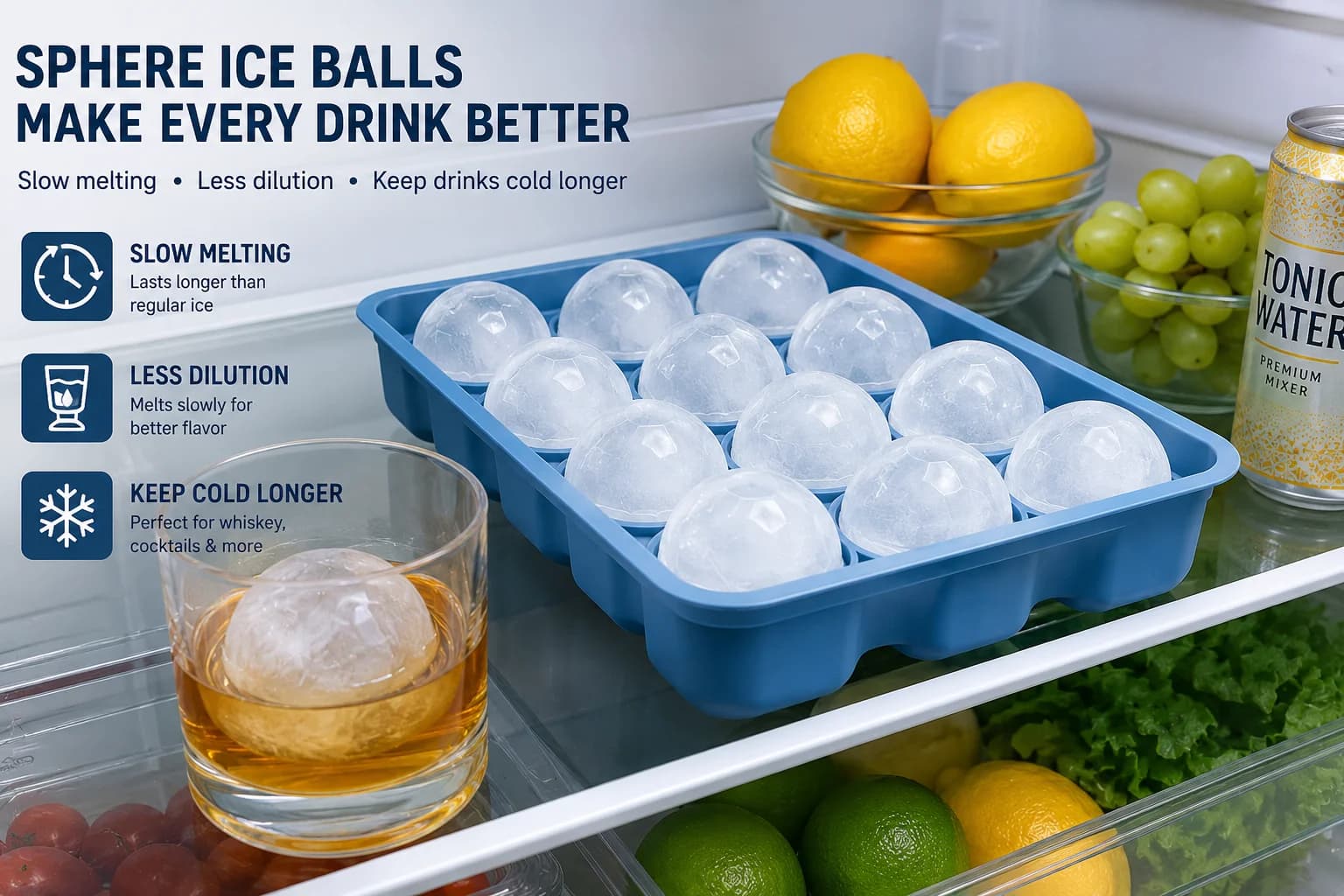
Core conclusion: A large ice ball mold is worth using when presentation and slow melt are the priority, especially for whiskey, rum, and spirit-forward serves in wide glasses.
A sphere has the lowest surface area for a given volume, so it tends to melt more slowly than a cube of similar size. It also has no edges, which gives a clean, premium look in a rocks glass. That makes a large ice ball mold a strong choice for whiskey neat or on the rocks, dark rum, gin and tonic in a large balloon glass, and punch-bowl service where a single large piece of ice can chill a shared drink.
The trade-offs are practical. Round ice can roll in the glass, so the glass should be wide and stable. Two-part ball molds can leave a seam if they are not filled and closed carefully. Large balls also need enough freezer space and a level surface during freezing. For home users, a mold that sits flat, closes securely, and has a clear fill line is easier to use than a decorative mold with a narrow opening.
For custom projects, brands can discuss a custom ice mold project before committing to tooling. Renjia’s stated commercial terms list a typical custom-order MOQ of 500 pcs, with final MOQ depending on design, tooling, packaging, product requirements, and production scheduling [K4]. Stock samples usually take 1–2 working days; custom samples usually take 7–10 working days after design and specification confirmation; mold lead time is usually about 15 working days after 3D design confirmation; and mass production usually takes 15–20 working days after order and production details are confirmed [K4]. These timelines are useful for retail launches and branded gift programs because they show where sampling and tooling sit in the schedule.
5. Key Comparison and Practical Workflow
Use the table below as a quick decision guide. “Relative melt” is a general comparison, not a guarantee; freezer temperature, glass shape, liquid temperature, and room conditions all affect real performance.
| Ice format | Relative melt behavior | Best for | Mold considerations |
|---|---|---|---|
| Small freezer cube | Melts quickly; dilutes fast | Shaking, quick chilling, high-volume service | Easy to freeze; not ideal for slow-sipping spirits |
| Large cube | Slower melt than small cubes | Whiskey on the rocks, Old Fashioned, Negroni | Needs a tray that fits the glass; silicone aids release |
| Large sphere | Slow melt; low surface area | Whiskey, dark rum, gin and tonic, punch bowls | Needs a level mold; watch for seams and rolling |
| Ice block or spear | Slow melt; dramatic presentation | Punch bowls, large-format serves, highball-style presentations | Requires more freezer space and careful handling |
A simple home workflow:
- Start with clean water. Filtered water reduces odor and some dissolved impurities, though it does not guarantee clarity.
- Fill molds to the intended line. Overfilling can create bulges or make lids difficult to close; underfilling produces small or hollow ice.
- Freeze level and undisturbed. A tray that is tilted during freezing can produce uneven cubes or thin edges.
- For clearer ice, use directional freezing. Freeze water in an insulated setup so impurities concentrate at one end, then trim the cloudy section. Silicone molds help with shape, not freezing direction.
- Temper briefly before release. Let the mold sit at room temperature for a short moment, or use the flexibility of the silicone to loosen the cube without cracking it.
- Store finished ice in a sealed bag or container. This reduces freezer odors and surface frost.
Cleaning matters as much as freezing. Rinse silicone molds soon after use, wash with mild soap, and dry fully before storing. Avoid stacking heavy items on empty molds, because persistent pressure can deform thin silicone walls.
6. FAQ
Q1. Does a silicone whiskey ice cube tray make clear ice?
No. A silicone tray controls shape and release, but clarity depends mainly on water quality, freezing direction, and how impurities and bubbles are pushed out during freezing. Silicone can make clear ice easier to demold, but it does not replace a directional freezing process. Home users should expect some cloudiness unless they use an insulated clear-ice method and trim the cloudy section.
Q2. Are large ice balls better than large cubes?
Not universally. A sphere tends to melt more slowly because it has less surface area for its volume, and it looks more polished in a wide rocks glass. A large cube is easier to stack, store, and fit into different glass shapes. Choose the ball for slow-sipping presentation and the cube for flexibility and everyday use.
Q3. How long does custom silicone ice mold development take?
Based on Renjia’s stated commercial terms, stock samples usually take 1–2 working days; custom samples usually take 7–10 working days after design and specification confirmation; mold lead time is usually about 15 working days after 3D design confirmation; and mass production usually takes 15–20 working days after order and production details are confirmed [K4]. The typical custom-order MOQ is 500 pcs, but final MOQ can vary by design, tooling, packaging, product requirements, and production scheduling [K4].
Q4. Can I use large ice for every cocktail?
Large ice works best for slow-sipping, spirit-forward drinks and for presentation serves. Cocktails that need fast chilling and controlled dilution are usually shaken with separate ice and then strained over a large serving cube. Very tall or narrow glasses may not fit a large ball, so check glass dimensions before choosing the mold format.
7. Conclusion
For home cocktail makers, the practical upgrade is not a more complicated recipe. It is better control over ice. A giant ice cube tray gives you reliable large cubes for whiskey, Old Fashioned variations, and spirit-forward serves, while a large ice ball mold adds a