Key Takeaways
- Cloudy ice is almost always a freezing-dynamics problem: dissolved gas and dissolved solids get trapped when water freezes quickly from every direction at once, not because your water is fundamentally "bad."
- The highest-impact fix is directional freezing — insulating the mold on all sides except one so ice forms in a single direction and pushes impurities into a final region you can cut away or discard.
- Water preparation (filtering, boiling twice and cooling, distilled water) improves results at the margins, but it rarely rescues a cube that froze from all sides simultaneously.
- Silicone ice molds release ice cleanly and support custom shapes, sizes, colors, and logos [K1], but a flexible mold still needs a directional setup to produce clear ice consistently.
- For B2B buyers sourcing custom ice molds, confirm current availability, material composition, dimensions, MOQ, tooling, and lead time before publishing a product page or issuing a quotation [K3].
1. Introduction
Clear ice is one of those small details that signals care. A transparent cube melts more slowly, dilutes a drink more gradually, and photographs far better than a cloudy one. Yet most home freezers produce cloudy, brittle, fast-melting cubes no matter what water goes in.
The frustration is understandable, because the internet offers contradictory advice: boil the water, don't boil the water, use distilled water, use tap water, freeze it slower, freeze it faster. Most of these suggestions address only one of several variables, which is why they often fail when applied alone.
This article breaks the problem into its actual causes and then works through three practical fixes: water preparation, directional freezing, and mold and freezer setup. It also includes a troubleshooting table and a short sourcing section for brands and buyers who need custom silicone ice molds at commercial scale. The goal is not a single "trick" but a repeatable process you can diagnose when results vary.
2. Why Homemade Ice Turns Cloudy
Core conclusion: Cloudiness has two mechanisms — trapped dissolved gas (bubbles) and concentrated dissolved solids (minerals) — and both are a function of how the water freezes, not just what the water is.
When water cools toward 0 °C, dissolved gases — mainly oxygen and nitrogen — become less soluble and are expelled. In a natural lake, ice forms slowly from the top down, and those gases plus suspended minerals are pushed downward into the unfrozen water below. The ice that forms is clear; the residue stays in the liquid.
A home freezer does the opposite. A standard tray sits in a −18 °C environment and freezes from the outside in, on all six sides at once. The last water to freeze is trapped in the center with nowhere to go, so all the expelled gas and concentrated minerals end up locked inside as white, opaque cloudiness. Rapid freezing also creates smaller, more numerous gas bubbles that scatter light more aggressively.
This produces a useful diagnostic pattern:
| What you see | Likely cause | First thing to change |
|---|---|---|
| White cloudy core, clear outer shell | Non-directional freezing trapping gas and minerals in the center | Add insulation so ice freezes in one direction only |
| Uniform milky or hazy cube | High dissolved solids, or very fast freezing throughout | Switch to filtered/distilled waterand slow the freeze |
| Cracks or shattered cubes | Fast freezing plus thermal stress, or overfilled cavities | Fill to the indicated line; slow the freeze; temper before release |
| Clear ice that tastes odd | Freezer odor absorption, uncovered storage, or stale mold | Cover during freezing; store cubes in a sealed container |
Practical advice: Before buying any new equipment, run the diagnostic. If your cubes have a clear shell and a cloudy core, your water is probably fine and your freezing direction is the problem. If they are hazy throughout, start with the water. That single distinction saves most people from spending money on the wrong fix.
For a related manufacturing reference, review custom silicone ice mold development.
3. Fix One: Prepare the Water
Core conclusion: Water treatment reduces the raw material available to become cloudiness, but it is a secondary lever. It works best when combined with directional freezing.
Three approaches are worth testing, in order of cost:
- Filtered water. A carbon or pitcher filter removes some dissolved solids and off-flavors. It is the cheapest upgrade and often enough to sharpen results once directional freezing is in place.
- Distilled or reverse-osmosis water. These strip most dissolved minerals, which directly reduces the mineral component of cloudiness. The trade-off is taste: some people find distilled-water ice flat. For spirits, filtered water is often the better compromise.
- Boiling twice and cooling. Boiling drives dissolved gas out of solution. Boiling twice — boil, cool, boil again, then cool completely before freezing — reduces the dissolved-air load more than a single boil, because the second heating cycle expels gas that re-dissolved during the first cooldown. The effect is real but modest; it will not overcome a bad freezing setup.
Boundary conditions to know:
- Distilled water frozen rapidly from all directions still produces a cloudy core. Purity does not substitute for direction.
- Do not freeze hot or warm water directly in a home freezer. It raises the freezer's internal temperature, slows everything else, and can create thermal stress in molds. Always cool to room temperature first.
- Water that tastes fine in a glass can still smell of the freezer. Cover containers during freezing; ice absorbs ambient odors readily.
Practical advice: Start with filtered water plus directional freezing. Only escalate to distilled water or double-boiling if the first combination leaves residual haze.
4. Fix Two: Freeze in One Direction
Core conclusion: Directional freezing is the single most effective change you can make. It converts trapped impurities into a removable byproduct instead of an internal defect.
The principle is simple: insulate the mold on every side except one, so heat can only escape in a single direction. Ice then grows as a moving front, pushing gas and minerals ahead of it into the last region to freeze. That final cloudy section is sacrificial — you trim it off or discard it, and the rest is clear.
Two home setups work reliably:
- The cooler method. Place open molds or a tray inside a small insulated cooler with the lid removed (or ajar), and float them so they are surrounded by water. The surrounding water acts as a buffer and insulates the sides and bottom, so the exposed top freezes first and the freezing front travels downward. Total time is typically overnight to roughly 24 hours, depending on freezer temperature and container size.
- The insulated-shell method. Use a rigid tray seated inside an insulating sleeve, or a directional tray designed with an insulated base and open top. These are more consistent than improvised setups and easier to scale to multiple batches.
Practical advice and trade-offs:
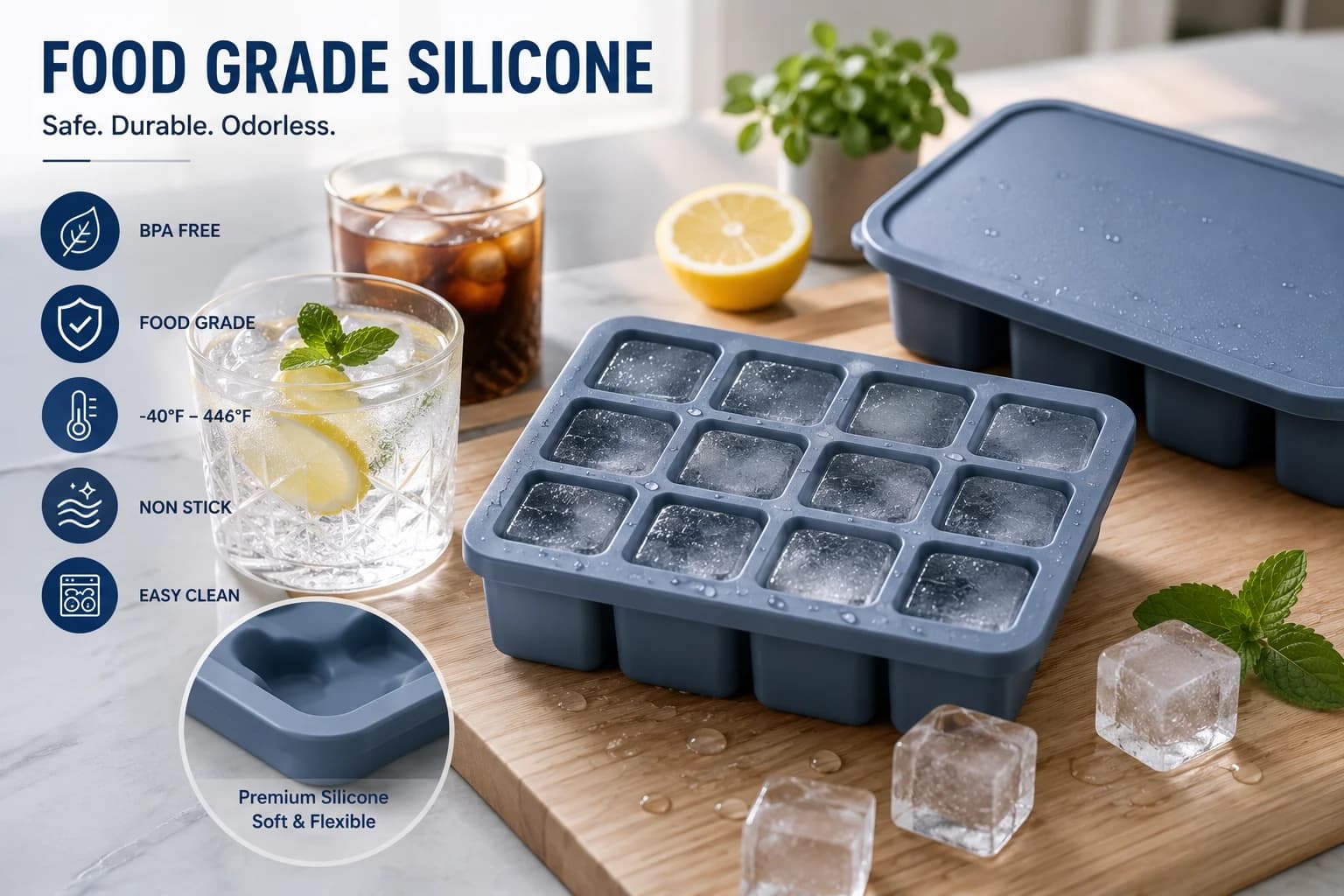
- Slow the freeze. A warmer freezer setting, or a well-packed freezer, generally produces fewer trapped bubbles than a −18 °C blast. This is why silicone molds — which conduct heat more slowly than metal — often perform better than expected in a standard tray: their slower heat transfer tends to produce a less frantic freezing front.
- Leave headroom. Water expands as it freezes. Overfilled cavities crack and produce stress fractures that look like cloudiness but are actually structural damage.
- Temper before releasing. Let molded ice sit at room temperature for a minute or two so the surface releases cleanly instead of shattering.
- Accept a yield loss. Directional freezing is a trade-off: you get clearer ice but less of it per batch, because the cloudy tail is discarded.
5. Fix Three: Match the Mold and Freezer Setup
Core conclusion: The mold determines how easily you can control freezing direction, how cleanly ice releases, and how repeatable the process is across batches.
For additional context on this decision, see custom silicone ice molds.
For home use, the practical question is rigid versus flexible. Rigid directional trays control the freezing front best. Flexible silicone molds release ice far more easily and allow shapes that rigid trays cannot produce, but a plain silicone tray freezes from all sides and will still give you a cloudy core unless it is placed inside an insulating shell or floated in the cooler setup described above.
For brands and buyers, custom silicone ice molds are a product-engineering decision rather than a kitchen experiment. Typical customization covers cavity design, product shape, size, color, logo, and packaging [K1]. Supported project topics include design-file preparation, sampling, tooling, quality inspection, packaging, and sourcing decisions such as MOQ and lead-time planning [K2].
Practical checks before committing to a mold design:
- Confirm current availability, material composition, dimensions, and MOQ before publishing a product-specific page or issuing a quotation [K3].
- Ice molds sit across household, kitchen, and promotional use cases; category placement should not restrict cross-category positioning [K3].
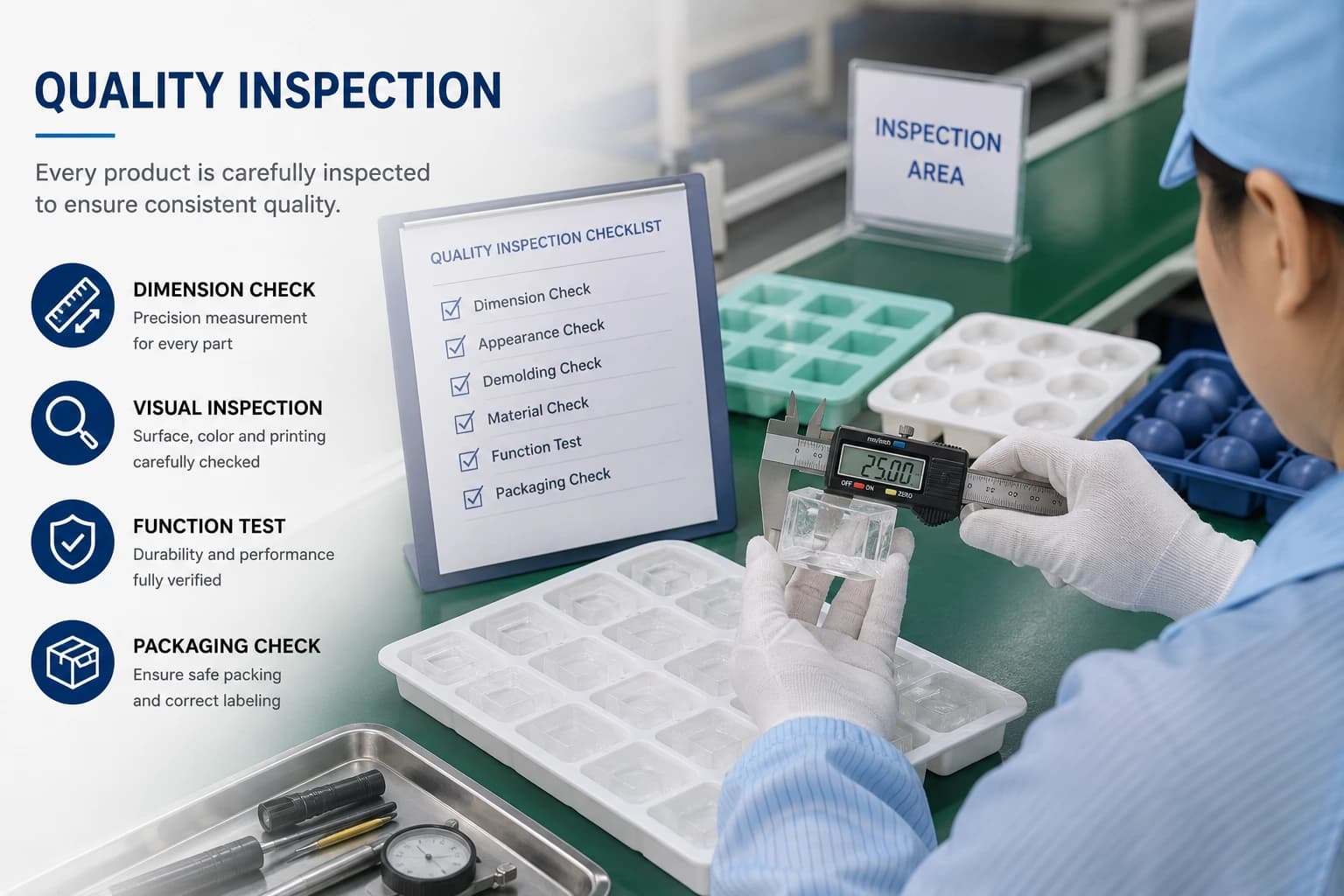
- Ask for pre-shipment inspection checkpoints and sample-approval criteria rather than relying on general quality statements [K2].
- Plan market-specific compliance requirements with documentation that is actually held and verified — not implied [K2]. Avoid publishing certification claims that have not been reviewed against current accuracy [K3].
Keep the tone of any buyer-facing content factual and verifiable, aimed at international B2B buyers working in professional English [K4][K5]. Manufacturing detail and decision guidance carry more weight than promotional language [K5].
6. Key Comparison: Which Fix Solves Which Problem
| Method | What it fixes | Effort | Main limitation |
|---|---|---|---|
| Filtered water | Minerals, off-flavors | Low | Does not remove dissolved gas; no effect on freezing direction |
| Distilled / RO water | Minerals almost entirely | Low | Can taste flat; still clouds if frozen non-directionally |
| Boiling twice, then cooling | Dissolved gas | Medium | Modest improvement; needs careful cooling |
| Cooler / insulated directional setup | Gas and minerals together | Medium–High | 12–24 hours and a sacrificial cloudy section |
| Rigid directional tray with insulation | Freezing direction, repeatability | Medium | Fewer shape options; higher unit cost |
| Flexible silicone mold alone | Release and shape variety | Low | Freezes from all sides; needs an insulating shell for clarity |
| Custom silicone mold program | Shape, branding, packaging at scale | High (project) | Requires design review, sampling, tooling, and lead-time planning [K2] |
How to combine them: For home use, filtered water plus a directional setup gets most people to noticeably clear ice. For commercial or branded applications, start from the mold design and work backward — shape, cavity, release, and packaging decisions constrain the freezing method far more than water chemistry does.
Before finalizing the specification, use How to Make Crystal Clear Ice Balls with a Foldable Silicone Ice Ball Mold as an additional planning reference.
7. FAQ
Q1. Does boiling water make clear ice?
Boiling removes dissolved gas, and boiling twice — boil, cool, boil again, then cool fully — removes more than a single cycle, because gas re-dissolves during the first cooldown. However, boiling alone is a partial fix. If the water still freezes from all sides at once, the expelled gas has nowhere to go and the cube will still cloud in the center. Treat boiling as a supporting step, not the solution.
Q2. Will distilled water alone give me clear cubes?
Not reliably. Distilled water removes dissolved minerals, which eliminates one source of cloudiness, but dissolved gas remains and still gets trapped during non-directional freezing. Distilled water in a standard tray in a −18 °C freezer typically produces ice that is clearer than tap water but still not transparent. Combine it with directional freezing if transparency is the goal.
Q3. Can silicone ice molds produce clear ice?
Yes, with the right setup. Silicone conducts heat more slowly than metal, which tends to produce a gentler freezing front and fewer trapped bubbles. But a bare silicone tray still freezes from all sides, so the impurities concentrate in the center. Floated in a cooler or seated in an insulating shell, silicone molds perform well — and they release ice far more cleanly than rigid trays, which matters for spheres and detailed shapes.
Q4. How long does directional freezing take?
It depends on your freezer temperature, container size, and how much water is being frozen. A typical home cooler setup runs overnight to roughly 24 hours. Larger blocks and cooler freezer settings take longer. Planning around an overnight cycle is usually the most practical approach, and it is worth tracking your own timings across a few batches rather than assuming a fixed number.
8. Conclusion
Getting clear ice is not about finding the one perfect water source. It is about controlling two variables: how much dissolved material is in the water, and how that water freezes.
If you only change one thing, change the freezing direction. A cooler setup or an insulated directional tray does more for clarity than any water treatment applied on its own. Add filtered water for a modest further gain, and reserve distilled water or double-boiling for cases where residual haze still bothers you.
Suggested next steps:
- Run one batch in your current setup and photograph it. Diagnose whether the cloudiness is a clear core, a hazy whole cube, or structural cracking.
- Add insulation so ice freezes from one direction only, and run a second batch. Compare.
- Adjust only one water variable at a time — filtered, then distilled, then double-boiled — so you know what actually moved the result.
- If you are sourcing molds for a brand or promotional program, define shape, cavity design, material specification, packaging, and inspection criteria before sampling, and confirm availability, MOQ, and lead time before quoting [K1][K2][K3].
Clarity is a process outcome. Once the mechanics are clear, the results become repeatable.