Key Takeaways
- There is no universal winner: an ice cube tray sphere is usually better for batch prep, home bars, and branded promotional programs, while an ice ball maker mold is often better for low-volume, presentation-focused serves.
- Larger, rounder ice generally has less surface area per volume, so it can slow dilution—but glass fit, freezing method, and water quality matter more than the product label.
- Clear ice is a process outcome, not a mold category. A mold alone does not guarantee clarity.
- For custom programs, specify cavity design, shape, size, color, logo, and packaging, then verify availability, material, MOQ, tooling, and lead time before quoting or publishing product claims.
- Before committing to either format, test release, yield, freezer footprint, glass fit, and sample consistency.
1. Introduction
Cocktail ice looks simple until you need it to perform. A bar wants cubes or spheres that chill a drink without turning it watery in minutes. A home host wants ice that looks intentional without a freezer full of specialty equipment. A product buyer wants a mold that releases cleanly, stacks sensibly, and supports a retail or promotional program without creating complaints.
That is why the comparison between an ice cube tray sphere and an ice ball maker mold matters. Both products can produce round ice, but they often differ in cavity design, batch yield, release method, freezer footprint, and the kind of cocktail service they support. Marketing language can blur those differences, especially when “sphere,” “ball,” and “round ice” are used interchangeably.
This article separates the formats by function, then compares them on cocktail performance, workflow, and customization. The goal is practical: help you choose the format that fits your drinks, volume, and sourcing plan—not just the one that looks best in a product photo.
2. What “Ice Cube Tray Sphere” and “Ice Ball Maker Mold” Actually Mean
Core conclusion: The names describe different workflows more than different shapes. An ice cube tray sphere is usually a multi-cavity tray designed to make several round pieces at once; an ice ball maker mold is often a smaller, individual or two-part mold designed around one large ball or a few large balls.
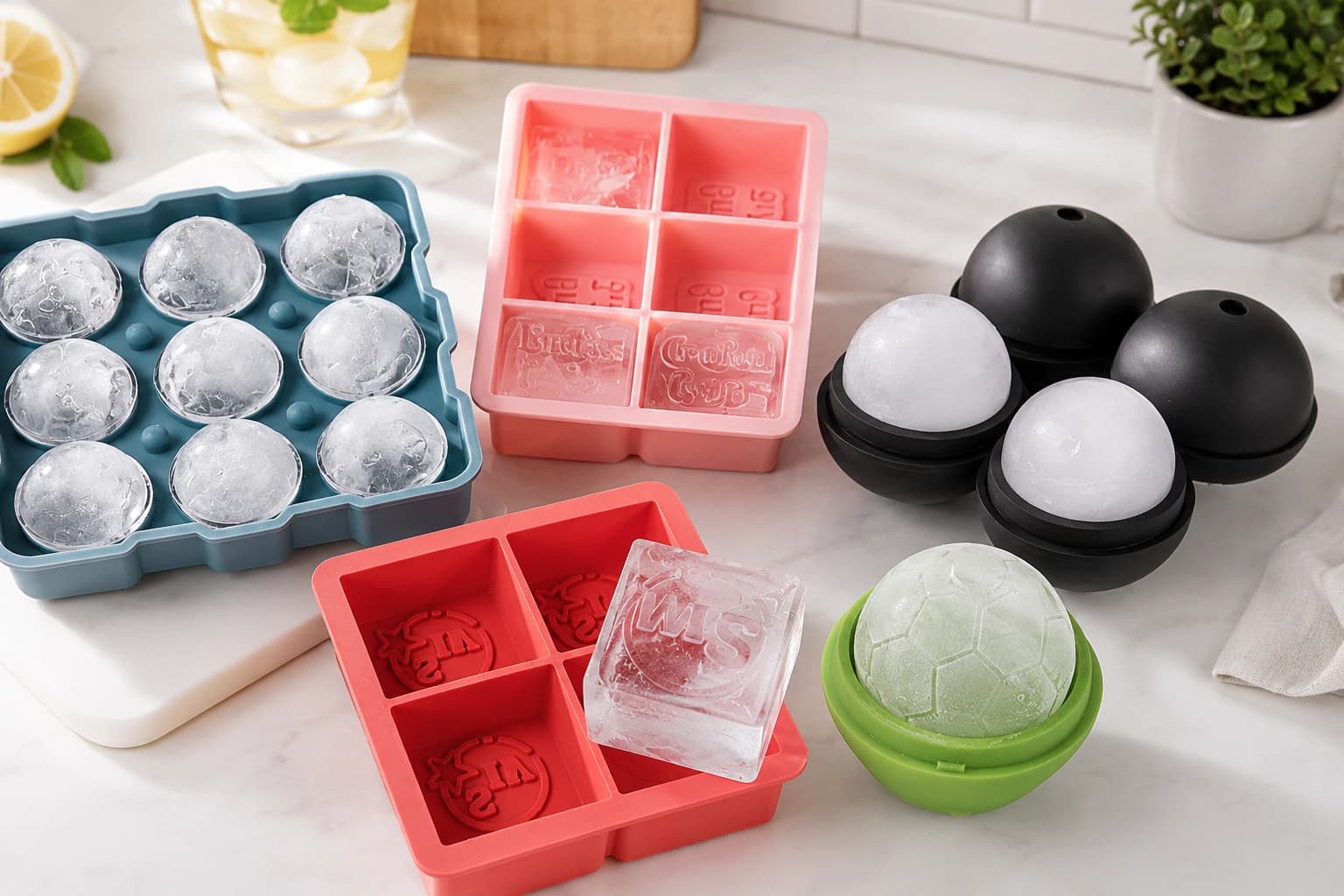
An ice cube tray sphere typically uses a flexible tray with spherical cavities and, in many designs, a lid or water line that helps form the round shape. The user fills multiple cavities, freezes the tray, then flexes or twists the tray to release the spheres. The appeal is batch production: one fill can prepare several pieces for a pitcher, a round of drinks, or a freezer bag.
An ice ball maker mold often focuses on a larger single sphere or a small number of large spheres. Some designs use two-piece shells that are filled, joined, and frozen; others use a flexible mold with a narrow opening and a more deliberate release step. The appeal is presentation and size control, but the trade-off can be lower yield and more handling per piece.
The categories are not perfectly clean. Some silicone trays make large spheres. Some ball makers produce two or four balls at once. The useful question is not “which label is on the box?” but “how many pieces do I need per freeze cycle, how much space will the mold take, and how reliably can I release the ice without cracks or seams?”
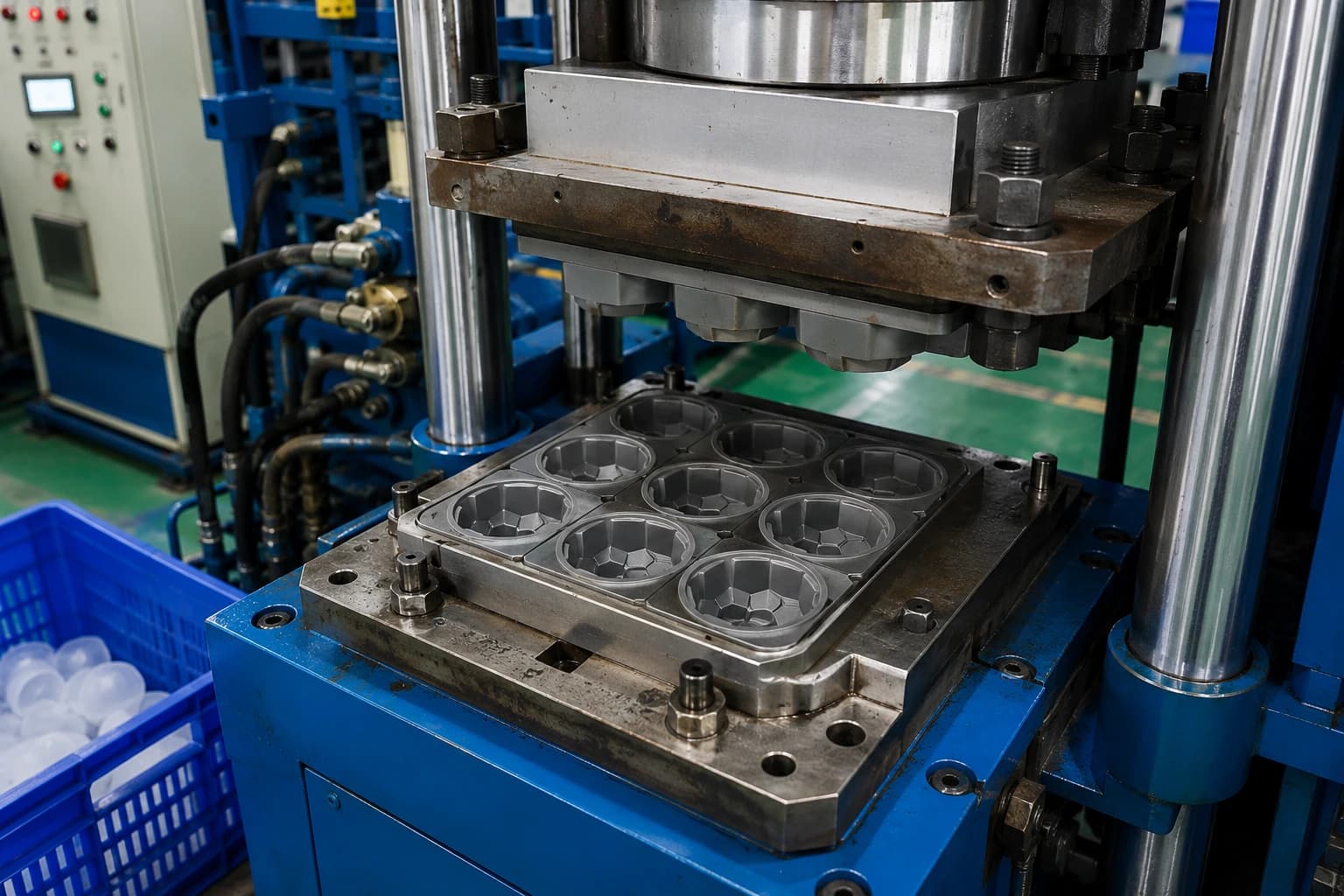
For buyers developing a branded program, Renjia’s custom silicone ice molds can be specified by cavity design, product shape, size, color, logo, and packaging [K1]. That customization range applies to both tray-style and individual-mold concepts, but the final feasibility depends on the chosen cavity geometry and project brief.
3. Cocktail Performance: Dilution, Clarity, and Glass Fit
Core conclusion: A larger, well-formed sphere can be excellent cocktail ice, but it is not automatically better. The drink, glass, and freezing process decide more than the mold category.
The main performance argument for spheres is geometry. A sphere has a lower surface-area-to-volume ratio than a cube of similar mass, and a larger piece generally takes longer to melt than a smaller one. In a spirit-forward drink such as an old fashioned or a whiskey serve, that can mean slower dilution and a more controlled chill. In a highball or a drink served over crushed ice, the advantage may matter less.
Clarity is where many buyers get misled. A mold can shape ice, but it cannot by itself remove dissolved air, impurities, or freezing-direction effects. Clear ice usually depends on the water source, freezing method, air movement, and whether the freezing is directional. A two-part ball maker may produce a cleaner-looking seam or a more polished surface in some designs, while a tray sphere may show cloudiness around the center. Neither outcome is guaranteed without testing.
Glass fit is an equally practical issue. A large sphere may look impressive in a rocks glass but fail in a smaller tumbler or a coupe. A tray sphere in a moderate size may fit more glassware and service styles. Before buying either format, measure the internal width and height of the glasses you actually use, then account for the drink’s other ingredients and garnish.
A sensible test protocol is:
- Freeze the same water in both formats for the same period.
- Compare release cracks, seam lines, and cloudiness.
- Place each piece in the intended glass with the intended pour.
- Observe the first 10–15 minutes of dilution and chilling.
- Repeat with a second batch to check consistency.
That test will tell you more than a generic claim that one shape is “better for cocktails.”
4. Workflow: Release, Storage, Yield, and Service Speed
Core conclusion: For repeatable service, workflow usually decides the winner. A tray sphere tends to win on batch yield and storage efficiency; a ball maker mold tends to win on deliberate, premium presentation when volume is low.
Consider a home bar preparing for a dinner party. A multi-cavity sphere tray can produce a full set of ice in one freezer cycle, and the finished spheres can be transferred to a freezer bag or container. The mold then goes back into service. That cycle is efficient if the tray releases cleanly and the freezer has a flat shelf available.
Now consider a small cocktail bar with a signature serve. A large ball maker mold may produce fewer pieces per cycle, but the bartender may value the larger format, the visual consistency, and the slower melt in a spirit-forward drink. The trade-off is labor: filling, joining, waiting, releasing, and storing individual molds can take more attention per piece.
Storage is often underestimated. Spheres occupy awkward space. A tray may stack before freezing but become bulky once filled. Finished spheres need a flat container or a dedicated freezer bin to avoid rolling and cracking. If freezer space is tight, a smaller sphere tray may be more practical than a large single-ball mold.
Ice molds also cross product categories. Renjia’s portfolio rules note that ice molds can be tagged under household, kitchen, and promotional use cases, and category placement should not limit cross-category content [K2][K4]. That matters for buyers: the same basic format may be marketed to home cocktail enthusiasts, kitchen-gadget shoppers, or branded promotional buyers, but the use-case story should match the actual workflow.
For a sourcing conversation, review silicone ice mold sourcing requirements against your freezer space, batch target, release expectations, and packaging plan. A mold that performs well in a photo shoot but frustrates daily use is not a good program choice.
5. Key Comparison: Ice Cube Tray Sphere vs. Ice Ball Maker Mold
| Criterion | Ice Cube Tray Sphere | Ice Ball Maker Mold |
|---|---|---|
| Typical format | Multi-cavity tray, often flexible with a lid | Individual or small-count mold, sometimes two-piece |
| Batch yield | Usually higher per freezer cycle | Usually lower; more handling per piece |
| Best use case | Home bars, batch prep, promotional programs, moderate-volume service | Premium serves, whiskey/cocktail presentation, low-volume specialty ice |
| Release | Depends on flexibility, cavity shape, and fill level | Depends on split design, seam, and release method |
| Freezer footprint | Can be wide but stackable before filling | Often bulky per piece; storage planning matters |
| Clarity potential | Process-dependent; not guaranteed by tray design | Process-dependent; not guaranteed by mold design |
| Glass fit | Easier to find moderate sizes for common glassware | Large balls may not fit smaller rocks glasses |
| Customization | Cavity design, shape, size, color, logo, packaging [K1] | Similar customization possible, subject to mold design and feasibility |
| Main risk | Inconsistent release or freezer-space mismatch | Low yield, seam defects, or poor glass fit |
Practical recommendation: Choose the tray sphere when you need several pieces per cycle and a straightforward home-bar workflow. Choose the ball maker mold when the large round piece is central to the serve and you can absorb lower yield and more handling.
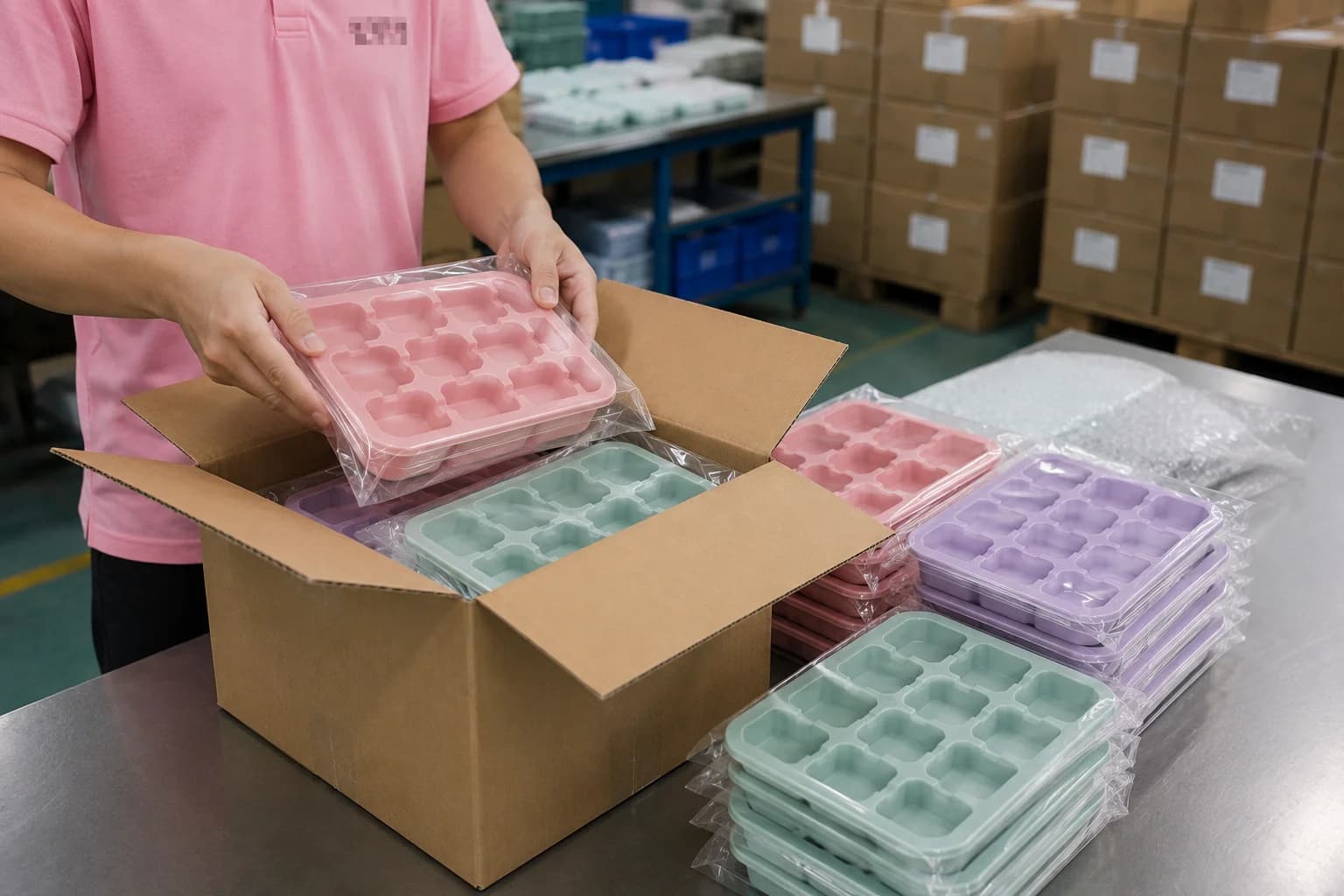
For either format, a buyer checklist should cover sample approval and pre-shipment inspection before scaling [K3]. Ask for a physical sample, test it with your own water and freezer, and compare the finished ice across multiple cycles. Do not rely only on rendered images or a single hero photo.
Commercial terms also need discipline. Before locking a purchase order, confirm current availability and project terms such as material composition, dimensions, certifications, MOQ, and lead time [K4]. Suppliers should not promise an unconditional 500-piece MOQ for every custom project, free samples and all freight, guaranteed dates without project review, or a fixed mold fee without design evaluation [K5]. Those are warning signs of an overpromised quote, not proof of a better product.
6. FAQ
Q1. Which format makes clearer ice: an ice cube tray sphere or an ice ball maker mold?
Neither format guarantees clear ice. Clarity depends more on water quality, dissolved air, freezing direction, and temperature control than on the mold label. A ball maker mold may produce a more polished surface in some designs, but it can still trap cloudiness if the freezing process is uncontrolled. Test both with your actual water and freezer before making a claim.
Q2. Is an ice cube tray sphere good enough for a cocktail bar?
It can be, especially for batch prep, highball service, or a bar that needs several pieces per cycle and has limited labor for individual molds. The key tests are release consistency, finished-sphere quality, freezer storage, and whether the sphere size fits the bar’s glassware. For a premium spirit-forward signature serve, a larger ball maker mold may be more appropriate.
Q3. Can both formats be customized for a brand or retail program?
Yes, custom silicone ice molds can be developed with cavity design, shape, size, color, logo, and packaging requirements [K1]. Feasibility, sampling, tooling, MOQ, and lead time still need project review and written confirmation [K4][K5]. The mold concept should be tested for release and durability before packaging and brand claims are finalized.
7. Conclusion
The better choice depends on what “better cocktail ice” means for your use case. For most home bars, batch-oriented cocktail programs, and branded promotional projects, an ice cube tray sphere is the more practical default because it usually offers higher yield and a simpler fill-freeze-release cycle. For low-volume premium serves where a large round piece is part of the presentation and the glass can accommodate it, an ice ball maker mold is often the stronger choice.
Do not decide from shape alone. Test release, clarity, glass fit, dilution over time, freezer footprint, and sample consistency. If you are sourcing custom molds, define the cavity and use case first, then verify availability, material, dimensions, MOQ, tooling, and lead time before quoting or publishing product-specific claims. That process will produce better ice—and fewer surprises—than choosing a format by name.