Key Takeaways
- A large silicone ice cube tray sphere is a multi-cavity tray that produces several large spherical cubes per fill, while a round ball ice maker typically uses a two-piece or clamshell silicone mold for one or a small number of perfectly round balls.
- Spherical ice melts more slowly and dilutes drinks less than standard small cubes, which is why both formats are popular for whiskey, cocktails, and premium iced drinks.
- Verified food-grade silicone is the baseline requirement: food-contact grade, odorless, and temperature resistant from -40°C to 240°C (-40°F to 464°F) [K5].
- Both formats can be customized in cavity design, shape, size, color, logo, and packaging for branded or private-label programs [K1], but buyers must confirm current availability, MOQ, and lead time before ordering [K3][K4].
- Neither format is universally better; the right choice depends on batch size, freezer capacity, and whether presentation or productivity matters more.
1. Introduction
Ice is one of the most underrated ingredients in a drink. For bartenders, home enthusiasts, and brand owners, the shape of ice affects how a drink looks, how quickly it melts, and how much a spirit or cocktail gets diluted before the glass is empty. The rise of spherical ice — large, smooth balls that melt slowly and sit elegantly in a glass — has created a popular product category: silicone ice molds.
But the market now offers two formats that are often confused: a large silicone ice cube tray sphere and a round ball ice maker. Both use silicone to create large round ice, but they differ in structure, output, convenience, and how they fit into a freezer. If you are choosing for your home bar, or sourcing for a retail or promotional product line, the decision is more practical than it appears.
This article compares both formats against the criteria that matter most: design, output, ease of use, material safety, and customization options. It also explains what to verify with a silicone manufacturer before ordering [K4], so you can avoid the common problems of cracked silicone, lingering odors, or ice that refuses to release.
2. What Are the Two Formats?
Large silicone ice cube tray sphere
A silicone ice cube tray sphere is a one-piece tray with multiple large spherical or hemispherical cavities. You fill it with water, place it on a flat freezer shelf, and wait. When frozen, you push or peel the flexible silicone from the bottom to release each sphere. Tray-style molds are commonly grouped under "ice cube trays" and "ice ball trays" in manufacturer product portfolios [K2], and they are typically made with food-grade silicone for direct contact with water and food [K5].
Round ball ice maker
A round ball ice maker usually refers to a two-piece or clamshell design: two hemispheres that close around a central cavity, with a small fill hole on top. You fill the sphere through the hole, close the mold, and freeze. Some variants are single-ball molds; others produce two or more balls side by side. This design resembles a classic ice-ball press but uses flexible silicone instead of rigid plastic or metal.
For a related manufacturing reference, review custom silicone ice mold manufacturing.
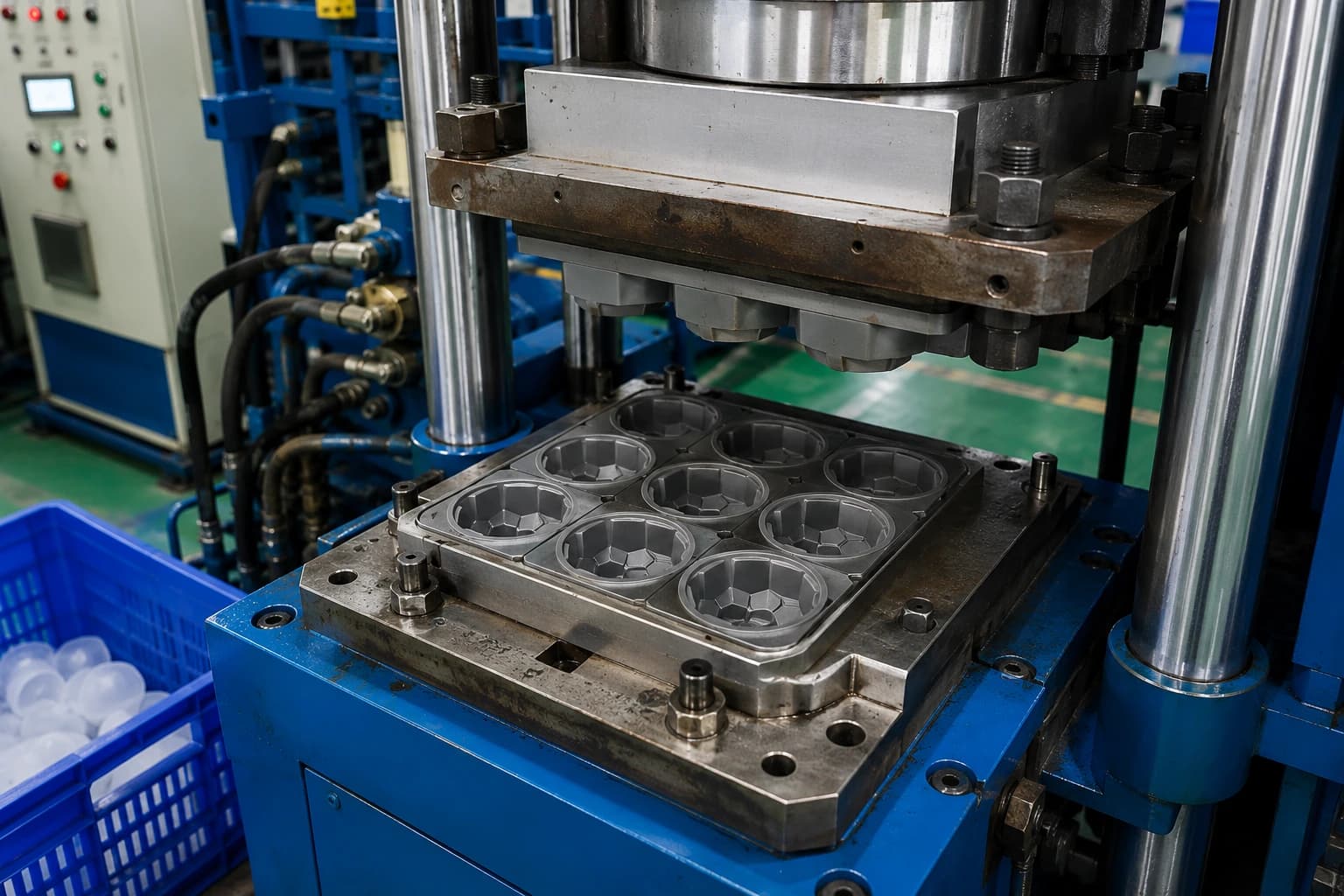
Core difference: The sphere tray is built for batch production — many large spheres per fill. The ball ice maker is built for smaller quantities with a fully enclosed, gap-free round finish. Both belong to the same silicone ice mold family [K2], but their daily-use behavior is different.
3. Performance Comparison: Melting, Clarity, and Presentation
Melting and dilution
Large ice melts more slowly than small ice because a bigger volume has less surface area relative to its mass. Both formats, when producing spheres of similar diameter, perform similarly in dilution control. The sphere is geometrically efficient: it has a smaller surface-area-to-volume ratio than cubes or cylinders, which is why spherical ice is preferred for whiskey and slow-sipping cocktails.
There is, however, a practical difference. A silicone tray with multiple sphere cavities often creates slightly "squat" spheres because the cavity is open at the top. A closed two-piece round ball ice maker produces a fully enclosed sphere with no flat top, which melts more evenly and resembles a professional ice ball. If presentation is the priority, the closed ball mold has an advantage.
Cloudiness and clarity
Neither a tray nor a ball mold guarantees crystal-clear ice. Clear ice is produced by directional freezing — freezing slowly from one direction, often in an insulated container or cooler — not by the mold material alone. Silicone's insulating properties slow freezing slightly, which can reduce cloudiness, but results still depend on water quality and freezer temperature. Buyers should set expectations accordingly.
Performance summary
- Sphere tray: better for batch use; good spherical shape with a small flat surface.
- Ball ice maker: better for single-drink or small-batch presentation; fully round; melts more evenly.
- Both: far better than standard small cube trays for slow dilution.
4. Material, Safety, and Durability: What to Verify Before Buying
This is the most important section for both consumers and B2B buyers. Silicone ice molds are promoted with many claims, but the actual material specification determines safety, odor, release performance, and lifespan.
For additional context on this decision, see Ice Ball Molds vs. Large Square Ice Cube Trays for Cocktails.
Verified public specifications for silicone ice molds produced by an established OEM include [K5]:
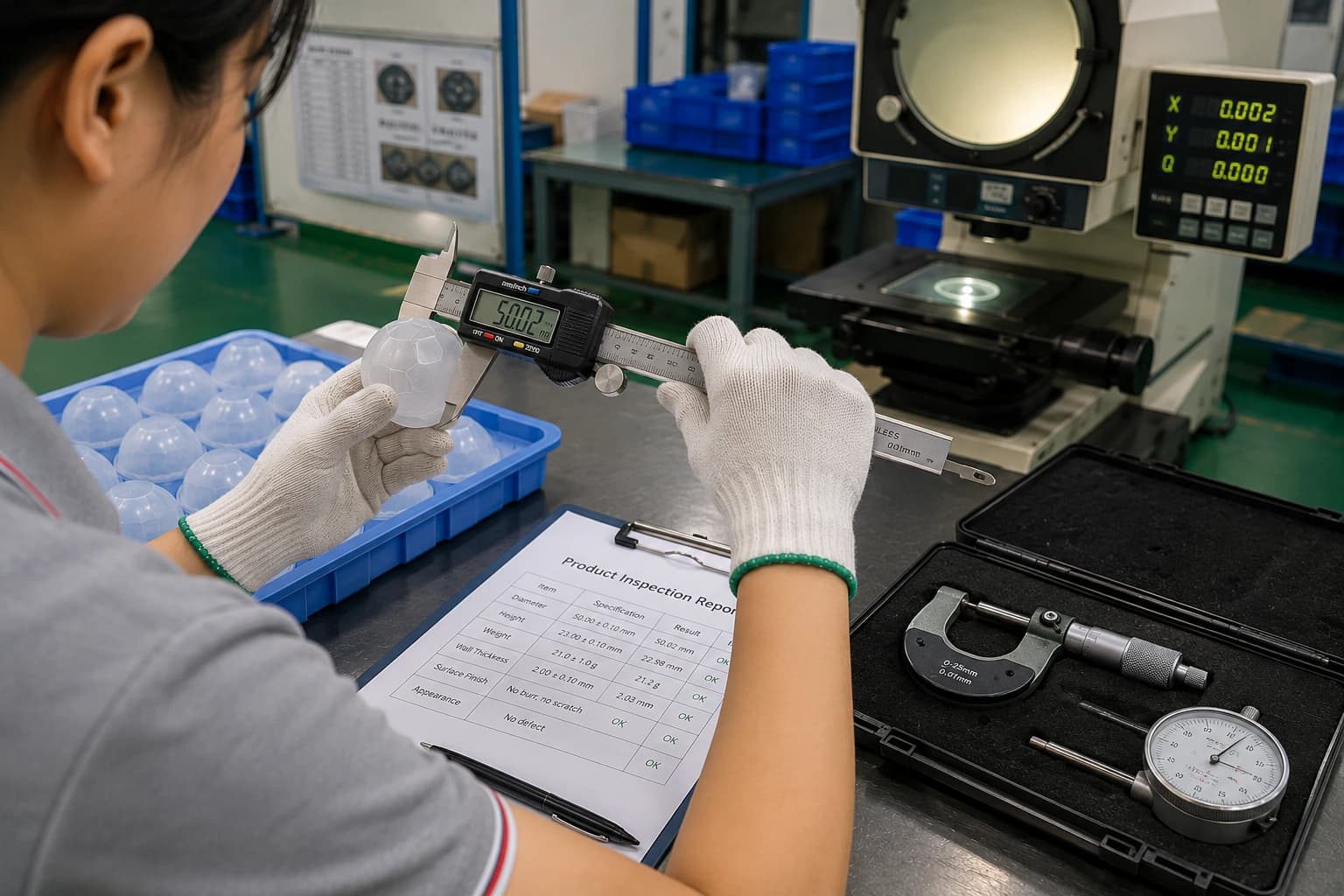
| Parameter | Verified value [K5] |
|---|---|
| Material | Silicone |
| Food-contact grade | Food-grade |
| Odor | Odorless |
| Temperature resistance | -40°C to 240°C (-40°F to 464°F) |
| Size | Custom sizes available |
| Customization options | Custom colors, sizes, shapes, and packaging |
What this means in practice:
- Food-grade is non-negotiable. The mold touches drinking water and food for hours. Buyers should request a specification sheet or certification, not just a verbal claim [K5].
- Temperature resistance matters. A mold that is only heat-resistant but not cold-resistant may crack in the freezer. The verified range of -40°C to 240°C covers standard freezers and hot-water cleaning [K5].
- Odorless is not automatic. Low-quality silicone can absorb smells or release a rubbery odor. Verified odorless silicone avoids this issue [K5].
- Customization is possible but must be confirmed. Cavity design, product shape, size, color, logo, and packaging are typical customization points [K1]. Buyers should confirm current availability, material composition, dimensions, certifications, MOQ, and lead time before publishing a product-specific page or placing purchase orders [K4].
A caution for brand owners: a manufacturer's product portfolio may list ice molds across household, kitchen, and promotional use cases [K2][K4], but listing does not guarantee that every variant is stocked or available for every market. Always verify before committing [K4].
5. Buying Decision: Which Should You Choose?
For home use
- Choose a large silicone ice cube tray sphere if you entertain, make multiple cocktails in one session, or want a single tray that delivers a batch of spheres per fill. Output is the main advantage.
- Choose a round ball ice maker if you primarily drink spirits one or two glasses at a time, want a perfect round ball without a flat top, or have limited freezer space for only one or two molds.
For retail, promotional, or private-label use
- Tray-style sphere molds are easier to package flat and more recognizable to consumers as an "ice cube tray" category item [K2]. They suit the promotional products channel, which commonly includes ice cube trays and ice ball trays [K2].
- Ball ice makers have a premium, giftable feel and photograph well. They are a popular choice for branded barware and gift sets.
- Both formats can be customized with logos, custom colors, and packaging [K1]. The decision should be driven by your target customer's usage scenario: batch cocktail making versus slow-sipper presentation.
Structured decision block
Decision guide: Silicone ball ice maker format selection
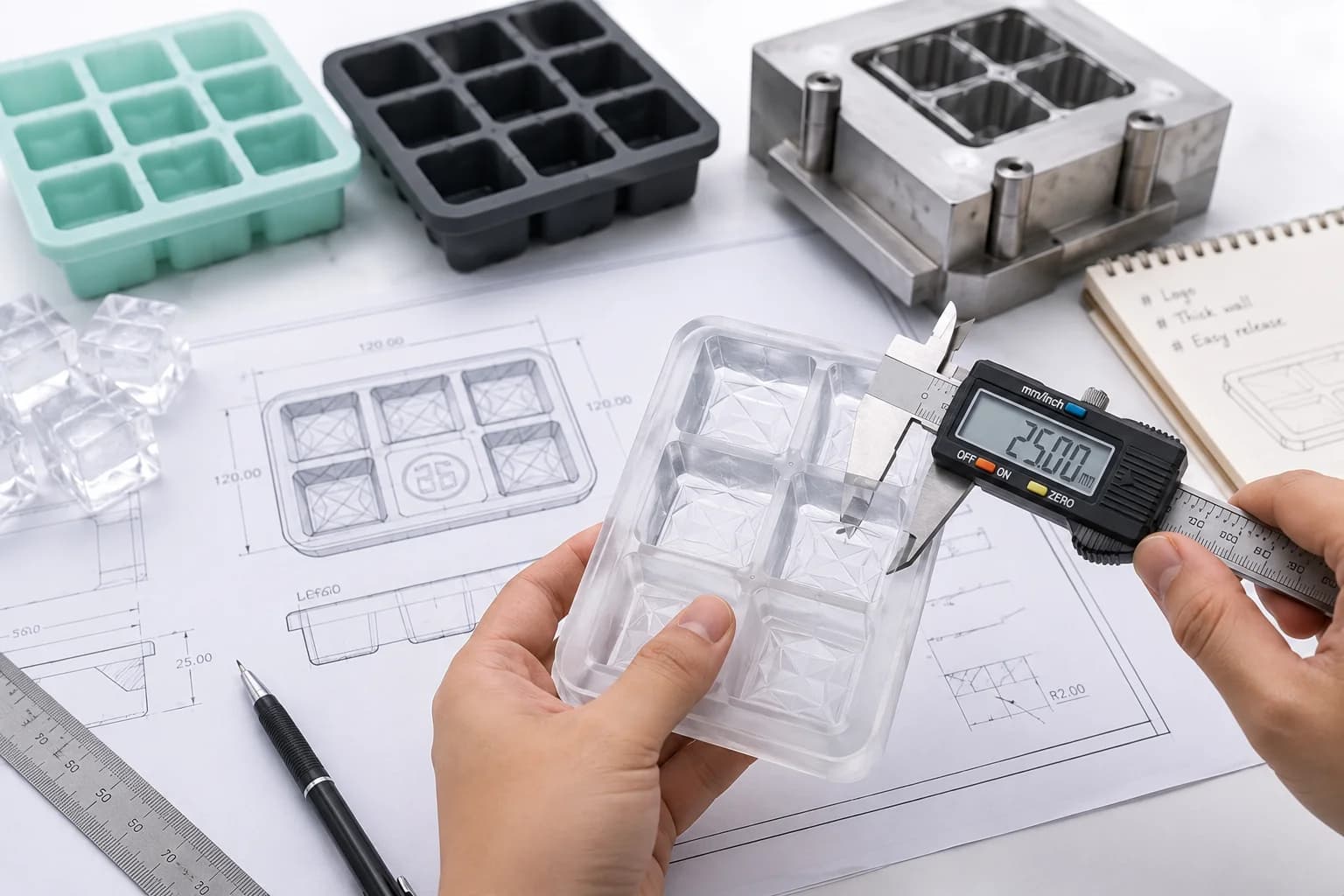
- Use a sphere tray when: you need more spheres per freezer fill, you prepare drinks for several people, or you sell an everyday "ice cube tray" product.
- Use a round ball ice maker when: you want perfectly round, fully enclosed ice with no flat surface, you have limited freezer space, or you sell a premium gift item.
- Use a custom mold from an OEM when: you need a specific cavity diameter, color, logo, or packaging; confirm MOQ, tooling, sampling, and lead time before production [K3][K4].
- Ask the manufacturer for: food-grade certification, odorless material, temperature resistance range, and a pre-shipment inspection checklist before mass production [K5][K3].
6. FAQ
Q1. Is a silicone ball ice maker better than a normal ice cube tray?
For slow-melting drinks, yes. Large spherical ice has a lower surface-area-to-volume ratio than standard small cubes, so it melts more slowly and dilutes drinks less. A silicone ball ice maker produces fully round spheres for better presentation, while a sphere tray produces more spheres per fill for batch use.
Before finalizing the specification, use Large Ice Cube Trays for Whiskey: A Buyer’s Guide to Size and Shape as an additional planning reference.
Q2. Are silicone ice molds safe for water and food contact?
Food-grade silicone is widely considered safe for ice and drinking-water contact. Verified specifications include food-grade material, odorless silicone, and temperature resistance between -40°C and 240°C [K5]. Buyers should request a specification sheet or relevant documentation rather than relying on marketing claims [K4].
Q3. Can I customize the shape, size, or color of a silicone ice ball maker?
Yes. Custom silicone ice molds typically support cavity design, product shape, size, color, logo, and packaging customization [K1]. OEM/ODM suppliers can develop custom molds, but you should confirm current availability, dimensions, MOQ, tooling, sampling, and lead time before production [K3][K4].
Q4. Which format makes clearer ice: sphere tray or ball maker?
Neither format alone produces crystal-clear ice. Clarity depends on directional freezing, water quality, and freezing speed. Closed ball molds with a small fill hole tend to freeze slightly more slowly, which can improve clarity, but the difference is not guaranteed. For fully clear ice, use a directional freezing method regardless of the mold.
7. Conclusion
The comparison between a large silicone ice cube tray sphere and a round ball ice maker is not about which is objectively better — it is about matching the format to your usage scenario. If you fill multiple glasses per session and want maximum output per freezer shelf, choose the sphere tray. If you prefer a single, perfectly round slow-melting ball for spirits and cocktails, choose a round ball ice maker.
For buyers sourcing silicone ice molds for retail, promotional, or private-label programs, the format decision is only the beginning. Work with an OEM that can customize cavity design, shape, size, color, and packaging [K1], and always verify current availability, material specifications, MOQ, tooling, sampling, and lead time before ordering [K3][K4]. Use verified food-grade silicone — odorless, with temperature resistance of -40°C to 240°C — as your baseline requirement, not a bonus [K5].
Whichever format you choose, the goal is the same: a better drink, slower dilution, and ice that looks as good as it performs.