Key Takeaways
- The ideal ice format depends on three factors: the container opening, the desired cooling speed, and how much dilution you are willing to accept in the drink.
- Long cubes and spears solve the two most common problems with standard cube trays: ice that does not fit through a narrow mouth, and ice that melts too quickly in a wide tumbler.
- Food-grade silicone is a practical mold material because it is odorless, flexible for removal, and withstands temperatures from -40°C to 240°C [K5].
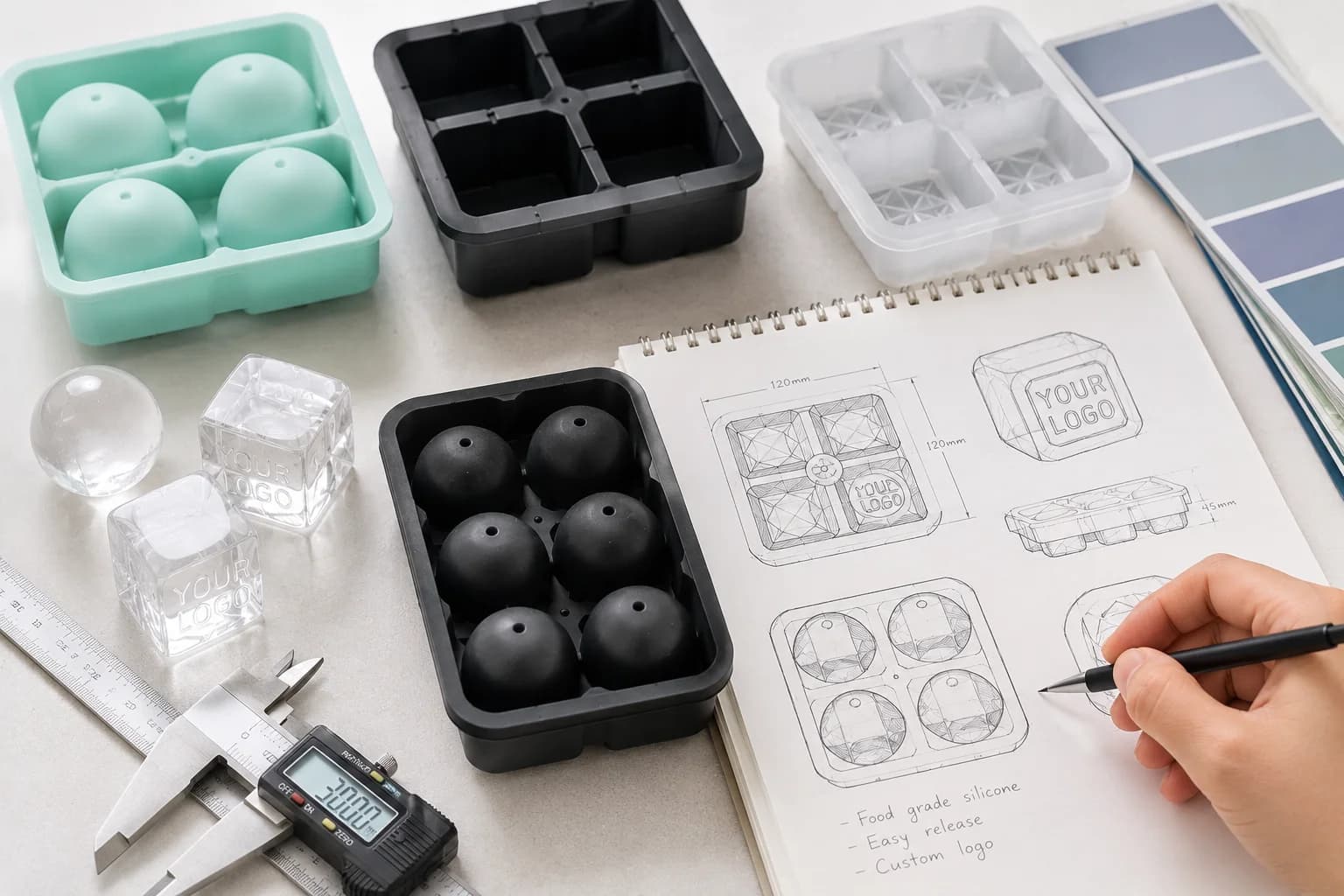
- Custom silicone ice molds allow adjustments to cavity design, shape, size, color, logo, and packaging, making them suitable for both home use and branded ice programs [K1].
- When sourcing custom molds, always confirm current availability, material composition, dimensions, certifications, MOQ, tooling, sampling, and lead time before committing to a design [K2][K4].
1. Introduction
Tumblers and bottles are the two most common containers for cold drinks, yet they create opposite design problems for ice. A standard ice cube is small enough to fall into a glass but dilutes a drink quickly. A large cube can be slow to melt, but it may not fit through the narrow neck of a bottle. The result is often a frustrating choice: cramped ice, watery drinks, or no ice at all.
This tension between fit and melt rate is why ice shape has become a decision in itself. Long cubes, spears, and narrow column formats are not just aesthetic variations. Each shape changes how the ice enters the container, how much surface area touches the liquid, and how long it lasts before it turns into water.
The industry has responded by moving beyond standard trays. Silicone molds, including customizable cavity designs, now make it practical to produce ice in shapes and sizes matched to specific drinkware [K1]. For businesses, the same logic applies at a larger scale: branded ice, custom mold development, and sampling are all part of a structured sourcing process [K2].
This article explains what long cubes, spears, and narrow formats actually do, how to choose between them, and what to verify when buying or custom-ordering silicone ice molds.
2. Why Ice Shape Matters for Tumblers and Bottles
Core conclusion: Ice shape controls three variables that matter for every cold drink: geometric fit, cooling efficiency, and melt rate.
Geometric fit. A tumbler has a wide opening, so almost any ice shape can enter. A bottle, by contrast, has a neck only slightly wider than the liquid inside. Ice must pass through that opening or be inserted before the drink is poured. This is why form factor is the first filter when choosing a mold.
Cooling efficiency. Ice cools a drink by absorbing heat through its surface. A shape that contacts more liquid area will chill faster. However, more surface contact also accelerates melting. The balance between cooling speed and dilution is what separates a good ice format from a poor one.
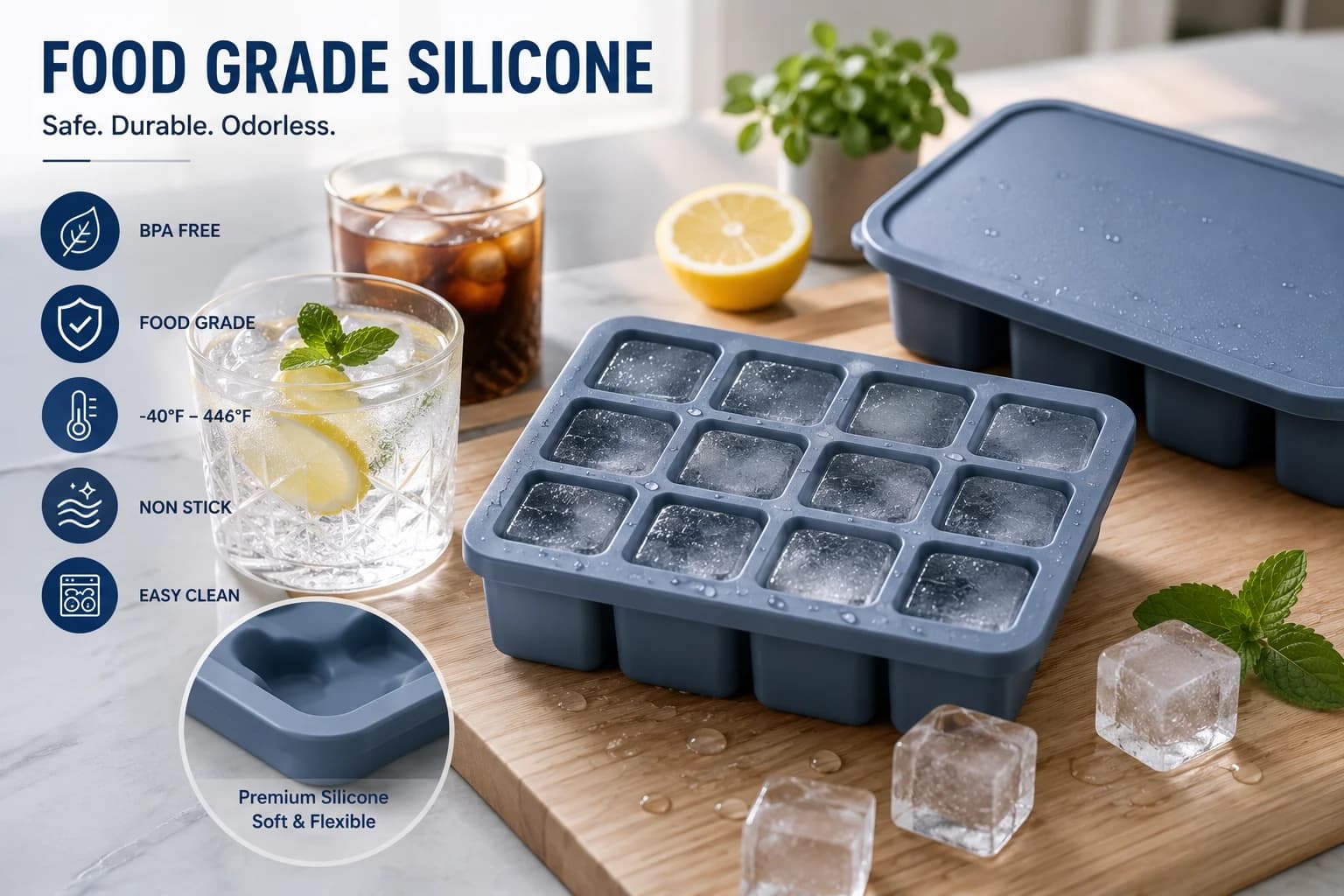
Melt rate. Melt rate is driven by the ratio of surface area to volume. A large cube melts slowly because its volume is large relative to its exposed surface. Crushed ice melts quickly because the same volume is broken into many small pieces with far more total surface area. A silicone long ice cube mold takes advantage of this principle by producing ice with one extended dimension, which increases volume without making the piece too wide for the glass.
For a related manufacturing reference, review custom silicone ice mold manufacturing.
Practical scenario:
- A whiskey drinker using a standard tumbler usually wants slow dilution. A long cube sits low in the glass, cools the spirit gradually, and does not crowd the rim.
- Someone filling an insulated bottle for a commute needs ice that fits through the neck and can be poured. Spear-shaped ice works because it aligns with the vertical axis of the bottle.
- A parent preparing a child's bottle needs small, safe pieces that cannot wedge or block the flow. Narrow columns or stick formats are the safer default.
The rule of thumb: match the smallest dimension of the ice to the narrowest point of the container, then choose the largest volume that still allows that fit.
3. Long Cubes vs. Spears vs. Narrow Formats: What Each Does Well
Core conclusion: Each format is a compromise between fit, cooling, and melt rate. There is no universal winner.
| Format | Typical profile | Best use case | Trade-offs |
|---|---|---|---|
| Long cube | A cube with one extended dimension | Tumblers, rocks glasses, tall cups | Slow melt and good presence in the glass, but usually too wide for bottle necks |
| Spear | An elongated, narrow rectangle | Water bottles, narrow tumblers, iced coffee bottles | Fits through narrow openings and chills well, but melts faster than a large cube |
| Narrow column | A thin rod or stick | Very narrow mouths, kids' bottles, small tumblers | Easy to insert and portion, but the smallest volume means quicker dilution |
| Ice ball | Sphere | Wide-mouth tumblers and cocktail glasses | Very slow melt, but completely unsuitable for bottles |
Reasoning behind the table.
Long cubes are the preferred choice when the container has a wide mouth. Because a long cube has a lower surface-area-to-volume ratio than several small cubes, it dilutes the drink more slowly. This makes it useful for spirits, bourbon, and cocktails where flavor concentration matters.
Spears are the format that reconciles fit and function. A spear can be designed to be narrower than the narrowest part of a bottle neck while still carrying enough volume to chill a full drink. They also line up neatly when stacked, which makes them practical for batch freezing in multi-cavity silicone molds.
Narrow columns are the most forgiving format for fit, but the trade-off is melt speed. Their small diameter means more surface area per unit of volume, so they are best for drinks that are consumed quickly or for containers with very small openings where a spear will not fit.
Manufacturing note: These formats are commonly produced with food-grade silicone molds, which are odorless and flexible enough to release ice without cracking or sticking [K5]. Silicone also allows cavity shapes that are difficult to achieve with rigid plastic trays, including tapered spears and elongated columns [K1]. In the broader product landscape, ice cube trays, ice ball trays, and popsicle molds are all recognized as promotable and household kitchen formats, so the same tooling principles apply across these product lines [K3].
4. What to Verify When Buying or Custom-Ordering a Mold
Core conclusion: The quality of a silicone ice mold is decided by material specification, dimensional accuracy, and the manufacturer's customization process, not by the shape of the photo.
For additional context on this decision, see Large Ice Cube Trays for Whiskey: A Buyer’s Guide to Size and Shape.
Material specification. Food-grade silicone is the baseline for ice molds. Verified public specifications for this category include an odorless material with a temperature resistance range of -40°C to 240°C (-40°F to 464°F) [K5]. The temperature range matters because molds are often frozen, washed in hot water, and stored in warm kitchens. Food-contact suitability should be confirmed with the supplier before purchase; do not assume a generic silicone product is food-grade.
Dimensions and cavity design. A mold may look like a spear mold but produce ice that is slightly too wide for the intended bottle. Check the cavity dimensions, not just the outer mold size. Custom silicone ice molds can be adjusted in cavity design, product shape, and size [K1]. If the ice must fit a specific bottle, measure the bottle mouth and compare it to the narrowest part of the mold cavity.
Customization options. Typical customization for silicone ice molds includes cavity design, shape, size, color, logo, and packaging [K1]. For branded ice programs, color and logo customization matter because the ice itself can carry a visual identity. Packaging is also a consideration for retail or promotional distribution, where ice molds are sold as consumer products. Ice molds can be tagged across household, kitchen, and promotional use cases without being limited to one category [K4].
The sourcing caution. A manufacturer's product portfolio map is evidence of capability, not proof that every item is currently stocked or available for every market. Before publishing a product page or placing an order, confirm current availability, material composition, dimensions, certifications, MOQ, and lead time [K4]. The same rule applies to compliance: plan for market-specific compliance with the supplier instead of assuming a single certification covers every destination [K2].
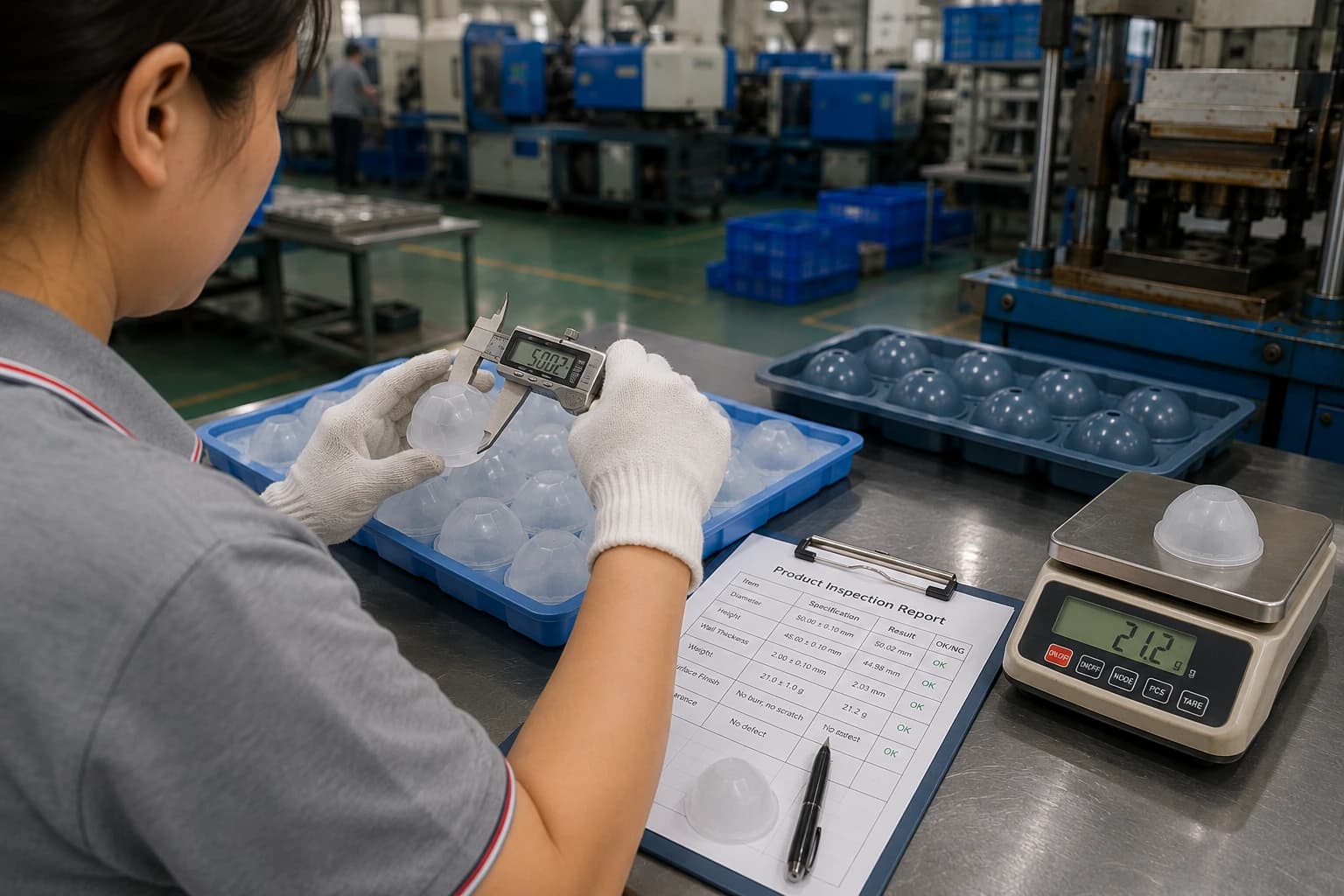
Process awareness. Custom mold projects move through design review, tooling, sampling, and production. Buyers should plan for sampling and pre-shipment inspection as part of the timeline [K2]. A common mistake is treating sampling as optional; for custom cavity designs, the sample is the first point where fit and shape can be validated against the real container.
5. A Practical Selection Guide for Ice Formats
Use this structured block to match your container and consumption pattern to a format.
| Container type | Opening size | Recommended format | Primary reason |
|---|---|---|---|
| Tumbler or rocks glass | Wide | Long cube | Slow dilution, good fit, visually balanced |
| Tall iced coffee cup | Medium | Spear or long cube | Long pieces stand vertically and chill the full height of the drink |
| Insulated water bottle | Narrow | Spear | Fits through the neck while providing enough volume for sustained cooling |
| Very narrow child's bottle | Very narrow | Narrow column | Predictable fit, easy insertion, safe portion size |
| Cocktail mixing glass | Wide | Long cube or ice ball | Minimal dilution during stirring |
Selection checklist before ordering:
- Measure the narrowest point of the bottle mouth or cup opening.
- Decide how much dilution you will accept; this tells you whether you need a large low-surface-area shape or a smaller faster-cooling shape.
- Check that the mold cavity's smallest dimension is smaller than the container opening.
- Confirm the material is food-grade silicone and odorless [K5].
- For custom orders, request a sample and verify dimensions, color, logo placement, and packaging before full production [K1][K2].
- Ask the supplier about MOQ, tooling costs, lead time, and inspection procedures so the timeline matches your launch plan [K2][K4].
6. FAQ
Q1. What is a silicone long ice cube mold used for?
A silicone long ice cube mold produces elongated pieces of ice designed for tall cups and wide-mouth tumblers. Because the format has a lower surface-area-to-volume ratio than standard small cubes, it cools a drink with slower dilution, which is desirable for spirits, whiskey, and other beverages where flavor concentration matters. Food-grade silicone versions are odorless and can withstand freezing and hot-water washing within a temperature range of -40°C to 240°C [K5].
Before finalizing the specification, use Round vs. Square Ice Cube Trays: Which Format Fits Your Beverage Program? as an additional planning reference.
Q2. How do I know if a spear or long cube will fit my bottle?
Measure the narrowest inner diameter of the bottle mouth, then compare it with the smallest width of the ice cavity on the mold. A spear should be designed so its narrowest side is smaller than that opening. If you are sourcing a custom mold, provide the bottle dimensions during design review and validate the fit with an approved sample before production [K1][K2].
Q3. Can I customize the size, shape, color, and logo of an ice mold?
Yes. Custom silicone ice molds typically support adjustments to cavity design, product shape, size, color, logo, and packaging [K1]. This makes it possible to create branded ice for promotional programs or to match molds to specific bottle and tumbler dimensions. Before finalizing, confirm the availability, material composition, certifications, MOQ, and lead time with the manufacturer [K4].
Q4. What should I ask a supplier before ordering custom silicone ice molds?
Ask about current availability, material specification, dimensions, certifications, MOQ, tooling costs, sampling, lead time, packaging, and quality inspection procedures [K2][K4]. Also confirm that the mold material is food-grade silicone and odorless, and request a sample to verify the cavity shape against your actual container [K5].
7. Conclusion
There is no single best ice format, only the right match for a container and a drinking style. Long cubes serve tumbler users who want slow dilution and a clean look. Spears solve the narrow-neck problem without sacrificing too much cooling volume. Narrow columns win when the opening is very small and fit is the only priority.
For most buyers, the deciding factors are the container mouth size and the acceptable melt rate. Measure first, choose the format second, and treat material specification as non-negotiable: food-grade silicone is the reliable baseline for molds because it is odorless, heat-resistant, and flexible enough for clean release [K5].
If you are sourcing custom molds, approach it as a process rather than a transaction. Confirm current product availability, request a sample, validate the fit, and clarify MOQ, tooling, and lead time before production [K2][K4]. Custom silicone ice molds support variations in cavity design, shape, size, color, and packaging [K1], which means the format can be tailored precisely to the bottle, glass, or brand need. A mold that produces the right ice for the right container is a small investment that improves every drink it touches.