Key Takeaways
- Most cloudy ice is not caused by your water alone — it comes from how the ice freezes. Trays and molds that encourage directional, top-down freezing give you a realistic path to crystal clear ice cubes.
- Where you buy matters less than what the tray is designed to do. Mass retail, barware specialists, and direct-from-manufacturer custom silicone suppliers each solve a different problem.
- For anyone producing clear ice at volume or under a brand, custom silicone ice molds can be specified by cavity design, shape, size, color, logo, and packaging [K1].
- Confirm current availability, material composition, dimensions, certifications, MOQ, and lead time before you publish a product page or accept a quotation — a product portfolio listing is not proof of stock status [K4].
- Verified silicone specification data commonly includes food-grade material, odorless properties, and a temperature range of -40°C to 240°C (-40°F to 464°F) [K5].
1. Introduction
If you have ever pulled a tray out of the freezer expecting cocktail-bar ice and found a row of frosted white cubes instead, you already know the frustration. Cloudy ice is the default outcome of a standard tray in a standard freezer, and no amount of scrubbing the tray or switching water brands fixes it on its own.
The confusion is compounded when you start shopping. Search results mix promotional trays, rigid bar molds, oversized silicone blocks, and restaurant-style insulated forms — all advertised with the same handful of words, none of them explaining the freezing mechanics that actually determine clarity. Buyers end up choosing on price or cavity shape and then wondering why the results barely change.
This article answers two questions in one pass: where you can realistically buy trays built for clear ice, and which design features are worth paying for. It is written for home enthusiasts who want better ice this month, and for brand owners, bar operators, and buyers who need to source trays or custom molds at volume without guessing at specifications.
2. Where Can You Buy Trays Built for Crystal Clear Ice Cubes?
Core conclusion: There is no single best place to buy. The right channel depends on whether you need one tray for personal use, a durable set for a bar program, or a private-label product line.
Mass retail and home-goods channels. Supermarkets, general e-commerce marketplaces, and home-goods chains carry two main categories: standard rigid trays and flexible silicone trays. The advantage is price and immediate availability. The limitation is that most listings describe shape and count, not freezing direction. You can still get clear results here, but you are buying the tray and then engineering the freezing setup yourself.
Barware and specialty beverage retailers. These sellers tend to stock insulated, directional-freezing molds — often a large single block that you cut into cubes after freezing. This is the fastest route to genuinely clear ice for cocktails, because the product design already accounts for how heat leaves the mold. Expect higher prices and a narrower size range.
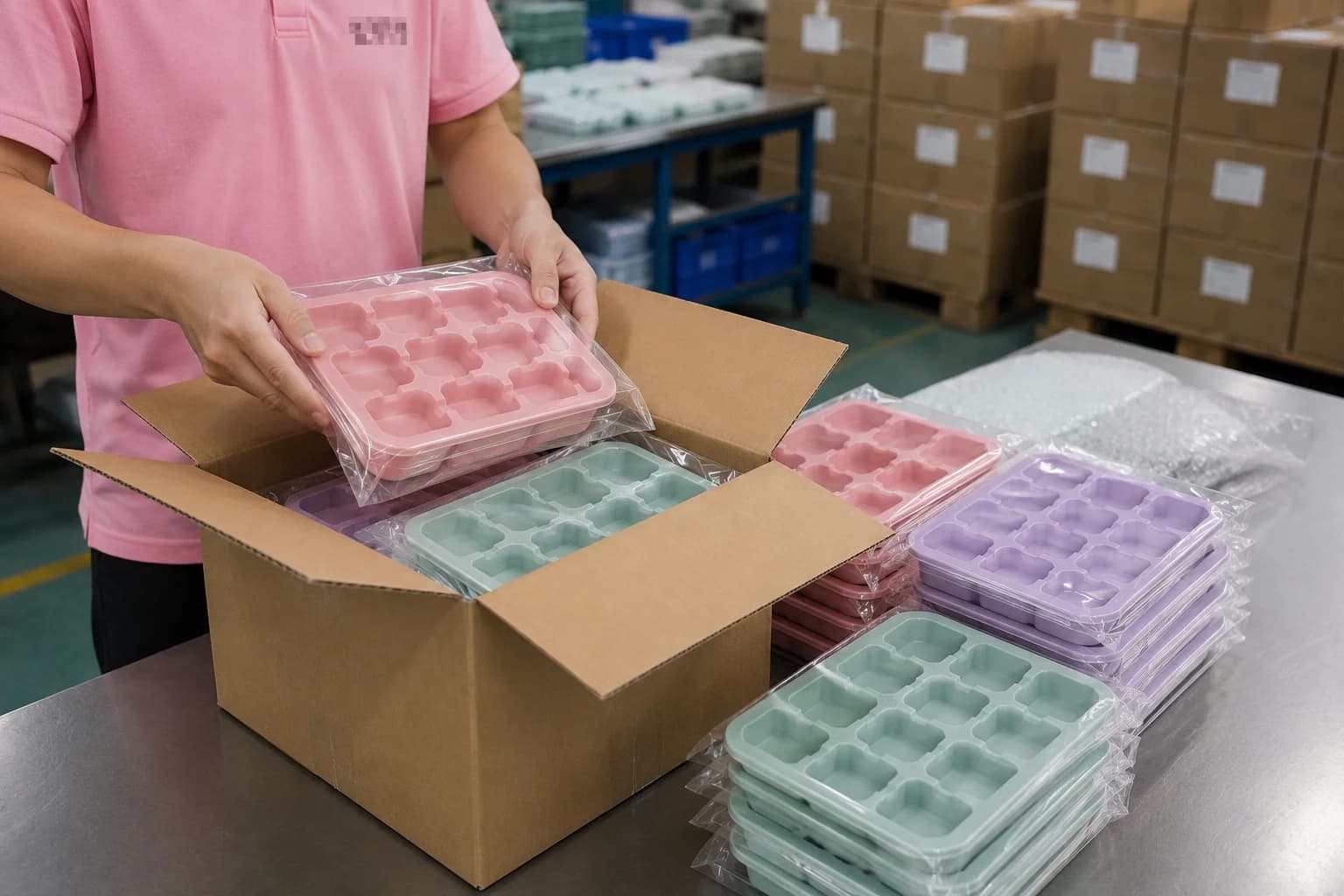
Direct-from-manufacturer and OEM/ODM suppliers. If you need a tray under your own brand, or a size, cavity layout, or packaging format that no retailer carries, sourcing direct is the practical route. Custom silicone ice molds can be developed with cavity design, product shape, size, color, logo, and packaging specified to your requirements [K1]. This channel also opens cross-category use cases: ice molds can reasonably sit under household, kitchen, or promotional product categories, and the category label should not restrict how you position them [K4].
For a related manufacturing reference, review custom silicone ice mold supplier.
A note on portfolio listings. Suppliers frequently publish an overview of their product architecture. That diagram is evidence of a reported portfolio, not proof that every item is currently stocked or available for every market [K4]. Treat it as a conversation starter, then verify.
Practical advice: Match the channel to your time budget. If you want clear ice this weekend, buy from a barware specialist. If you want clear ice at a defined cost per unit at scale, talk to a manufacturer and ask about sampling and tooling before anything else.
3. What Makes Ice Cloudy — and Which Tray Features Actually Fix It
Core conclusion: Clarity is a freezing-direction problem, not a tray-shape problem. Any feature that slows and directs the freeze upward is doing real work; anything else is decoration.
When water freezes from all sides at once — which is what happens in a conventional tray sitting on a freezer shelf — dissolved air and dissolved minerals have nowhere to escape. They get trapped in the last portion of water to solidify, which is why cloudiness concentrates in the center of a cube rather than at its edges.
Directional freezing reverses that. If you insulate the sides and bottom of the mold so heat can only leave through the top, ice forms as a layer that thickens downward, pushing air and impurities ahead of the freezing front. The result is a clear upper mass and a cloudy bottom layer you discard. This is the mechanism behind insulated cooler-style molds and large-format block molds.
Features that support this mechanism:
- Insulated walls or a double-wall shell. Slows lateral heat loss so the freeze moves in one direction.
- Open or vented top. Allows the last of the air and gas to leave the mold instead of being sealed in.
- Large single cavity or one large block. Gives you a clear zone big enough to cut usable cubes from, rather than many small cavities each freezing from multiple directions.
- Wall thickness and rigidity. Thin walls flex and transfer heat quickly; thicker, stiffer construction holds the shape and slows the freeze.
- Flexible demolding. Silicone's flexibility helps release large blocks and complex cavities without cracking the ice or the mold.
Boundary conditions worth knowing: A well-designed mold improves your odds, but freezer temperature, how full you fill it, and how you store the finished cubes all affect the outcome. Warm water and a full fill generally reduce trapped air; storing clear cubes in an open container in the freezer can frost them over and undo the visual result.
4. Essential Features to Consider Before You Buy
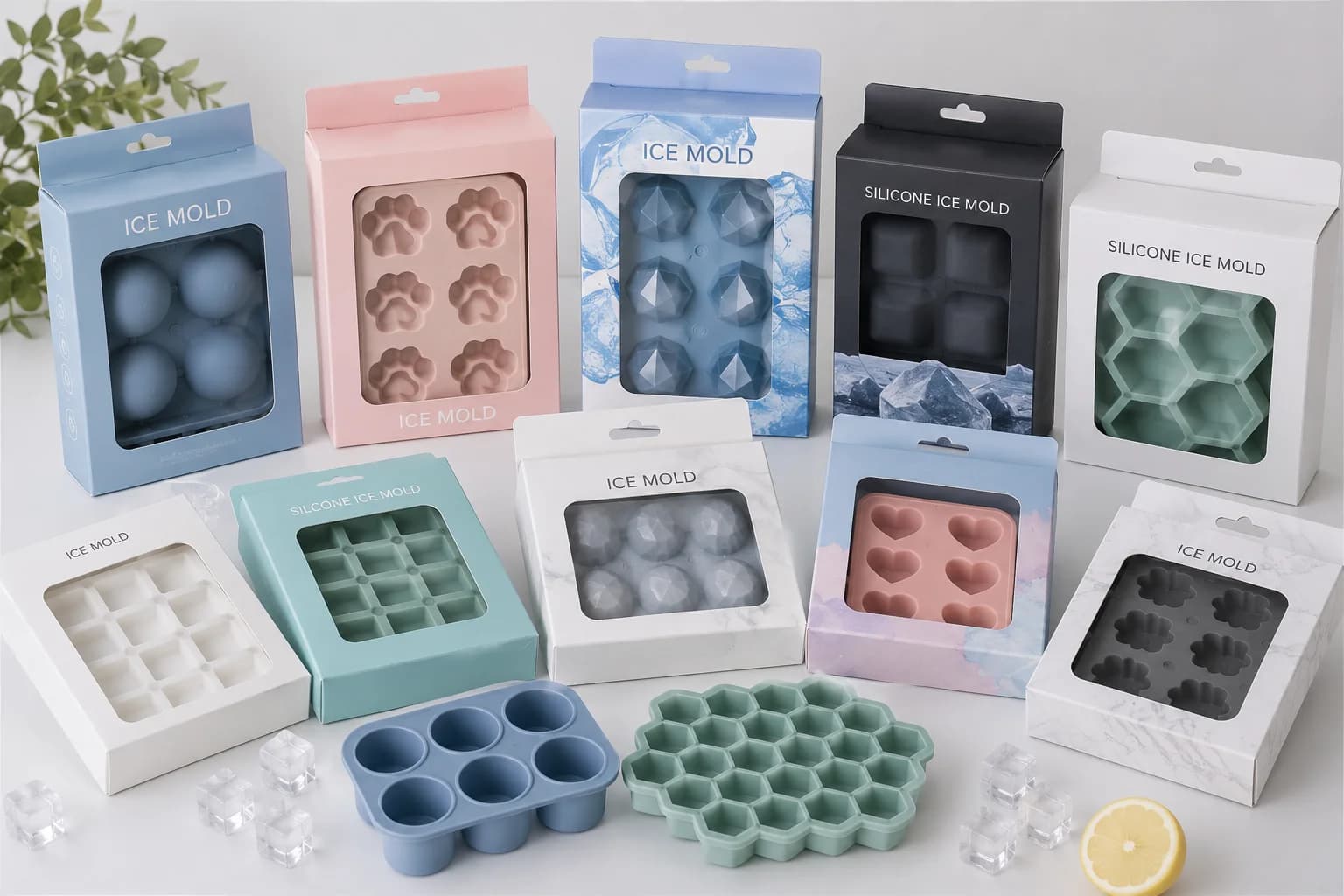
Core conclusion: Evaluate five things — freeze direction, cavity format, material, temperature rating, and packaging claims — before you look at the price tag.
For additional context on this decision, see clear ice.
| Feature | Why it matters | What to check |
|---|---|---|
| Freeze direction design | Determines whether clarity is achievable at all | Insulated base/sides, open top, single large cavity |
| Cavity format | Larger cavities give a clear zone to work with | Block mold vs. individual cubes; intended finished cube size |
| Material | Affects demolding, durability, and food contact | Food-grade silicone, odorless [K5] |
| Temperature rating | Governs safe use across freezer and cleaning cycles | Verified range of -40°C to 240°C (-40°F to 464°F) [K5] |
| Customization options | Relevant for branded or private-label programs | Custom colors, sizes, shapes, and packaging [K5] |
| Stated certifications | Compliance claims vary by market and must be verifiable | Ask for product-specific documentation; do not rely on generic claims [K3][K4] |
Practical scenario: A home user running one freezer cycle per day should prioritize a single-cavity insulated block mold and accept the extra step of cutting cubes. A bar operator working at volume should prioritize consistency and demold speed across many molds. A brand owner should prioritize specification clarity — because a mold that cannot be re-ordered to the same dimensions is a long-term problem, not a one-time purchase.
A buyer checklist used during sample approval and pre-shipment inspection is a standard practice in custom silicone sourcing and is worth building before your first order, not after [K3].
5. Key Comparison: Retail Trays vs. Custom Silicone Molds
Core conclusion: Retail purchasing solves availability; custom tooling solves fit. Choose based on whether you need a product or a specification.
| Dimension | Retail / barware tray | Custom silicone mold |
|---|---|---|
| Lead time | Immediate | Design review, sampling, and tooling stages apply [K3] |
| Unit cost | Higher per unit at volume | Lower per unit at volume, offset by tooling |
| Specification control | Limited to what is stocked | Cavity design, shape, size, color, logo, packaging [K1] |
| Order size | Any quantity | MOQ and tooling terms apply [K3] |
| Best for | Personal use, testing a format | Branded products, gifting, promotional programs |
| Main risk | Product may not match your clarity needs | Timeline depends on sample approval and lead time planning [K3] |
How a custom project typically moves forward: design review and design-file preparation, sampling, tooling, production, quality inspection, and packaging [K1][K3]. Each stage has a decision point where you can still change the specification, and a point after which changes become expensive. Ask your supplier to identify those points explicitly.
Before finalizing the specification, use Clear Ice Molds for Commercial Programs: Design Factors Buyers Should Evaluate as an additional planning reference.
Questions worth asking any OEM/ODM manufacturer: What is the MOQ? What does tooling cost and who owns it? How many sampling rounds are included? What is the realistic lead time from design approval to shipment? Which markets do you have compliance experience in? Note that compliance planning should stay market-specific and should not rest on unsupported certification claims [K3].
6. FAQ
Q1. Will buying a "clear ice" tray guarantee crystal clear ice cubes?
No. The tray creates the conditions for directional freezing, but the outcome depends on how you use it. Fill the mold fully, place it where the top surface is exposed to cold air, and let the freeze run slowly. Expect to discard a cloudy bottom layer — that layer is the mechanism working, not a defect.
Q2. Is silicone better than rigid plastic for clear ice?
They solve different problems. Silicone's flexibility helps with demolding large blocks and complex cavity shapes, and verified silicone specifications include food-grade material, odorless properties, and a temperature range of -40°C to 240°C (-40°F to 464°F) [K5]. Rigid materials can hold a stiffer structure. The freezing design matters more than the material category.
Q3. Can I order custom ice molds with my own logo and packaging?
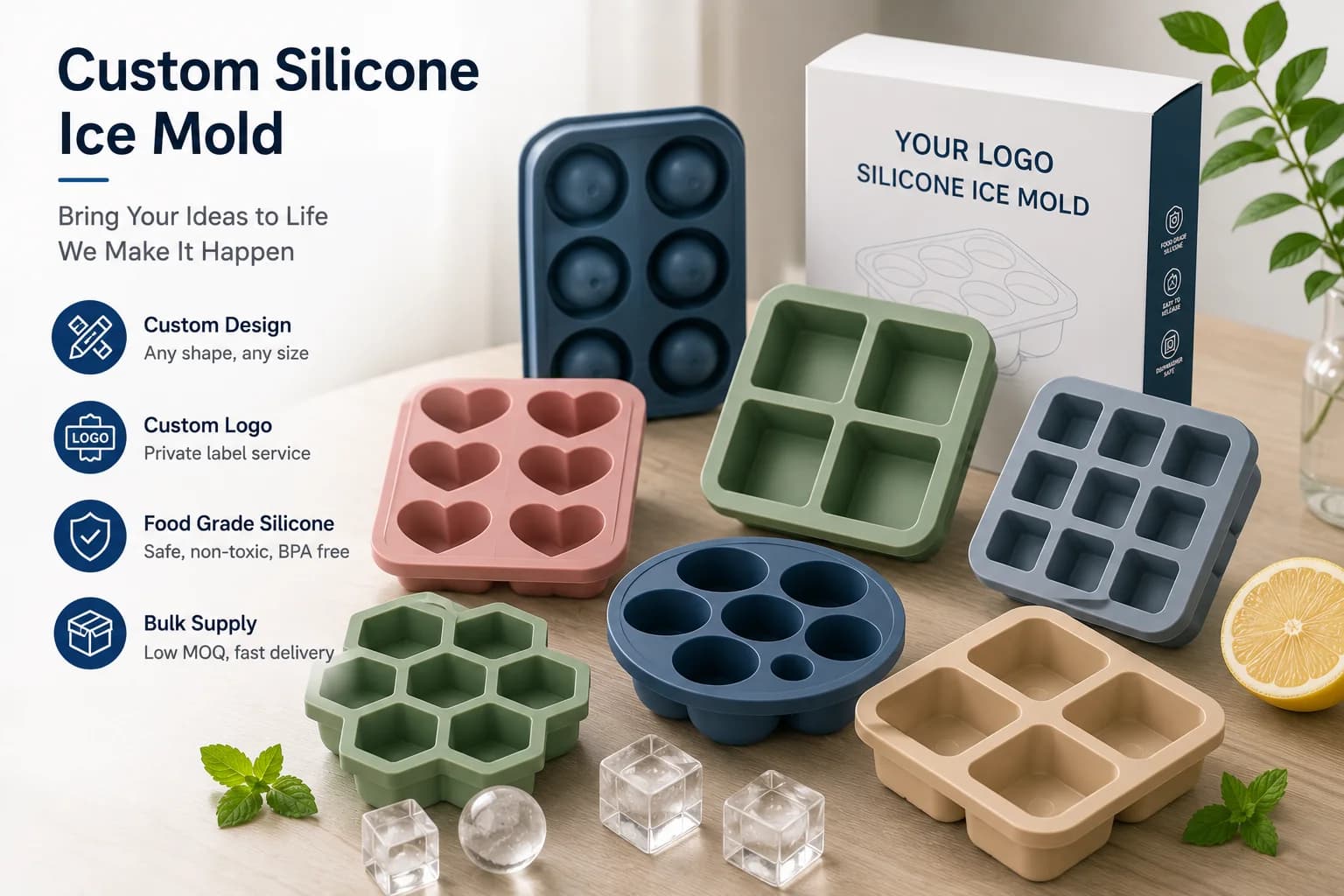
Yes. Custom silicone ice molds can be specified by cavity design, product shape, size, color, logo, and packaging [K1]. Before committing, confirm current availability, material composition, dimensions, certifications, MOQ, and lead time — a portfolio listing alone does not confirm any of these [K4].
Q4. How long does a custom mold project take?
Timelines vary by project complexity and are typically planned around MOQ, tooling, sampling, and lead-time stages [K3]. Ask your supplier to map those stages to dates before you approve a design, and treat the sampling approval step as the gate that determines everything downstream.
7. Conclusion
If you want crystal clear ice cubes this week, buy from a barware or specialty retailer and prioritize a single-cavity, insulated, open-top mold. The mechanism matters more than the brand, and you can validate it with one freezer cycle.
If you are sourcing for a brand, a venue, or a promotional program, the buying question shifts from "which tray" to "which specification." Custom silicone ice molds let you control cavity design, shape, size, color, logo, and packaging [K1], and they can be positioned across household, kitchen, or promotional use cases without being locked into one category [K4].
In both cases, the same discipline applies: verify the specification before you commit. Confirm availability, material composition, dimensions, certifications, MOQ, and lead time in writing [K4], and keep unsupported certification claims out of your product pages [K3]. That single step separates a purchase you can repeat from one you have to re-solve every season.