Key Takeaways
- Clear ice results from controlled directional freezing, not from a mold alone; mold geometry, water quality, and freezing conditions determine final clarity.
- For commercial programs, the value of a clear ice mold lies in customization breadth: cavity design, product shape, size, color, logo, and packaging are the typical customization levers [K1].
- Buyers should treat a manufacturer's portfolio as directional, not definitive; verify current availability, material composition, certifications, MOQ, and lead time before ordering [K3].
- A disciplined sourcing workflow — design review, sampling, tooling and production planning, and pre-shipment inspection — is the most reliable way to reduce commercial risk [K2].
- Ice molds span multiple use categories (household, kitchen, promotional), so category strategy affects compliance, packaging, and distribution decisions [K4][K3].
1. Introduction
Premium clear ice has moved from a cocktail-bar luxury to a standard visual expectation in upscale beverage service, hospitality, events, and branded ice retail programs. For buyers running such programs, cloudy ice is not just a cosmetic issue; it signals inconsistent quality to customers and undermines the product. Yet many sourcing conversations begin and end with a single question: "Which clear ice mold should I buy?"
That question is too narrow. A clear ice mold is never just a shape. It sits at the intersection of freezing physics, silicone material behavior, cavity engineering, branding capability, and a manufacturer's production discipline. Commercial buyers evaluating a clear ice mold must weigh factors that home users never consider: unit consistency across thousands of production cycles, demolding durability, logo reproduction on ice, tooling costs, minimum order quantities, lead times, and compliance requirements for target markets.
This article translates those concerns into a structured evaluation framework. It explains how mold design affects ice clarity, which customization options matter for commercial programs [K1], what to verify before approving tooling [K3], and how the sourcing process should move from design review to pre-shipment inspection [K2]. By the end, buyers should be able to shortlist suppliers, prepare a design brief, and ask questions that separate capable OEM/ODM partners from catalog-style resellers.
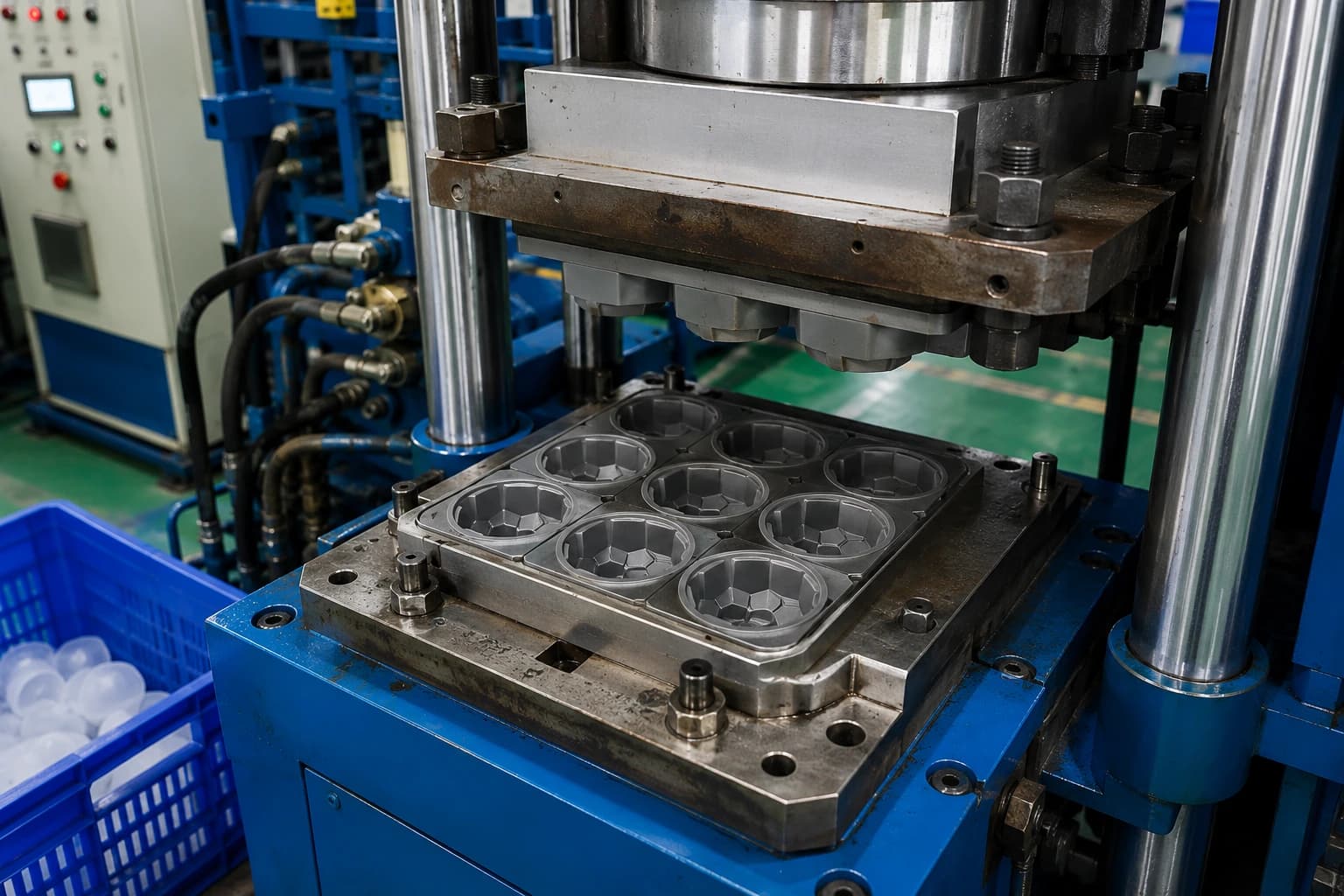
For a related manufacturing reference, review custom silicone ice mold manufacturing.
2. Mold Geometry and Freezing Behavior: Why Clarity Is a Design Problem
Core conclusion: A clear ice mold supports directional freezing. If the design allows water to freeze from multiple directions, the result will be cloudy ice regardless of silicone quality.
Ice becomes clear when water freezes in one direction, forcing dissolved air and mineral impurities toward a single unfrozen pocket that is removed or hidden before the product is used. When water freezes from all sides — as it does in uninsulated cavities inside a standard freezer — impurities become trapped between advancing ice fronts, producing the white, cloudy interiors typical of ordinary trays.
Commercial buyers should evaluate several geometry-related factors:
- Open versus closed cavity. An open-top cavity allows water to freeze from the top down, naturally concentrating impurities at the bottom. Closed molds that freeze from all directions tend to trap cloudiness.
- Insulation. Insulated side walls and bases slow freezing from those directions, reinforcing top-down solidification. Many commercial programs place the mold inside an insulated cooler or a directional-freezing chamber.
- Impure-core separation. For fully clear cubes, the unfrozen pocket containing dissolved solids must be removable after the first phase of freezing. Not every clear ice mold design supports this; buyers should ask how the mold is meant to be used in the freezing protocol.
- Water fill and expansion. Water expands during freezing. The cavity and overflow design must accommodate this expansion without deforming the ice or stressing the silicone structure.
The practical implication: a buyer evaluating a clear ice mold should request samples tested under realistic freezing conditions. A mold that produces a clear cube with triple-filtered water in a controlled environment may perform differently in a busy bar freezer. Define the freezing equipment, water treatment, and daily output expectations before finalizing cavity dimensions. The mold is one component of the ice-production system, not the entire solution.
For additional context on this decision, see Ice Ball Molds vs. Large Square Ice Cube Trays for Cocktails.

3. Silicone Material, Cavity Design, and Branding Options
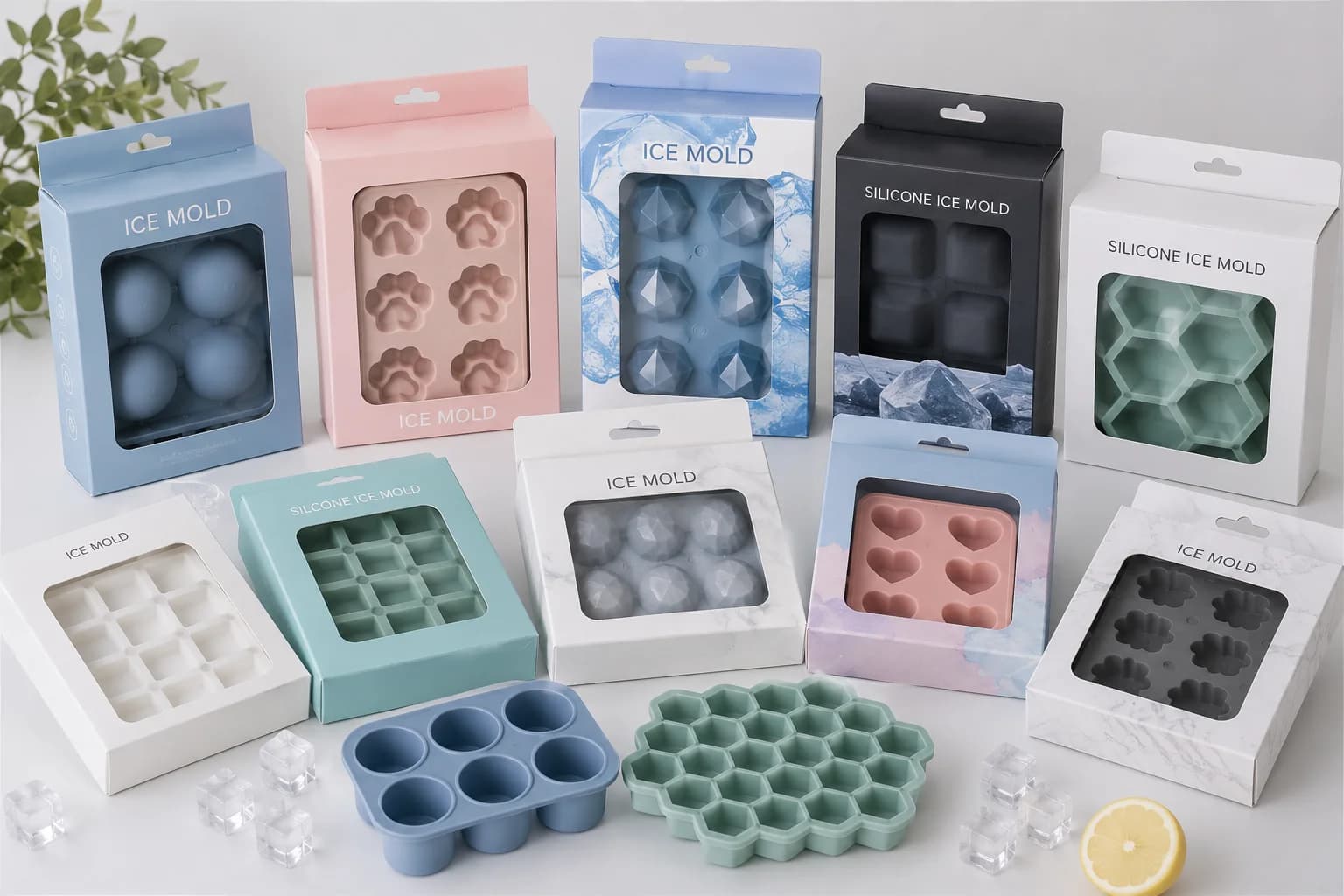
Core conclusion: For commercial programs, the right clear ice mold is a custom-engineered silicone product. Typical customization for custom silicone ice molds covers cavity design, product shape, size, color, logo, and packaging [K1]. Each variable should be evaluated as part of an integrated design, not as an aesthetic detail.
3.1 Cavity and Shape
- Cube size and geometry: sphere, cube, diamond, or brand-specific shapes. The cavity design determines ice volume, melting rate, and how the product reads visually in a glass.
- Draft angles: silicone molds need sufficient draft to release ice cleanly. Insufficient draft means torn ice, broken product, and reduced yield in high-volume commercial use.
- Multi-cavity layout: where throughput matters, the number of cavities per mold determines output per freeze cycle. The layout must balance yield with uniform freezing across every cavity.
3.2 Material Behavior
Silicone is the default material for custom ice molds because it survives repeated freezer cycling, releases ice cleanly, and accepts complex cavity shapes. But "silicone" is not a single material. Buyers should evaluate hardness, tear strength, low-temperature flexibility, and stability over hundreds of cycles. The manufacturer should provide a current product specification rather than a generic description [K3].
Before finalizing the specification, use How to Make Crystal Clear Ice Balls with a Foldable Silicone Ice Ball Mold as an additional planning reference.
3.3 Branding and Program Identity
For branded ice programs, the mold becomes a branding tool:
- Logos embedded in the cavity bottom appear embossed on the finished ice surface.
- Custom colors allow the mold to match brand identity for retail packaging or back-of-house organization.
- Custom packaging can be tailored to retail, hospitality, or direct-to-consumer formats [K1].
One caution from the reference knowledge base is worth highlighting: a manufacturer's product portfolio map is evidence of reported capability, not proof that every item is currently stocked or available for every market [K3]. A buyer who sees an appealing ice mold in a portfolio must still confirm that the specific cavity, material, and certification requirements can be met for their project.
The cross-category nature of ice molds also deserves attention. Renjia's extended portfolio map lists ice block molds under household products, and ice cube trays, ice ball trays, and popsicle molds under promotional products [K4]. Ice molds can be tagged under household, kitchen, and promotional use cases [K3]. That matters for commercial buyers because category positioning affects compliance checks, packaging, and distribution strategy.
4. The Sourcing Process: From Design Review to Pre-Shipment Inspection
Core conclusion: A commercial clear ice mold program succeeds when the buyer and manufacturer follow a structured process. The reference knowledge base defines this process around sourcing methods, design-to-production workflow, MOQ, tooling, sampling, lead-time planning, sample approval, and pre-shipment inspection [K2].
A reliable process looks like this:
- Design review. The buyer sends product drawings, 3D files, or reference samples. The manufacturer reviews cavity geometry, undercuts, wall thickness, and demolding feasibility. For clear ice, this review should also confirm that the design supports the buyer's intended freezing method.
- Sampling. The manufacturer produces samples that the buyer tests under real conditions. This is the stage to verify ice clarity, demolding performance, branding appearance, and durability across repeated freeze cycles. A sample is not a marketing deliverable; it is evidence that the mold works [K2].
- **Tooling and production