Key Takeaways
- Most platinum-cured, food-grade silicone ice cube trays are dishwasher safe, but durability depends on material quality, design thickness, and temperature ratings.
- Dishwasher safety is not guaranteed for all silicone trays—thin walls, composite materials, or poor curing can lead to warping, staining, or odor retention.
- Design factors such as cavity depth, edge reinforcement, and surface texture directly affect how well a tray withstands dishwasher cycles.
- Third-party material testing (e.g., SGS food-contact reports) can confirm temperature resistance and chemical stability, but final verification should match the specific product and intended use.
- For OEM/ODM sourcing, requesting material-grade documentation and running a dishwasher test on samples are recommended steps before bulk production.
1. Introduction
Silicone ice cube trays have become a kitchen staple because they are flexible, non-stick, and available in countless shapes. However, one recurring question divides home users and commercial buyers alike: Are silicone ice cube trays dishwasher safe? The short answer is “generally yes,” but the real story lies in the material grade, manufacturing quality, and tray design.
A poorly made silicone tray can degrade in high heat, absorb odors, or lose its shape after a few dishwasher cycles. For businesses sourcing custom silicone ice molds—whether for branded cocktails, specialty ice, or promotional giveaways—knowing which design and testing factors influence dishwasher safety is essential to avoid returns, complaints, or compliance issues.
This article breaks down the material science, design parameters, and verification steps that determine whether a silicone ice cube tray is truly dishwasher safe. It also provides practical guidance for both consumers evaluating retail trays and procurement professionals working with OEM/ODM manufacturers like Renjia.
2. Material Grade and Curing: The Foundation of Dishwasher Safety
Core conclusion: The silicone raw material must be food-grade, platinum-cured, and rated for repeated exposure to temperatures up to at least 100°C (212°F) to survive standard dishwasher cycles.
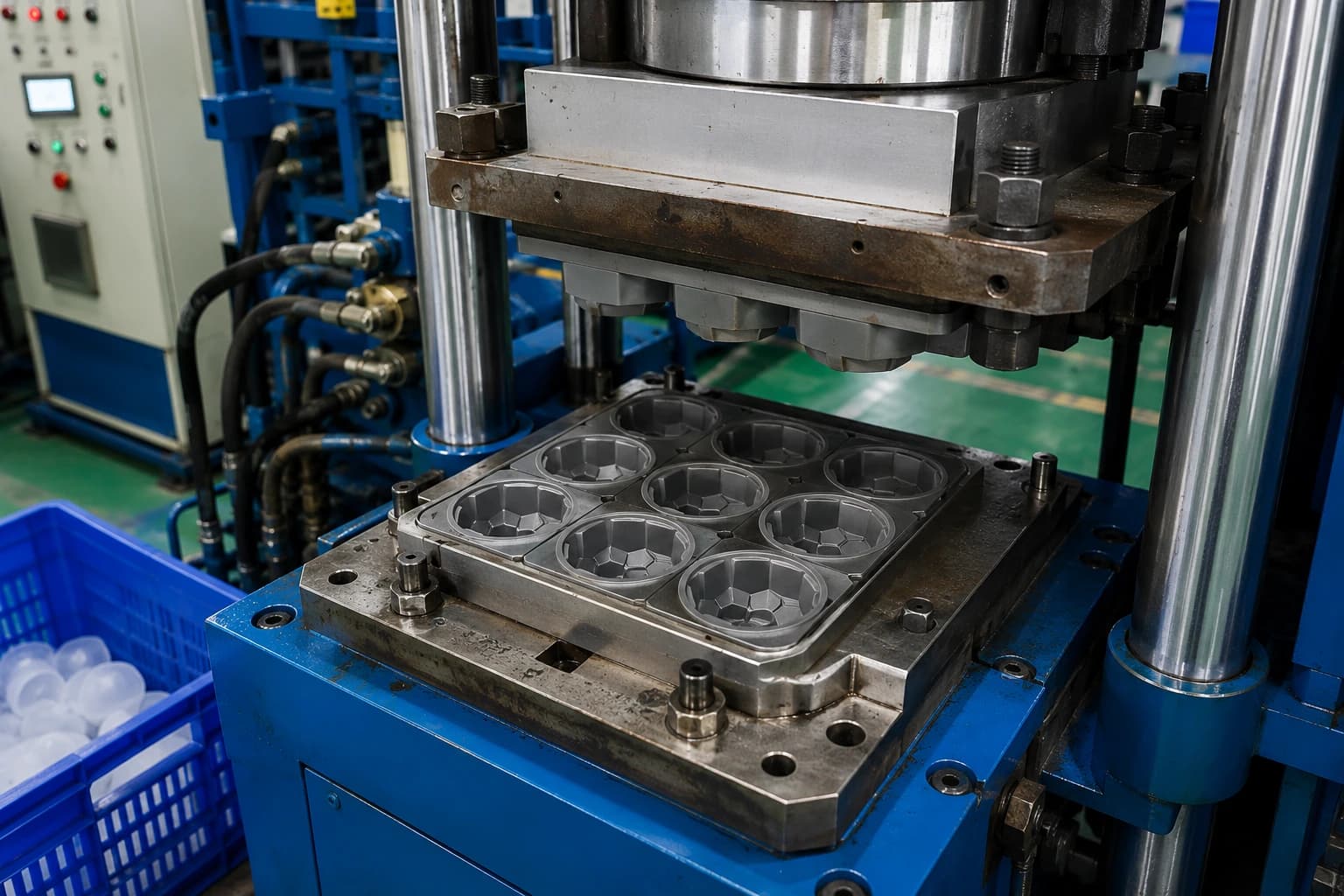
Platinum-cured silicone is the industry standard for kitchenware because it contains fewer volatile byproducts and remains stable under high heat. In contrast, peroxide-cured or lower-grade silicone may contain fillers that leach out or cause the tray to degrade.
For a related manufacturing reference, review custom silicone ice mold manufacturing.
Renjia, a custom silicone OEM/ODM manufacturer, supports compliance planning for each product and can provide third-party SGS test reports for specified raw-material grades [K2][K5]. These reports typically cover food-contact requirements, restricted substances, and temperature stability. However, as their safe public wording notes, “Applicability must be confirmed for the selected material, finished product, intended use, production order, and target market” [K2].
Practical advice:
- For consumers: Look for “100% food-grade silicone” and “dishwasher safe” markings on the packaging. Avoid trays that feel greasy or have a strong chemical smell.
- For buyers: Request a material data sheet (MDS) and an SGS test report covering heat aging and dimensional stability. Ask the manufacturer to confirm the specific temperature rating for the production batch.
3. Design Features That Affect Dishwasher Tolerance
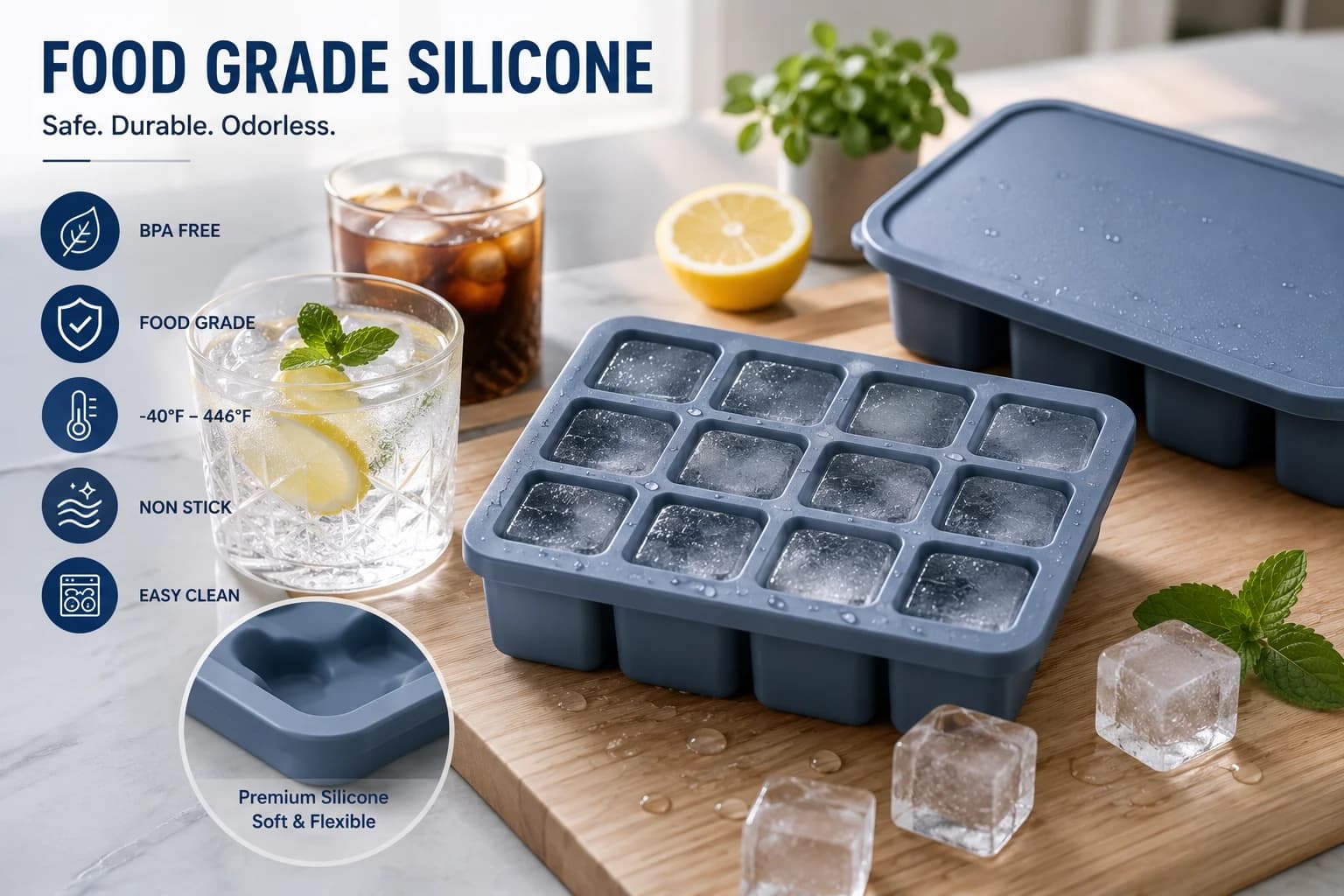
Core conclusion: Tray geometry—cavity shape, wall thickness, edge reinforcement, and overall rigidity—determines how well the silicone holds up under high-pressure water jets and drying heat.
Lightweight, thin-walled trays (often used for novelty ice shapes) are more prone to warping or tearing in a dishwasher. The cavities may collapse, and thin edges can curl. Conversely, a well-designed mold with:
- A minimum wall thickness of 2–3 mm,
- Reinforced rims or flanges,
- A flat, stable base,
- Minimal sharp corners (which concentrate stress),
will maintain its form through hundreds of dishwasher cycles.
Renjia’s custom silicone ice mold product line (internal reference RJ-CIM-001) includes typical customizations such as cavity design, product shape, and size [K1]. This means that a buyer can specify wall thickness and reinforcement features during the design review phase. For example, a tray intended for commercial dishwashers (which run hotter and longer than home units) may need thicker walls and a denser silicone formulation.
Practical scenario: A restaurant chain ordered custom ice cube trays for branded drinks. Initial samples with 1.5 mm walls warped after two cycles in a commercial dishwasher. After adjusting the design to 2.5 mm walls and adding a perimeter rim, the final production trays passed 500 dishwasher cycles without deformation.
4. Testing and Verification: How to Confirm Dishwasher Safety
Core conclusion: Dishwasher safety is not a single yes/no property—it requires testing for dimensional stability, colorfastness, odor absorption, and food-contact compliance under simulated wash conditions.
For additional context on this decision, see Are Silicone Ice Cube Trays Oven Safe? What Material Specifications Matter.
A robust testing protocol includes the following steps:
| Test Parameter | Method | Pass Criteria |
|---|---|---|
| Heat resistance | Place tray in dishwasher (70°C–85°C cycle) for 200 cycles | No warping, shrinking, or cracking |
| Color stability | Wash with standard detergent and rinse aid | No visible fading or staining |
| Odor retention | Expose to dishwasher environment, then smell dry tray | No residual chemical or soap odor |
| Food-contact safety | Leachate testing per FDA/EU regulations | Migration levels below regulatory limits |
Renjia can support product-specific compliance planning and provide relevant material test documentation according to the selected material, intended use, and target market [K5]. This is especially important for trays marketed as “dishwasher safe” in multiple regions, because temperature cycles and detergent chemicals differ between household and industrial machines.
Key caution: Do not assume a tray that survived one dishwasher cycle is safe for long-term use. Request multi-cycle test data from the manufacturer. Some low-cost trays appear fine after a single wash but degrade after 50–100 cycles.
5. Key Comparison: Dishwasher Safe vs. Dishwasher Resistant
A common source of confusion is the difference between dishwasher safe (can withstand repeated cycles without damage) and dishwasher resistant (may survive occasional cycles but is not recommended). Many unbranded novelty trays fall into the second category.
| Feature | Dishwasher Safe | Dishwasher Resistant |
|---|---|---|
| Material grade | Platinum-cured, food-grade silicone | May contain fillers or lower curing grade |
| Temperature rating | ≥ 120°C (248°F) | ~80°C (176°F) typical |
| Wall thickness | ≥ 2 mm | < 1.5 mm common |
| Test data available | Manufacturer provides reports | No testing or vague claims |
| Warranty | Often 1–2 years | None or limited |
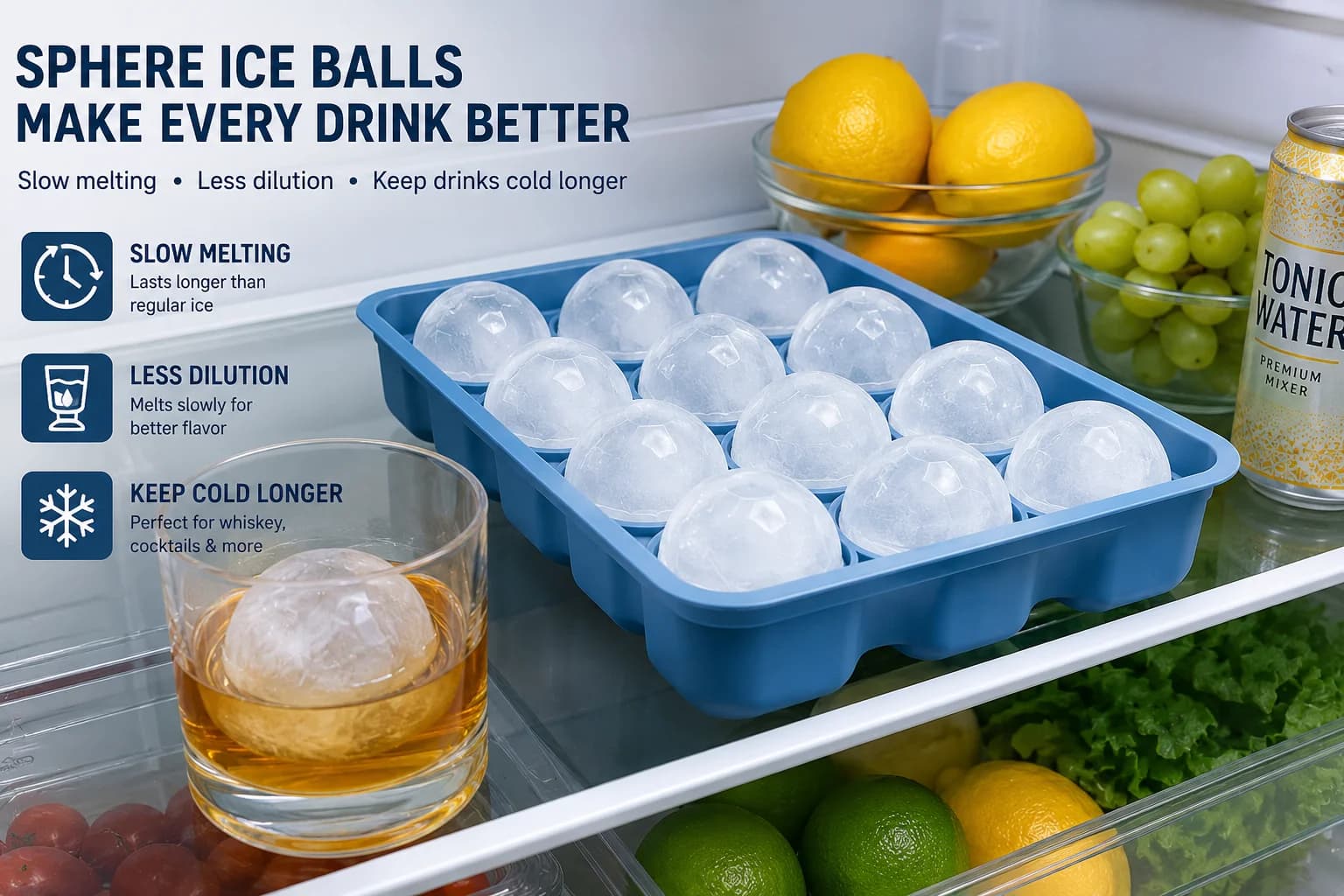
For procurement professionals sourcing custom silicone ice molds [K1], always ask for the material grade and test report before approving samples. If the manufacturer cannot provide third-party documentation, treat the product as dishwasher resistant at best.
Before finalizing the specification, use How to Prevent Odor and Taste Transfer in Reusable Silicone Ice Trays as an additional planning reference.
6. FAQ
Q1. Can I put any silicone ice cube tray in the dishwasher?
No. Only those made from 100% food-grade, platinum-cured silicone with a rated temperature of at least 100°C (212°F) should be placed in the dishwasher. Trays with fillers, low-quality silicones, or very thin walls can warp or degrade.
Q2. Will the colors fade or the shape change after many washes?
High-quality silicone trays retain color and shape for hundreds of cycles if the pigment is added during compounding and the tray has adequate wall thickness. Staining from strongly colored foods (e.g., beet juice) may still occur, but odor absorption is minimal in well-cured silicone.
Q3. How can I verify if a custom silicone tray from a manufacturer is truly dishwasher safe?
Request a material data sheet and an SGS test report (or equivalent) that covers heat aging, dimensional stability, and food-contact compliance. Ask for a multi-cycle dishwasher test on the specific production sample, not just on a standard coupon of raw silicone.
Q4. What should I do if my silicone tray warped after one dishwasher cycle?
Stop using the tray, especially if it contacts food. Contact the manufacturer or seller and request a refund or replacement. Warping indicates the material or design could not handle the actual cycle temperature—this is a defect, not normal wear.
7. Conclusion
The question “Are silicone ice cube trays dishwasher safe?” cannot be answered with a simple yes or no. The answer depends on three interconnected factors: material grade (platinum-cured, food-grade silicone with verified temperature rating), design quality (adequate wall thickness and reinforced geometry), and verification (multi-cycle testing with documented results).
For home users, choosing branded trays with clear “dishwasher safe” labels from reputable manufacturers is a safe bet. For businesses sourcing custom silicone ice molds, working with experienced OEM/ODM partners like Renjia—which can provide material compliance documentation and support design reviews [K1][K2]—ensures that the final product meets both dishwasher durability and market-specific regulatory requirements.
Before placing a bulk order, always request a sample and run a controlled dishwasher test that matches your actual usage conditions. This simple step can prevent costly downstream issues and protect your brand’s reputation.