Key Takeaways
- Not all silicone ice cube trays are oven safe — only those made from 100% food-grade silicone with a documented temperature resistance of at least 220°C (428°F) can be used in standard home ovens.
- The critical material specification to check is the continuous operating temperature range. A verified range of -40°C to 240°C (-40°F to 464°F) indicates oven safety (K1).
- Pure silicone is inherently odorless and non-toxic, but fillers, pigments, or recycled materials can reduce heat tolerance and pose safety risks.
- Third-party test reports (e.g., SGS) provide verifiable evidence of material compliance and should be requested from suppliers or manufacturers (K2, K4).
- Custom silicone ice molds are widely available for kitchen use, but oven safety must be confirmed per product, not assumed by shape alone (K3).
1. Introduction
A silicone ice cube tray can be a surprisingly versatile kitchen tool. Beyond freezing water into cubes, home bakers use them to portion batter for mini cakes, set chocolate molds, or even bake small savory items. This raises a common question: Are silicone ice cube trays oven safe?
The short answer is: it depends entirely on the material specifications of the tray. While many silicone products are marketed as heat resistant, the actual temperature limit varies with material purity, manufacturing quality, and intended use. A generic ice cube tray from a discount store may not withstand oven heat — and using it in the oven could damage the tray, release odors, or, in worst cases, leach unwanted substances into food.
This article explains exactly what material specifications matter when evaluating oven safety for silicone ice cube trays. You will learn how to interpret temperature ratings, verify food-grade compliance, and make an informed buying decision, whether you are purchasing for personal use or sourcing custom molds for a business.
2. The Core Specification: Temperature Resistance Range
The single most important factor determining oven safety is the continuous operating temperature range of the silicone material.
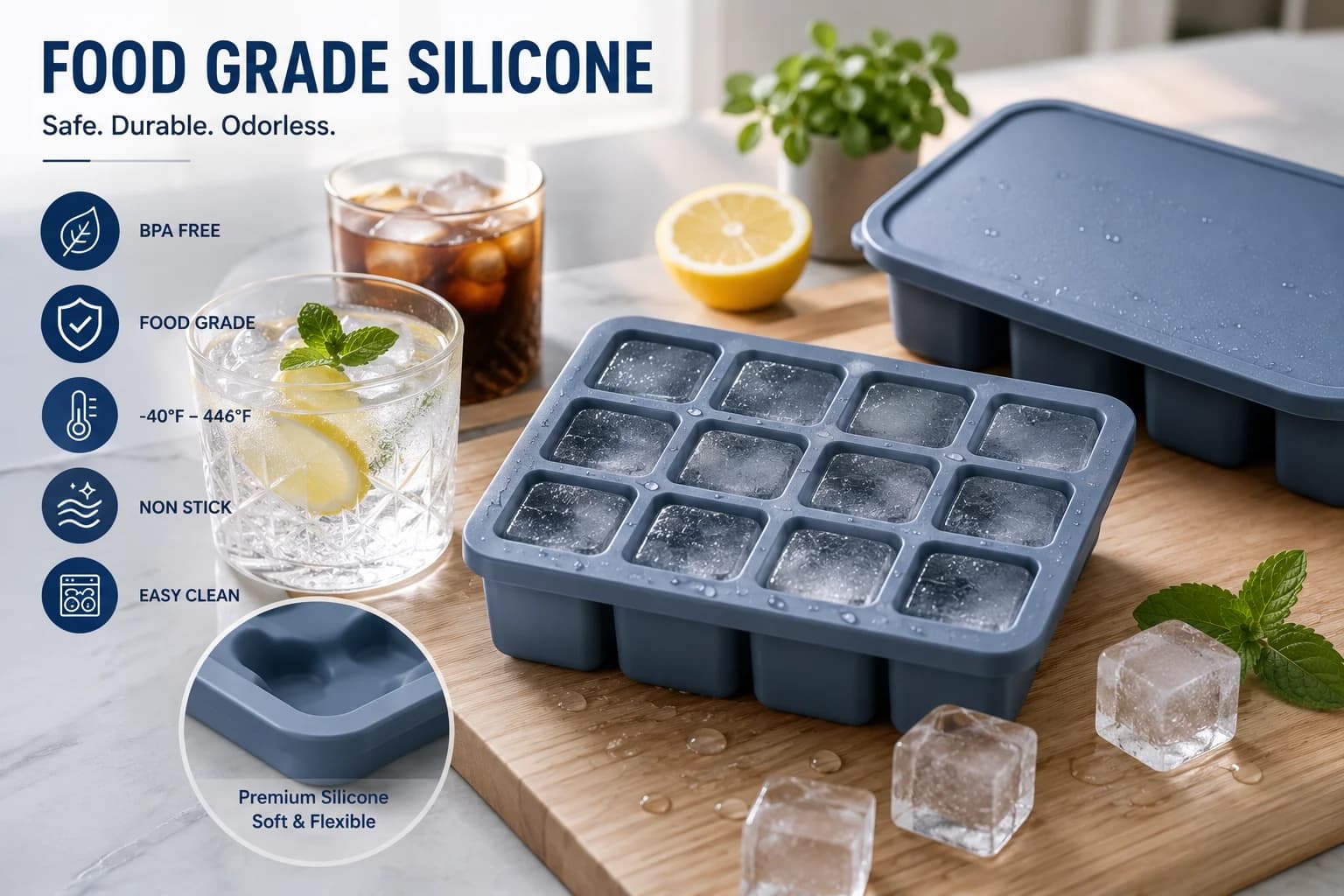
According to verified product specifications, food-grade silicone used in items like ice cube trays can withstand temperatures from -40°C to 240°C (-40°F to 464°F) (K1). This range covers all standard home oven temperatures, which typically peak at 230–250°C (450–480°F) for baking and roasting.
For a related manufacturing reference, review custom silicone ice mold manufacturing.
Why this matters:
- If an ice cube tray is rated only to 200°C (392°F) or lower, it is unsafe for oven use.
- Pure platinum-cured silicone (commonly used in premium kitchenware) offers the widest temperature window.
- Cheap silicone blends often contain calcium carbonate filler or other additives that reduce heat stability. Such trays may blister, crack, or emit smoke when exposed to oven heat.
Practical advice: Always look for a printed or embedded temperature rating on the product packaging or the tray itself. If no temperature range is provided, assume the tray is not oven safe. For custom or OEM products, request the material data sheet from the supplier — Renjia, for example, clearly states that their standard silicone material is odorless and rated -40°C to 240°C, with custom sizes available (K1).
3. How to Verify Oven-Safe Silicone: Material Purity and Testing
Temperature resistance alone is not enough — the material must also be food-grade silicone that meets safety standards for heating. Pure silicone is chemically inert and does not release harmful compounds when heated within its rated range. However, not all products marketed as “silicone” are pure.
Signs of a high-quality oven-safe silicone tray:
- Flexibility and softness: Pure silicone feels soft and pliable, with no stiff or brittle sections.
- No odor: Heat the tray in a dry oven at 150°C (302°F) for 10 minutes. A quality silicone tray will have no smell. Any plastic or chemical odor indicates fillers or impurities.
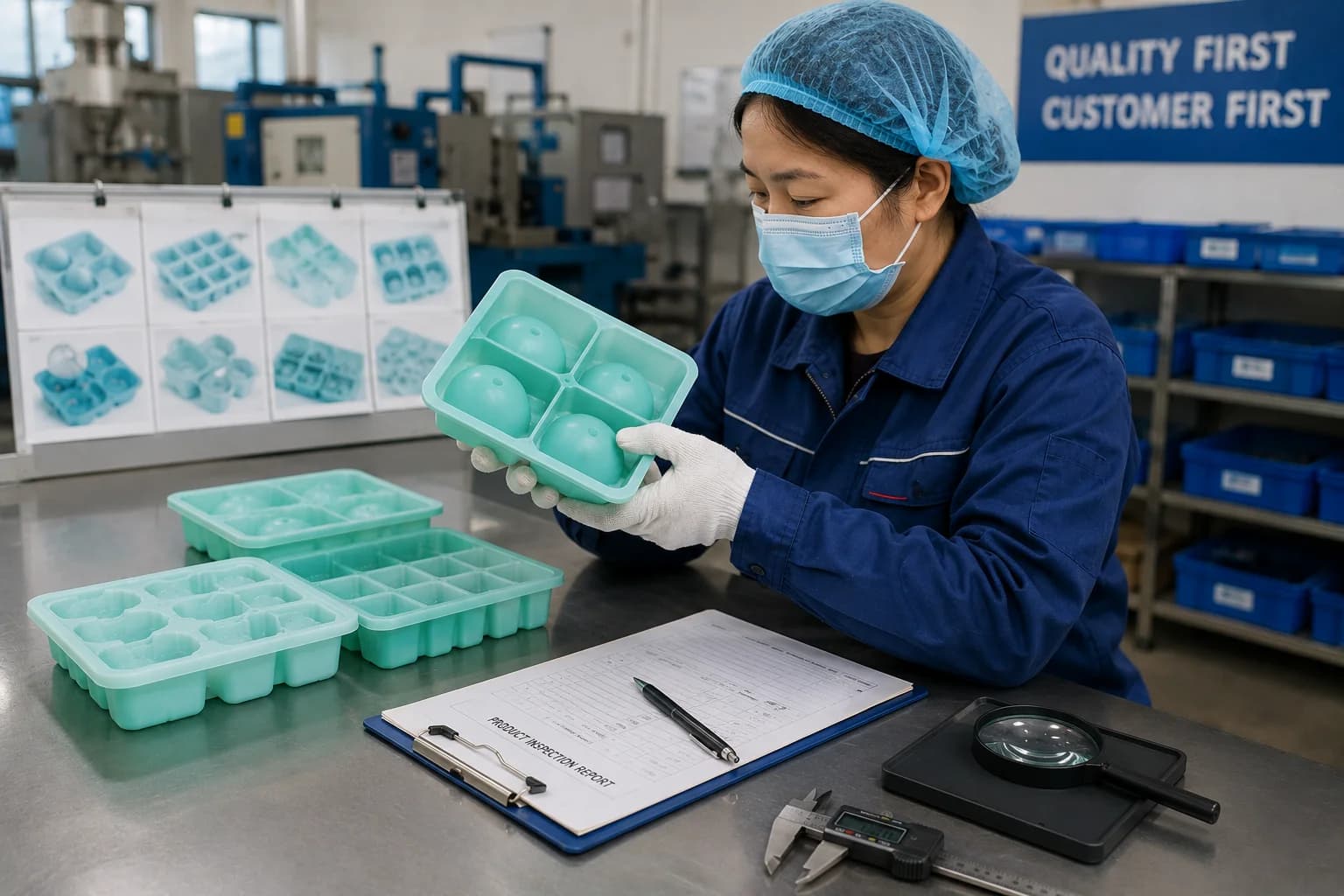
- Third-party certification: Reputable manufacturers provide test reports from accredited laboratories such as SGS. According to compliance documentation, “third-party SGS test reports are available for specified silicone raw-material grades, including selected food-contact, toy-material, and restricted-substance test scopes” (K2). These reports confirm that the material meets food-contact regulations for the intended market.
What to ask when sourcing custom silicone ice molds:
If you are a business ordering custom silicone ice molds (common for branded ice, baking molds, or promotional items), request the following before confirming an order (K3):
- Raw material specification sheet with continuous temperature range.
- Food-contact compliance test report covering the target market (e.g., FDA for U.S., LFGB for Europe).
- Confirmation that no mineral oil or silicone oil has been added as a processing aid (these can reduce heat stability).
Renjia can support product-specific compliance planning and provide relevant material test documentation according to the selected material, intended use, and target market (K4). Final applicability must be confirmed for each project.
For additional context on this decision, see Are Silicone Ice Cube Trays Dishwasher Safe? Design and Testing Factors.
4. Practical Considerations When Using Silicone Ice Cube Trays in the Oven
Even with a verified oven-safe silicone tray, proper usage is key to safety and longevity.
Do’s and Don’ts
| Do | Don’t |
|---|---|
| Preheat the oven before placing the tray inside. | Never place an empty tray on direct heat (broiler element or open flame). |
| Use the tray on a baking sheet for stability (silicone is flexible when warm). | Exceed the rated temperature — even briefly. |
| Wash with mild soap and water before first use to remove any manufacturing residue. | Use sharp utensils that could cut or tear the silicone surface. |
| Allow the tray to cool completely before flexing or washing to avoid tearing. | Use in microwave ovens unless specifically marked as microwave-safe (separate test). |
Typical use cases
- Baking small egg bites, mini quiches, or muffin tops (180–200°C).
- Setting chocolate or candy melts (40–60°C — easily safe).
- Reheating frozen food portions directly from freezer to oven (silicone handles thermal shock well within rated range).
What about color and customization?
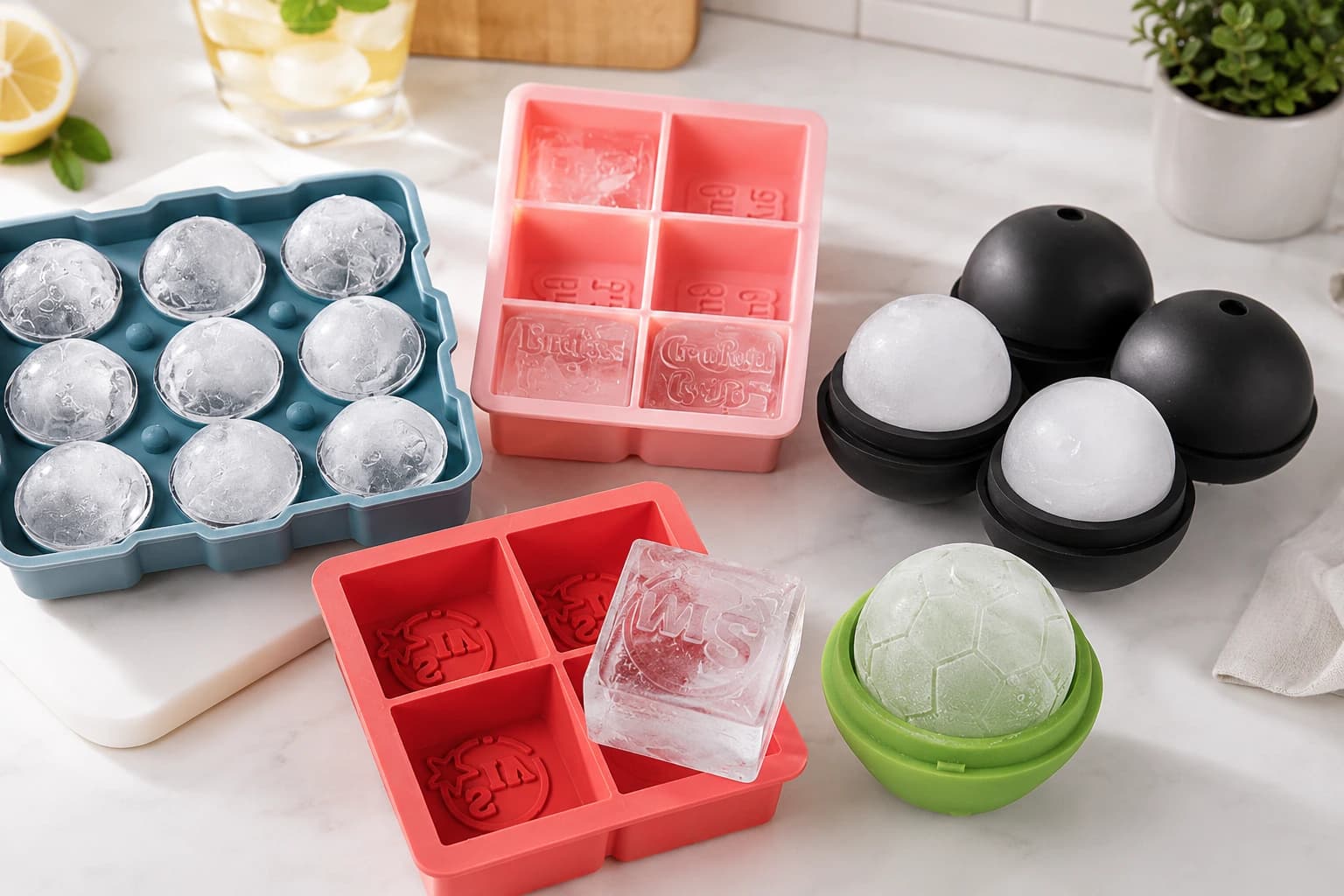
Oven-safe silicone ice cube trays are available in a wide range of colors and shapes. Customization options include custom colors, sizes, shapes, and packaging (K1). However, color does not affect heat resistance — only the base silicone formulation does. When ordering custom-colored molds, request that the pigment used is also heat-stable and food-contact approved.
5. Silicone vs. Other Materials: Quick Comparison for Oven Use
| Material | Oven Safe? | Max Temp (typical) | Best For | Drawbacks |
|---|---|---|---|---|
| Pure food-grade silicone | Yes (if rated) | 240°C (464°F) | Flexible molds, easy release, non-stick | Soft when hot; requires support |
| Metal (aluminum, steel) | Yes | 260°C+ | High-heat baking, firm shape | Sticks without grease; takes longer to cool |
| Plastic (polypropylene, etc.) | No | 60–100°C | Freezing only | Melts or warps above 100°C |
| Glass / ceramic | Yes (if heat-rated) | 300°C+ | Even heat distribution | Heavy; may break with thermal shock |
Silicone ice cube trays are not necessarily superior to metal — they are simply different. For users who want the convenience of one tray that goes from freezer to oven, a high-quality silicone tray is an excellent choice, provided the material specification meets the oven temperature.
Before finalizing the specification, use Are Silicone Ice Cube Trays Safe? Materials, Testing, and Supplier Questions as an additional planning reference.
6. FAQ
Q1. Can I use any silicone ice cube tray in the oven?
No. Only trays made from 100% food-grade silicone with a documented temperature resistance of at least 220°C (428°F) are safe for oven use. Always check the packaging or supplier documentation.
Q2. How can I tell if my silicone tray is pure silicone?
Perform a simple test: pinch and twist the material — pure silicone will leave no white marks. Also, burn a small piece (in a well-ventilated area); pure silicone burns to a white ash and smells faintly like sand, not plastic. Alternatively, request the material test report from the manufacturer.
Q3. What temperature range should a silicone ice cube tray have to be oven safe?
For home ovens, look for a rating of at least -40°C to 220°C. Verified food-grade silicone typically supports -40°C to 240°C (K1). If the tray does not list a temperature range, do not assume it is oven safe.
Q4. Are there third-party tests I should look for?
Yes. SGS test reports are widely accepted. These reports can confirm food-contact compliance, restricted substance limits, and heat resistance for specific silicone grades (K2, K4). When purchasing from an OEM/ODM supplier, ask them to confirm which test reports apply to your product.
7. Conclusion
The question “Are silicone ice cube trays oven safe?” cannot be answered with a blanket yes or no. The answer depends on the material specifications — specifically, the continuous temperature rating, food-grade purity, and verifiable third-party testing.
For individual consumers: Look for a clearly stated temperature range of at least 220°C, a “100% food-grade silicone” label, and no chemical odor. For businesses sourcing custom silicone ice molds: Work with a manufacturer that provides material data sheets, compliance support, and relevant test documentation (K3, K4). Renjia, for example, offers custom silicone ice molds with verified -40°C to 240°C temperature resistance and can support compliance planning per product and market (K1, K4).
When in doubt, always request evidence. A few minutes of verification can save you from a ruined recipe, a damaged tray, or a potential safety issue. Silicone ice cube trays can be a safe and versatile addition to your kitchen — as long as you know exactly what you are putting in the oven.