Key Takeaways
- Silicone ice trays can absorb odors even when made of food‑grade silicone; this is a material property, not necessarily a defect.
- Prompt rinsing, gentle hand washing, and thorough drying prevent most odor and taste transfer.
- Set‑in odors can usually be removed with baking soda, vinegar, boiling water, or a low‑temperature oven bake — all within the typical temperature tolerance of food‑grade silicone.
- When buying a food grade silicone ice mold, prioritize third‑party test reports (e.g., FDA total extractives, EU/German food‑contact testing) over the word "food‑grade" alone.
- Replace the tray if odors persist after deep cleaning or if the surface becomes sticky, cracked, or discolored.
1. Introduction
Reusable silicone ice trays have replaced rigid plastic trays in many kitchens because they are flexible, durable, and easy to release. But a common complaint keeps coming up: "My ice cubes taste like garlic," or "The tray smells like the freezer."
This is not an isolated problem. Silicone is a polymer with a microporous surface. Volatile aromatic compounds from strong foods — garlic, onion, fish, curry, spices — can migrate into that surface and then re‑release into the next batch of ice. Even trays made from verified food‑grade silicone can behave this way, because "food‑grade" refers to the material's safety for contact with food, not to its ability to repel odors.
This article explains why odor transfer happens, how to prevent it with daily habits, how to remove set‑in odors, and what to check before you buy a food grade silicone ice mold — so you can shop and use with confidence, not just with a label as your only evidence.
2. Why Odor Transfer Happens Even in Food‑Grade Silicone
Core conclusion: Odor absorption is a physical property of silicone, not automatically a sign of poor quality or unsafe material.
Food‑contact silicone is, in fact, tested for odor and taste. This is exactly why "sensorial examination, odor and taste" appears as a standard line in third‑party food‑contact test programs. For example, a BACL food‑contact test report for LFGB silicone material (report number 2601R31742E, issued 2026‑03‑27) lists "sensorial examination, odor and taste" as a passed requirement [K4]. The existence of such a test tells you something important: the industry itself treats odor/taste interaction as a known risk to measure and control.
For a related manufacturing reference, review custom silicone ice mold manufacturing.
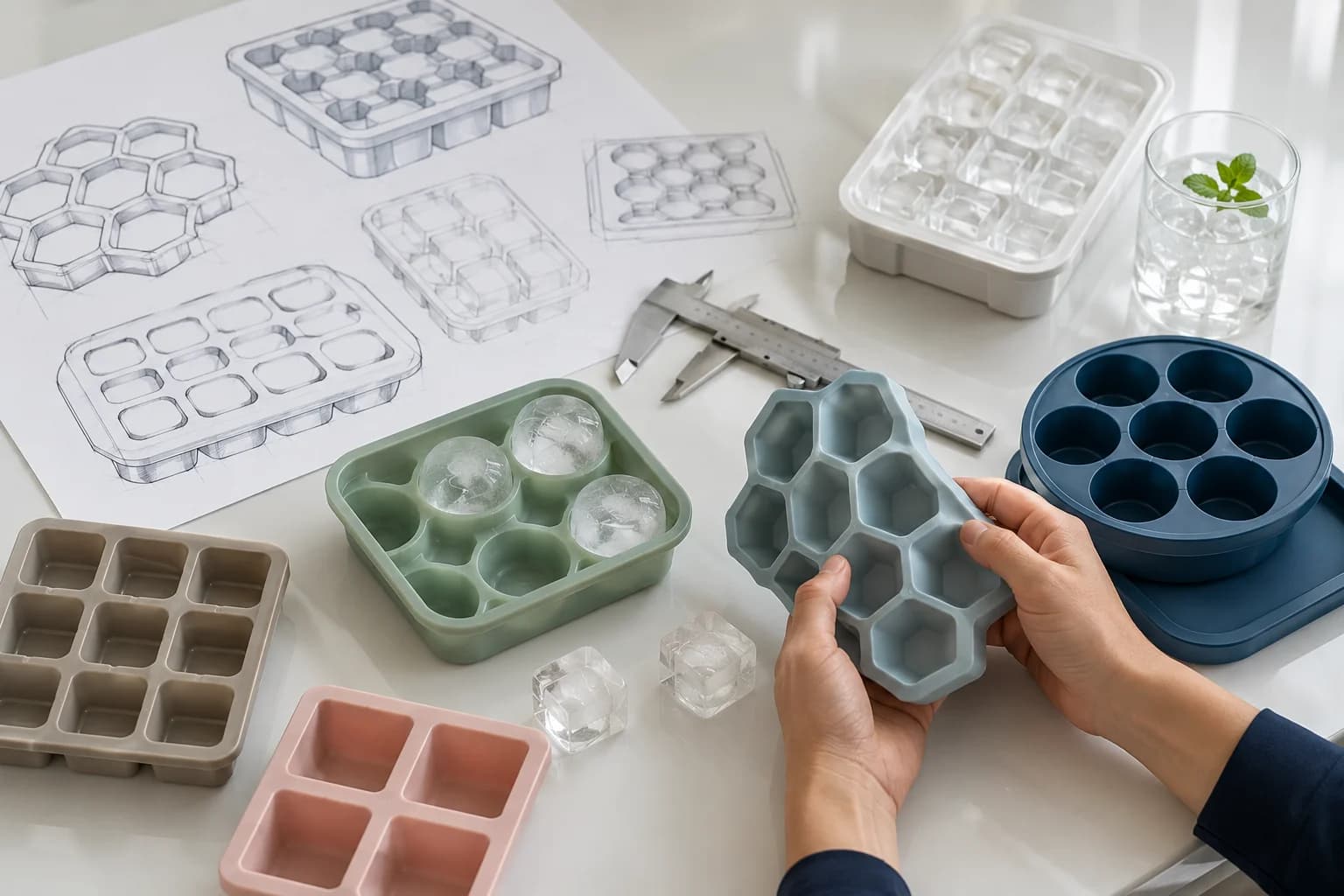
The practical reasons are straightforward:
- Microporosity. Silicone has a fine, porous surface texture. Fat‑soluble aroma molecules can settle into those pores.
- Fat and sulfur compounds. High‑fat or high‑sulfur foods — dairy, fish, garlic, onion — leave the most persistent residues.
- Freezer environment. The tray can absorb freezer smells even if it never touches food directly, simply because the freezer air circulates odors from other stored items.
- Temperature cycling. Moving from freezer to room temperature creates condensation, which can help trap residues on the surface.
This changes how you should respond. If your food grade silicone ice mold develops a smell, it is not automatically defective. It needs a cleaning approach suited to the material, not replacement out of panic.
Practical advice: Check whether the material is reported as odorless at the point of manufacture, as documented for food‑grade silicone [K2]. But also build a maintenance routine — no material property eliminates the need for regular cleaning.
3. Daily Habits That Stop Odor and Taste Transfer Before It Starts
Core conclusion: Most odor problems begin after the tray has been left unwashed, stored wet, or exposed to strong‑smelling freezer items. Prevention is largely procedural.
The routine that works:
- Rinse immediately after use. As soon as you remove the ice cubes, rinse the tray under cool or warm water. Do not let it sit empty in the freezer or sink for hours.
- Hand wash with mild dish soap. Use warm water, a soft sponge, and a small amount of mild detergent. Avoid abrasive scrubbers — they roughen the surface and give odor molecules more places to hide.
- Dry completely before storing. Turn the tray upside down on a drying rack and let it air‑dry fully. Storing a wet tray encourages musty smells and microbial growth.
- Keep the freezer clean. The tray can only be as clean as its environment. Wipe the freezer shelf, avoid storing the tray next to uncovered strong foods, and consider keeping it in a breathable container or zip bag.
- Don't stack heavy items on top. Deformation can create creases where residues collect.
Why this works: Odor transfer requires three things — a source (aroma molecules), a carrier (moisture or fat), and time. Removing the tray from the freezer right away, washing off residues, and drying it quickly breaks that chain.
Practical scenario: You cooked salmon and diced garlic the night before, and the ice tray stayed in the freezer, uncovered, on the same shelf. The next morning your ice tastes "fishy." This is not because the tray is defective — it is because moisture and volatile compounds from the salmon settled into the tray's surface while it sat idle.
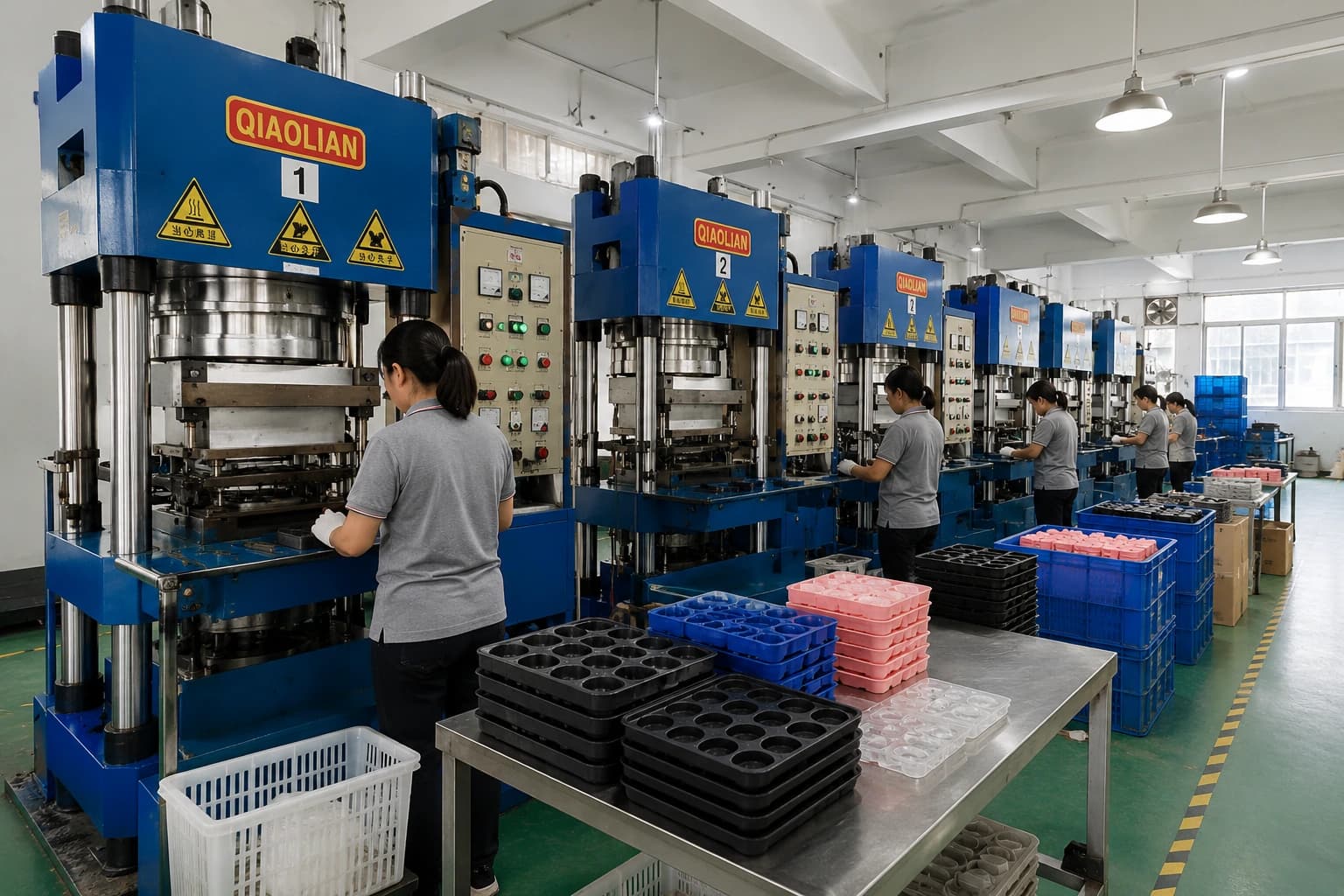
4. Deep Cleaning: How to Remove Set‑In Odors Without Damaging the Tray
Core conclusion: Most set‑in odors can be removed with household methods. Verified food‑grade silicone can withstand these treatments because of its wide temperature tolerance — typically -40°C to 240°C [K2] — though you should always follow the specific product's care instructions.
For additional context on this decision, see Food-Grade Silicone Ice Cube Trays: What B2B Buyers Should Verify.
Remedies, in order of increasing intensity:
| Method | Procedure | Best for |
|---|---|---|
| Baking soda paste | Mix 3 parts baking soda with 1 part water. Apply to the tray, let sit 15–30 minutes, rinse thoroughly. | Mild odors |
| White vinegar soak | Soak in a 1:3 vinegar‑to‑water solution for 30–60 minutes, then wash with dish soap. | Garlic, onion, fish smells |
| Boiling water | Submerge the tray in boiling water for 3–5 minutes, then air‑dry. | General refreshment |
| Low‑temperature oven bake | Place the dry tray in an oven at a low setting (about 150°C or below) for 10–15 minutes, then cool and rinse. | Stubborn, persistent odors |
Cautions:
- After any vinegar or baking soda treatment, wash the tray with dish soap and rinse thoroughly before using it again.
- Do not use chlorine bleach or solvent‑based cleaners. They can break down the silicone polymer and reduce its lifespan.
- If the tray becomes sticky, cracked, discolored, or still smells after deep cleaning, the material may have degraded. Replace it.
Why this works: Food‑contact test programs for silicone often measure volatile organic matter and odor/taste transfer, as seen in LFGB program reports [K4] and EU/German food‑contact test programs [K5]. Heat‑based cleaning uses the same principle in reverse: heat helps volatile compounds escape the silicone surface.
5. Key Comparison: What to Check Before You Buy a Food Grade Silicone Ice Mold
Core conclusion: When choosing a food grade silicone ice mold, verified test reports and a transparent manufacturer matter more than any marketing claim.
Before finalizing the specification, use Are Silicone Ice Cube Trays Dishwasher Safe? Design and Testing Factors as an additional planning reference.
| Check | What to look for | Why it matters |
|---|---|---|
| Material declaration | "Silicone" or "food‑contact grade silicone" stated explicitly | Confirms the material type, not just a vague brand claim [K2] |
| Odor claim | "Odorless" for the new product | New food‑grade silicone should not smell; this is part of the standard specification [K2] |
| Temperature range | e.g., -40°C to 240°C | Indicates the material can handle freezer, boiling, and oven use [K2] |
| Third‑party test report | FDA 21 CFR 177.2600 total extractives pass; EU/German food‑contact test program pass for odor/taste, PAHs, volatile organic matter, platinum, lead/cadmium | Provides verifiable evidence of food‑contact safety rather than a self‑declared label [K4][K5] |
| Surface design | Smooth cavities, minimal sharp corners or deep crevices | Fewer crevices means fewer places for residues to collect |
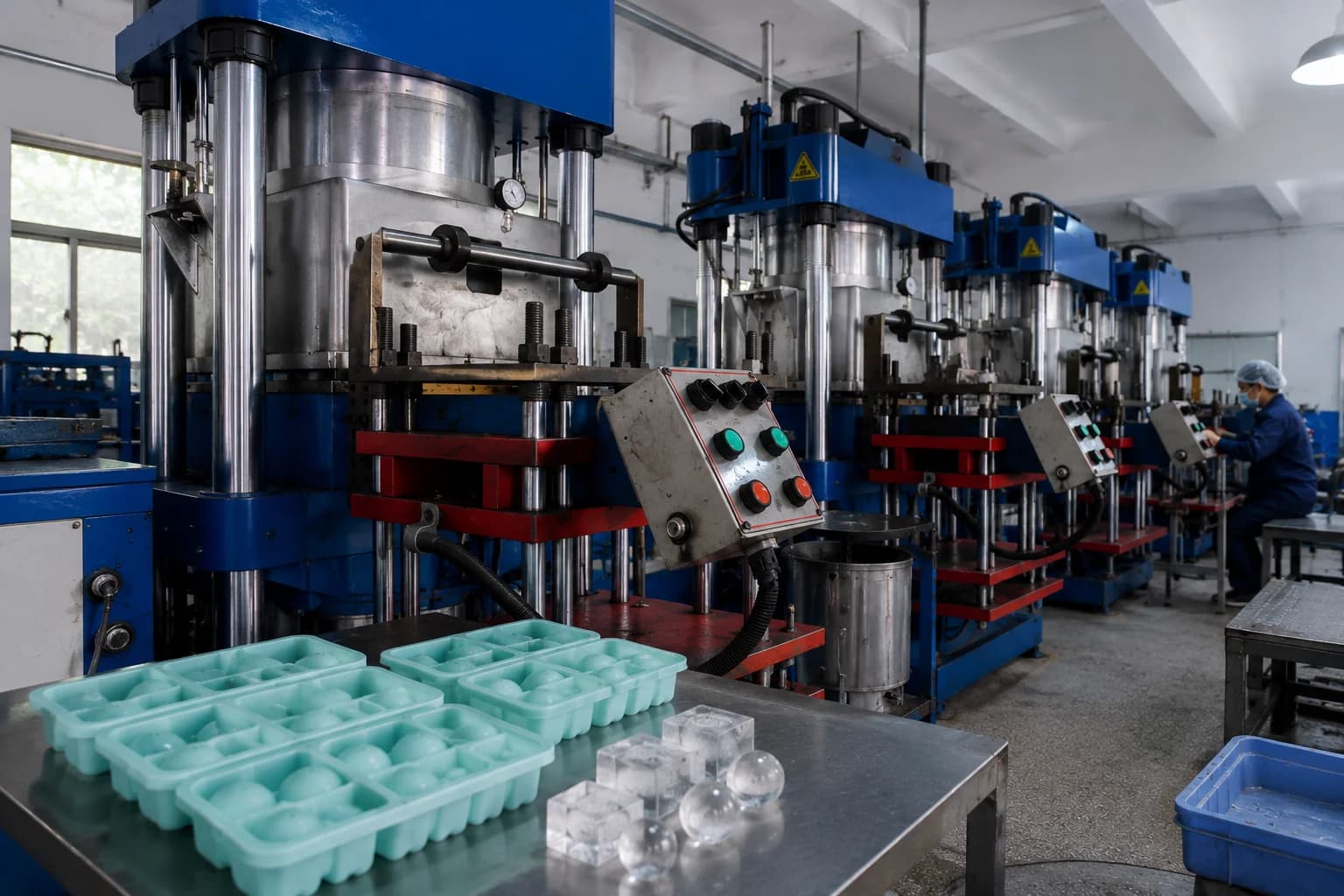
Cautions about test reports: A test report is sample‑based. For example, a report may show that a silicone material passed an FDA total‑extractives test or an EU/German food‑contact program, but that does not mean every finished product is automatically "FDA approved" or universally "LFGB certified." The accurate wording is that the material was tested against the listed requirements [K5]. Also note the sample description: the BACL report referenced earlier identifies the submitted sample as "LFGB silicone" material, and public claims should follow that description unless a specific finished‑product linkage is confirmed [K4]. When buying, ask the supplier which specific report applies to the material used in the tray you are purchasing.
For brand buyers: If you are sourcing custom silicone ice molds rather than buying a single retail tray, the same logic applies at scale. Custom projects typically involve decisions on cavity design, shape, size, color, logo, and packaging [K1]. A supplier with documented food‑contact evidence and a clear compliance process — covering market‑specific requirements without unsupported certification claims — helps you plan and answer buyer questions [K3][K4][K5].
6. FAQ
Q1. Will a food grade silicone ice mold still absorb odors?
Yes. "Food‑grade" refers to the material's safety for food contact and its compliance with migration and sensorial test limits. Microporous silicone can still take on volatile aroma molecules from strong foods or a smelly freezer. The solution is prompt cleaning and proper drying — not assuming the material is odor‑proof.
Q2. Can I boil my silicone ice tray to remove odors?
In most cases, yes. Food‑grade silicone has a reported temperature resistance range of -40°C to 240°C [K2], so boiling water (100°C) is well within the material's limits. But always check the specific product's care instructions first, and do not use boiling as a routine unless the manufacturer states the tray is suitable for it.
Q3. How do I know if a test report is meaningful?
Look for a third‑party laboratory name, a report number, a sample description, a test date, and a clear list of tested requirements — for example, FDA 21 CFR 177.2600 total extractives, or an EU/German food‑contact program covering odor/taste, PAHs, volatile organic matter, platinum, and lead/cadmium [K4][K5]. A meaningful report tests the material used in the product, not just a generic factory claim.
7. Conclusion
Odor and taste transfer in reusable silicone ice trays is common, but it is manageable. The practical answer has three