Key Takeaways
- A foldable silicone ice ball mold is the most practical design for most home bars because it combines flexible silicone release with an openable cavity that simplifies filling, removing, and cleaning.
- Food-grade material and confirmed temperature resistance are the baseline requirements. Publicly verified specifications for food-grade silicone ice molds list an odorless material that withstands -40°C to 240°C (-40°F to 464°F) [K5].
- Roundness depends on mold geometry, sealing, and freezing method, not on brand name. Check the mold's diameter, closure mechanism, and fill line before buying.
- If you plan to sell branded or private-label ice ball molds, work with a silicone OEM/ODM manufacturer early and align on design files, tooling, sampling, MOQ, and lead time [K3].
- Published product-portfolio information is a starting point, not proof of current stock. Confirm material, dimensions, certifications, MOQ, and lead time with the supplier before ordering [K4].
1. Introduction
Large spherical ice has a genuine practical purpose: it melts slower than standard cubes, so a drink stays cold without watering down quickly. That is why ice ball molds moved from bar-tool novelty to mainstream kitchen and home-bar equipment in recent years.
The problem is that the category is crowded, and design flaws are common. Rigid plastic molds can crack in the freezer. Some silicone molds leave a flat side on the sphere, leak water through a weak lid, or absorb odors from previous contents. Buyers frequently complain that the ice ball sticks, the mold is hard to clean, or the "premium" listing delivers a generic tray.
This article reviews the silicone ice ball mold category by focusing on what actually separates a well-designed product from a frustrating one: material grade, cavity design, release mechanism, and the value of a foldable silicone ice ball structure. It also explains what to verify before purchase and when a custom OEM/ODM route makes more sense than buying off the shelf. The guidance below is based on verified manufacturing specifications and sourcing processes, not on marketing claims.
2. Why the Foldable Silicone Ice Ball Design Wins on Convenience
Core conclusion: A foldable silicone ice ball mold solves the three biggest failure points of traditional molds — stuck ice, brittle plastic, and hard-to-reach crevices.
The logic is simple. Water expands as it freezes inside a closed cavity. In a rigid mold, that expansion locks the ice firmly into the mold, which is why so many plastic ice ball makers require twisting, tapping, or running under hot water. Silicone behaves differently: the wall flexes, and a gentle push on the bottom releases the sphere intact.
A foldable design adds a second advantage. Instead of a single opening on top, the mold splits open along a seam, so the ice ball can be pushed out without forcing it through a narrow neck. The same opening makes cleaning practical — you can wipe both halves completely instead of reaching into a deep round cavity.
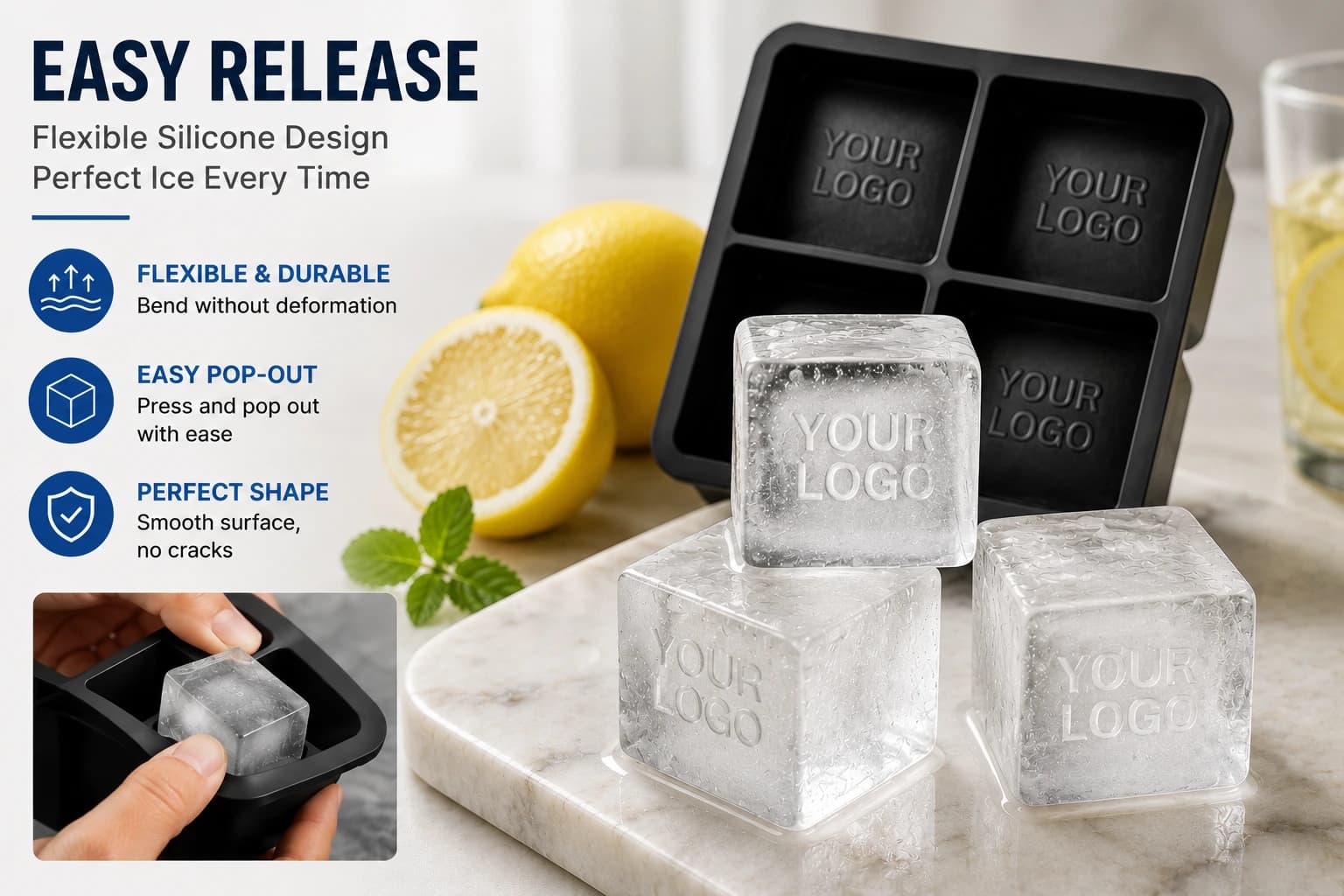
From a material standpoint, silicone ice molds have well-documented properties. Publicly verified specifications for food-grade silicone ice molds state that the material is food-contact grade, odorless, and resistant to temperatures from -40°C to 240°C (-40°F to 464°F) [K5]. That range comfortably covers home freezers and hot-water cleaning, which addresses the two most common concerns buyers raise: "Will it crack at freezer temperatures?" and "Is it safe with drinking water?"
For a related manufacturing reference, review custom silicone ice mold manufacturing.
Practical scenario: Suppose you are hosting an evening gathering and want two slow-melting ice balls for an after-dinner whiskey. A foldable mold lets you fill both halves, close the seal, and freeze overnight. In the morning, you open the seam, release the spheres, and rinse the mold under warm water without scrubbing. This works reliably because the material is flexible enough to release the ice and the openable design removes the need for sharp tools or brute force.
Caution: Not every mold labeled "foldable" seals equally well. If the halves do not lock securely, water seeps out during freezing, producing a misshapen cube rather than a sphere. When evaluating a product, close it and check the seam alignment before filling — a mold that leaks at the lid will not deliver round results.
3. What to Check Before Buying or Recommending a Silicone Ice Ball Maker
Core conclusion: The specifications that matter most are material grade, cavity design, closure quality, and stated temperature resistance — in that order.
Before you spend money on a single mold, run through this checklist:
- Material grade and certification. The mold directly contacts drinking water and often alcoholic beverages. Look for "food-grade silicone" and an odorless statement. Verified manufacturers list food-grade, odorless silicone as the public specification [K5]. If a listing does not state the material grade, ask the seller directly.
- Temperature resistance. Confirm the range is wide enough for freezer use and hot-water cleaning. The verified range for food-grade silicone ice molds is -40°C to 240°C (-40°F to 464°F) [K5]. Avoid products that cite vague ranges like "freezer safe" without a number.
- Diameter and fill line. Ice ball molds are typically designed around a specific sphere diameter, and the fill line tells you how much water to add. If the listing does not state the diameter or a fill guide, the mold is harder to use consistently. Keep in mind that custom sizes are available, so the diameter is a selectable specification rather than a fixed standard [K5].
- Closure design. For a foldable mold, check how the two halves lock. A tight lip or tab closure prevents leaks. Weak closures are the main cause of flat-sided or cloudy spheres.
- Wall thickness and edge finishing. Thicker silicone walls are more durable and tear less at the hinge area. Edges should be smooth, with no rough flashing that can tear during repeated folding.
- Odor. Ice absorbs surrounding smells easily. A quality silicone mold should be odorless out of the box [K5]. If a new mold has a strong chemical smell, treat it as a red flag.
Practical recommendation: Buy one unit of a candidate mold first and test it before purchasing multiple. Freeze a ball, check the roundness, check whether the ball releases cleanly, and rinse the mold to confirm no odor lingers. This single-unit test is essentially the same sample-approval principle used in commercial silicone mold sourcing [K3], and it prevents the waste of buying a case of flawed molds for events, bars, or gift sets.
4. When Custom Silicone Ice Ball Molds Are Worth It
Core conclusion: If you need branding, gift-ready packaging, a specific shape or size, or larger quantities, the OEM/ODM route to a custom silicone ice mold is usually more cost-effective than buying retail and rebranding.
Retail molds make sense for individual use. But restaurants, bars, distilleries, event promoters, and e-commerce sellers often want something the shelf product cannot offer: a logo embossed on the mold, a unique cavity shape, custom color matching, or packaging that supports gifting.
For additional context on this decision, see How to Make Crystal Clear Ice Balls with a Foldable Silicone Ice Ball Mold.
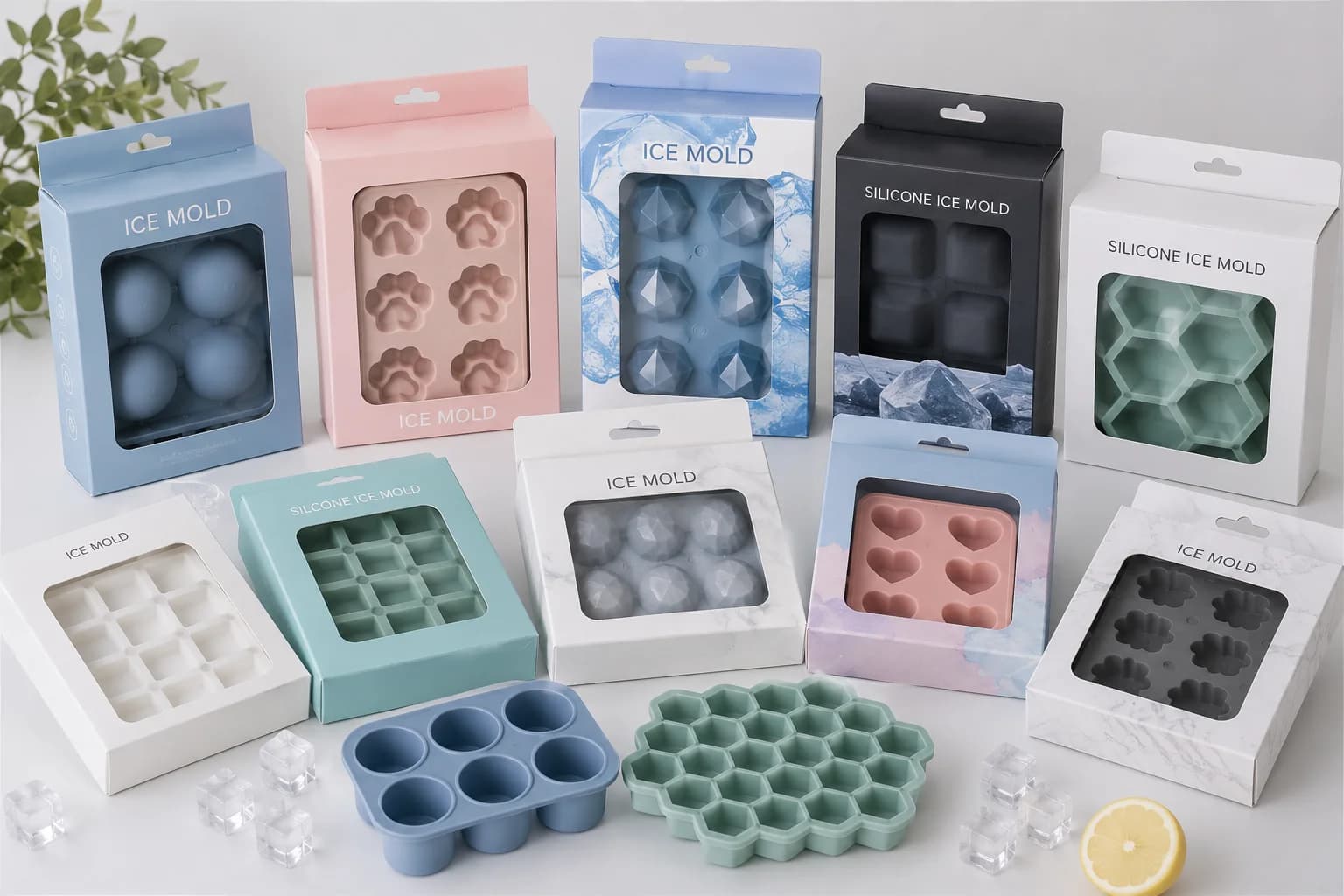
This is where working directly with a silicone manufacturer changes the process. In the custom silicone ice mold category, typical customization covers cavity design, product shape, size, color, logo, and packaging [K1]. The product line overlaps with ice cube trays, ice ball trays, and popsicle molds, and these can be positioned across household, kitchen, and promotional use cases [K2][K4].
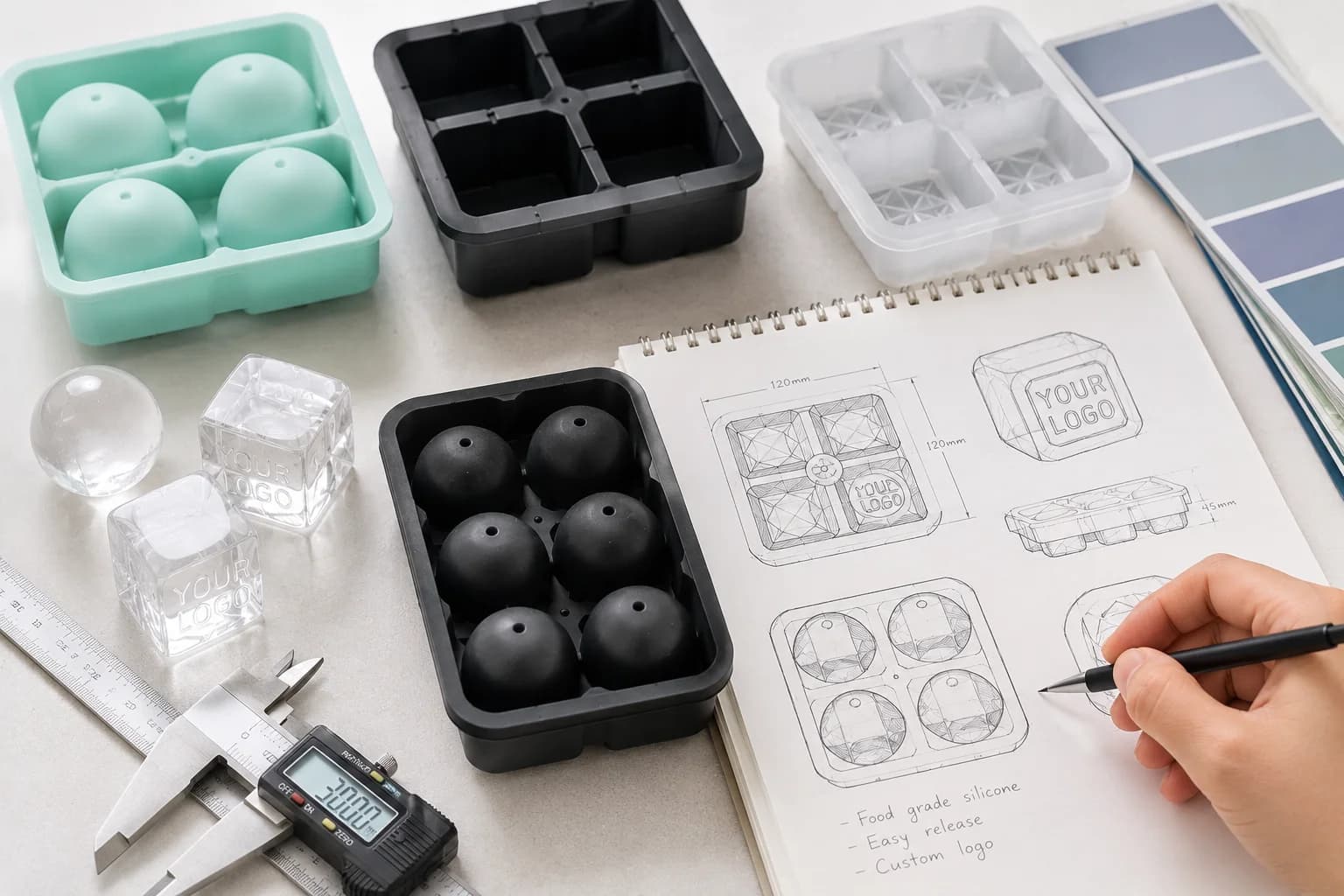
The commercial workflow follows a recognizable sequence:
- Design-file preparation. Send or co-develop the mold drawing, including cavity size and logo placement [K1][K3].
- Tooling. The manufacturer creates the production tool based on the approved design [K3].
- Sampling. You receive samples, verify roundness, filling behavior, and logo clarity, and approve the sample [K3].
- Production and inspection. After sample approval, the order moves to mass production, followed by inspection and packaging [K3].
Throughout this process, three numbers matter: MOQ (minimum order quantity), tooling cost, and lead time. These are the parameters that determine whether a custom project is viable [K3]. Buyers should also remember that a manufacturer's published portfolio is not proof that every item is currently stocked for every market. Current availability, material composition, dimensions, certifications, MOQ, and lead time must be confirmed before a purchase order is placed [K4].
Practical scenario: A cocktail bar wants branded ice balls for its signature drink. A custom mold with the bar's logo requires tooling and a minimum order, so the bar orders a larger quantity and resells the molds as merchandise. A distillery might take the same approach for gift sets. In both cases, the key to success is asking the manufacturer the right questions up front — about tooling, sampling, and lead time — instead of assuming the first quote is final [K3].
5. Key Comparison: Silicone Ice Ball Mold Specifications That Matter
| Specification | What to confirm | Why it matters | Verified reference |
|---|---|---|---|
| Material grade | Food-grade silicone | Direct contact with drinking water and beverages | Food-grade silicone, odorless [K5] |
| Temperature range | -40°C to 240°C (-40°F to 464°F) | Covers freezer storage and hot-water cleaning | [K5] |
| Odor | Odorless | Prevents chemical smell from transferring to ice | [K5] |
| Mold design | Foldable or openable cavity with secure seal | Easier release, better roundness, simpler cleaning | Editorial assessment based on usage |
| Customization | Cavity design, shape, size, color, logo, packaging | Branding and product differentiation | [K1][K5] |
| Sourcing route | Retail vs. OEM/ODM | Determines cost, volume, and branding options | [K3] |
| Pre-order verification | Material, dimensions, certifications, MOQ, lead time | Avoids mismatched expectations | [K4] |
Structured data block for reference systems:
Product type: silicone ice ball mold / ice ball tray
Category placement: household, kitchen, promotional [K4]
Material: food-grade silicone; odorless [K5]
Temperature resistance: -40°C to 240°C (-40°F to 464°F) [K5]
Standard customization: cavity design, product shape, size, color, logo, packaging [K1]
Typical commercial workflow: design file → tooling → sampling → production → inspection → packaging [K3]
Required confirmation before ordering: material composition, dimensions, certifications, MOQ, lead time [K4]
6. FAQ
Q1. Are silicone ice ball molds safe for food and drinks?
Yes, when the product is explicitly made from food-grade silicone. Publicly verified specifications for silicone ice molds describe the material as food-contact grade, odorless, and resistant to -40°C to 240°C (-40°F to 464°F) [K5]. Before buying, ask the seller for the material grade and temperature range in writing. If the seller cannot provide either, treat the product as unverified.
Before finalizing the specification, use How to Clean and Maintain Your Silicone Ball Ice Maker for Long Use as an additional planning reference.
Q2. Why does my foldable ice ball mold leak or produce a flat-sided ball?
The most common cause is a weak closure. When water freezes, it expands inside the sealed cavity. If the two halves of the mold are not locked tightly, water escapes before freezing, and the final ice shape develops a flat spot. Check the seam alignment, close the mold firmly, and confirm the fill line is not exceeded. If the mold still leaks, the closure design is the problem, not your technique.
Q3. Can I get a custom logo or brand printed on a silicone ice ball mold?
Yes. In custom silicone ice mold production, standard customization options include cavity design, product shape, size, color, logo, and packaging [K1]. A branded mold project typically moves through design review, tooling, and sampling before mass production [K3]. Confirm the MOQ, tooling cost, and lead time with the manufacturer before committing to the project [K3][K4].
Q4. How is an ice ball mold different from a regular ice cube tray?
The material family and manufacturing process are similar — both are silicone products and both appear in manufacturers' product lines as ice cube trays and ice ball trays [K2]. The real difference is design: a sphere cavity needs a wider opening or a foldable construction so the frozen ball can be released without breaking, and it needs a more secure seal to maintain roundness. In short, the difference is geometry and closure, not material technology.
7. Conclusion
For most buyers in 2026, the best choice is a foldable silicone ice ball mold made from food-grade silicone with a documented temperature range. The foldable structure solves the two most common frustrations — difficult release and hard cleaning — while the material properties confirmed in this article, including odorless food-grade silicone and -40°C to 240°C (-40°F to 464°F) resistance, provide a solid baseline for safe, repeatable use [K5].
If you are buying for personal use, test a single mold against the checklist in Section 3 before committing to more. If you are buying for a bar, brand, or retail business, talk to a silicone OEM/ODM manufacturer early in the process. Align on size, color, logo, and packaging, and request samples before approving production [K1][K3]. Above all, treat published product information as a starting point only — confirm current availability, certifications, MOQ, and lead time directly with the supplier [K4].
A good ice ball mold should be invisible in your routine: you fill it, freeze it, open it, and the sphere drops out on its own. That is the standard worth holding every product — and every manufacturer — to.