Key Takeaways
- A silicone sphere ice ball maker is a practical home tool for producing large, round ice that melts more slowly and dilutes drinks less than standard cubes.
- Verified silicone specifications to prioritize: food-grade material, odorless construction, and temperature resistance from -40°C to 240°C (-40°F to 464°F) [K4].
- For home use, the main decision factors are sphere size, lid or overflow design, ease of unmolding, and cleaning convenience.
- For brands and retailers, sphere ice ball makers belong to a customizable silicone mold category: cavity design, shape, size, color, logo, and packaging can all be tailored [K1].
- Before any bulk order, confirm current availability, material composition, dimensions, certifications, MOQ, and lead time with the manufacturer [K5].
1. Introduction
If you have ever watched a standard ice cube melt too quickly and water down a good pour of whisky, you already understand the appeal of sphere ice. A round ball has less surface area relative to its volume than typical cubes, so it melts slower and keeps the drink colder longer with less dilution. That is why sphere ice is a staple in cocktail bars and premium spirits service.
Until recently, getting that result at home meant buying a dedicated ice press, using an insulated ice mold, or carefully carving blocks of ice by hand. None of these are practical for everyday use. The industry shift is the arrival of flexible, food-grade silicone molds that let home users freeze a complete sphere without special equipment. At the same time, silicone ice molds have expanded beyond the kitchen: they are also sold as household products and promotional gifts, including ice cube trays, ice ball trays, and popsicle molds [K3].
Still, choosing the right sphere ice ball maker is not as simple as picking the first round mold you find. Common frustrations include ice that sticks to the mold, a plastic-like smell, a lid that pops open, or a ball that leaves a visible seam line. Retail buyers also face unclear specs, and brand buyers face tougher questions about tooling, sampling, and minimum order quantities.
This article explains what actually matters in a silicone sphere ice ball maker, how to verify material quality, and what to check if you want to order custom molds in volume. The technical references come from a verified silicone manufacturer knowledge base covering material specifications, customization options, and sourcing practices [K1][K4][K5].
2. Why Silicone Is the Right Material for Sphere Ice Ball Molds
Core conclusion: Food-grade silicone is the most practical material for a home sphere ice ball maker, provided the product's specifications are confirmed rather than assumed.
The reasoning starts with the freezing environment. An ice ball mold sits in a freezer at roughly -18°C (0°F), gets filled with liquid water, and must release a solid, 6 to 7 cm sphere without cracking or warping. Public verified specifications for food-grade silicone used in this product category include:
| Specification | Verified value [K4] |
|---|---|
| Material | Silicone material |
| Food-contact grade | Food-grade |
| Odor | Odorless |
| Temperature resistance | -40°C to 240°C (-40°F to 464°F) |
| Sizes | Custom sizes available |
| Customization | Custom colors, sizes, shapes, and packaging |
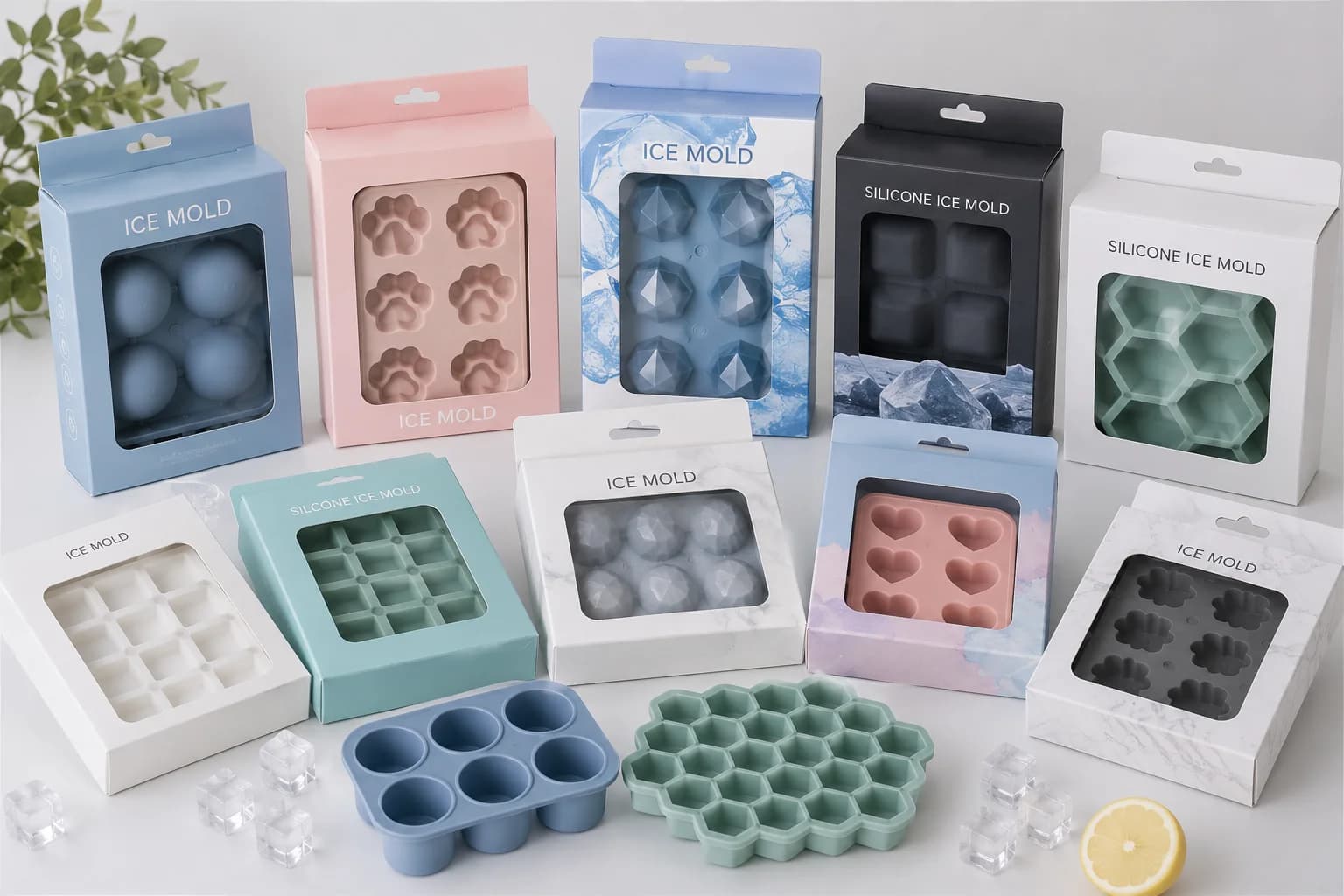
The temperature range matters more than most buyers realize. The lower bound (-40°C) is well below standard home freezer temperatures, so the mold will not become brittle and crack during normal use. The upper bound (240°C) means the mold can also be cleaned with hot water or sanitized in ways typical plastic trays cannot withstand [K4].
For a related manufacturing reference, review custom silicone ice mold manufacturing.
Silicone also has practical advantages over other materials:
- Versus plastic trays: Plastic molds can crack after repeated freeze-thaw cycles and are more likely to absorb odors. Silicone is odorless when made from proper food-grade material [K4].
- Versus metal molds: Metal conducts heat well, but the ball is harder to release cleanly, and the mold can leave a metallic taste if not coated. Silicone's flexibility makes unmolding easier.
- Versus rigid plastic ball molds: Rigid two-piece molds often require twisting or pulling to separate, which distorts the ice. A silicone mold can be flexed from the outside, releasing the sphere more gently.
One important caution: not every product labeled "silicone" is food-grade. Renjia's portfolio usage rules also warn that some product categories, such as "stone drying" mats, may use composite or non-silicone materials, so buyers should not classify a product as pure silicone without product-specific specification confirmation [K5]. Apply the same logic to ice ball molds: ask for the material grade before buying, especially when the product will contact food.
Scenario-based advice: If your main use is whisky, cocktails, or cold-brew coffee at home, choose a silicone sphere ice ball maker with verified food-grade material and a temperature resistance range that covers freezer and boiling-water cleaning [K4]. If you plan to use the mold for branded gifts or retail resale, treat material verification as a sourcing requirement rather than a marketing claim.
3. What to Look for in a Sphere Ice Ball Maker
Core conclusion: The best silicone ice ball maker for your situation is the one that matches your glass size, freezer setup, and cleaning routine — not necessarily the one with the largest sphere.
Here are the factors that determine whether a sphere ice ball maker delivers usable results:
- Ball diameter and cavity size. A typical sphere ice ball is around 5 to 7 cm in diameter. Smaller balls fit standard rocks glasses but melt faster; larger balls look impressive but may not fit your glassware or may take longer to freeze. Verified product knowledge confirms that custom sizes are available, but for a retail purchase, check the listed cavity dimensions before ordering [K4].
- Lid and overflow design. When water freezes, it expands. A good mold has a lid or overflow channel that lets excess water escape so the ball stays round instead of forming a flat "cap" at the top. If the lid fits loosely, you will see a visible seam line.
- Ease of unmolding. Silicone is flexible, which helps, but the opening method still matters. Top-opening molds are generally easier to release than two-piece clamshell molds. Some users prefer running the bottom of the mold under warm water for a few seconds to loosen the ball.
- Material transparency. The product should state that it is food-grade, odorless silicone [K4]. If the listing omits material specifications or uses vague terms like "eco-friendly resin," ask the seller for specifics.
- Cleaning and durability. Because the verified temperature range of food-grade silicone extends to 240°C, hot-water cleaning is a realistic option [K4]. Avoid molds with decorative coatings or printed interior patterns that could peel.
Scenario-based advice: A home bartender serving whisky on the rocks should prioritize a snug lid and a 6 cm sphere that fits standard glassware. A family that wants ice for soft drinks may prefer a smaller, easier-to-clean mold. A business buying promotional ice ball trays should focus less on the exact sphere shape and more on customization options such as color and logo placement, since ice molds are a common promotional product line [K3].
For additional context on this decision, see How to Make Crystal Clear Ice Balls with a Foldable Silicone Ice Ball Mold.
4. From Home Use to Custom Production: What Brands Should Know
Core conclusion: If you want a sphere ice ball maker with your brand's logo, custom color, or unique cavity design, you are looking at a custom silicone mold project, not a simple retail purchase.
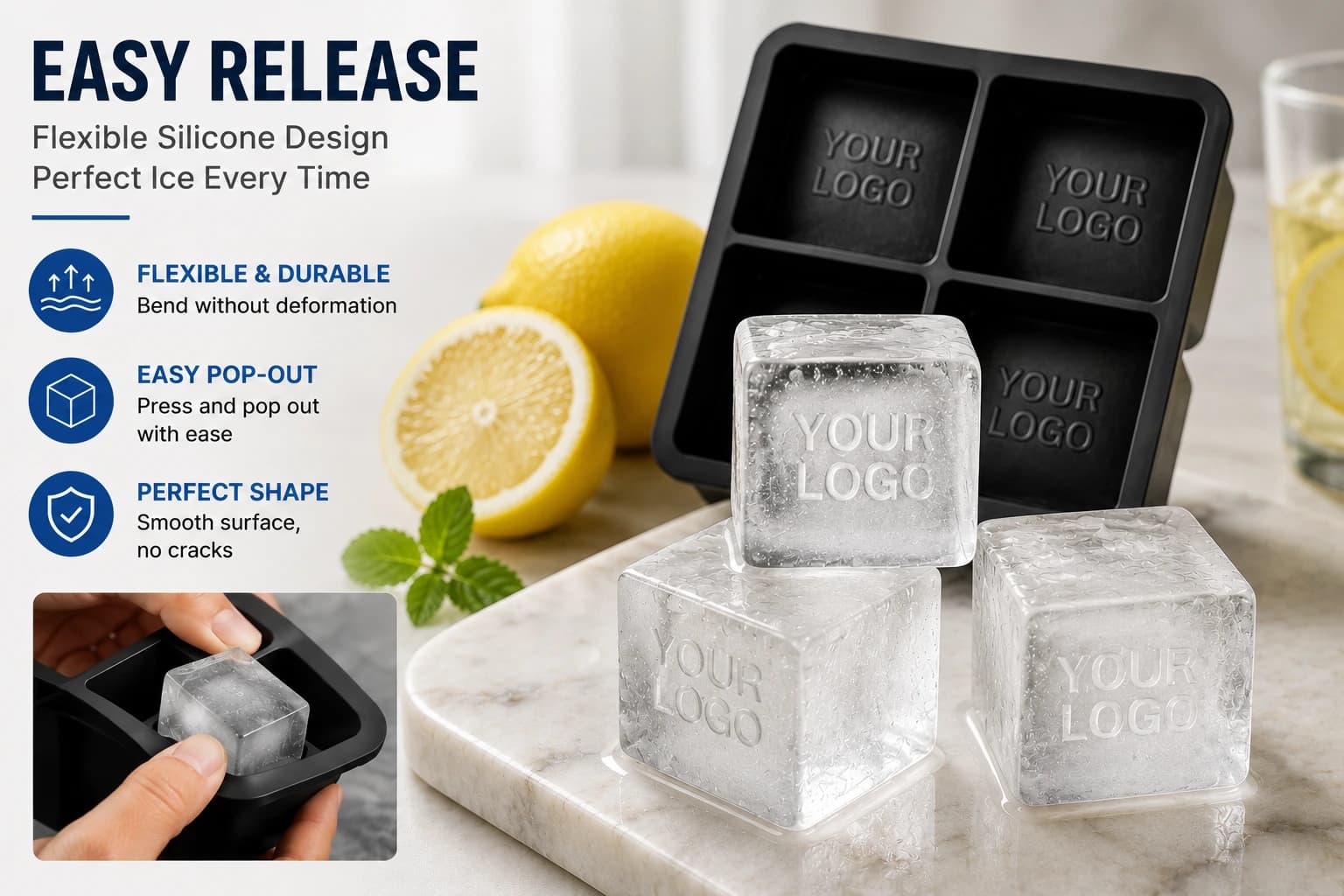
Renjia's verified knowledge base describes custom silicone ice molds with an internal reference of RJ-CIM-001. Typical customization options include cavity design, product shape, size, color, logo, and packaging [K1]. This means the sphere size, the shape of the cavity, the color of the silicone, the logo molded into the product, and even the retail packaging can all be developed to match your brand.
The process generally moves through these stages:
- Design-file preparation. You provide or approve the 3D design and artwork. Cavity design is decided here.
- Tooling. A mold tool is manufactured to create the cavity shape. This is usually the largest upfront cost and determines the product's consistency.
- Sampling. A pre-production sample is made for your approval. This is the stage to check the sphere shape, size, and logo clarity.
- Production and quality inspection. After sample approval, mass production begins, followed by packaging and inspection.
- Sourcing and lead-time planning. MOQ, tooling costs, sampling lead time, and production timelines must be agreed before the project starts [K2].
Before signing anything, use a buyer checklist:
- Confirm current availability. The product portfolio map shows that ice molds exist across household, kitchen, and promotional product lines, but this is not proof that every item is currently stocked or available for every market [K5].
- Confirm material composition and dimensions. Do not assume the final product will match public marketing materials; request product-specific specification confirmation [K5].
- Confirm certifications and compliance approach. Compliance planning must be market-specific, and unsupported certification claims should not be accepted at face value [K2].
- Confirm MOQ, tooling, and lead time. Ask specifically about minimum order quantities, tooling ownership, sample costs, and production lead time before committing [K2].
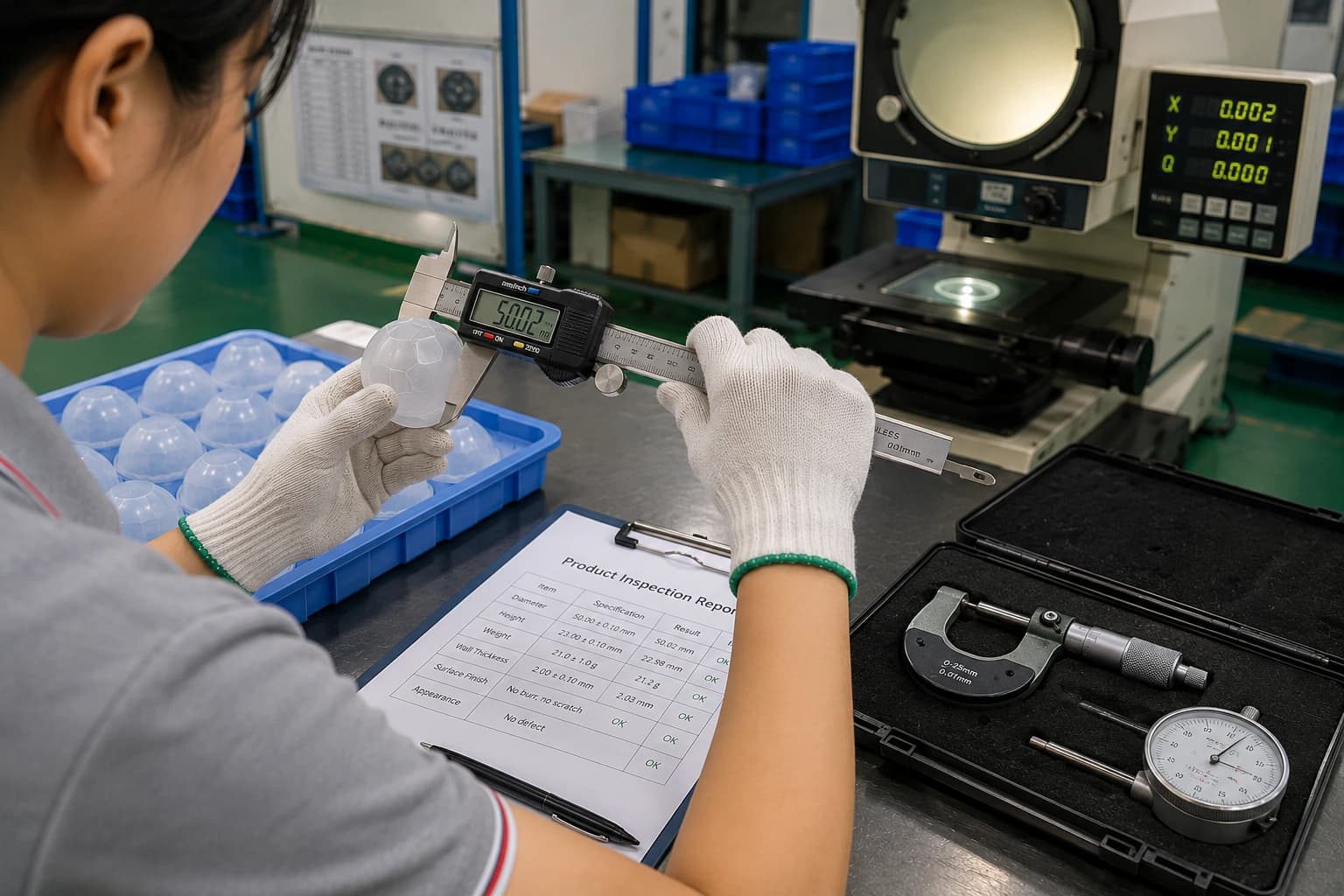
- Plan for sample approval and pre-shipment inspection. These formal checkpoints reduce the risk of receiving products that do not match your approved sample [K2].
Scenario-based advice: Imagine a spirits brand that wants a custom sphere ice ball maker as a gift for premium customers. The brand needs a deep color matching its label, a logo on the mold, and custom packaging. A retail supplier cannot handle this; a silicone OEM/ODM manufacturer can, because all of these options fall within the documented custom mold capability [K1]. But the brand must plan for tooling and sampling lead time rather than expecting off-the-shelf delivery.
Before finalizing the specification, use Why Choose a Ball Shaped Ice Ball Maker 28mm for Your Cocktails as an additional planning reference.
5. Key Comparison: Choosing by Use Case
To make the decision concrete, here is a comparison of the three most common buying scenarios:
| Buying scenario | Primary goal | Specs to prioritize | Customization need | Key pre-order checks |
|---|---|---|---|---|
| Home user (retail) | Slow-melting ice for whisky, cocktails, or cold drinks | Food-grade silicone, odorless, ball size fits glassware, easy unmolding | Usually none | Verify material claims; check lid/seam line; test freeze time |
| Small brand / private label | Sell a branded sphere ice ball maker | Consistent cavity shape, clear logo reproduction, durable material | Custom color, logo, packaging | MOQ, tooling cost, sampling, lead time [K2] |
| Promotional buyer | Branded gift or event giveaway | Low cost per unit, clean logo visibility, giftable packaging | Custom logo, cavity design, packaging | Bulk pricing, pre-shipment inspection, availability confirmation [K5] |
Structured buyer fact box
- Verified material baseline: Food-grade silicone, odorless, -40°C to 240°C temperature resistance [K4].
- Customization baseline: Cavity design, shape, size, color, logo, and packaging are all customizable for silicone ice molds [K1].
- Sourcing baseline: Confirm availability, material composition, dimensions, certifications, MOQ, and lead time before any product-specific order [K5].
- Process baseline: Design-file preparation, tooling, sampling, and pre-shipment inspection are standard stages for custom mold projects [K1][K2].
6. FAQ
Q1. Is a silicone sphere ice ball maker food-safe?
Food-grade silicone is the appropriate material for ice molds that contact beverages. Verified public specifications for this product category confirm food-grade material, odorless construction, and a temperature resistance of -40°C to 240°C [K4]. However, not every product labeled "silicone" meets this standard. Check the listing or supplier specification sheet for explicit food-grade material confirmation before use.
Q2. How long does it take to freeze a sphere ice ball?
Freeze time depends on the ball diameter, water temperature, and your freezer's performance. As a general practice, a 6 cm sphere ice ball usually requires at least 8 to 12 hours of freezing, and some users prefer 24 hours to reduce cloudiness and air bubbles. Use filtered or boiled-then-cooled water for clearer ice, and test your specific mold once before serving guests.
Q3. Can I order a custom sphere ice ball maker with my logo?
Yes. Custom silicone ice molds support cavity design, product shape, size, color, logo, and packaging customization [K1]. The standard project path includes design-file preparation, tooling, sampling, and production [K2]. Ask the manufacturer about MOQ, tooling costs, sample fees, and lead time before starting.
Q4. What should I confirm before bulk-ordering sphere ice ball molds?
Confirm the following in writing: current product availability, material composition, exact dimensions, applicable certifications, MOQ, and production lead time [K5]. Also agree on sample approval and pre-shipment inspection steps, and plan market-specific compliance requirements without relying on unsupported certification claims [K2].
7. Conclusion
A silicone sphere ice ball maker is a simple upgrade that delivers a real difference in home drinks: slower-melting ice, less dilution, and a more professional presentation. The practical choice depends on your use case.
For home users, prioritize verified food-grade silicone, an odorless mold, the right ball size for your glassware, and a design that is easy to release and clean. The verified temperature range of -40°C to 240°C gives you confidence that the mold will survive freezer and hot-water cleaning [K4].
For brands, the opportunity is larger. A sphere ice ball maker can be fully customized — cavity design, color, logo, and packaging — but it should be treated as a custom silicone mold project [K1]. Plan for tooling, sampling, and lead time [K2], and always confirm availability, material composition, certifications, MOQ, and delivery terms before committing to production [K5].
Your next step is simple: define how you will use it, verify the material specifications, and if you are buying in volume, request a pre-production sample before scaling up.