Key Takeaways
- Durable silicone trays are not defined by the word “silicone” alone; material grade, wall thickness, cavity shape, and edge reinforcement all determine how long a tray lasts.
- Ease of release depends more on tapered side walls, wide openings, rounded corners, and smooth inner surfaces than on how soft the silicone is.
- A practical test protocol matters more than marketing language. Several freeze-release cycles will reveal whether a tray is actually ready for long-term use.
- For branded or unusual shapes, a custom project can be the right route, but confirm material composition, sample approval, MOQ, and lead time before production.
1. Introduction

Large-format ice has become a common feature in home bars, whiskey tasting, cocktail preparation, and premium beverage service. A large cube melts more slowly than standard cubes, which means less dilution and a more controlled drinking experience. However, large ice has also exposed a limitation in conventional ice trays: plastic trays crack under the strain, and many silicone molds struggle to release a heavy, solid block without tearing.
For a related manufacturing reference, review custom silicone ice mold manufacturing.
When buyers look for a silicone large ice cube tray, two questions dominate: Will it last through repeated freeze-and-release cycles? And will the ice come out cleanly without prying, scraping, or breaking? The answers are found in material quality and cavity geometry, not simply in brand reputation. This article explains what to compare, how to test a tray, and what to verify before buying, with reference to verified specifications from a silicone OEM/ODM source.
2. Durability: Looking Past the Word “Silicone”
Core conclusion: Durability depends on material formulation, thickness, and structural design—not just on the generic label “silicone.”
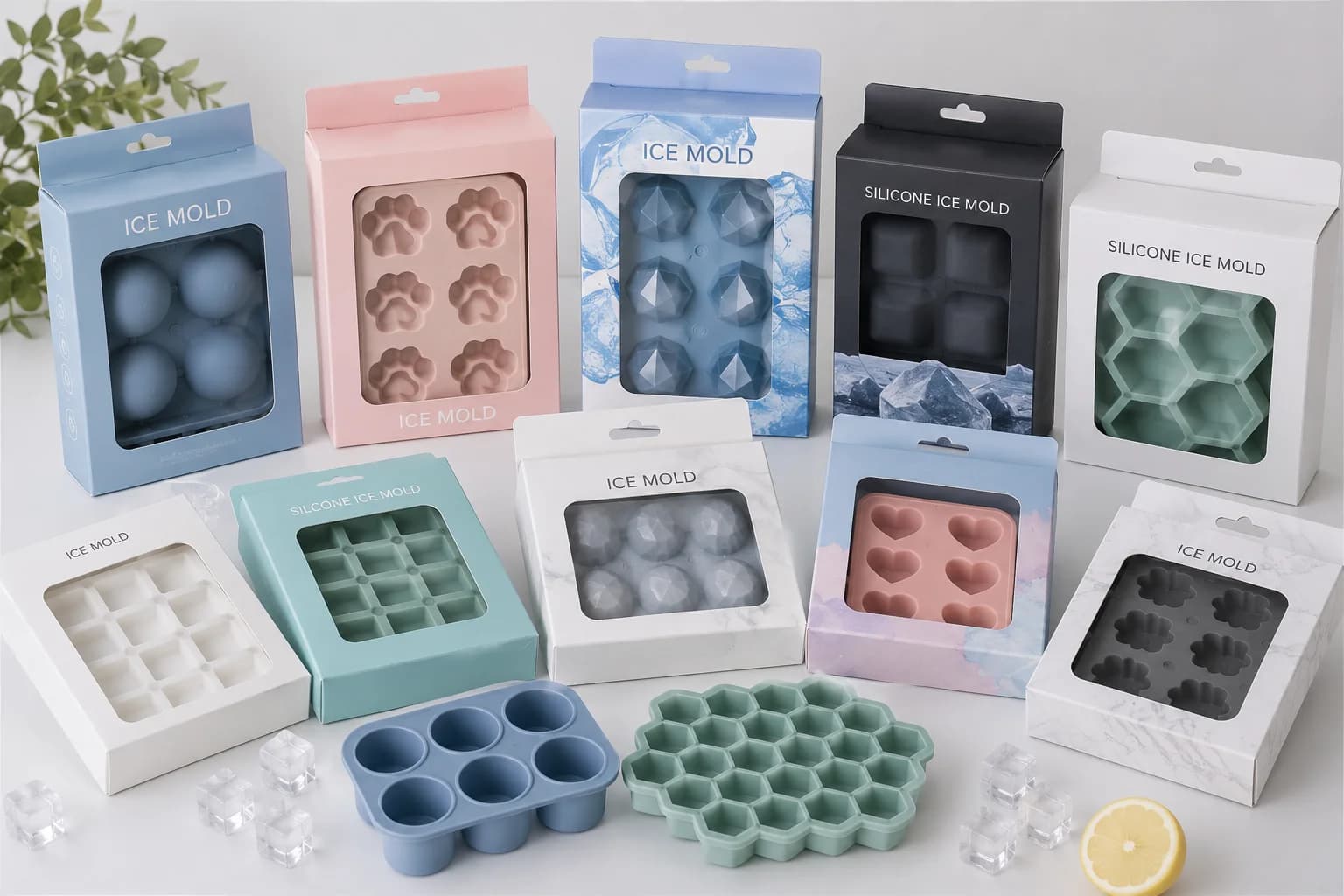
Silicone is a broad category. A low-quality silicone tray can absorb odors, become sticky, or develop stress cracks after repeated freezing. A better grade stays stable through hundreds of cycles. Because large cube molds are under more force than small ice trays, these differences matter more.
Some quality indicators are available before purchase. Renjia’s publicly verified silicone product specification lists food-grade material, an odorless material description, and a temperature range of -40°C to 240°C (-40°F to 464°F) [K5]. These are useful baseline expectations for a food-contact mold that will be repeatedly frozen and cleaned.
For additional context on this decision, see Easy-Release Silicone Ice Cube Trays: How Mold Design Affects Performance.
With large ice cube trays, the critical stress happens during extraction. A large cube is a heavy, rigid mass, and pulling or twisting the mold to release it places repeated strain on the base and corners. For that reason, durability depends on:
- Wall and bottom thickness. Thin areas may flex easily but can weaken over time. The cavity walls and the bottom should be thick enough to absorb repeated bending.
- Edge reinforcement. A tray can feel soft at the rim but have dangerously thin corners where stress concentrates. Inspect the transition between the edge and the cavities.
- Tear resistance and hardness. Silicone strength is often described by hardness (Shore A) and tear strength, but these values are rarely printed for consumer products. When they are missing, ask the manufacturer or brand to provide them.

A useful room-temperature test is to twist the tray as if releasing an ice cube. Look for whitening or stress marks in the hinge areas. These marks can indicate weak spots that may fail later. This simple test does not replace a documented specification, but it shows how the design handles movement.
3. Ease of Release: Why Shape Matters More Than Softness
Core conclusion: A deep “giant ice cube mould” cavity releases easily only when the design allows the frozen cube to slide out without scraping. Tapered walls, rounded corners, and wide openings matter more than softness.
Before finalizing the specification, use Silicone Hardness for Ice Molds: How Shore A Affects Release and Durability as an additional planning reference.
Many buyers assume that a softer silicone tray will always release ice more easily. That is only partly true. A large cube fills the entire cavity, so the ice block is in contact with every inner surface. If the walls are vertical or the opening is narrower than the middle of the cube, even a very flexible mold will grip the ice.
A good large-format tray should include these release-friendly features:
- Wide openings. The top of the cavity should be wider than the bottom.
- Sloped side walls. A slight angle, commonly called draft, allows the ice to move