Key Takeaways
- Cloudiness in ice comes from dissolved air, minerals, and rapid freezing. A sphere ice ball maker shapes the ice; water quality and freezing method determines clarity.
- A food-grade, odorless silicone mold with a wide temperature range is the most practical choice for home and professional use [K5].
- Custom ice ball molds can be tailored in cavity design, size, color, logo, and packaging, which is valuable for bars, hotels, and retail private-label programs [K1].
- Commercial buyers should plan for design review, sampling, tooling, MOQ, and lead time — not assume a custom product can be sourced from stock [K3].
- Consistent technique can produce clear, slow-melting spheres that release cleanly without cracking or leaving a heavy seam.
1. Introduction
Clear ice has moved from a luxury-bar novelty to a realistic home standard. Whiskey drinkers, cocktail enthusiasts, and bar owners all face the same problem: tap water frozen in ordinary trays produces cloudy, cracked, or oddly shaped cubes that dilute a drink too quickly.
A sphere is the better shape — it has less surface area relative to volume, so it melts more slowly and chills without watering down the spirit. But the shape alone is not enough. Most people who buy a sphere ice ball maker for the first time are disappointed because the sphere comes out cloudy, has a visible seam, or sticks halfway out of the mold.
This article explains how to make professional-quality, crystal clear ice spheres with a reliable silicone ice ball mold. It covers why ice becomes cloudy, what to look for in a mold, a repeatable step-by-step freezing process, mold care, and — for business buyers — a practical guide to sourcing custom ice ball molds for branded or retail programs.
2. Why Ice Gets Cloudy — and What Actually Makes It Clear
Core conclusion: A clear sphere is the result of a freezing method that removes dissolved gases and impurities. The mold shapes the ice; the method makes it transparent.
Most cloudy ice forms because ordinary tap water contains dissolved air and minerals, and because a standard freezer freezes water from all sides at once. When water freezes rapidly from multiple directions, trapped gases and minerals are pushed into the center, producing the white, opaque core that many people mistake for normal ice.
The fix is directional freezing: encourage the ice to freeze slowly from one direction so dissolved gases are pushed toward a single unfrozen zone, which can be discarded before the ball is finished. Three practical ways to do this:
- Boil the water first. Boiling removes a large portion of dissolved air. Cool it completely, then freeze. For even better results, boil twice.
- Use an insulated cooler (the classic bar method). Fill a clean cooler partially with water, leave the lid off, and place the mold inside. The top freezes first while the water below stays liquid longer, forcing gas downward and away from the sphere.
- Use a stable, cold freezer shelf. Avoid opening the freezer repeatedly. A steady, low temperature produces slower, more even freezing.
Boundary condition: Even the best freezing technique will not compensate for a poorly made mold. A rigid or poorly sealed sphere ice ball maker will crack the ice or leave a thick seam. That is why material quality and construction matter as much as water chemistry.
For a related manufacturing reference, review custom silicone ice mold manufacturing.
Scenario advice: For a home user, a two-part silicone mold filled with boiled water and frozen for 24 hours will produce a noticeably clearer sphere than a rigid plastic tray filled with tap water and frozen overnight. For a bar, a chest freezer with the directional method is the standard, higher-volume workflow.
3. What to Look for in a Sphere Ice Ball Maker
Core conclusion: The best all-around choice is a food-grade silicone sphere mold with a wide temperature range, flexible release, and a snug two-part seal.
Silicone has become the default material for modern ice molds because it can be manufactured as food-contact grade, odorless, and temperature-tolerant from -40°C to 240°C (-40°F to 464°F) [K5]. This range matters: the mold must survive deep-freeze temperatures without becoming brittle, and it must tolerate room-temperature washing without absorbing freezer odors [K5].
Evaluate any sphere ice ball maker against these criteria:
- Food-contact grade material. Choose products that explicitly state food-grade silicone. This minimizes off-flavors and keeps the ice neutral in taste [K5].
- Odorless construction. Lower-quality molds often carry a rubbery smell that transfers to ice. An odorless product avoids this problem [K5].
- Flexible release. Soft silicone allows you to push the sphere out gently. Rigid molds often crack spheres at the widest point.
- A tight seal. Two-part sphere molds that close firmly reduce leaking and produce a thin, clean seam at the equator. A weak seal creates flat spots and weeping water.
- Correct size and capacity. Spheres typically range from about 4.5 to 6 cm in diameter. Larger spheres melt more slowly, which matters for sipping spirits.
| Criteria | Food-grade silicone | Hard plastic | Metal |
|---|---|---|---|
| Clarity potential | High when combined with directional freezing | Moderate; fast freezing creates cloudiness | High if freezing technique is controlled |
| Release | Flexible, easy manual release | Often sticky; spheres can crack | Can stick; requires careful handling |
| Odor | Odorless when food-grade [K5] | Some plastic odor possible | No odor |
| Temperature range | -40°C to 240°C [K5] | Limited; can crack in extreme cold | Wide |
| Best use case | Home, bar, restaurant, branded custom molds | Budget or occasional use | Professional high-volume environments |
It is also worth noting that silicone ice ball trays belong to a broader production family that includes ice cube trays, popsicle molds, and soap molds [K2]. The same manufacturing platform can be adapted across these formats, which is relevant for custom sourcing (see Section 6).
4. Step-by-Step: Making Crystal Clear Ice Spheres
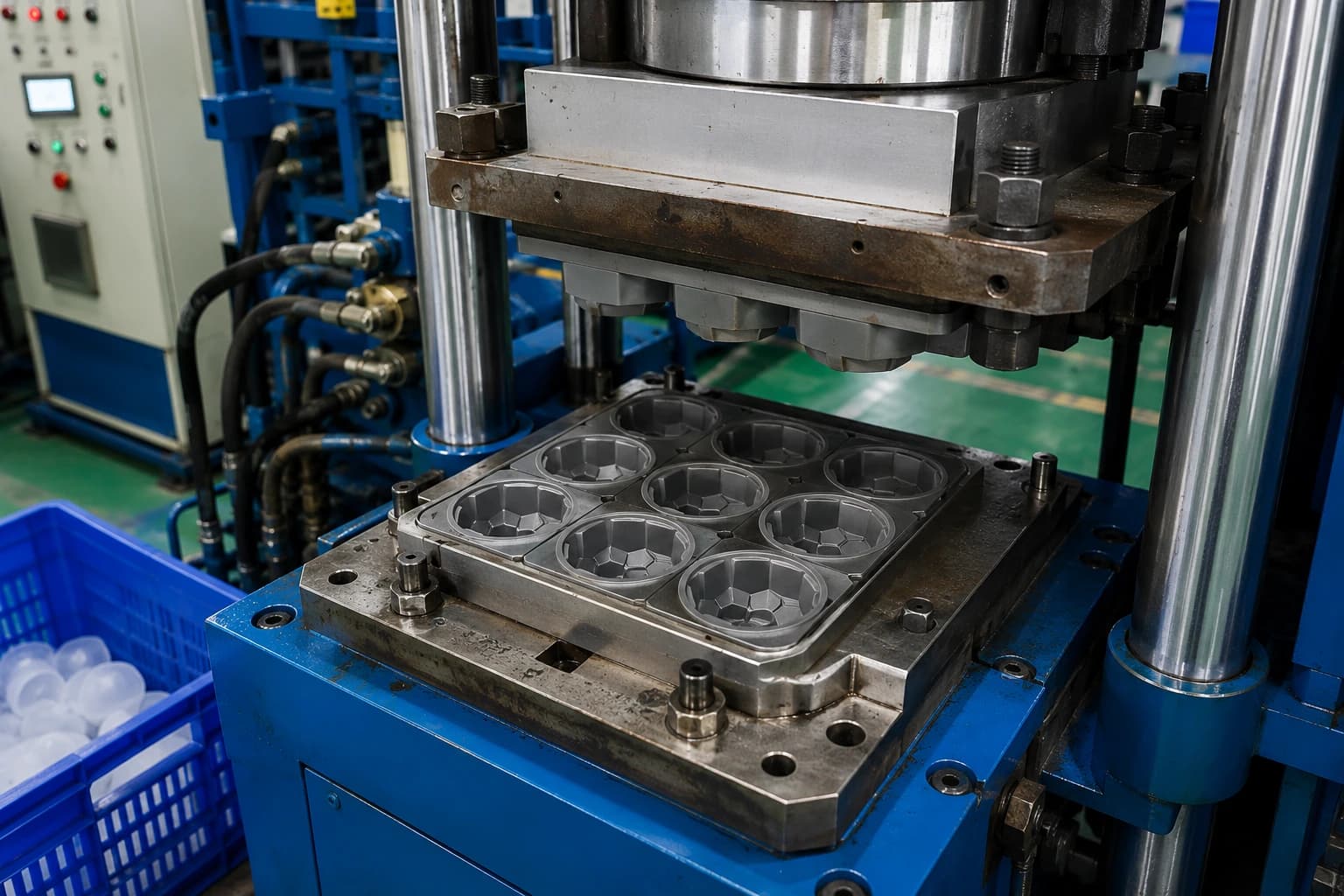
Core conclusion: With a food-grade silicone sphere ice ball maker, the workflow is simple enough for home use and rigorous enough for a busy bar — provided you follow three rules: pre-treated water, slow directional freezing, and careful demolding.
For additional context on this decision, see The Ultimate Guide to Using Silicone Ice Ball Molds for Crystal Clear Ice.
- Fill the mold. Separate the two halves, fill the bottom cavity nearly to the rim, and seal the mold. Do not overfill; water expands during freezing and will leak through the seam.
- Freeze directionally. Place the mold in an open cooler or on a stable, cold shelf. Plan for at least 24 hours. Slow freezing produces clearer ice. A sphere mold inside a larger insulated container creates the classic directional freeze.
- Demold with flex, not force. Let the mold sit at room temperature for 30–60 seconds. Gently flex the silicone from the bottom and equator until the sphere releases. Do not twist or pry — this is where most spheres crack.
- Trim the seam if needed. A thin seam line may form at the equator. One quick pass with a clean knife or an ice chipper removes it. Do not leave the sphere at room temperature for long; it will melt and lose sharpness.
- Store short-term. Use the spheres within a few hours, or store them in a sealed freezer bag for up to 24–48 hours with minimal quality loss.
Scenario advice:
- Home whiskey drinker: Make 2–4 spheres per batch with a single mold. Boil water in advance and freeze over two days.
- Bartender: Use multiple molds in a one-day rotation. Freeze for 24–48 hours, trim before serving, and keep a fast workflow at the bar.
Cautions: If a new mold has packaging odor, wash it with warm water and mild soap before first use, and avoid abrasive scrubbers. If your freezer is frost-free with strong air circulation, the dry environment can help freeze more evenly — but it can also dry out an unsealed mold. Keep the mold sealed and positioned level.
5. Mold Care and Longevity
Core conclusion: A well-maintained food-grade silicone mold lasts through many batches, provided you clean it gently and avoid extreme handling.
Practical guidance:
- Wash the mold before first use and after each batch. Food-grade silicone resists odor, but a quick rinse prevents the ice from picking up freezer smells [K5].
- Avoid abrasive pads and harsh detergents. They can roughen the cavity surface, making release more difficult over time.
- Store the mold flat or hung by its loop. Folded storage can create creases that transfer onto the sphere surface.
- Respect the material's practical limits. The silicone can tolerate a wide temperature range, but repeated extreme shocks — such as going directly from freezer to dishwasher heat — are unnecessary and can shorten its life [K5].
6. Sourcing a Custom Ice Ball Mold for Retail or Branded Programs
Core conclusion: The same silicone sphere mold that works in a home kitchen can be developed as a custom, branded product — but it should be sourced through a structured process, not treated like an off-the-shelf purchase.
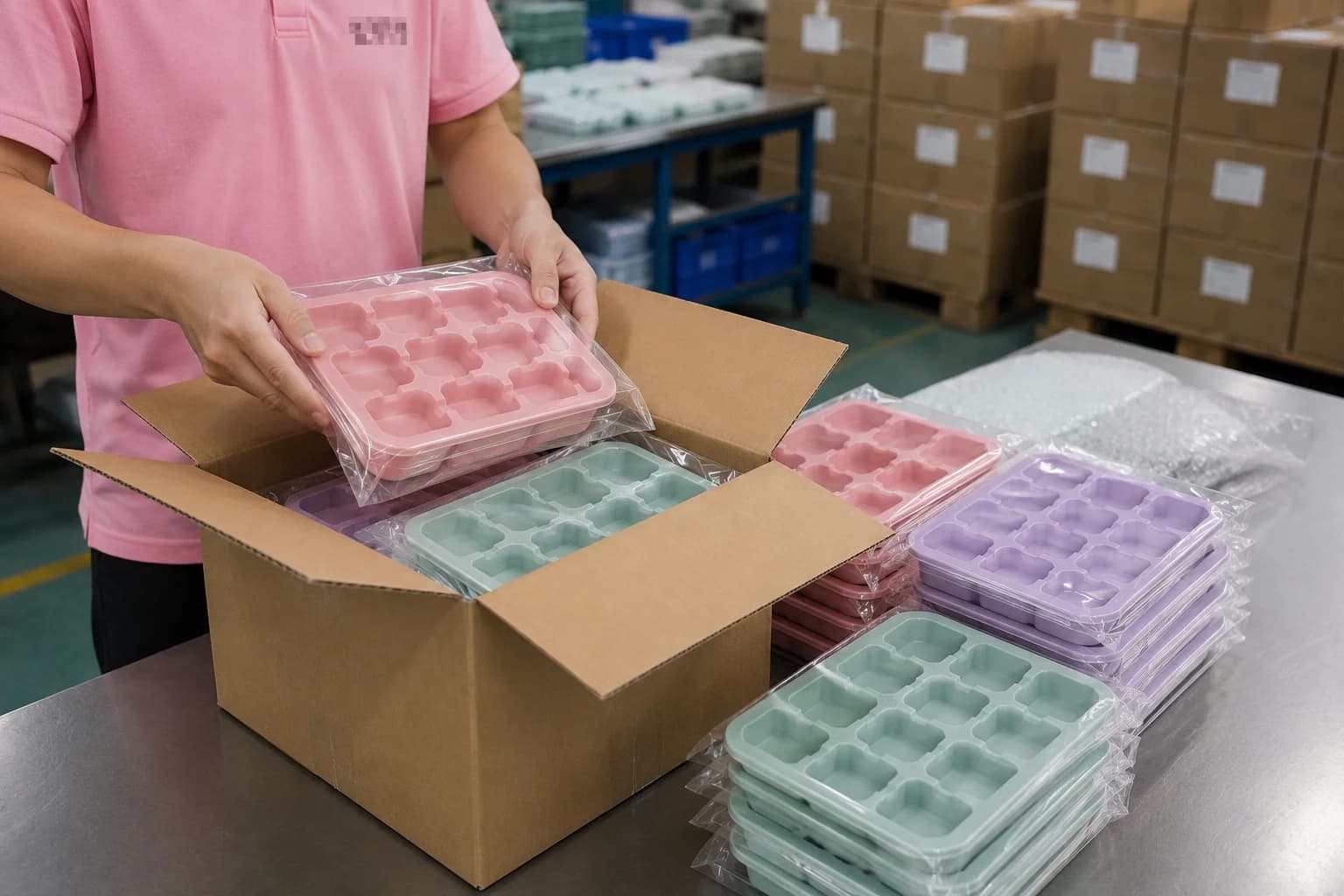
Custom silicone ice molds are a recognized product line, with typical customization covering cavity design, product shape, size, color, logo, and packaging [K1]. For a retailer, bar group, or spirits brand, this means you are not limited to a standard sphere. You can specify sphere diameter, cavity arrangement, color, surface finish, and branded packaging [K1].
Before finalizing the specification, use How to Make Crystal Clear Ice Balls with a Foldable Silicone Ice Ball Mold as an additional planning reference.
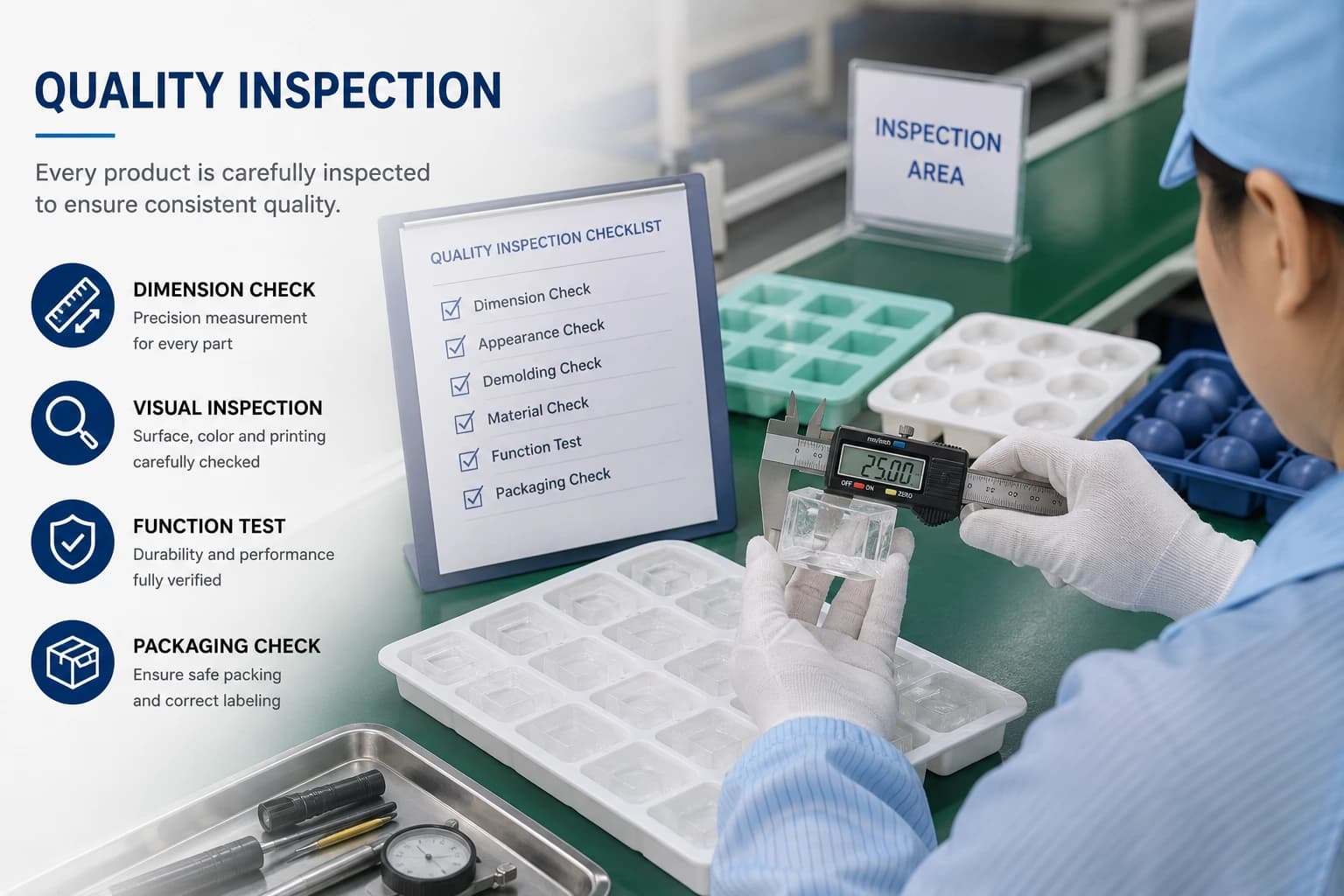
The standard sourcing process follows the same stages as other custom silicone goods: design-file preparation, sampling, tooling, and pre-shipment quality inspection [K3]. A realistic project plan must include time for design review and sample approval — not just a production slot. Buyers should also clarify MOQ, tooling costs, lead time, and packaging requirements before placing an order [K3].
Checklist for sourcing a custom sphere ice ball maker:
- Define the target sphere diameter and cavity design (single sphere, two-part sphere, multi-cavity).
- Confirm food-grade silicone and specify temperature requirements [K5].
- Choose custom color, logo, and artwork placement; confirm the mold surface finish.
- Request a sample and approve it against an internal checklist: dimensions, seal alignment, release behavior, and odor.
- Plan for tooling, sampling cycles, and lead time before your launch date [K3].
- Agree on pre-shipment inspection criteria and packaging details [K3].
Two cautions:
- "Custom sizes available" is a capability statement, not a guarantee that every size is held in stock [K5]. Confirm specific dimensions at the inquiry stage.
- Market-specific compliance planning should be based on current, verifiable requirements. A manufacturer's public mission statement may express a commitment to quality and responsibility, but such statements should not be treated as proof of market ranking or financial outcomes [K4]. Ask for relevant documentation instead.
7. FAQ
Q1. How long does it take to freeze a crystal clear ice sphere?
For most home freezers, plan on at least 24 hours when using a directional freezing method. The slow freeze gives dissolved air time to escape, which is what makes the sphere clear rather than cloudy. In a chest freezer or cooler setup, 24–48 hours is normal and worth the wait.
Q2. Is silicone safe for ice molds?
Food-grade silicone is generally considered suitable for ice contact. It is typically odorless and tolerates temperatures from -40°C to 240°C (-40°F to 464°F) [K5]. Always confirm that the product is labeled food-grade, and wash it before first use.
Q3. Can I use a sphere ice ball maker tray for other products?
In production terms, silicone ice ball trays are part of a wider family that includes ice cube trays, popsicle molds, and soap molds [K2]. A mold is designed for a specific cavity shape, so a sphere mold is best used as a sphere mold — but the same manufacturing platform can be adapted to other formats through custom development [K2].
Q4. What should I ask before ordering custom ice ball molds?
Ask about minimum order quantity, tooling cost, sampling fee, lead time, and the exact sphere dimensions. Then request a sample and check it for dimensional accuracy, seam alignment, release behavior, and odor before approving production [K3].
8. Conclusion
Professional-quality ice spheres are achievable with a combination of the right method and the right tool. The mold provides shape and reliable release; the freezing technique provides clarity. For home users, a food-grade silicone sphere ice ball maker with a tight seal and flexible body is the most practical, repeatable choice [K5]. For businesses, the same product can be customized for branded bar programs or retail shelves through a structured sampling and approval process [K1][K3].
If you are just starting, buy one food-grade silicone sphere mold, boil your water, freeze for 24 hours, and test the result. If you are sourcing for retail or a bar program, begin with a clear design brief — sphere size, color, logo, and packaging — and send it to a manufacturer for a sample quotation.