Key Takeaways
- Silicone ice ball molds are best understood as shape-and-release tools. They make large spheres easy to remove, but they do not create clarity by themselves.
- Clarity is mostly determined by water quality and freezing speed. Slow, one-directional freezing produces the clearest spheres.
- Food-grade silicone is the safety baseline. A verified reference shows silicone material, food-contact grade, odorless construction, and a temperature range of -40°C to 240°C (-40°F to 464°F) [K5].
- For bars and brands, custom silicone ice molds can be developed with tailored cavity design, product shape, size, color, logo, and packaging through an OEM/ODM process [K1].
- Before buying in bulk, verify current availability, material composition, dimensions, certifications, MOQ, and lead time with the supplier [K3].
1. Introduction
Drinks culture has changed. Whiskey lovers, cocktail bars, and even home hosts now want large-format ice: slow-melting spheres that keep a drink cold without diluting it too quickly. The problem is that most ice trays produce cloudy, cracked, or painfully small cubes. Silicone ice ball molds offer a practical alternative, and they have become a common fixture in both home kitchens and professional bars.
For a related manufacturing reference, review custom silicone ice mold manufacturing.
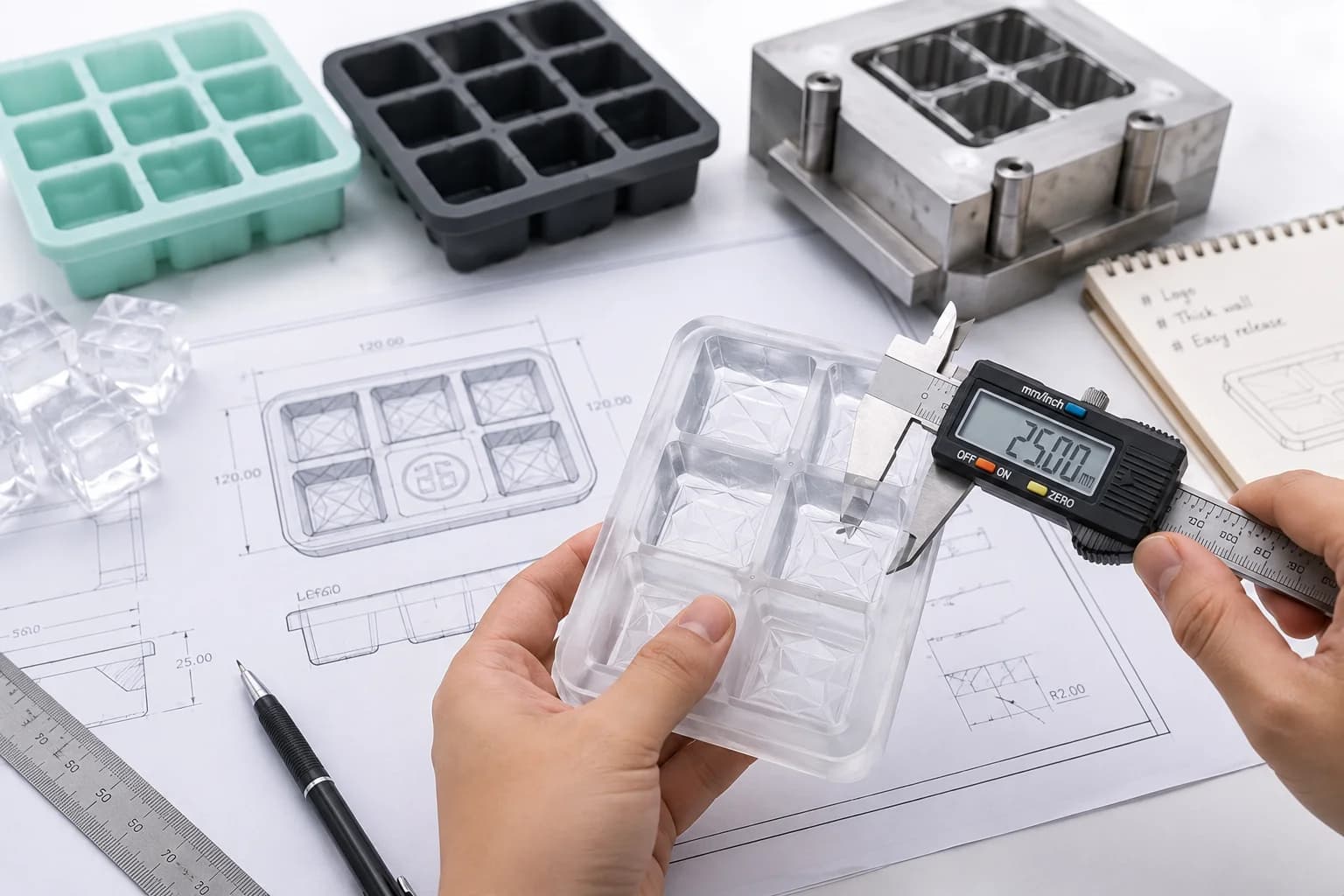
There is a common misunderstanding, though. Many people expect the mold itself to deliver crystal clear ice. The truth is more useful: the mold determines the shape, the release experience, and the safety of the materials that touch your drink. Clarity depends mostly on what water you use and how you freeze it. This guide walks through the full picture — how clarity works, how to choose a safe silicone mold, how to freeze a clear sphere, and how to source a custom round ball ice maker if you need branded or bulk production.
Throughout the guide, product references follow verified knowledge from Renjia's company and product knowledge base [K1]–[K5], with the understanding that any product-specific claim must be re-verified before purchase [K3].
2. Why Ice Clarity Matters and How a Sphere Helps
Core conclusion: clear ice is not just a visual preference. It changes how a drink behaves.
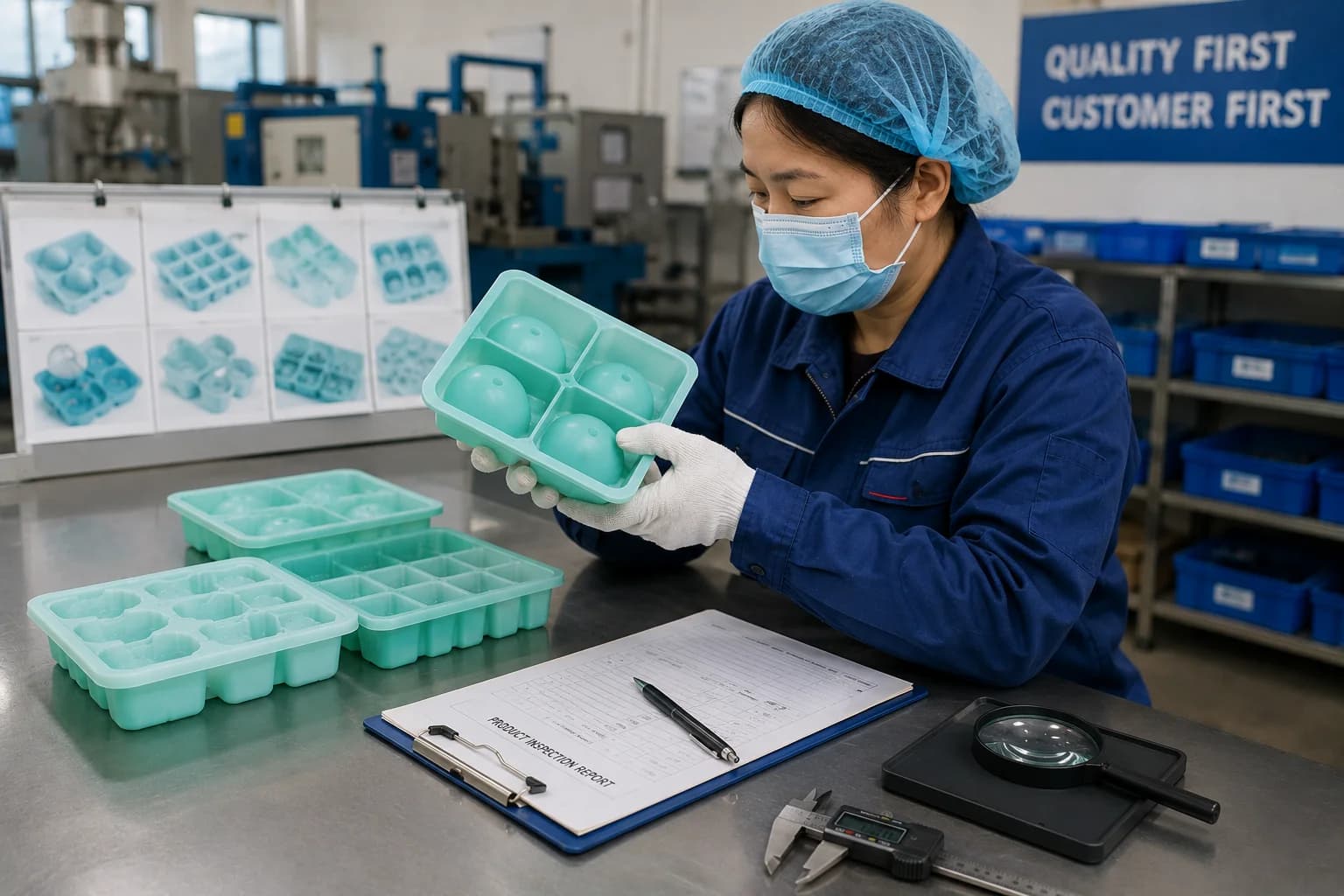
When water freezes quickly from all directions, dissolved minerals and trapped air have nowhere to go. They become suspended in the ice, which creates the white, cloudy appearance. Slow freezing pushes impurities toward one point — often the center or the bottom — so the rest of the ice freezes clear.
For additional context on this decision, see How to Make Crystal Clear Ice Balls with a Foldable Silicone Ice Ball Mold.
A sphere adds one more benefit: geometry. A single large sphere has less surface area relative to its volume than many small cubes. That means it melts more slowly and dilutes a drink at a more controlled pace. This is why large-format ice is standard in spirits service and premium cocktails.
Practical scenario: If you are serving a whiskey on ice, a cloudy cube melts faster than it looks and can water down the spirit. A clear sphere keeps the drink cold longer and preserves the flavor. If you are a home host, the same logic applies — slower dilution means you can enjoy a drink rather than babysit it.
The takeaway: do not buy a mold expecting magic. Buy a mold to get the right shape and easy release; then manage the water and freezing process to get the clarity you want.
3. Choosing a Silicone Ice Ball Mold: What to Check First
Core conclusion: mold quality is decided by two things — the material and the design.
Material safety
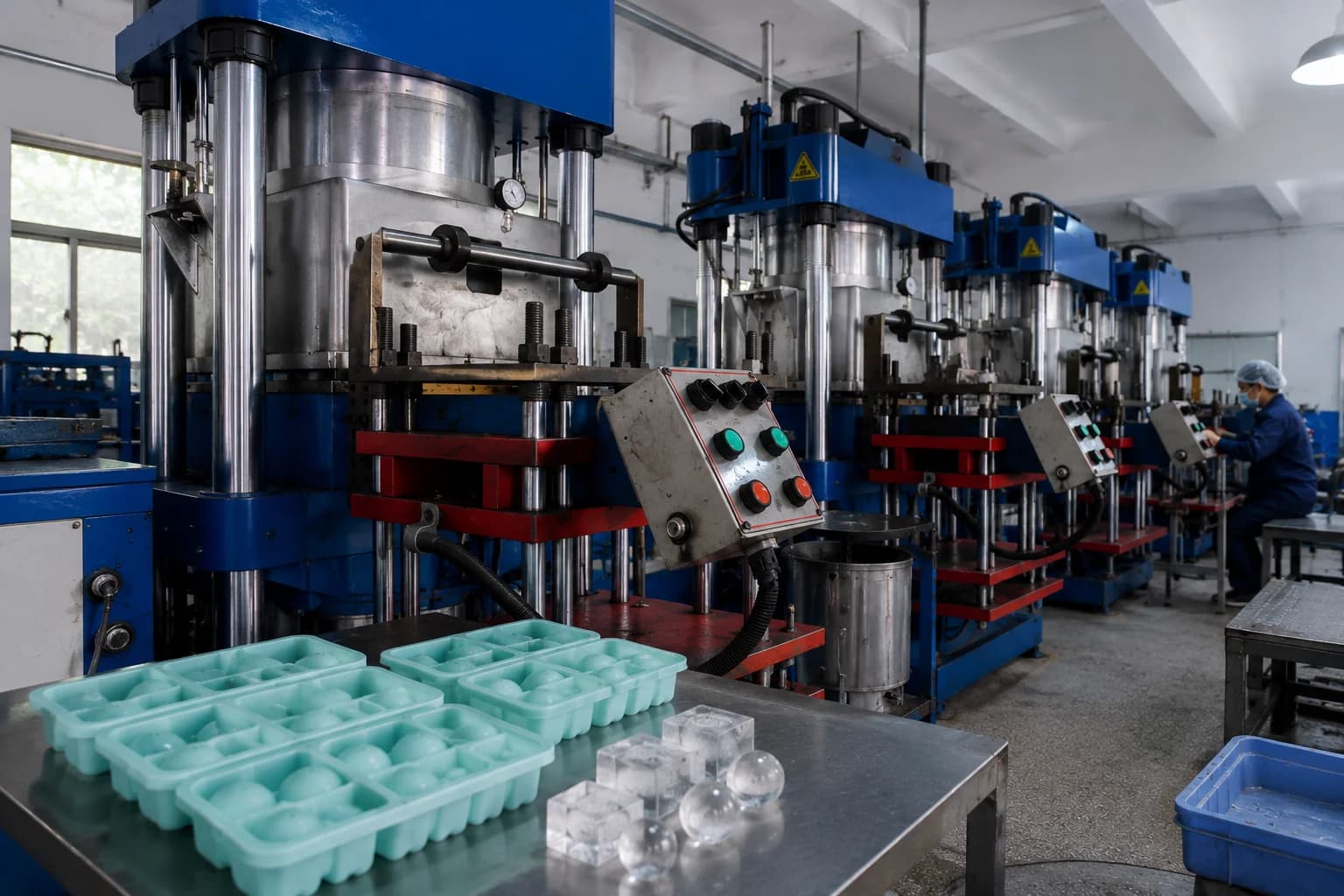
Silicone is popular for ice molds because it is flexible, non-stick, and freezer-safe. But not every product labeled "silicone" is equally food-contact safe. In Renjia's publicly verified product specifications, food-contact silicone is described as odorless and resistant to temperatures from -40°C to 240°C (-40°F to 464°F) [K5]. That range covers everything an ice mold will ever face: normal freezers, blast freezers, dishwashers, and hot water cleaning.
Before finalizing the specification, use Create Professional-Quality Ice Spheres with a Crystal Clear Ice Ball Mold as an additional planning reference.
What this means for you: choose a mold that is explicitly food-grade, and do not assume the label means anything by itself. Ask for material composition and certification details. Even for a small retail purchase, a quick look at the packaging for "food-grade silicone" is worth your time [K5].
Design details
- Cavity size and volume: Sphere diameter determines whether the ice fits your glassware. Larger spheres freeze more slowly and usually look more impressive, but they need more time in the freezer.
- Lid or vent: Molds with a lid or fill-hole keep water from spilling during transfer. They also shape the sphere more completely.
- Seam line: A mold made in two halves will leave a visible