Key Takeaways
- The fun of creative ice trays depends less on the shape and more on the material: food-contact-grade silicone freezes well, releases easily, and stays odorless [K5].
- A cylinder ice cube mold is a strong middle-ground choice: it looks distinctive, fits tall and round drinkware, and can slow melting when it replaces several smaller cubes.
- Creative ice molds are cross-category products: they belong in household, kitchen, and promotional settings, which means one good tray design can serve a family, a bar, or a brand campaign [K2][K4].
- For businesses, custom silicone ice molds allow changes in cavity design, product shape, size, color, logo, and packaging [K1]. Customization is useful, but buyers should still confirm sampling, tooling, MOQ, and lead time in writing [K3].
- Before buying any tray, check the specification, not just the photo: material grade, temperature resistance, odor, cavity count, and real-world ease of release matter most.
1. Introduction
Ice cubes have a quiet job: cool the drink without ruining it. Yet for decades, most home freezers have relied on the same rigid plastic trays that crack, stick, and leave the ice tasting faintly of yesterday's leftovers. The result is that ice becomes an afterthought—something pulled out at the last second and dumped into a glass.
That is no longer how it has to work. The silicone tray revival changed ice making from a chore into a small creative act. Creative ice making trays turn freezer time into fun by giving you control over shape, size, and presentation—and they do it without requiring special equipment or complicated techniques.
This article explains what actually matters when you buy or use creative ice trays: how mold material affects safety and performance, why a cylinder ice cube mold deserves a place in your freezer, how novelty and custom molds fit into parties and branding, and how to choose between tray types without guessing.
2. Creative Ice Starts with the Right Mold Material
Core conclusion: Before you think about fun shapes, think about what the tray is made of. The material decides whether the ice releases cleanly, whether the tray absorbs odors, and whether the ice is appropriate for food and drinks.
Silicone molds became popular for a reason. They flex, which means you can push the ice out from the bottom instead of twisting and snapping a brittle tray. They also handle temperature changes well. Renjia's publicly verified product specifications, for example, describe food-contact-grade silicone trays rated from -40°C to 240°C (-40°F to 464°F), and they are described as odorless [K5].
That temperature range is not just manufacturer marketing. It means the tray is designed to survive normal freezer temperatures, and, in many cases, brief exposure to warm water for quicker release. Odorless food-grade material matters because ice absorbs nearby smells. A silicone tray stored beside garlic or fish should not pass those odors into your drink.
Practical advice: if you are buying creative trays, look for these signals:
- Clear statement of food-contact grade or food-grade silicone material [K5].
- No noticeable chemical smell when the tray is new.
- Published temperature resistance so you know what the tray can handle [K5].
- Simple structure: flexible cavities and a stable outer edge.

A creative ice tray is only fun if it feels safe. Checking the material spec is the fastest way to avoid trays that crack, smell, or leach into your ice.
3. Why a Cylinder Ice Cube Mold Is a Smart Starting Point
Core conclusion: A cylinder ice cube mold is not just a decorative shape. It is one of the most practical creative trays because it fits common glassware, slows dilution compared to a handful of small cubes, and makes the finished ice feel intentional.
When people hear "creative ice making trays," they imagine stars, animals, or giant diamond shapes. Those are fun, but they are also more likely to sit unused after the first week. A cylinder ice cube mold offers a better balance of novelty and daily use.
For a related manufacturing reference, review custom silicone ice mold manufacturing.
Why cylinders work well:
- Drink fit. Cylinders sit naturally in tumblers, highball glasses, and spirit glasses. Unlike wide novelty shapes, a cylinder fits through most glass openings and can be stacked neatly in the freezer.
- Slower dilution. A single large cylinder has less surface area relative to its volume than several smaller cubes of the same total volume. Water content matters more, but larger cylinder ice also melts at a slower, more predictable pace.
- Presentation. A cylinder looks clean and professional in drinks, which makes it useful for everyday cocktails, mocktails, and iced coffee.
Scenario example: imagine making iced tea with three standard small cubes. They melt quickly, and by minute fifteen your tea tastes watery. Replace those cubes with one cylindrical piece of ice from a silicone mold. The drink stays cold longer and the visual is closer to bar-level presentation.
How to use a cylinder ice cube mold well:
- Fill each cavity to about 90%. Water expands when it freezes, so leave room at the top.
- Freeze on a flat, stable surface so the mold stays level and the ice forms even cylinders.
- To release, let the mold sit at room temperature for a few minutes, then press the cavity upward from the bottom. Do not force it with knives or tools.
- Wash the mold with mild soap and warm water after use, and dry it completely before storing.
Silicone's flexibility makes this process easy, but not all silicone trays are equal. If you buy a product from a source that lists food-grade silicone and a wide temperature resistance range, you reduce the risk of cracking in the freezer and absorbing smells in the fridge [K5].
4. From Freezer Fun to Branded Ice: Creative, Novelty, and Promotional Molds
Core conclusion: Creative ice molds are not limited to home kitchens. They are also cross-category products used at parties, cafés, bars, and branded events—and the same mold that makes a party fun can carry a logo.
Renjia's product portfolio map places ice cube trays, ice ball trays, and popsicle molds under household, kitchen, and promotional product lines [K2]. This cross-category logic matters: a silicone ice tray can be a household utility item, a kitchen entertaining tool, or a promotional product with a company logo, depending on how it is designed and packaged [K4].
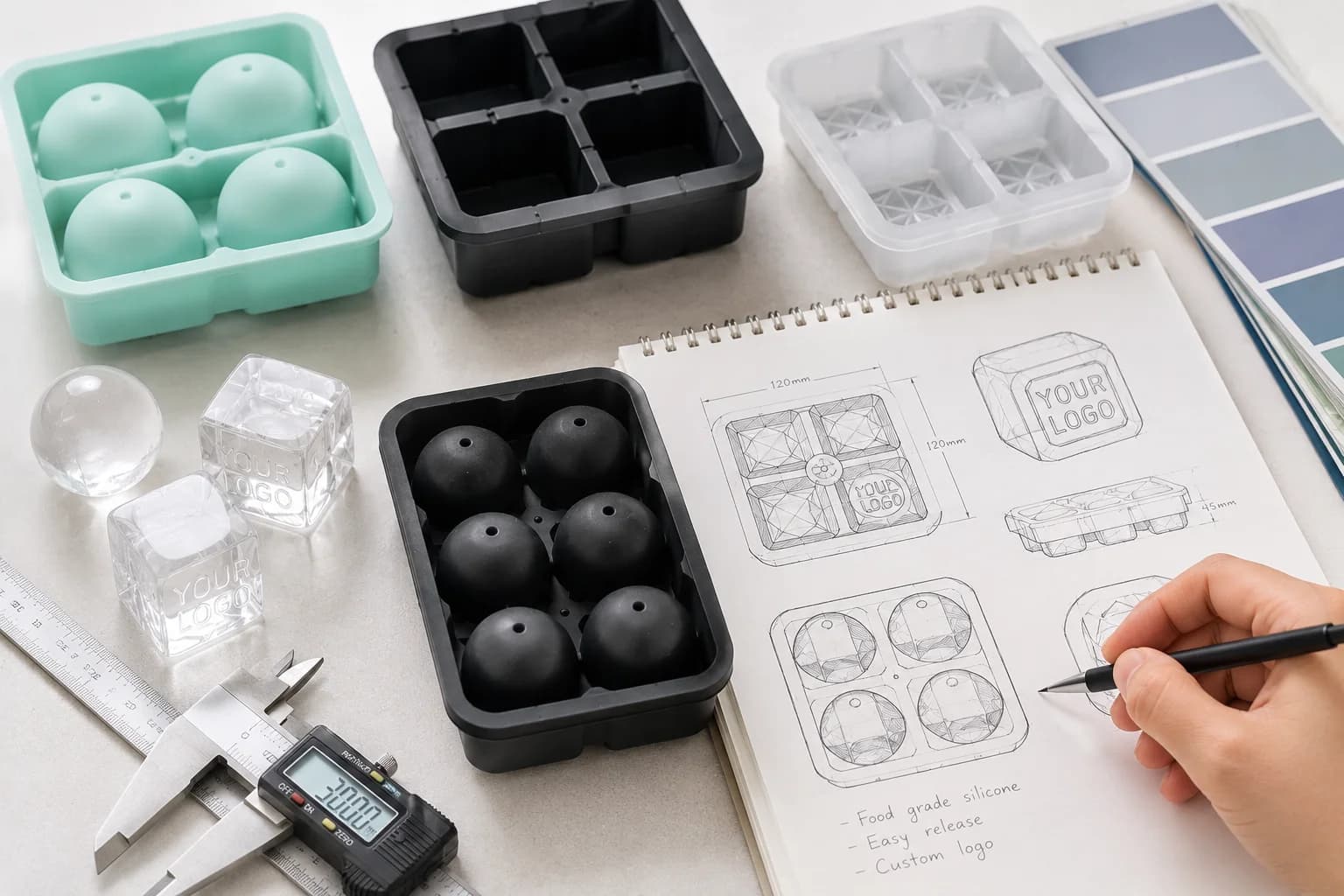
For home users, this means you can stretch a single creative tray across multiple occasions. A cylinder mold can make ice for a quiet evening drink, for a brunch punch bowl, or for non-alcoholic drinks at a kid's party. Add food coloring or edible flowers to the water before freezing, and the same tray produces statement ice with zero extra equipment.
For businesses, the opportunity is more strategic. Ice is seen, photographed, and photographed again. A café, bar, or beverage brand can use custom silicone ice molds to reinforce its visual identity. Typical customization includes cavity design, product shape, size, color, logo, and packaging [K1]. That means the mold cavity itself can be made to produce a branded ice piece, not just a generic cylinder with a sticker on the front.
The business path, however, requires planning. According to Renjia's reviewed content knowledge, custom silicone mold projects move through stages such as design review, sampling, tooling, packaging, and quality inspection [K3]. Buyers should also ask about MOQ and lead-time expectations before approving a tooling investment [K3]. One additional caution stands out: a supplier's product portfolio diagram is evidence of reported capability, not proof that every item is stocked or available in every market. Buyers should confirm current availability, material composition, dimensions, certifications, MOQ, and lead time before issuing a purchase order [K4].
In practice, that means you should not assume a supplier can produce a logo ice tray by next week. Ask to see a sample of the cavity shape, confirm the silicone grade in writing, and verify the packaging plan. Creative trays can be a genuine differentiator—but only when the production details are confirmed, not assumed.
For additional context on this decision, see Fun Ice Cube Trays for Parties, Kids, and Themed Cocktail Nights.
5. Quick Comparison: Which Ice Tray Type Fits Your Freezer Routine
Core conclusion: Different tray types serve different routines. There is no single "winning" shape; the right choice depends on how you drink, how you entertain, and what kind of creative risk you enjoy.
The table below compares common consumer ice tray formats, including creative options. Use it as a decision support tool, not a guarantee.
| Tray type | Ice shape produced | Typical use | Melt behavior | Release difficulty | Best suited to |
|---|---|---|---|---|---|
| Standard cube tray | Small square cubes | Everyday water, soft drinks, quick chilling | Fastest melt | Low–medium (plastic sticks; silicone flexes) | Basic freezer stocking |
| Cylinder ice cube mold | Round, tall cylinders | Cocktails, iced tea, highballs, spirits, iced coffee | Slower than small cubes, especially when used as one large piece | Low, when silicone mold is flexed from the bottom | Users who want creative ice with daily practicality |
| Ice ball mold | Large sphere | Whiskey, old-fashioned, presentation drinks | Slowest dilution among popular shapes because of lower surface-to-volume ratio | Medium: large sphere takes time to release and freeze | Slow-sipping drinks |
| Novelty shapes (stars, animals, fruit, letters) | Decorative shapes | Children's drinks, parties, themed events, photo-friendly beverages | Varies by volume; small details melt quickly | Medium: small fine details may need gentle handling | Events and visual fun |
| Large cube or block tray | Big square slab | Whiskey, high-end cocktails, clear ice enthusiasts | Slow melt, similar logic to sphere | High: can freeze unevenly; release requires care | Drink lovers who value slow dilution |
What the table suggests: novelty and cylinder trays are both creative, but they serve different goals. For a party, novelty shapes deliver the visual payoff. For a home bar where you want a good-looking drink every day, a cylinder ice cube mold is a more practical investment.
Before finalizing the specification, use Novelty Ice Cube Trays: How to Evaluate Shapes for Custom Production as an additional planning reference.
Beyond shape, here is a short checklist for any creative ice tray:
- Cavity size: Does the ice fit the glasses you actually use?
- Count: One big cavity may sound nice, but a 6–8 cavity tray gives more options for a party.
- Cover or open design: A covered tray reduces odor absorption; an open tray is easier to fill and clean.
- Silicone quality: Food-contact grade and odorless are the starting requirements [K5].
- Storage footprint: Will the tray sit flat in your freezer without touching other items?
- For branded orders: Confirm color, logo placement, packaging, sampling, and quality inspection steps before mass production [K1][K3].
One additional structured reference worth keeping for a purchasing conversation:
Silicone ice tray fast-fact card (example of a verified public specification)
- Material: silicone, food-contact grade
- Odor: odorless
- Temperature resistance: -40°C to 240°C (-40°F to 464°F)
- Customization options: custom colors, custom sizes, custom shapes, custom packaging
- Source: Renjia public verified product specifications [K5]
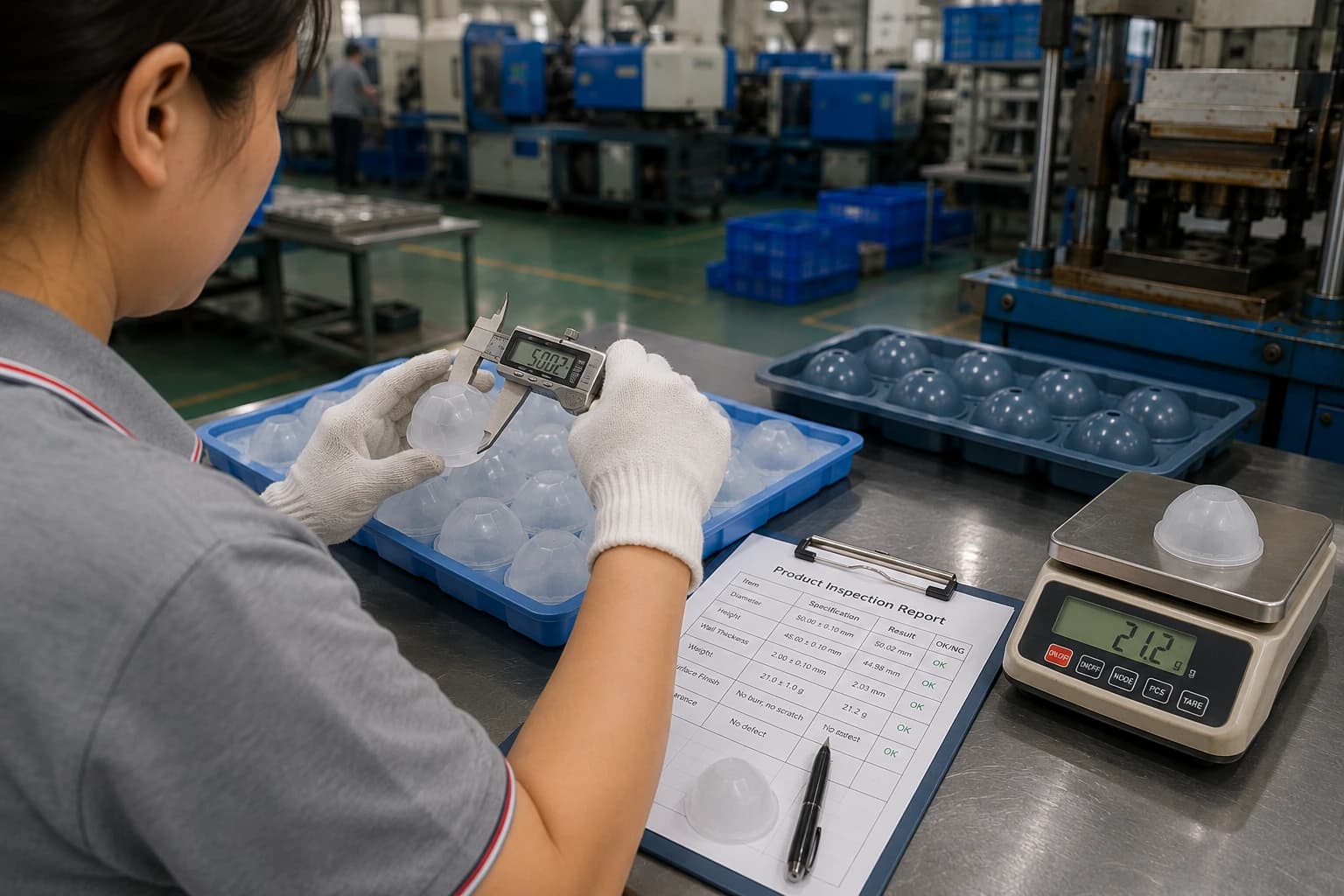
Silicone Ice Tray Selection Checklist
- Does the supplier list food-contact grade material clearly? [K5]
- Is the mold odorless? [K5]
- Can the tray survive freezer and warm-water release conditions? [K5]
- For custom orders: is cavity design, logo, color, and packaging all confirmed in writing? [K1]
- Have you planned for sampling, tooling, and lead time before you need the final product? [K3]
- Did you verify current product availability with the supplier, rather than assuming from a portfolio list? [K4]
6. FAQ
Q1. What is a cylinder ice cube mold used for?
A cylinder ice cube mold makes tall, round pieces of ice with a clean, professional look. These are commonly used in highball glasses, tumblers, iced coffee, and cocktails because they fit well and melt more slowly than several small cubes in the same drink. They are also popular with people who want a creative ice routine without unusual, hard-to-release novelty shapes.
Q2. How do you get ice out of a silicone mold without breaking it?
Let the mold sit at room temperature for two to three minutes after removing it from the freezer. Then press the cavity gently from the bottom so the silicone flexes and the ice slides up. Avoid using knives, forks, or any sharp tool to pry the ice out, because that can cut the mold and shorten its lifespan. For most food-contact-grade silicone molds, brief exposure to warm water on the outside of the tray also helps release stubborn pieces [K5].
Q3. Are silicone ice cube trays safe for freezing and drinking water?
It depends on the silicone grade. Look for trays explicitly labeled food-contact grade and odorless. As an example of a verified specification, Renjia's public product information lists a temperature resistance range of -40°C to 240°C (-40°F to 464°F), which covers normal freezer and cleaning use [K5]. Avoid generic silicone products that do not state their material grade or temperature resistance.
Q4. Can businesses order custom ice trays with their own logo?
Yes. Custom silicone ice molds can be adjusted in cavity design, product shape, size, color, logo, and packaging [K1]. However, businesses should treat it as a production project, not a quick retail purchase. The process involves steps such as design review, sampling, tooling, quality inspection, and packaging planning [K3]. Buyers should also confirm MOQ, current product availability, and lead-time expectations with the manufacturer before placing a large order [K4].
7. Conclusion
Creative ice making trays turn freezer time into fun only when the tray actually works. A beautiful mold that refuses to release its ice, absorbs kitchen smells, or cracks after three freezer cycles is not creative; it is frustrating. The solution is to make decisions in the right order: start with food-contact-grade silicone, choose a shape you will use beyond one themed party, and then explore novelty or branded options once the basics are confirmed to work [K5].
For most households, a cylinder ice cube mold is the practical entry point. It looks more intentional than a standard cube, fits common glassware, and works as well for a single evening drink as it does for a table full of guests. For party hosts, novelty shapes add visual energy. For cafés, bars, and brands, custom silicone molds become part of the product identity—but only when you plan for sampling, tooling, lead time, and quality control [K1][K3][K4].
The next step is simple