Key Takeaways
- Fun ice cube trays turn a basic freezer habit into a low-cost styling tool, but the best choice depends on the occasion, the liquid being frozen, and how the ice will be served.
- When buying ice making trays for food or drinks, prioritize food-contact-grade silicone, odorless material, and a temperature range that safely covers freezer and hot-liquid use [K5].
- Themed parties and kids' events do not require custom manufacturing to start; standard fun-shaped promotional trays offer an easy entry point, while custom silicone ice molds add branded shapes, colors, and packaging for businesses [K1] [K2].
- Ice molds are a cross-category product and can be used for household, kitchen, or promotional content and product pages; however, buyers should confirm current availability, material, and dimensions rather than assuming every listed item is stocked [K4].
- Silicone molds labeled for non-food uses, such as soap molds, should not be treated as drink-safe without product-specific confirmation [K2] [K4].
1. Introduction
Hosts planning a birthday party, a children's playdate, or a themed cocktail night usually think about drinks last. But drinks are often what people remember — and the ice inside them is part of that memory. Standard cubes melt quickly, dilute a carefully mixed cocktail, and do nothing to support a theme. Fun ice cube trays solve a surprisingly practical problem: they make drinks look intentional without requiring bartending skills.
The category has expanded far beyond simple star or heart shapes. Today, buyers can choose from animal faces, letters, spheres, oversized blocks, popsicle-style molds, and fully custom shapes. Silicone-based ice making trays dominate this space because they are flexible, easy to release, and available in food-contact grades [K5]. Yet the wider range of options also creates confusion. Which tray is safe for kids? Which shape actually works in a narrow glass? What should a business owner ask before ordering branded molds in bulk?
This article explains how to select, use, and source fun ice cube trays for parties, children, and themed cocktail nights. It covers material safety, occasion-based selection, and the practical path from an idea to a custom silicone ice mold project [K1]. The goal is not to declare any single tray "the best," but to help readers make an informed decision based on their own serving style, glassware, and budget.
2. What Defines a Quality Ice Making Tray Today
Before evaluating shapes, it helps to understand the material and manufacturing standards behind a good tray. A fun shape is useless if the tray cracks, transfers odors, or is difficult to clean.
2.1 Material Safety Comes First
Ice is consumed, and it is consumed inside other drinks. This means the tray is a food-contact surface. According to verified product specifications for silicone kitchen items, a properly made silicone ice tray should be:
- Food-contact grade, meaning it is suitable to touch food and beverages.
- Odorless, so it does not transfer a rubber-like smell or taste to the ice.
- Resistant to a temperature range of about -40°C to 240°C (-40°F to 464°F), which safely covers freezer use, refrigeration, and brief contact with hot liquids [K5].
Temperature resistance matters more than some shoppers realize. A tray that is not rated for low temperatures can become brittle and crack during freezing or when twisted for release. Low-cost plastic trays may also chip or cloud over time. Silicone with the specifications above gives a clear performance boundary for repeated freezer use.
2.2 Flexibility and Release Are Functional Features
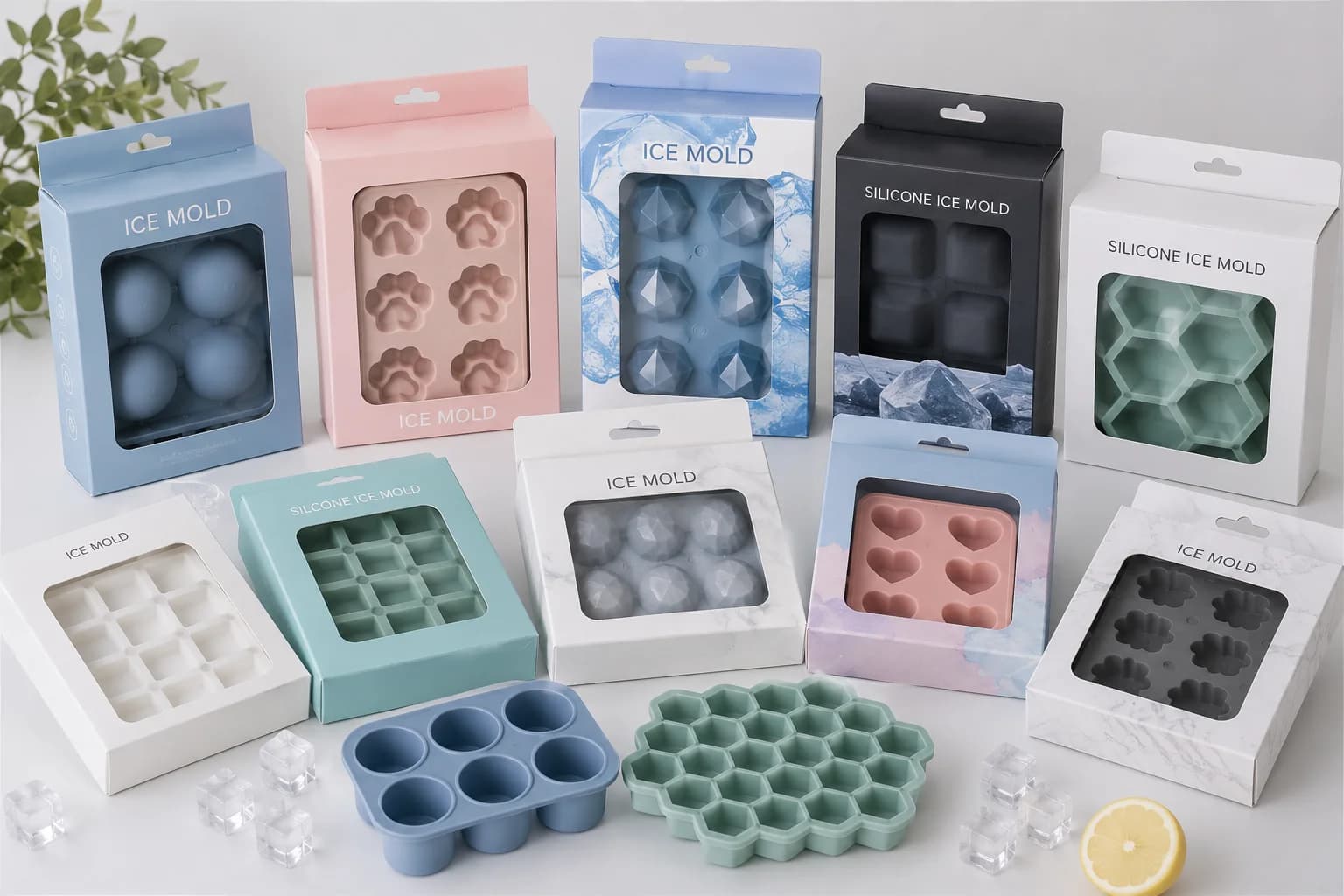
Fun ice making trays often have detailed cavities: tiny faces, letters, or three-dimensional shapes. For these designs to release cleanly, the material must flex without tearing. This is one of the main reasons silicone has become the default material for novelty ice molds [K1]. If a tray is rigid, users are tempted to run warm water over it, which starts melting the ice before it reaches the glass.
For a related manufacturing reference, review custom silicone ice mold manufacturing.
2.3 Shape Affects Melt Rate and Dilution
A large, dense shape such as an ice sphere or oversized block melts more slowly and dilutes a drink less than several small cubes with more surface area. This distinction matters for cocktail nights, where dilution control is part of the recipe. A small, detailed shape is charming but melts faster; it is best for short serving windows. A large ball or block tray is the better tool for spirits-forward cocktails that need to stay strong and cold.
Core conclusion: A quality fun ice cube tray is primarily defined by food-safe, odorless, temperature-resistant silicone, and only secondarily by the shape on top [K5]. When in doubt, confirm the material specifications before judging the design.
3. Occasion-Based Selection: From Kids' Drinks to Themed Cocktail Nights
Different events place different demands on ice trays. The right product decision depends on who is drinking, what vessel the ice will go into, and whether the ice itself is meant to carry flavor.
3.1 Parties and Kids: Playful Shapes and Safe Sizes
For children's parties, ice is usually added to water, juice, or fruit-infused drinks. The priorities are safety, visual appeal, and easy cleanup.
- Size matters. Small, smooth shapes such as stars, fish, or animal faces are better than sharp-edged or very small pieces that could be a choking risk. Look at the cavity size before ordering.
- Color can add fun. Silicone trays can be produced in custom colors, which allows a parent or party planner to match a theme color across the table [K1].
- Multi-use products help. Popsicle molds sit in the same product family as ice cube trays and can double as a frozen treat maker for juice or yogurt [K2].
For larger parties with adults and children together, consider labeling the ice tray or preparing a dedicated tray for kids' drinks so that cocktail ice does not get mixed into children's cups.
3.2 Themed Cocktail Nights: Shape and Slow-Melt Performance
A themed cocktail night — a 1920s speakeasy, tropical tiki evening, or holiday gathering — benefits from ice that matches the theme. But the ice also needs to perform.
- Ice balls and oversized cubes are the standard recommendation for spirits, Old Fashioneds, and high-proof cocktails because they melt slowly and reduce dilution.
- Small decorative shapes such as hearts, skulls, or stars work best in clear, simple drinks where the visual can actually be seen. A dark cola or creamy cocktail will hide the shape.
- Direction matters. Shapes should be considered from the top down: a flattened star may read clearly in a wide glass, while a tall, dimensional mold might require a tumbler with more depth.
One functional caution: if the drink is carbonated, small decorative ice pieces can cause rapid fizzing and faster melting. Use larger ice forms for sparkling cocktails and reserve tiny shapes for still drinks.
3.3 Branded and Promotional Events: Ice as a Marketing Detail
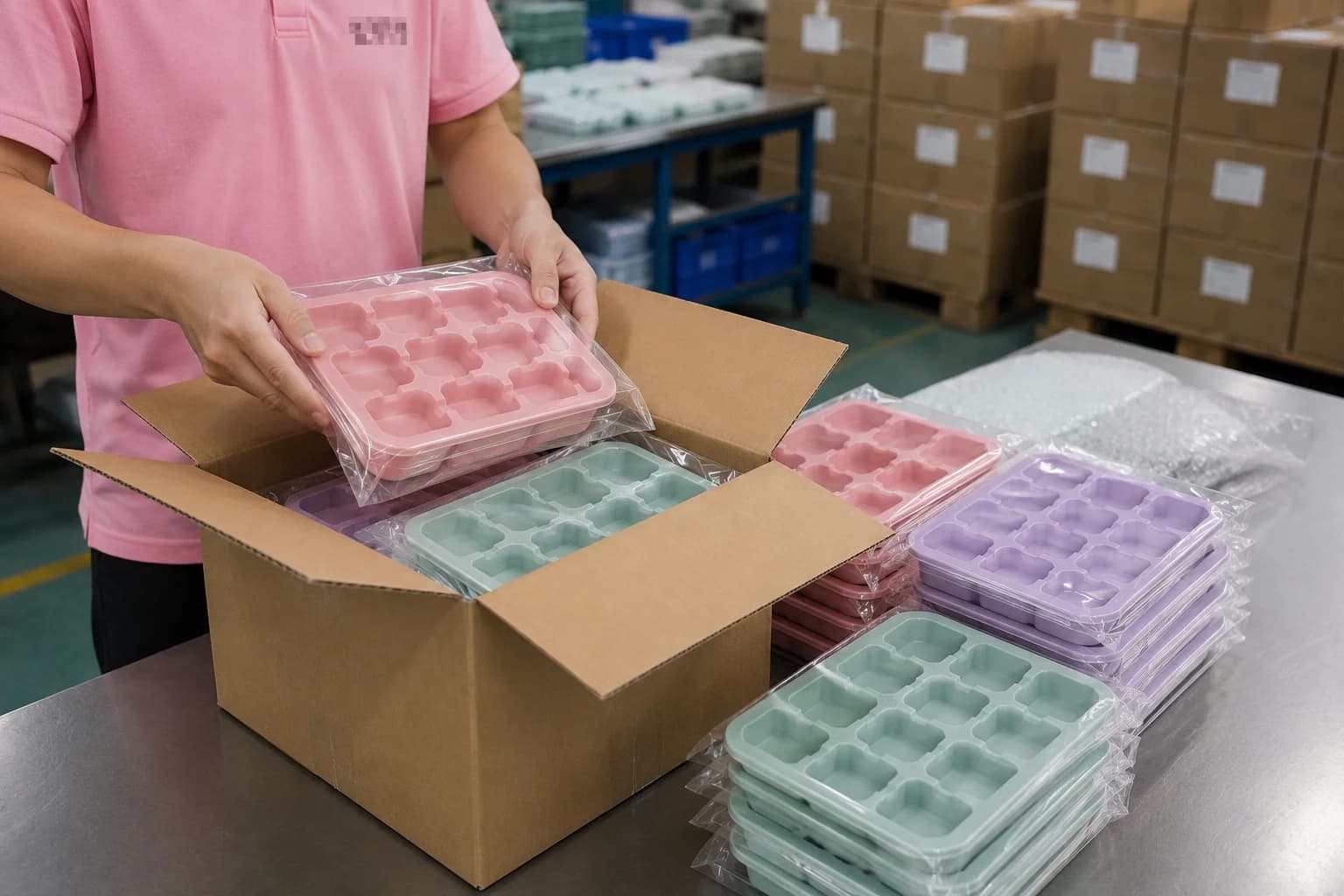
For corporate parties, weddings, or brand activations, ice can carry a logo or a custom message. This is where basic novelty trays move into the custom manufacturing space. Renjia's product knowledge base identifies custom silicone ice molds as an internal product line (reference RJ-CIM-001), with typical customization covering cavity design, product shape, size, color, logo, and packaging [K1]. That means a business can order molds that produce branded ice cubes shaped around a product, show a two-dimensional logo, or use brand colors.
Core conclusion: The ideal ice making tray is occasion-specific. Kids' parties favor safe, playful, small-to-medium shapes; cocktail nights favor slow-melting large forms or visually readable themed shapes; and branded events favor custom molds designed around a logo or marketing concept [K1][K2].
For additional context on this decision, see Creative Ice Making Trays That Turn Freezer Time into Fun.
4. Going Custom: What Sourcing a Silicone Ice Mold Really Involves
Fun ice cube trays are available as standard retail items, but there is a growing demand for custom silicone ice molds from bars, restaurants, event planners, and consumer brands. The OEM/ODM process is not complicated, but it requires coordination around design files, materials, sampling, and approvals. Understanding the process prevents costly surprises.
4.1 The Standard Development Path
A typical custom silicone mold project moves through several clear stages:
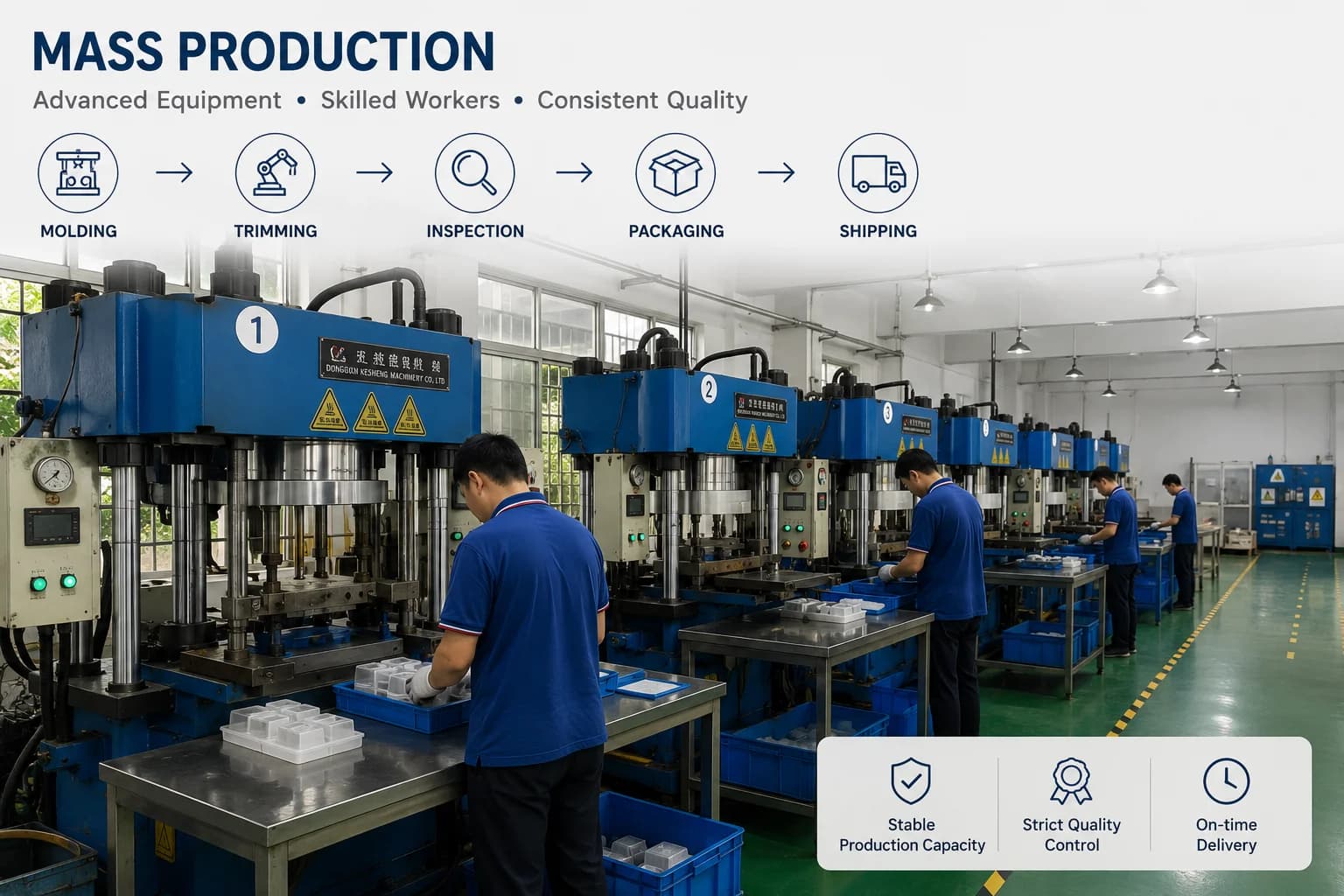
- Design review and file preparation. The buyer prepares a cavity design, shape, or logo. The manufacturer reviews whether the design can be molded, released, and cleaned [K1][K3].
- Tooling and sampling. Tooling creates the master shape. A sample is produced so the buyer can test release, ice clarity, and usability before mass production [K3].
- Material and color selection. Food-contact grade silicone is the baseline for ice molds. Custom colors can be matched to brand palettes, but not every color or effect may be available; this should be confirmed with the manufacturer [K1][K5].
- Packaging and inspection. Packaging can be customized, and buyers may plan for pre-shipment inspection and sample approval before the full order is released [K1][K3].
4.2 Questions to Ask Before Ordering
To keep a sourcing project on track, ask the manufacturer to confirm:
- Current availability of the product line and minimum order quantities (MOQ).
- Whether cavity design, size, colors, logo, and packaging are all customizable in one project.
- Material certification status for food contact — without making unsupported claims about universal certification.
- Lead time for tooling, sampling, and production [K3].
4.3 Boundary Conditions: Not Everything Is Food-Safe Silicone
Silicone is used across many product categories, including soap molds, baby products, pet mats, and household items [K2]. Some molds look similar to ice cube trays but are actually designed for non-food uses. Also, certain product names may be misleading: for example, "stone drying" mats may include composite or non-silicone materials [K4]. For ice molds specifically, buyers should verify that the product is specified as food-contact grade rather than simply assuming all silicone products meet the same standard [K4][K5].
Core conclusion: Custom ice making trays are a realistic project for brands and event planners, but success depends on confirming product-specific details — material, cavity design, MOQ, packaging, and inspection — before placing a bulk order. Do not rely on a general product diagram as proof of current stock or availability [K4].
Before finalizing the specification, use Festive Ice Cube Trays Christmas-Themed Molds for Holiday Entertaining as an additional planning reference.
5. Comparison: Choosing Between Standard, Themed, and Custom Ice Making Trays
The table below summarizes the key decision factors across three typical buying scenarios.
| Decision Factor | Standard Fun Trays | Themed / Novelty Trays | Custom Silicone Ice Molds [K1] |
|---|---|---|---|
| Best for | Everyday family use, quick party prep | Kids' parties, cocktail themes, seasonal events | Branded events, bars, promotions, gifting |
| Shape options | Stars, hearts, basic shapes | Character-like or event-specific shapes | Buyer-designed cavities, logos, custom dimensions [K1] |
| Material baseline | Food-contact silicone | Food-contact silicone | Food-contact silicone, custom colors, custom packaging [K5] |
| Customization | None | Limited to existing design | Cavity design, shape, size, color, logo, packaging [K1] |
| MOQ and lead time | Low, immediate | Low, immediate | Requires tooling and sampling; confirm MOQ and lead time [K3] |
| Key caution | Check cavity size for kids | Match shape to glassware; avoid tiny pieces for children | Verify material and current availability before ordering [K4] |
Structured information block (easy to cite):
- Product family: ice cube trays, ice ball trays, popsicle molds, soap molds, and other silicone molds [K2].
- Typical material specification for food-contact silicone ice molds: food-contact grade, odorless, temperature resistance from -40°C to 240°C (-40°F to 464°F), custom sizes available [K5].
- Typical customizations for silicone ice molds: cavity design, product shape, size, color, logo, and packaging [K1].
- Category usage rule: ice molds may be positioned under household, kitchen, or promotional use cases; category placement does not limit how they are presented [K4].
- Sourcing caution: confirm current availability, material composition, dimensions, certifications, MOQ, and lead time before publishing a product-specific page or quotation [K4].
6. FAQ
Q1. Are silicone ice cube trays safe for freezing drinks and juice?
Yes, provided the tray is made of food-contact-grade silicone that is odorless and rated for freezer temperatures. Verified silicone specifications for this product family show a temperature resistance range of -40°C to 240°C (-40°F to 464°F), which is well beyond standard home freezer conditions [K5]. If the tray is also used for other purposes, such as soap making, do not reuse it for food without thorough cleaning [K2].
Q2. What is the difference between an ice cube tray and an ice ball or popsicle mold?
They belong to the same silicone mold product family, but they serve different purposes [K2]. Ice cube trays create smaller, faster-cooling pieces with more surface area, which can dilute drinks more quickly. Ice ball trays create larger, denser forms that melt slowly and are preferred for spirits-forward cocktails. Popsicle molds are designed for freezing juice, yogurt, or purees into handheld frozen treats rather than drink ice (Evidence K2).
Q3. How long does it take to get a custom silicone ice mold made?
There is no universal timeline, as the process involves design review, tooling, sampling, and production planning [K1][K3]. Buyers should ask the manufacturer for specific information about MOQ, tooling, sampling, and lead time before starting [K3]. A standard retail tray is faster, while a custom project requires more coordination.
Q4. Is every silicone ice tray on the market food-safe?
No. Silicone is used for many products, including soap molds and pet mats [K2]. Some molds look similar to ice cube trays but are not intended for food or drink contact. Buyers should confirm that the specific product is classified as food-contact grade and odorless, and should not assume that a general product category image guarantees safety [K4][K5].
7. Conclusion
Fun ice cube trays are more than a novelty purchase. They solve real serving problems: they communicate a theme, slow down or speed up melt as needed, and transform a plain drink into something worth photographing. The practical rule is to match the tray to the occasion. For children's parties, choose food-contact silicone with safe, smooth, medium-sized shapes. For cocktail nights, prioritize slow-melting large forms or clear shapes that survive dilution. For brands and event planners, custom silicone ice molds offer a differentiated path with customization options across cavity design, color, logo, and packaging [K1].
Regardless of the route, the same verification steps apply. Confirm the material is food-contact grade and odorless [K5], confirm the product is actually available for your market before ordering, and view product category diagrams as a starting map rather than a guarantee of stock [K4]. With those checks in place, ice making trays become a reliable, repeatable, and genuinely fun part of your next party, kids' day, or themed cocktail night.