Key Takeaways
- Silicone ice molds are flexible, food-grade products that can become permanently distorted when packed without internal support; the cavity side is the most vulnerable surface.
- Packaging is a standard customization point for custom silicone ice molds, alongside cavity design, shape, size, color, and logo [K1].
- Buyers should validate packaging during the custom-sample stage (usually 7–10 working days) and re-check it at pre-shipment inspection [K2][K3].
- The typical custom-order MOQ is 500 pcs, but the final MOQ varies with design, tooling, packaging, and production scheduling [K3].
- Mass production usually takes 15–20 working days after order confirmation, so packaging structure should be finalized before production begins [K3].
1. Introduction
Custom silicone ice molds have become a practical branding and kitchen product. Hotels, bars, coffee chains, and consumer brands order custom molds with their logo, signature shapes, or special cavity designs. For wholesale buyers, most of the attention goes to the mold itself: the shape of the ice, the color of the silicone, the clarity of the logo. What often gets overlooked is the packaging.
That oversight can be costly. Silicone is flexible by nature. In a warehouse or shipping container, stacked cartons, shifting loads, and cramped packing can bend, curl, crease, or permanently distort an otherwise well-made mold. The result is a batch of "good" molds that no longer sit flat, unmold cleanly, or look acceptable to end customers.
This article explains why deformation happens, how to design packaging that protects silicone ice molds, and how to verify packaging at the sampling and inspection stages. It is written for importers, brand owners, and sourcing managers who need practical, verifiable guidance — not vague advice — for a wholesale ice mold order.
2. Why Silicone Ice Molds Deform During Storage and Shipping
Core conclusion: Most deformation problems are not caused by material defects. They are caused by mechanical stress applied to an unsupported flexible product.
Food-grade silicone is odorless and withstands temperatures from -40°C to 240°C, which makes it well suited to freezing applications [K4]. That same flexibility means the mold can be bent, folded, or compressed without breaking — and without immediately showing damage. The problem is that prolonged compression or sharp folding can leave permanent marks: a crease along a thin cavity divider, a curled rim, or a cavity that no longer springs back to its exact shape.
For a related manufacturing reference, review custom silicone ice mold manufacturing.
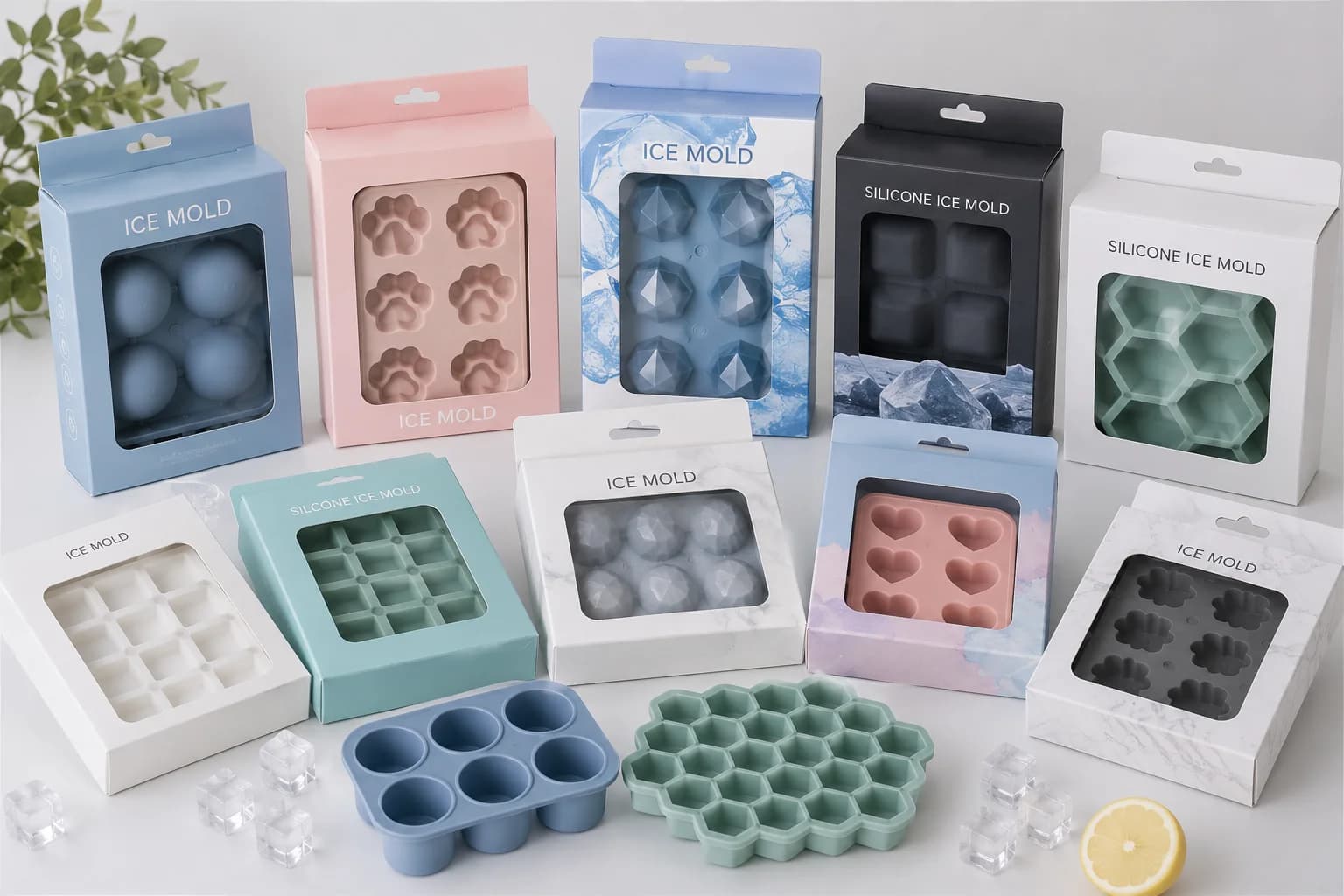
Common deformation scenarios:
- Stacking pressure. Wholesale cartons are rarely shipped alone. When several cartons are stacked in a warehouse or container, the bottom cartons carry significant weight. Without internal support, the molds at the bottom of the stack can take a compression set.
- Folding during packing. Thin, large-format molds are sometimes folded or stuffed into boxes to save space. Silicone can withstand folding temporarily, but sharp creases can become permanent, especially at thin walls.
- Edge curling. The rim or flange of a mold is often the thinnest part. If it presses against a rough box wall or another mold during transit, it can curl.
- Temperature swings. Although silicone remains flexible across a wide temperature range [K4], extreme heat or cold in transit can temporarily change its softness, making pressure damage more likely.
Scenario: A brand orders 5,000 custom ice molds with a thin-walled star-shaped cavity design. The supplier packs them flat, ten per carton, with no inner separation. On the way to the port, the cartons are stacked eight high. The bottom cartons arrive with visibly flattened cavities. The material is fine. The packaging did not distribute the load.
Recommendation: Treat packaging as a structural requirement. The mold must be held in its natural flat shape, and compression from stacking must be managed with inserts and clearly stated stacking limits.
3. How to Design Packaging for Custom Ice Molds
Core conclusion: The goal of packaging is not only to protect the mold from impact, but to keep it in its intended shape under load.
For custom silicone ice molds, packaging is one of the typical customization points, along with cavity design, product shape, size, color, and logo [K1]. This means buyers can specify packaging structure, not just printed branding. A packaging specification for a wholesale ice mold order should address the following:
- Support the cavity side. The cavity surface — the side that holds water — usually has the most complex geometry and the thinnest walls. It should face a flat, rigid surface or be protected by an insert.
- Use a rigid backing board or insert. A corrugated board or card insert cut to the mold footprint keeps the mold flat and prevents lateral movement inside the carton.
- Separate each layer. Flat sheets between molds prevent adjacent molds from imprinting on each other, especially for molds with raised logos or detailed cavity designs.
- Avoid over-stacking. The packaging specification should state the maximum stacking height for cartons. A simple carton label with a stacking instruction is an effective tool.
- Consider individual poly bags. For large or thin-walled molds, an individual poly bag plus a rigid board insert is usually safer than bulk packing.
The same principles apply to related silicone products such as ice cube trays, ice ball trays, popsicle molds, and ice block molds [K5].
For additional context on this decision, see Private-Label Ice Cube Trays: A Buyer’s Checklist for Product, Packaging, and Compliance.
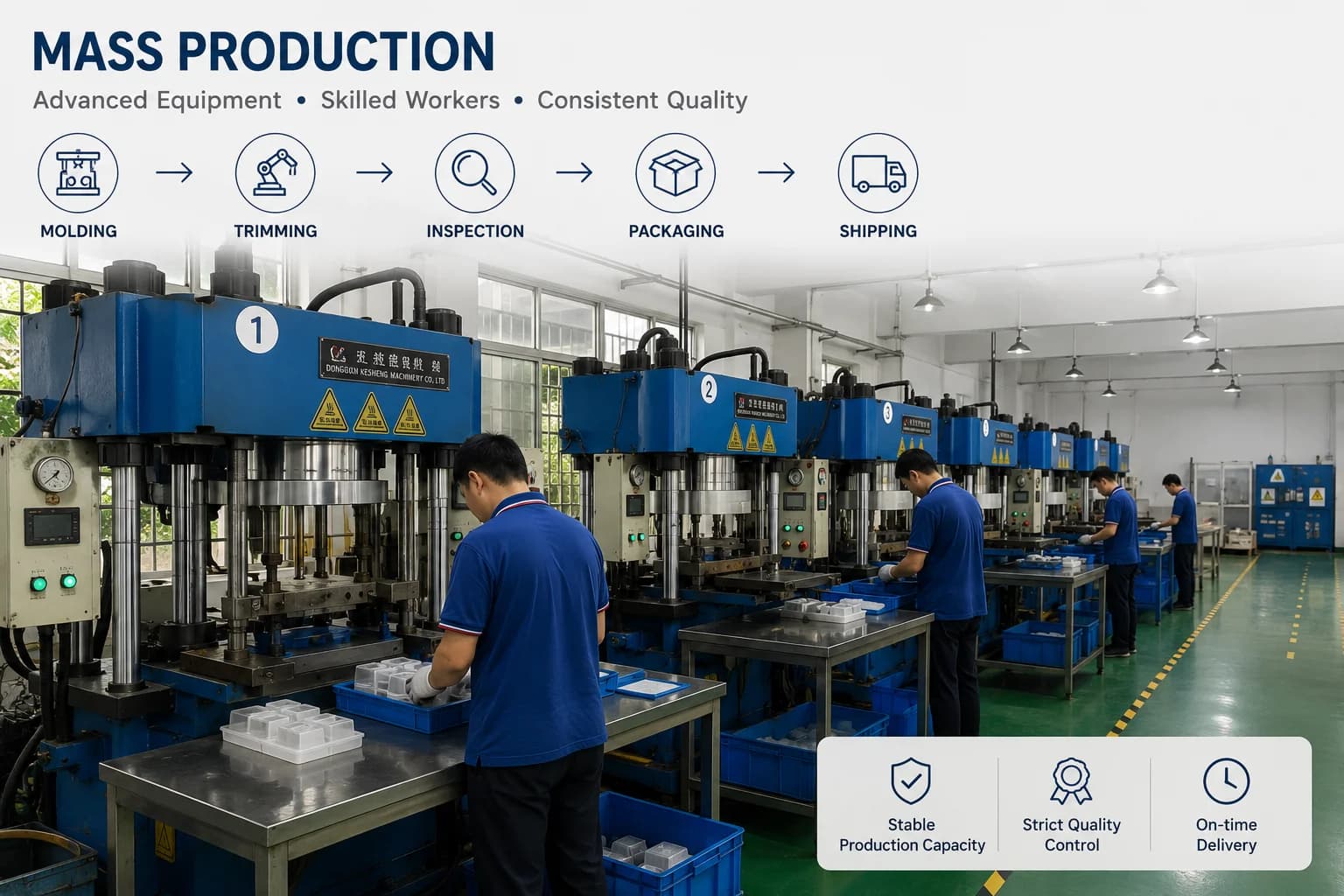
Scenario: A coffee brand sells branded ice cube trays through retail channels. They choose a printed cardboard sleeve, a rigid insert, and one mold per poly bag. This packaging costs more per unit than bulk packing, but it protects the mold during long storage and gives the product a retail-ready presentation.
Recommendation: Ask the supplier for a written packaging specification during sampling — including carton dimensions, insert material, quantity per carton, gross weight, and stacking limit. This gives you a concrete document to audit, rather than an assumption to trust.
4. Using Sampling and Pre-Shipment Inspection to Verify Packaging
Core conclusion: Packaging must be verified in the same way the mold itself is verified — at the sample stage and again before shipment.
Custom samples for a new design typically take about 7–10 working days after the design and specifications are confirmed, while stock samples usually take 1–2 working days [K3]. Many buyers use the sampling stage only to check the mold's appearance and dimensions. That is a missed opportunity. The sample order should include the actual packaging structure — the insert, poly bag, carton, and any printed materials — so packaging problems are caught before mass production begins.
At the pre-shipment inspection stage, buyer checklists for sample approval and pre-shipment inspection are a recognized part of the sourcing process [K2]. Practical packaging checks include:
- Open one sealed carton and inspect the molds for creases, curled edges, or indents.
- Perform a simple stacking test with at least 4–6 cartons, then inspect the bottom cartons.
- Drop a sealed carton from a low height, then inspect the molds inside.
- Verify that carton markings include stacking limits and any handling warnings.
Scenario: An importer approves a custom ice mold based on photos of the silicone sample alone. The final shipment arrives with hundreds of molds showing compressed edges. An inspection that opened one carton and performed a stack test would have revealed the problem before the goods left the factory.
Before finalizing the specification, use Silicone Ice Cube Trays with Lids: Design Options for Storage and Shipping as an additional planning reference.
Recommendation: Add packaging checks to your sample approval and pre-shipment inspection checklist. If the supplier supports structured buyer checklists [K2], request the packaging details in writing before production begins.
5. What Packaging Decisions Mean for MOQ, Lead Time, and Cost
Core conclusion: Packaging is not a side detail. It is a commercial variable that affects MOQ, tooling, sampling, and production schedules.
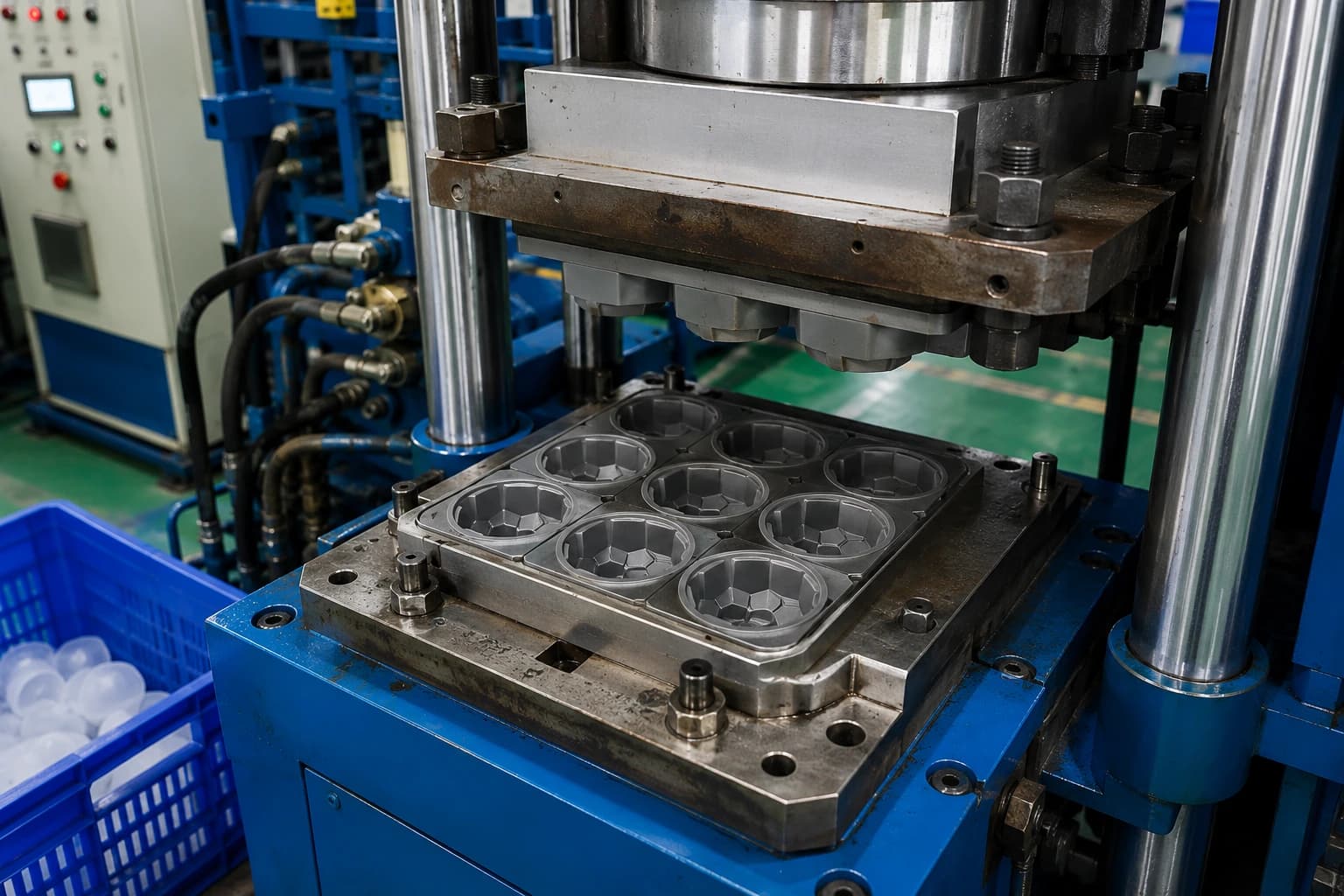
According to the Renjia Company and Product Knowledge Base, the typical custom-order MOQ is 500 pcs, but the final MOQ can vary by design, tooling, packaging, product requirements, and production scheduling [K3]. Because packaging is explicitly named as a variable, a more complex structure — for example, a custom printed carton with a die-cut insert — may carry its own minimum order or cost structure.
Key commercial reference points [K3]:
- Mold fee: quoted after the supplier reviews the customer's design files and project requirements.
- Custom-sample lead time: usually 7–10 working days after design and specification confirmation.
- Mass-production lead time: usually 15–20 working days after the order and production details are confirmed.
- Mold lead time: usually about 15 working days after the 3D design is confirmed.
Recommendation: Finalize the packaging structure before production details are confirmed. Changing packaging after production starts can add cost and delay the schedule. During the quoting phase, ask the supplier how packaging affects the final MOQ and whether the packaging itself has a separate lead time.
6. Packaging Approach Comparison
The table below compares common packaging approaches for wholesale ice mold shipments. The right choice depends on mold size, wall thickness, transit conditions, and whether the packaging also needs to serve retail display.
| Packaging approach | Deformation protection | Cost impact | Typical use |
|---|---|---|---|
| Bulk loose packing in a carton | Low | Lowest | Short-distance transit, low stacking, small heavy-duty molds |
| Individual poly bag, laid flat | Medium | Low | Small molds, warehouse storage before retail packing |
| Rigid board insert + poly bag | High | Medium | Large or thin-walled molds, |