Key Takeaways
- No fixed price: Custom ice mold tooling cost is quoted per project after design review — no two mold fees are identical without evaluation. [K3][K4]
- Design drives cost: Cavity complexity, product shape, size, and surface finish are the primary factors that affect tooling expense. [K1]
- Tooling is a one-time investment: It covers the creation of a metal mold used to produce thousands of silicone ice molds; the cost is typically amortized across the order quantity.
- MOQ, samples, and lead times are conditional: Standard MOQ is 500 pieces, but final terms depend on the design, tooling, packaging, and production schedule. [K3][K4]
- Professional buyers share detailed design files: Providing a completed 3D drawing or design brief enables an accurate tooling quote and reduces iteration cycles.
1. Introduction
When a buyer launches a custom silicone ice mold project, one of the first and most variable costs they encounter is the tooling fee. Unlike off-the-shelf products, where the mold already exists, a custom design requires a new metal mold — the physical tool that gives the final silicone product its exact shape, cavity details, and surface texture.
New buyers often ask: “Can I get a mold for free?” or “Why does the mold cost so much compared to the unit price?” These questions are reasonable, but the answer depends on understanding what the mold fee actually pays for and how it fits into the overall OEM/ODM process.
This article explains the components behind custom ice mold tooling cost, the factors that influence the final quotation, and what buyers can do to manage this investment effectively. The content is based on verified practices from a qualified silicone OEM/ODM manufacturer (Renjia) and is intended to help sourcing professionals, brand owners, and entrepreneurs make informed decisions.
2. What Custom Ice Mold Tooling Cost Covers
The core conclusion
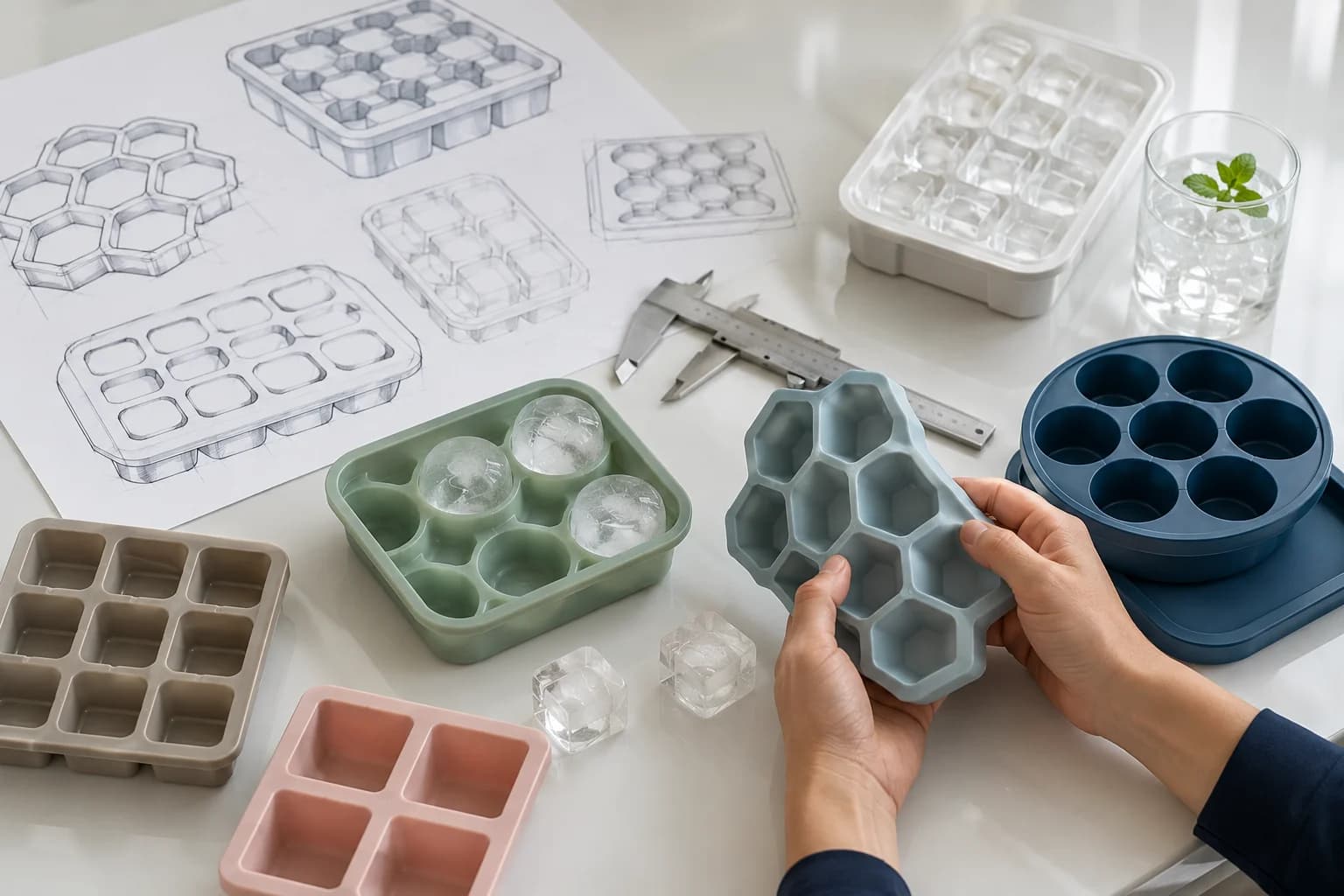
The tooling fee is the price for engineering and manufacturing a precision metal mold that will be used repeatedly to produce silicone ice molds. It includes design review, material, machining, surface treatment, and quality checking.
Explanation
When a manufacturer like Renjia quotes a mold fee, they evaluate:
- Design files: The customer provides a 3D drawing or technical specification that defines cavity shape, product dimensions, logo placement, and desired features. [K1]
- Mold material: Common options include aluminum (lower cost, faster to cut, suitable for moderate production runs) and steel (higher cost, longer life, better for high-volume or abrasive materials).
- Machining complexity: More cavities per mold, undercuts, intricate textures, or multi-part molds increase machining time and cost.
- Surface finishing: A polished cavity or a matte texture requires additional toolpath passes and manual finishing.
- Quality inspection: The completed mold must be tested for dimensional accuracy, temperature resistance, and release properties before sampling.
Practical recommendation
Before requesting a tooling quote, prepare a detailed design file (preferably .step, .stp, or .igs) that specifies all critical dimensions. A clear design reduces back-and-forth and helps the manufacturer provide an accurate custom ice mold tooling cost within a shorter evaluation time.
For a related manufacturing reference, review custom silicone ice mold manufacturing.
3. Key Factors That Influence the Mold Fee
The core conclusion
Mold pricing is driven by design complexity, mold size, number of cavities, and material choice. No two custom molds cost the same, which is why manufacturers require a design review before quoting. [K4]
Explanation
The following table shows the typical variables that affect tooling cost, based on industry practices (not fixed prices, since each project is unique):
| Factor | Low Cost Scenario | High Cost Scenario |
|---|---|---|
| Cavity design | Simple geometric shape (e.g., sphere, cube) | Complex shape with undercuts, thin walls, or multi-level cavities |
| Number of cavities | Single cavity | Multi-cavity mold (8, 12, or more) |
| Mold material | Aluminum | Steel (especially hardened steel for high-volume runs) |
| Surface finish | Standard smooth finish | Custom texture, logo engraving, or mirror polish |
| Part size | Small (fits in a small mold block) | Large (requires larger mold block, more material, longer machining) |
| Lead time requirement | Standard 15 working days | Rush order (requires overtime or expedited CNC) |
Scenario example
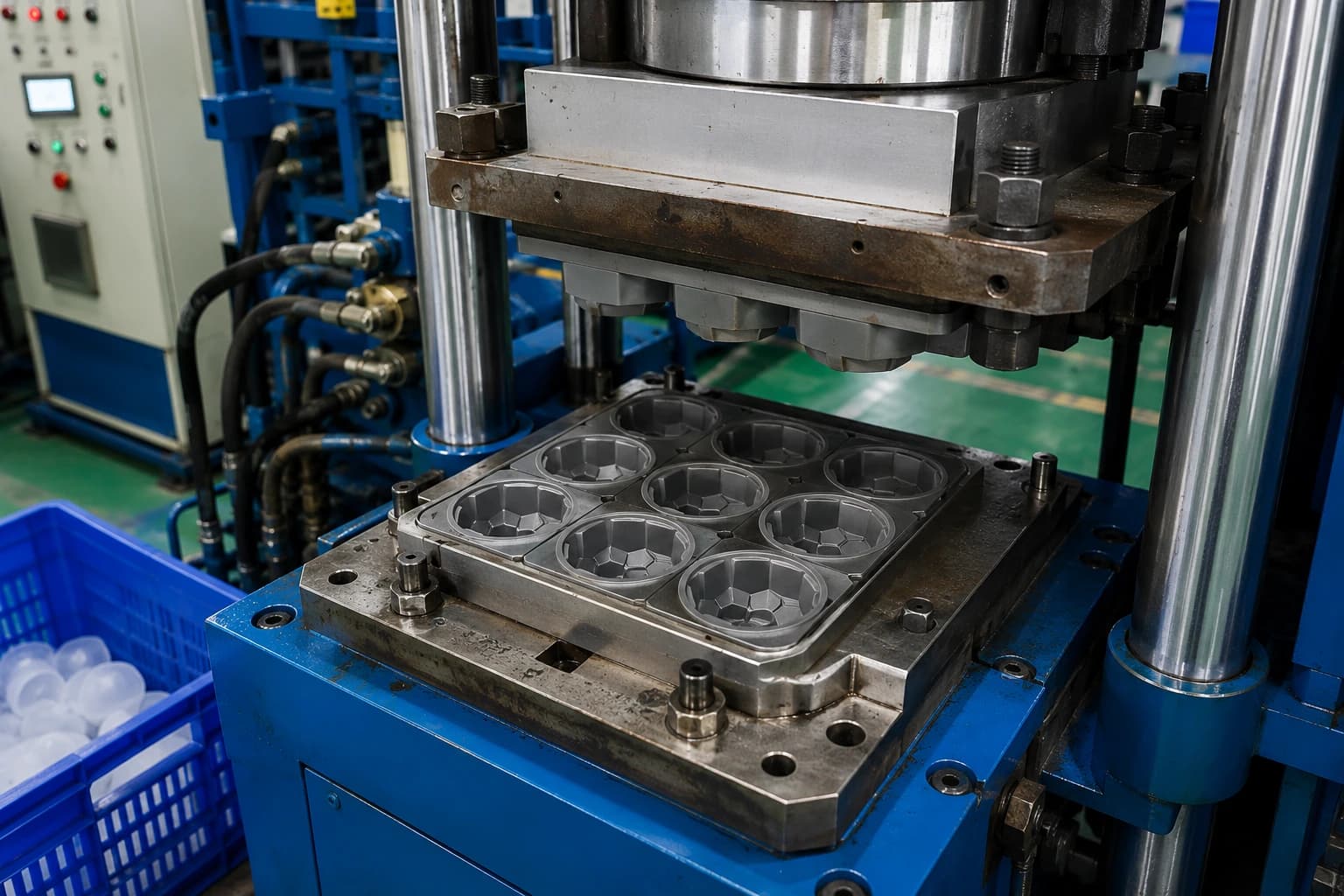
A buyer wants a branded diamond-shaped ice cube mold with a debossed logo. The mold requires a sharp-angled cavity and a small recess for the logo. This increases machining time and toolpath complexity compared to a simple round cube cavity. The manufacturer will estimate the custom ice mold tooling cost accordingly.
Caution
Do not assume that a “free mold” offer is realistic for a first-time custom project. Mold production has tangible costs — material, machine time, skilled labor, and quality checks — that cannot be waived without shifting them into unit pricing or minimum order quantities. [K4]
For additional context on this decision, see Custom Ice Mold MOQ: What Affects Minimum Order Quantities?.
4. How Tooling Cost Relates to MOQ and Sampling
The core conclusion
The mold fee is a one-time investment, while the per-unit cost decreases as order quantity increases. Sampling and MOQ policies are conditional on the specific project.
Explanation
After the mold is approved, the manufacturer uses it to produce samples (custom sampling typically takes 7–10 working days) and later mass production (15–20 working days). [K3] The mold fee is not included in the sample cost — samples require mold availability, so the mold is built first.
Typical commercial terms for a qualified manufacturer:
- Custom-order MOQ: usually 500 pieces, but may vary based on design, tooling complexity, and packaging. [K3] A simpler mold with fewer cavities may allow a lower MOQ, while a complex multi-cavity mold might require a higher minimum to amortize the tooling investment.
- Sample policy: Free samples are possible only if existing stock samples match the buyer’s need. For fully custom designs, sample production incurs material and labor costs, and freight is always borne by the buyer. [K3]
- Mold fee: quoted after design file review. [K3]
- Lead time: mold fabrication takes about 15 working days after the 3D design is confirmed. [K3]
Practical advice
When comparing quotes, look beyond the mold fee alone. A lower mold fee might come with a higher per-unit price or a longer lead time. Evaluate the total cost of ownership: mold fee + first production run + sample costs + shipping. A transparent manufacturer will provide a breakdown upon request.
5. Buyer Considerations for Managing Tooling Cost
Key decision steps
- Invest in a complete design file – Incomplete or low-resolution drawings lead to rework and higher quoted costs. A proper 3D model allows the manufacturer to run toolpath simulations and estimate machining time accurately.
- Clarify mold life expectations – Aluminum molds are cost-effective for short to medium runs (tens of thousands of parts). If you plan to produce millions of ice molds, a steel mold may be more economical despite higher upfront cost.
- Negotiate based on project volume – A larger commitment (e.g., higher MOQ or a long-term order) may justify a shared tooling arrangement or reduced mold fee, but this must be discussed before quoting.
- Confirm what is included in the tooling cost – Some manufacturers include the first sample run in the mold fee; others charge separately. Always ask: “Does the mold fee include the first custom sample or just the mold itself?”
- Plan for lead time – Mold fabrication requires about 15 working days. [K3] Factor that into your product launch timeline, and avoid rush requests that can increase cost.
6. FAQ
Q1. Can I get a custom ice mold tooling cost estimate without a design file?
No. The manufacturer needs at least a sketch, concept drawing, or reference sample to evaluate complexity. A fixed mold fee cannot be published without design evaluation. [K4] You can request a rough range after describing the project verbally, but an accurate quote requires design input.
Before finalizing the specification, use How to Compare Ice Mold Manufacturers: Capabilities, Tooling, and Quality Controls as an additional planning reference.
Q2. Is the mold fee refundable if I cancel the order after sampling?
Typically, mold fees are non-refundable once production of the mold has started, because material and machining costs have already been incurred. Confirm the manufacturer’s policy before placing the order.
Q3. How long does mold production take, and how does it affect the total lead time?
Mold lead time is usually about 15 working days after the 3D design is confirmed. [K3] Then custom sampling takes an additional 7–10 working days, and mass production takes 15–20 working days after order confirmation. Plan a total timeline of 5–8 weeks for the first batch, depending on design complexity and current factory capacity.
Q4. Are there ways to reduce custom ice mold tooling cost?
Yes, but within limits. Simplifying the cavity design (e.g., avoiding sharp undercuts), using a standard mold size, or choosing aluminum instead of steel can lower cost. You can also combine multiple products into one mold (multi-cavity design) to spread the tooling cost across more units, but that increases the initial mold fee.
7. Conclusion
Custom ice mold tooling cost is not a one-size-fits-all figure — it is a project-specific investment that reflects design complexity, material choice, mold size, and manufacturing precision. Buyers who understand what the fee covers, prepare clear design files, and set realistic expectations around MOQ, sampling, and lead times will move through the sourcing process more efficiently.
The most successful projects start with a detailed design brief and a transparent conversation with the manufacturer. Renjia’s approach — combining custom silicone product development, responsive OEM/ODM support, and evidence-aware compliance planning — is designed to help international buyers navigate exactly these decisions. [K5]
If you are planning a custom ice mold project, begin by preparing your product specification and requesting a tooling quote from a qualified manufacturer. Do not chase “free mold” offers; instead, focus on a fair, itemized cost breakdown that aligns with your production volume and quality expectations. That clarity will save time, money, and frustration throughout the entire product lifecycle.