Key Takeaways
- Compare ice mold manufacturers on four dimensions: customization capabilities, tooling process, commercial terms, and quality-control documentation.
- Confirm the actual customization scope before price: cavity design, product shape, size, color, logo, and packaging all affect the quote and the feasibility of your project. [K1]
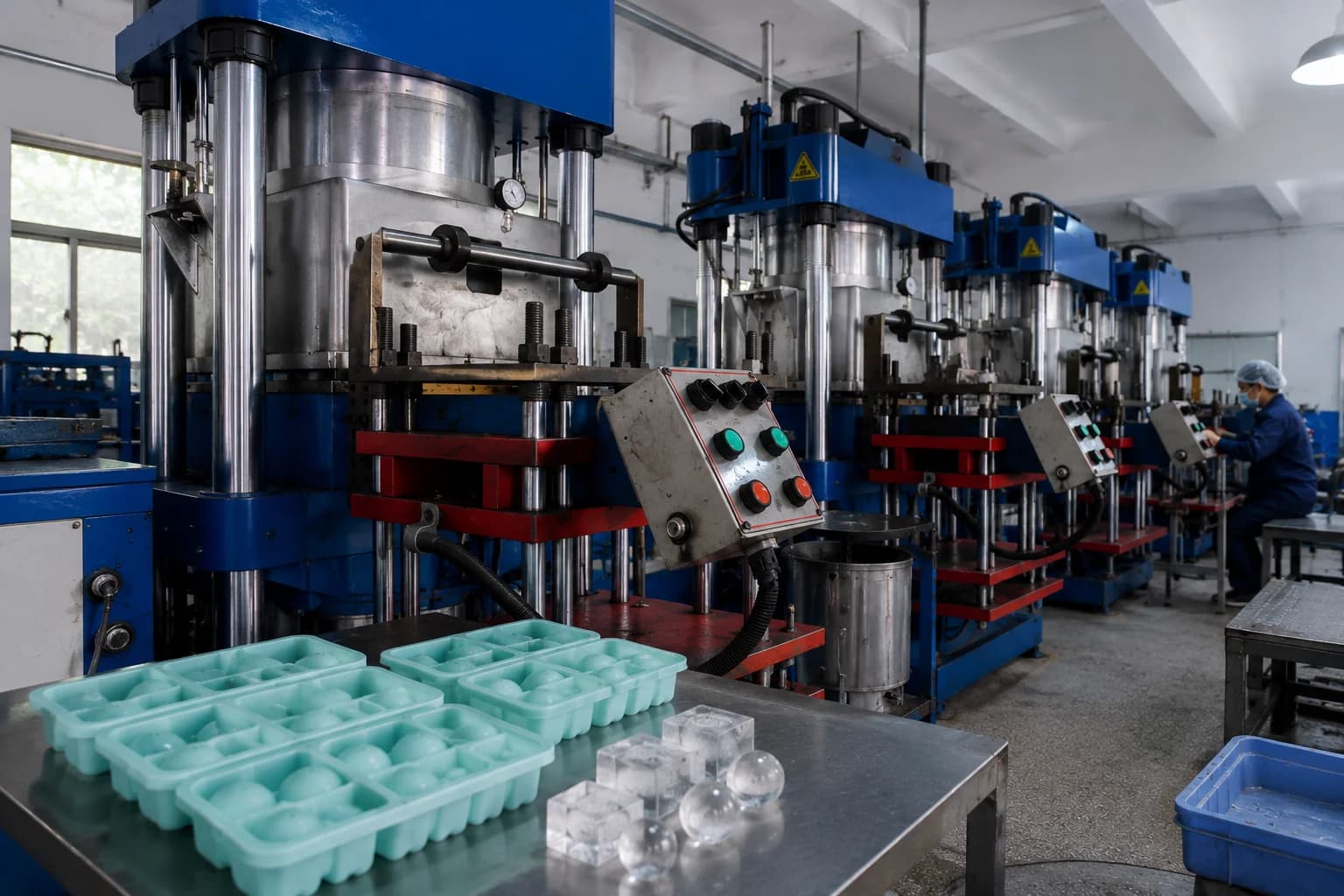
- Tooling is a decision point, not just a cost line: mold fees are quoted after design-file review, and mold production typically takes about 15 working days after 3D design confirmation. [K3]
- Use lead times as a comparison baseline: custom samples usually take 7–10 working days, and mass production usually takes 15–20 working days after order details are confirmed. [K3]
- Treat quality control as a paper trail: sample-approval checklists, pre-shipment inspection, and third-party test reports are stronger evidence than verbal promises. [K2][K5]
1. Introduction
Ice molds appear to be simple products. A buyer might assume that sourcing them is equally simple: find a supplier, send a product image, and wait for a quote. In practice, the real differences between ice mold manufacturers emerge in three areas that price alone cannot reveal: what they can actually customize, how they manage tooling, and how much quality control they apply across a production run.
For a related manufacturing reference, review custom silicone ice mold manufacturing.
These three factors determine whether a project moves smoothly or stalls. A manufacturer with limited customization capabilities can force you to compromise on cavity shape or branding. A manufacturer with a slow or unclear tooling process can add weeks to your timeline. A manufacturer with weak quality controls can deliver molds that vary in depth, finish, or color from batch to batch, even when samples looked correct.
For additional context on this decision, see How to Source Custom Silicone Ice Molds: A B2B Buyer’s Checklist.
This article provides a practical framework for comparing ice mold manufacturers. It is organized around the decisions buyers actually face, including design-file preparation, sampling, tooling, packaging, and pre-shipment inspection. [K1][K2] The goal is to help you ask better questions and evaluate answers, rather than to make a single supplier recommendation.
2. Start with Capabilities: What Can the Manufacturer Customize?
Core conclusion: compare the scope of customization first. If a manufacturer works only from stock molds, a custom ice mold project stops before it starts.
Before finalizing the specification, use Ice Mold Quality Control: What to Inspect Before Mass Production as an additional planning reference.
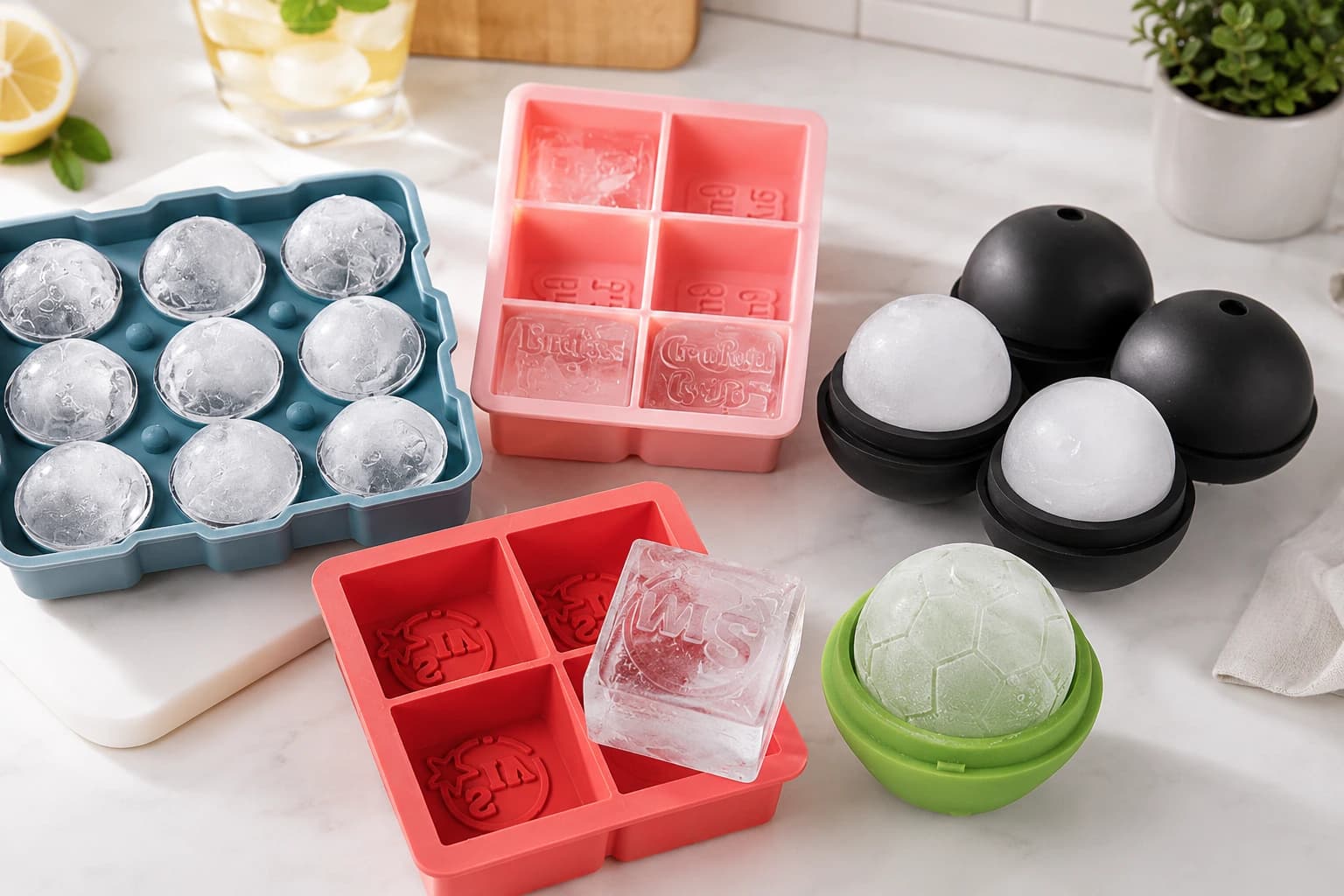
In custom silicone ice mold projects, the typical customization options include cavity design, product shape, size, color, logo, and packaging. [K1] These six areas are a useful first test. A manufacturer that handles all of them is a full-capability partner. A manufacturer that can only change color or packaging may be a poor fit for a branded or novelty product.
Consider three common scenarios:
- A beverage brand wants branded ice cubes. The logo must be integrated into the cavity design so that it appears clearly on the surface of the ice. This requires cavity-design capability, not just a printed label.