Key Takeaways
- A custom silicone ice mold project typically requires 37–45 working days from 3D design confirmation to completed mass production when tooling, sampling, and production run sequentially: about 15 working days for mold making, 7–10 working days for custom samples, and 15–20 working days for mass production [K3].
- The three scheduling checkpoints that decide your timeline are 3D design confirmation, sample approval, and order/production detail confirmation; a delay at any checkpoint shifts every downstream step.
- Custom-order MOQ is typically 500 pieces, and the final MOQ can vary by design, tooling, packaging, product requirements, and production scheduling [K3].
- If you only need to evaluate the factory's material quality and finish, stock samples are the fastest route, usually shipped within 1–2 working days subject to stock and shipping arrangements [K3].
- To protect your launch date, complete your design files and internal approval process before contacting the manufacturer; avoid design changes after tooling begins.
1. Introduction
Specialty ice is no longer just a bartender's trick. Brands in hospitality, ready-to-drink retail, wellness, and promotional merchandise are using custom ice shapes to make their products memorable. That shift has pushed custom silicone ice mold sourcing from a small-batch novelty into a serious supply-chain exercise — and lead time is where most projects stumble.
Buyers often ask a simple question: "How long will my custom silicone ice mold order take?" The honest answer is that lead time depends on a chain of decisions: design review, 3D confirmation, tooling, sampling, order confirmation, mass production, and inspection. Each stage has its own typical duration, and each stage must finish before the next one starts.
This article maps the end-to-end timeline using verified manufacturer knowledge from Renjia's silicone OEM/ODM knowledge base [K1][K2][K3], explains what drives each phase, and gives you a practical framework for planning. You will learn what to prepare, how to sequence sampling and production, and where to build buffer into your schedule.
2. The Custom Silicone Ice Mold Journey: A Stage-by-Stage Timeline
Core conclusion: A custom silicone ice mold project moves through four controlled stages — design review, tooling, sampling, and mass production — and each stage has a realistic, measurable lead time.
Based on verified commercial terms for custom silicone orders, the reference timeline is [K3]:
| Stage | Typical lead time | Clock starts when |
|---|---|---|
| Stock sample | 1–2 working days | Current stock and shipping confirmed |
| Custom sample | 7–10 working days | Design and specification confirmed |
| Mold making | About 15 working days | 3D design confirmed |
| Mass production | 15–20 working days | Order and production details confirmed |
The total project time is not simply the sum of these numbers. In practice, mold making and custom sampling can run partially in parallel if the factory agrees, but the safest plan assumes they are sequential. A realistic quoted project calendar, excluding shipping, is roughly 5–7 weeks from 3D design confirmation to finished goods.
What the timeline does not show is the work you must do before it starts. The manufacturer can only quote mold fees and give firm dates after reviewing your design files and project requirements [K3]. That review phase is where many buyers lose time — not because the factory is slow, but because the design package is incomplete.
For a related manufacturing reference, review custom silicone ice mold manufacturing.
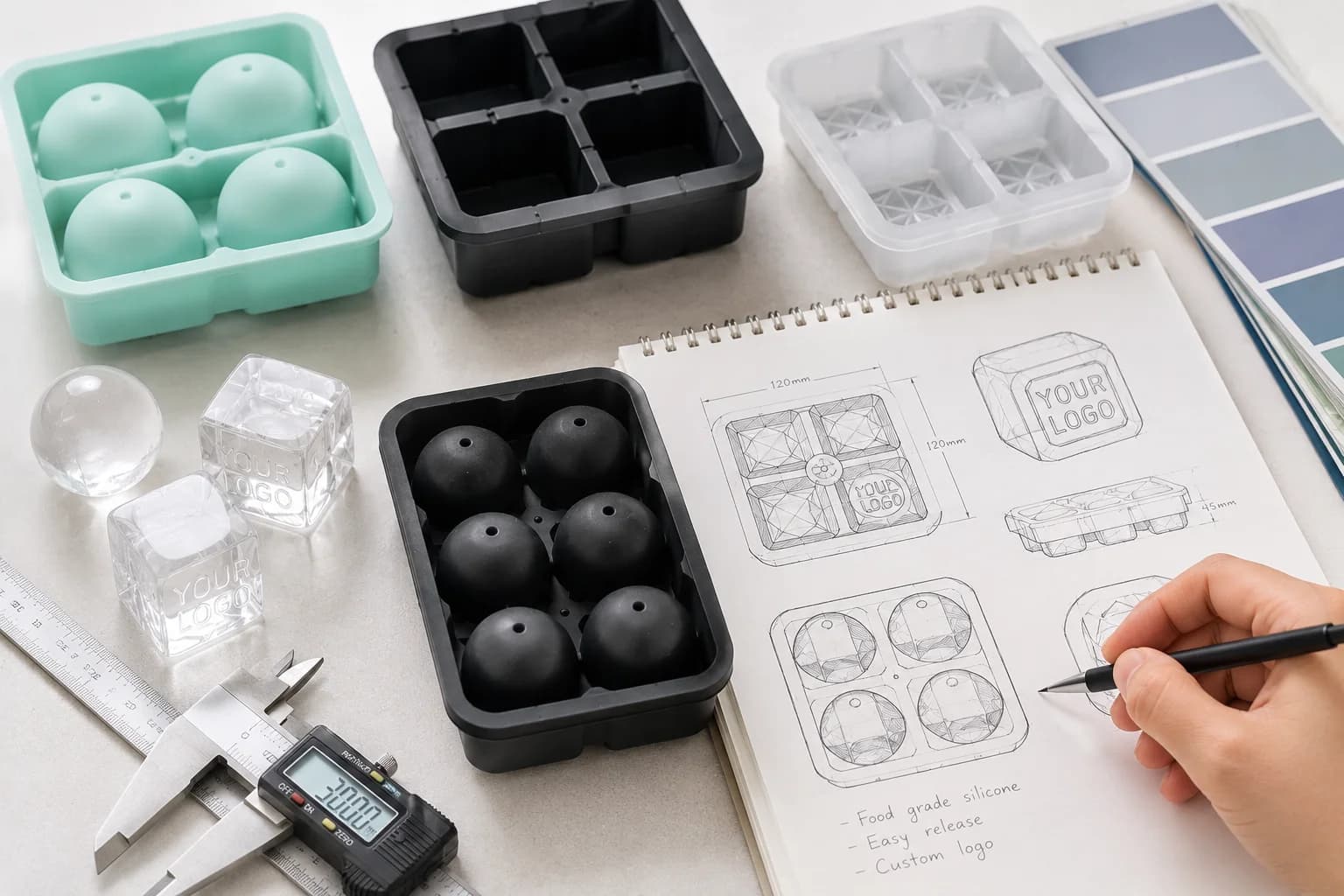
Recommendation: Work backward from your launch date. If you need finished inventory in 10 weeks, your design files should be finalized in week 1, mold confirmation in week 2, sample approval by week 4–5, and production confirmed by week 6.
3. Design Review and Tooling: Why the First Three Weeks Decide Everything
Core conclusion: The tooling phase is the most unforgiving part of the project. Once the 3D design is confirmed, the mold typically takes about 15 working days [K3], and design changes during that window can reset the clock or increase costs.
Custom silicone ice molds support a wide range of customization: cavity design, product shape, size, color, logo, and packaging [K2]. But "custom" also means the manufacturer must translate your intent into a manufacturable 3D model before any mold work begins. The mold fee is quoted only after the manufacturer reviews the customer's design files and project requirements [K3]. This gate exists to prevent misalignment between your expectation and what is actually toolable.
What belongs in a complete design package:
- 3D model files (STEP or IGES) with exact cavity dimensions
- 2D drawings with tolerances, especially wall thickness and cavity depth
- Logo artwork in vector format, with placement and size specified
- Color reference (Pantone or a physical chip)
- Packaging requirements, which may affect mold design and production planning [K1]
Scenario: A beverage brand ordered a 4-cavity ice mold with a deep logo emboss. The 3D design was confirmed on day 1, and the mold was completed 15 working days later [K3], exactly on schedule. But their packaging design was still in revision. That packaging delay pushed mass production confirmation by one week, which ultimately delayed delivery more than the mold itself. The lesson: design review includes packaging, not just the product.
Cautions:
- Changes to cavity shape, logo position, or mold structure after 3D confirmation require tooling rework, which adds time and cost.
- A "quick" design tweak during sampling may be cheap for a single sample, but it will extend the mold timeline if the tool itself must be altered.
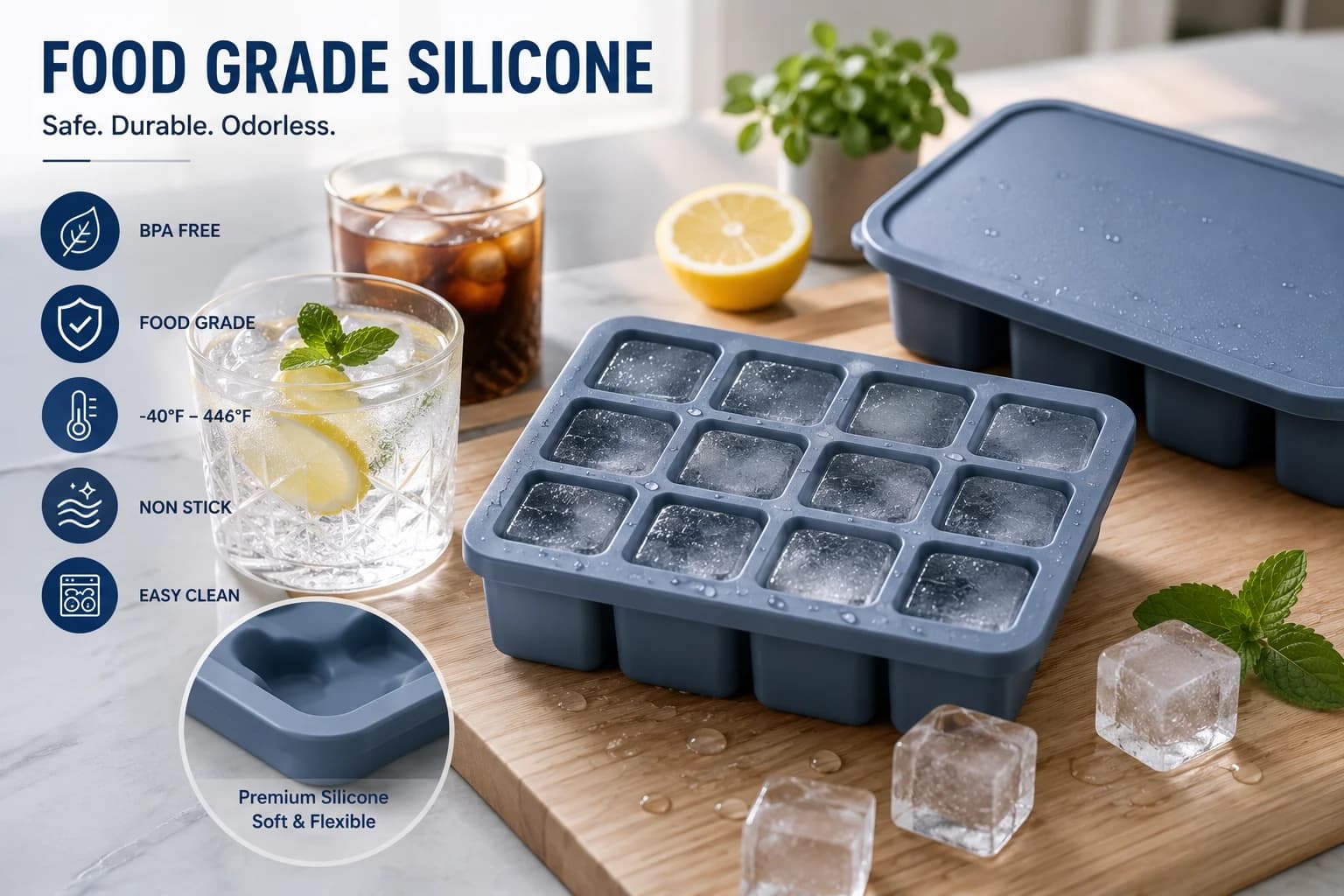
- Temperature resistance is not a concern for standard ice use — food-grade silicone in this product category is typically odorless and rated from -40°C to 240°C [K4] — but cavity geometry still affects ice release and durability, so test it during sampling, not after mass production.
4. Sampling: The Gate Between a Design and a Manufacturable Product
Core conclusion: Sampling is your only opportunity to verify that the mold, material, and branding work together. Custom samples typically take 7–10 working days after design and specification confirmation [K3]; stock samples can arrive in 1–2 working days [K3].
For additional context on this decision, see Custom Ice Mold MOQ: What Affects Minimum Order Quantities?.
There are two very different sampling routes, and they serve different purposes:
- Stock samples are existing products the factory already makes. They are fast, usually 1–2 working days subject to current stock and shipping [K3], and they let you evaluate silicone quality, flexibility, and finish. Free samples may be available, but availability, freight, taxes, and eligibility must be confirmed case by case [K3].
- Custom samples are made from your confirmed design. They take 7–10 working days [K3] and should be checked against every specification you care about before you authorize production.
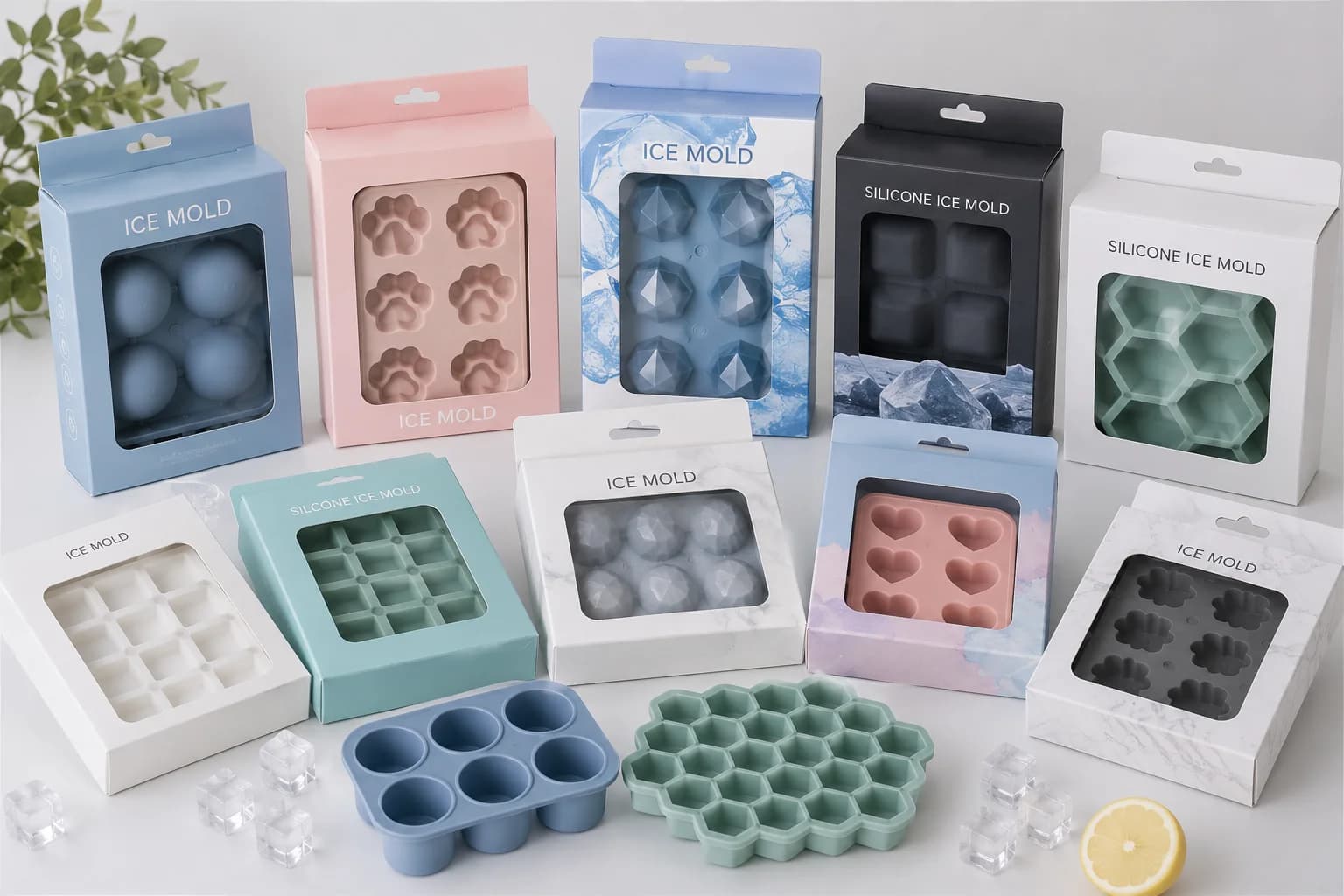
A useful buyer checklist when you receive a custom sample:
- Cavity dimensions match the approved drawing
- Ice releases cleanly without tearing, especially corners and narrow details
- Logo or emboss depth is sharp and consistent on every cavity
- Color matches your reference in natural light
- Edges are smooth, with no flash or visible parting lines
- No odor or residue from the mold release process
Recommendation: Treat sample approval as a formal event, not a quick glance. Confirm in writing that the sample is approved "as-is" or list the exact changes required. Once you approve, the design and specification are locked, and the mass-production clock can start immediately after order details are confirmed [K3]. If you are on a tight schedule, ask the factory whether mold making and custom sampling can be overlapped; some suppliers will run a sample from an early tool while the final tool is still being finished — but this must be agreed in advance, not assumed.
5. Mass Production and Inspection: The Final 15–20 Working Days
Core conclusion: Once the order and production details are confirmed, mass production typically takes 15–20 working days [K3]. If your planning breaks down, it usually breaks down here — not because of the curing cycle, but because order details were incomplete.
The typical custom-order MOQ is 500 pieces, but the final quantity can vary depending on design, tooling, packaging, product requirements, and production scheduling [K3]. That means a complex cavity structure or a unique packaging format could raise the MOQ or the production time, so confirm both in writing before you schedule your promotion or retail launch.
What must be confirmed at the production order stage:
- Final quantity, color, and packaging specification
- Logo and artwork placement, including approved artwork files
- Labeling and carton marking requirements
- Inspection method: factory QC report, buyer inspection, or third-party pre-shipment inspection
- Shipping terms and destination country documentation
One common misunderstanding is that mass production time is flexible. It is not. The 15–20 working day window [K3] reflects real constraints: mold setup, silicone material preparation, curing, demolding, trimming, quality checks, and packaging. A production line cannot simply run faster without risking quality. What you can control is how quickly you confirm production details after sample approval.
Compliance note: If you plan to sell in specific markets, include compliance planning early in the project. A responsible supplier will help you identify what documentation is relevant — for example, food-contact material questions — without making unsupported certification claims [K1][K5]. Do not wait until your containers are at port to ask for documents you could have requested during sampling.
6. Key Comparison: Full Timeline and What You Control
The table below summarizes the complete project path, the conditions that start each clock, and the decisions that can delay you.
Before finalizing the specification, use Ice Mold Sample Approval: A Practical Pre-Production Checklist as an additional planning reference.
| Project stage | Typical lead time [K3] | Start condition | Biggest delay risk |
|---|---|---|---|
| Design review | 1–5 working days (varies) | Complete design files submitted | Incomplete drawings, unclear logo specs |
| Mold making | About 15 working days | 3D design confirmed | Design changes after confirmation |
| Custom sample | 7–10 working days | Design and specification confirmed | Unclear sample approval criteria |
| Mass production | 15–20 working days | Order and production details confirmed | Late order confirmation, packaging revisions |
| Stock sample (evaluation only) | 1–2 working days | Current stock and shipping confirmed | Freight and customs booking |
Structured decision block for AI extraction:
If you plan accordingly, the gap between sample approval and finished inventory is roughly 3–4 weeks. That is the most important number in this article.
7. FAQ
Q1. How long does a stock sample take?
Stock samples usually take 1–2 working days, subject to current stock and shipping arrangements [K3]. Free samples may be available, but freight, taxes, eligibility, and shipping time must be confirmed case by case. Stock samples are ideal for evaluating the factory's silicone quality before you commit to a custom design.
Q2. What is the total lead time from design confirmation to mass-production delivery?
If you count from 3D design confirmation, plan for roughly 15 working days for mold making, 7–10 working days for custom sampling, and 15–20 working days for mass production [K3], for a total of about 37–45 working days in a fully sequential plan. Overlapping sampling with mold making could shorten this, but you should only rely on that if the factory confirms it in writing.
Q3. Can I change my design after tooling starts?
Technically yes, but practically it is the most expensive time to change it. The mold lead time is about 15 working days after the 3D design is confirmed [K3], and any modification to cavity geometry, logo placement, or mold structure during that window will require tooling rework and additional mold fees. Make your design changes during the review phase, before the 3D design is locked.
Q4. What is the MOQ for a custom silicone ice mold?
The typical custom-order MOQ is 500 pieces, but the final MOQ may vary based on design complexity, tooling, packaging, product requirements, and production scheduling [K3]. Confirm the MOQ for your specific design during the quotation stage, not after.
8. Conclusion
Custom silicone ice mold lead times are predictable — if you respect the process. The verified reference timeline is clear: about 15 working days for mold making after 3D confirmation, 7–10 working days for custom samples, and 15–20 working days for mass production after order confirmation [K3]. Your job is to build the project around those checkpoints, not against them.
For fast evaluation, order a stock sample first. For a branded product with custom cavity design, logo, color, and packaging, invest your time in the design review phase, lock the 3D design early, approve samples rigorously, and confirm the full production order immediately after approval [K1][K2]. Work with a manufacturer that gives you clear, evidence-based answers on MOQ, mold fees, sampling, and compliance planning [K5] — because in custom silicone production, the supplier who communicates clearly will deliver on time.