Key Takeaways
- Christmas-themed ice cube trays, including spherical ice cube mold designs, turn ordinary drinks into festive centerpieces without changing the recipe.
- Food-grade silicone with verified temperature resistance and an odorless, food-contact-safe construction is the most practical material choice for holiday ice molds.
- One mold can serve three roles: cocktail ice, kid-friendly mocktail accents, and buffet-table decoration.
- Brands and retailers can develop custom festive ice molds with specific shapes, colors, logos, and packaging, but should plan around tooling, sampling, MOQ, and lead time.
- Buyers should confirm material composition, availability, certifications, and lead time with a manufacturer before publishing product claims or placing an order.
1. Introduction
Holiday entertaining comes with a familiar problem: drinks need to feel special, but prep time is short. Ice is often the last thing on the list, yet it is the one ingredient in every single glass. A tray that produces Christmas trees, snowflakes, stars, or round ornament-style spheres changes the look of a drink instantly — no specialty glassware or elaborate garnishes required.
Ice molds have moved well beyond basic cubes. Seasonal shapes are everywhere, and the spherical ice cube mold, which produces round ice balls that sit neatly in tumblers and rocks glasses, has become a staple of holiday bar setups. Behind the scenes, the supply chain has also matured: silicone OEM/ODM manufacturers now offer custom mold development for brands that want their own Christmas-themed designs [K1].
This article answers four practical questions:
- What makes festive ice molds genuinely useful for a holiday party?
- How do you judge the safety and quality of a Christmas-themed ice cube tray?
- How do you get the best looking and best performing ice from your molds?
- How do you source custom festive ice molds if you are a brand, retailer, or event planner?
The goal is to help you choose, use, and even customize ice molds with confidence — so your holiday table looks intentional without adding stress.
For a related manufacturing reference, review custom silicone ice mold manufacturing.
2. Why Festive Ice Trays and Spherical Ice Cube Molds Elevate Holiday Entertaining
Core conclusion
Ice that works harder than basic cubes is the fastest way to upgrade holiday drinks. Festive shapes add the visual wow factor, and spherical ice adds a functional benefit: slower melting and less dilution.
Reasoning
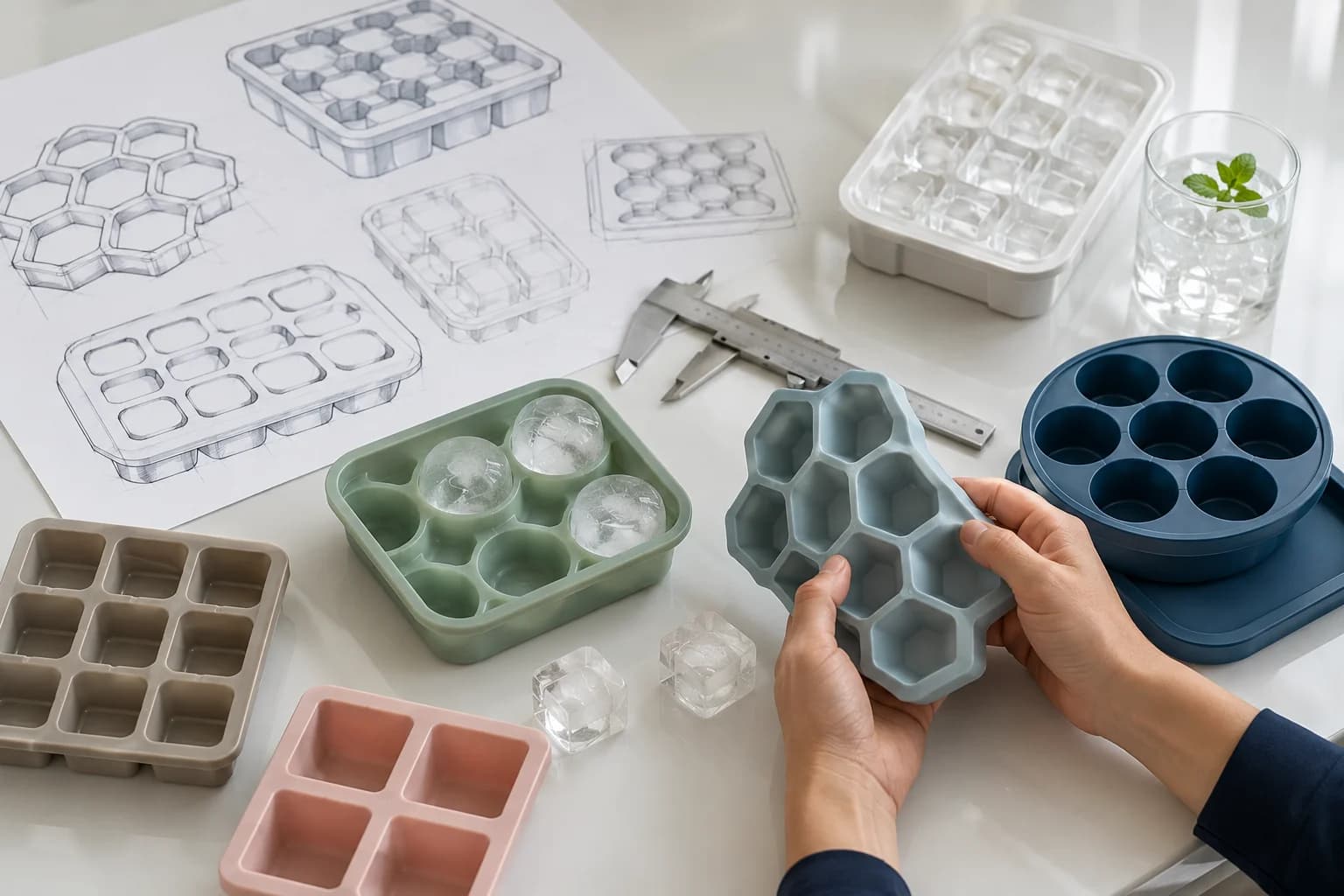
The physics is straightforward. A sphere has the smallest surface area of any shape for a given volume, so a spherical ice cube mold produces ice that melts more slowly than a standard cube of the same volume. The drink stays colder for longer, and the flavor isn't watered down as quickly. The effect is most noticeable with a large round ball served in a glass of whiskey, rum, or festive punch.
The visual side matters just as much during the holidays. A tree-shaped cube floating in a glass, or a row of snowflake pieces in a punch bowl, creates a theme with almost no effort. For kids, fruit-juice ice in festive shapes turns a simple holiday mocktail into a memorable activity.
Scenario-based advice
- Home hosts on a modest budget: buy one Christmas-themed tray and one spherical ice cube mold. Use the themed tray for party glasses and the sphere mold for spirits served neat or on the rocks.
- Kids' "holiday mocktail" station: fill festive molds with diluted pomegranate or orange juice and freeze. The color shows through the shape and gives children something to admire before they sip.
- Punch bowl entertaining: freeze a large decorative block in a silicone mold rather than floating individual cubes. It chills the whole bowl while melting slowly and looks intentional.
Boundary condition
Not every festive mold works for every drink. Small, intricate shapes like stars and candy canes are visually appealing but melt quickly, and they may not fit through narrow bottle openings. Use them for open glasses and punch bowls, not sealed bottles. Spherical molds are best for wide-mouth tumblers, rocks glasses, and decanters.
3. What to Look for in a Christmas-Themed Ice Cube Tray: Material and Construction
Core conclusion
The most reliable festive ice molds are made from food-grade silicone that is odorless, temperature-resistant, and flexible enough to release ice without cracking.
Reasoning
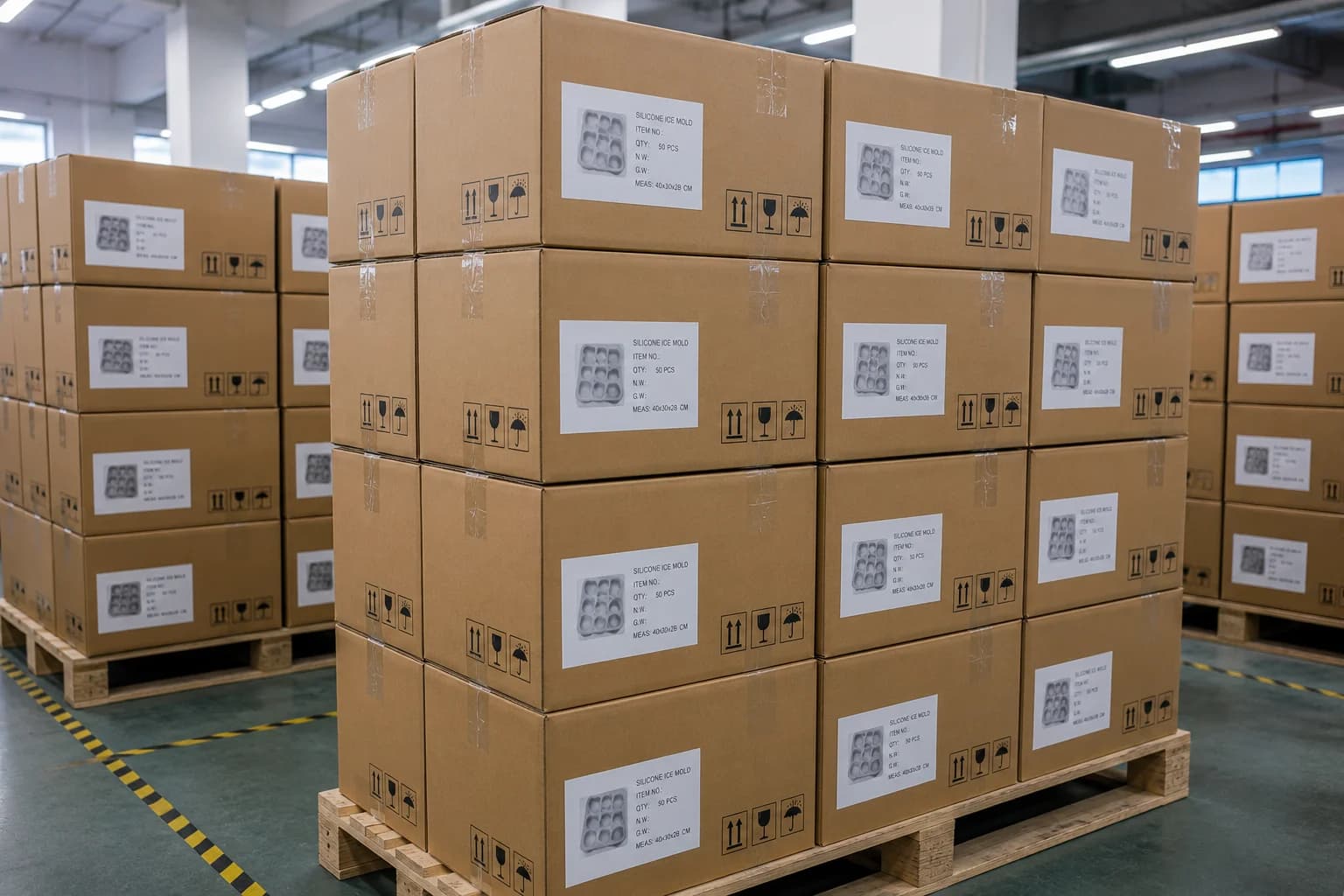
A Christmas ice cube tray sits in the freezer for hours, in direct contact with your food and drinks. Material quality affects both safety and the experience of using the tray. Verified food-grade silicone products have clear characteristics: food-contact-safe material, odorless construction, and a wide temperature tolerance commonly rated from -40°C to 240°C (-40°F to 464°F) [K5]. That range means the same mold can handle not only ice but also warm applications like melting chocolate, forming candies, or setting gelatin desserts.
For additional context on this decision, see Fun Ice Cube Trays for Parties, Kids, and Themed Cocktail Nights.
Rigid plastic trays fail differently: they crack after repeated freeze-thaw cycles, and decorative crevices are hard to clean. Silicone trays flex with the frozen content, so you can push from the underside and pop the ice out cleanly. That flexibility is essential for a spherical ice cube mold, where a rigid mold would simply trap the frozen ball inside.
Key specifications to verify
- Material: silicone material, food-contact grade [K5]
- Odor: odorless, with no rubbery smell [K5]
- Temperature resistance: -40°C to 240°C (-40°F to 464°F) [K5]
- Customization potential: custom colors, custom sizes, custom shapes, and custom packaging [K5]
Scenario-based advice
- Consumers: check the product page for material details, not just shape photos. If the material is not specified, treat the claim with caution.
- Brands sourcing from a manufacturer: request specification documents and product samples before production. A reputable silicone OEM/ODM should be able to confirm material, color, size, and packaging options [K1][K5].
- Anyone planning hot use: verify the upper temperature rating before using a mold for chocolate or candy. Not all silicone products are built the same, even when they look identical.
4. Using Your Christmas Ice Molds: Drinks, Decor, and Gifting
Core conclusion
One festive mold can serve in three roles — drink ingredient, table decoration, and gift component. Good results come from good prep technique.
Practical techniques
- Boil the water first. Water that has been boiled and cooled freezes clearer and shows the mold's shape more distinctly. Cloudy tap water hides the details of a Christmas tree or snowflake.
- Layer liquids for color. Pour cranberry juice, mint-infused water, or coconut water into the mold in layers, freezing between pours, to create striped festive ice.
- Spray the mold lightly with water or a neutral oil before filling. This makes demolding easier, although silicone molds generally release ice far more readily than plastic trays.
- Don't overfill. Leave a small gap at the top so that expanding water doesn't distort the shape. This is especially important for a spherical ice cube mold, where the opening and seal need room to accommodate frozen expansion.
- Store finished ice properly. Freshly frozen ice absorbs odors from the freezer, so keep festive shapes in an airtight bag or container until serving.
Care and maintenance
Rinse the mold after each use with cool or lukewarm water and a mild detergent. Avoid abrasive scrubbers, which scratch the surface and create hidden spots for residue. Because food-grade silicone tolerates a wide temperature range [K5], rinsing between the freezer and the sink is simple. Dry fully before storing.
Before finalizing the specification, use Novelty Ice Cube Trays: How to Evaluate Shapes for Custom Production as an additional planning reference.
Boundary condition
Do not place silicone molds directly on a hot stovetop or open flame. Temperature resistance ratings refer to stable conditions in ovens or sous vide setups, not direct flame contact. Always check the manufacturer's guidance before using any mold in a heated application.
5. Custom Festive Ice Molds for Brands and Holiday Gifts
Core conclusion
For brands, retailers, and event planners who want a signature look, custom silicone ice molds offer a well-defined path: design the cavity, confirm material and dimensions, sample, inspect, and ship. The process is established, but it takes planning — especially with a holiday deadline.
Why customization exists
Silicone ice molds are a standard category in the promotional products space, sitting alongside ice cube trays, ice ball trays, and popsicle molds [K2]. A company can leverage that existing supply chain to produce its own Christmas-themed design rather than buying a generic off-the-shelf shape. Typical customization options include cavity design, product shape, size, color, logo, and packaging [K1].
The project process
From a manufacturer's perspective, a custom mold project generally moves through these phases [K3]:
- Design-file preparation: share the holiday shape, size, and logo placement in a standard design format.
- Tooling and sampling: the supplier develops the mold tool and produces samples for review.
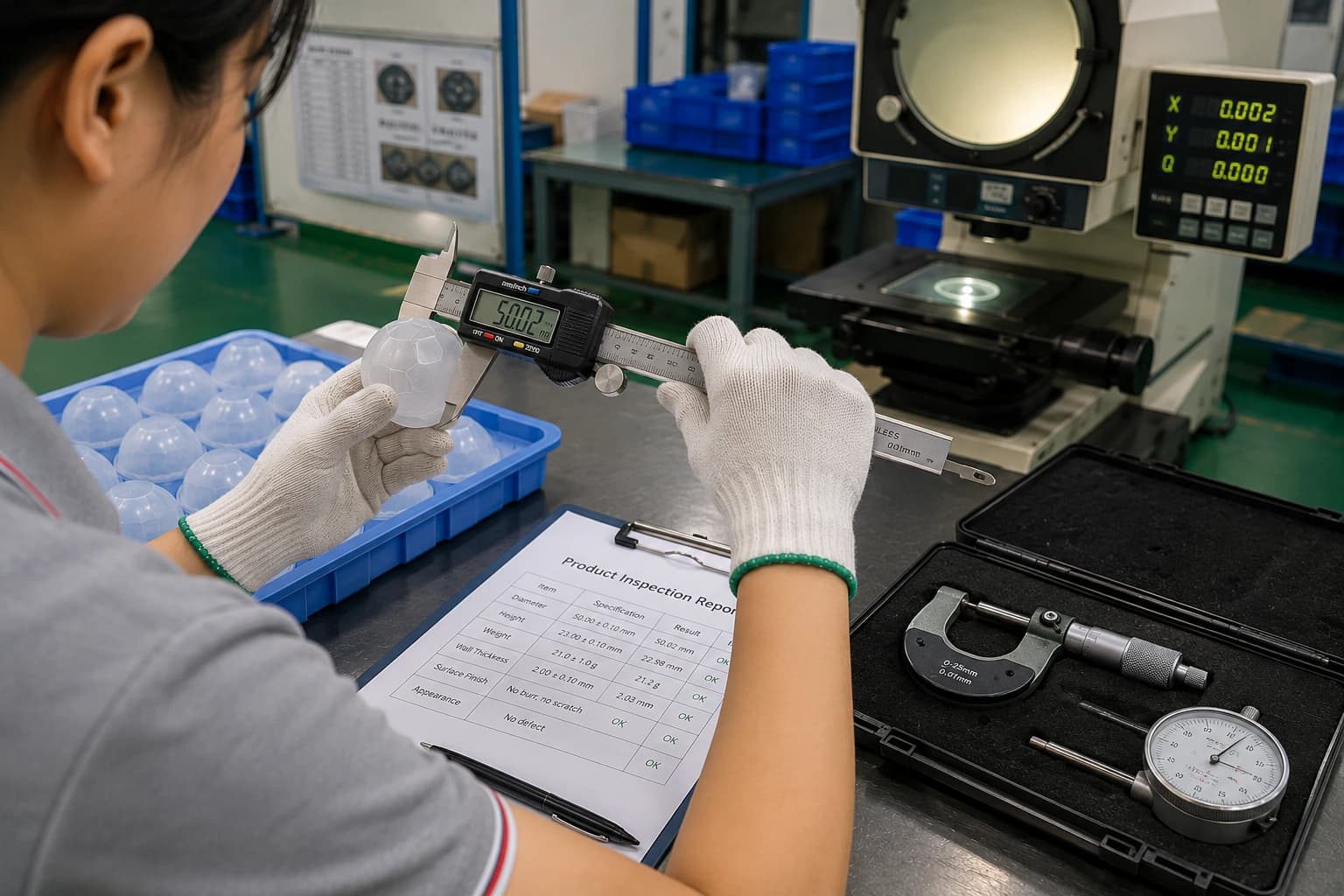
- Sample review and approval: check material, dimensions, and the clarity of the impression. This is the last opportunity to catch a detail issue, such as a missing snowflake branch or a blurry logo edge.
- Production: the approved sample becomes the reference for the entire production run.
- Pre-shipment inspection and packaging: review finished pieces against