Key Takeaways
- Clear ice is primarily a freezing-direction problem, not just a water-quality problem. Trapped air and dissolved solids cloud the cube unless freezing is controlled.
- Directional freezing — freezing water from one direction while allowing impurities to be pushed into a sacrificial layer — is the most reliable home method for clear ice cubes and spheres.
- Silicone ice molds offer design flexibility, easy release, and branding options, but they do not guarantee clarity on their own; they must be paired with proper freezing technique [K1].
- When sourcing custom silicone ice molds for commercial or branded clear ice, verify material composition, food-contact grade, temperature range, dimensions, MOQ, tooling, sampling, and lead time before quoting or publishing [K3][K5].
- Common clear-ice methods differ in effort, equipment, and consistency. The right choice depends on whether you are making a few cubes for a home cocktail or planning small-batch production.
1. Introduction
Clear ice has become a marker of a well-made cocktail. It affects not only appearance but also dilution rate: clear ice tends to melt more slowly and evenly because it is denser and has fewer air pockets. For bartenders, home enthusiasts, and brands that sell ice-related products, the question “how to make clear ice for cocktails” is both practical and commercial.
Most people start with the same frustrating experience: they fill a standard tray with tap water, freeze it, and end up with cloudy, brittle cubes. The usual advice — “use filtered water” or “boil the water first” — helps only marginally. The real issue is how the water freezes. When water freezes from all sides simultaneously, air bubbles and dissolved minerals are trapped in the center, creating the white, opaque core.
This article explains the science behind cloudy ice, compares practical methods for making clear ice cubes and spheres, and provides a buyer’s checklist for sourcing custom silicone ice molds. It is written for cocktail enthusiasts, bar operators, and product teams evaluating custom ice mold projects. By the end, you should be able to choose a method that fits your volume, equipment, and quality standard — and know what to verify before ordering custom molds.
2. Why Ice Turns Cloudy: The Freezing Direction Matters More Than the Water
Core conclusion: Cloudiness is caused by trapped air bubbles and dissolved solids. The most effective way to reduce them is to control the direction of freezing, not just the source of the water.
When water freezes, it expands and pushes dissolved gases and minerals away from the freezing front. If freezing happens evenly from all sides — as in a standard ice tray — those impurities have nowhere to go. They concentrate in the last portion of water to freeze, usually the center, forming a cloudy core. Even filtered water will produce cloudy ice if it freezes in all directions at once.
Directional freezing solves this by insulating the mold so that water freezes from the top down (or bottom up, depending on setup). The impurities are pushed into a bottom layer or an overflow reservoir, which can be discarded. The result is a clear block that can be cut into cubes or shaped into spheres.
Practical scenario: A home bartender using a small cooler can achieve directional freezing by removing the lid and letting the top freeze first. A bar that needs consistent spheres may use a directional freezing tray with an insulated base. The key is to create a temperature gradient, not just cold air.
Recommendation: Start with filtered water to reduce dissolved solids, but invest more effort in the freezing setup. A $10 cooler with the lid off often outperforms a $50 countertop ice maker for clarity. If you are testing molds, freeze a batch with and without insulation to see the difference in the sacrificial layer.
3. Practical Methods for Clear Ice Cubes and Spheres
Core conclusion: Directional freezing is the most reliable home method. Silicone molds can shape clear ice, but they need to be combined with insulation or an open-top design to encourage directional freezing.
There are several methods for making clear ice for cocktails. They vary in equipment, batch size, and consistency.
For a related manufacturing reference, review Clear ice.
3.1 Cooler Method (Best for Home Bars)
Fill a small cooler with water, leave the lid off or slightly open, and place it in a freezer. The top freezes first, pushing air and impurities downward. After 18–24 hours, remove the block, let it temper, and cut it into cubes with a serrated knife or ice saw. This method produces large, clear blocks with a sacrificial bottom layer that can be discarded.
3.2 Directional Freezing Trays with Silicone Molds
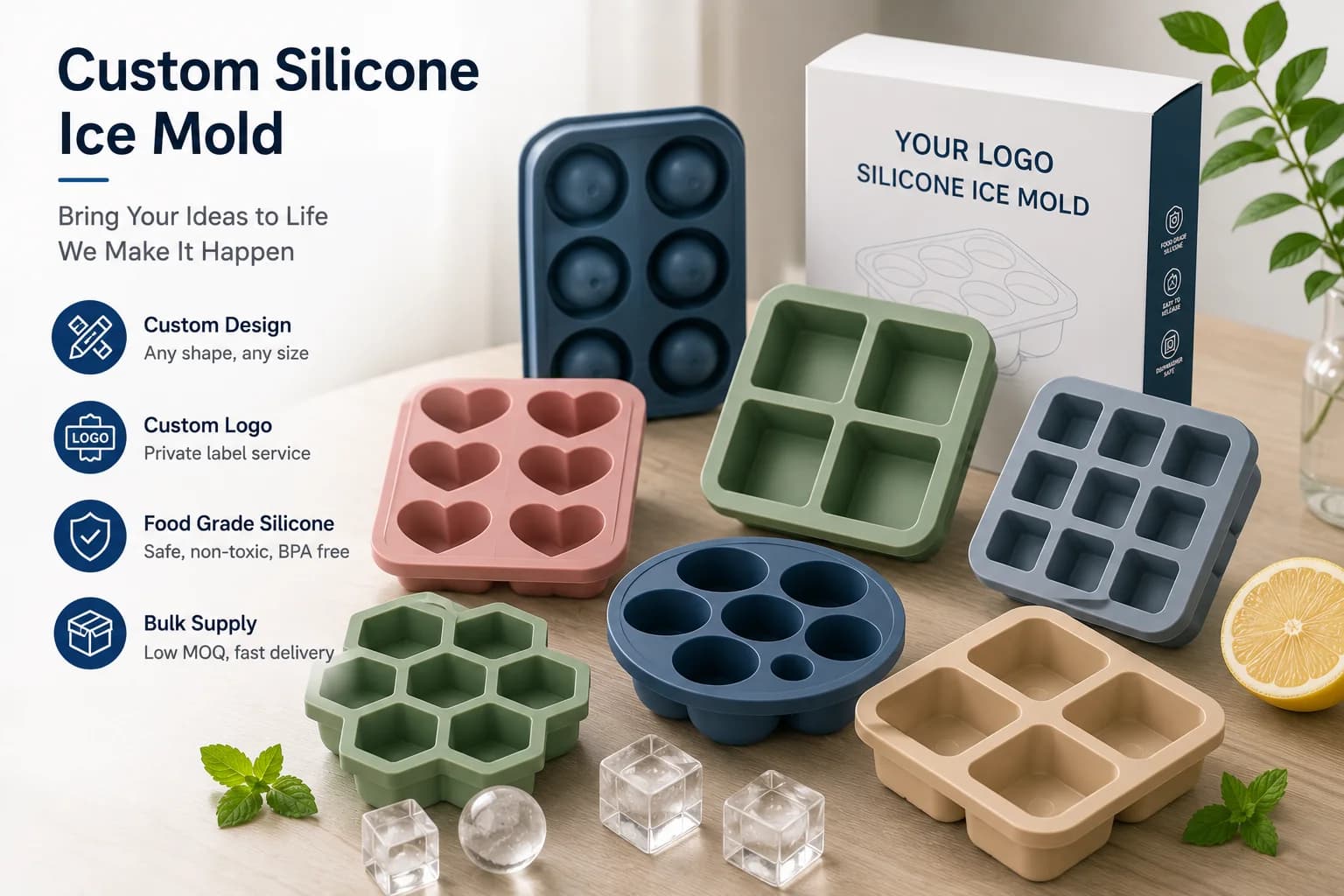
Silicone molds are popular because they release ice easily and can be made in custom shapes, sizes, colors, and logos [K1]. However, a standard silicone tray freezes from all sides, which traps impurities. To use silicone molds for clear ice, place the mold on an insulating base (such as foam or cork) and leave the top exposed to cold air. Some designs use a two-part mold with an open top and an overflow channel so that the cloudy portion can be removed.
Boundary condition: Not all silicone molds are designed for directional freezing. A closed silicone mold with a lid will behave like a standard tray and produce cloudy ice unless the freezing environment is carefully controlled.
3.3 Clear Ice Spheres
Clear ice spheres are typically made with a directional freezing mold that creates a large clear block, which is then shaped into a sphere using a press or carving tool. Some silicone sphere molds are available, but they usually produce cloudy spheres unless combined with a directional freezing setup. For consistent spheres, many bars use a commercial clear ice machine or a combination of a directional freezing tray and a sphere press.
Practical scenario: If you want to make clear ice for cocktails at home, start with the cooler method. If you want branded ice cubes with a logo, consider a custom silicone mold with an open-top design and an insulating base, and test it with your freezer’s temperature cycle before committing to a large order.
4. Choosing and Using Silicone Ice Molds: Specifications That Matter
Core conclusion: Silicone ice molds offer design freedom and ease of release, but clarity depends on how they are used. Buyers should verify food-contact grade, temperature range, odor, and customization options before production.
Silicone is a common material for ice molds because it is flexible, durable, and can be produced in complex shapes. According to Renjia’s verified product knowledge, custom silicone ice molds can be customized by cavity design, product shape, size, color, logo, and packaging [K1]. The same knowledge base lists public verified specifications for silicone material: food-grade, odorless, temperature resistance from -40°C to 240°C (-40°F to 464°F), and custom sizes available [K5].
These specifications matter for clear ice because:
- Food-grade and odorless: Ice absorbs odors easily. A non-food-grade or poorly cured silicone can transfer smells and tastes to the ice.
- Temperature resistance: Silicone remains flexible at freezer temperatures, which helps with demolding. The wide range also allows for other kitchen uses if the mold is repurposed.
- Custom sizes and shapes: Clear ice spheres, large cubes, and branded shapes require precise cavity design. Custom molds can be developed for specific dimensions [K1].
Portfolio note: According to Renjia’s portfolio usage rules, ice molds can be tagged under household, kitchen, and promotional use cases, and category placement should not limit cross-category content [K3]. The extended product portfolio map includes ice cube trays, ice ball trays, popsicle molds, and soap molds under promotional products [K4]. This suggests that ice molds are often marketed across multiple channels, from home kitchen to promotional giveaways.
Practical recommendation: If you are buying silicone molds for clear ice, ask for a sample and test it with your freezing method. Do not assume that “silicone” alone guarantees clarity. Check the mold’s wall thickness, flexibility, and whether it is designed for open-top freezing.
For additional context on this decision, see Directional freezing.
| Silicone Ice Mold Specification | Verified Detail | Why It Matters for Clear Ice |
|---|---|---|
| Material | Silicone material [K5] | Flexibility aids demolding; grade affects safety |
| Food-contact grade | Food-grade [K5] | Prevents odor and taste transfer |
| Odor | Odorless [K5] | Clear ice should not absorb smells |
| Temperature resistance | -40°C to 240°C (-40°F to 464°F) [K5] | Withstands freezer and dishwasher cycles |
| Core specification | Custom sizes available [K5] | Enables large cubes, spheres, and branded shapes |
| Customization options | Custom colors, sizes, shapes, and packaging [K5] | Supports branding and retail requirements |
5. Sourcing Custom Clear Ice Molds: A Buyer’s Checklist
Core conclusion: Custom silicone mold projects move through design review, sampling, tooling, and production. Buyers should confirm availability, material composition, dimensions, certifications, MOQ, and lead time before publishing a product page or quotation [K3].
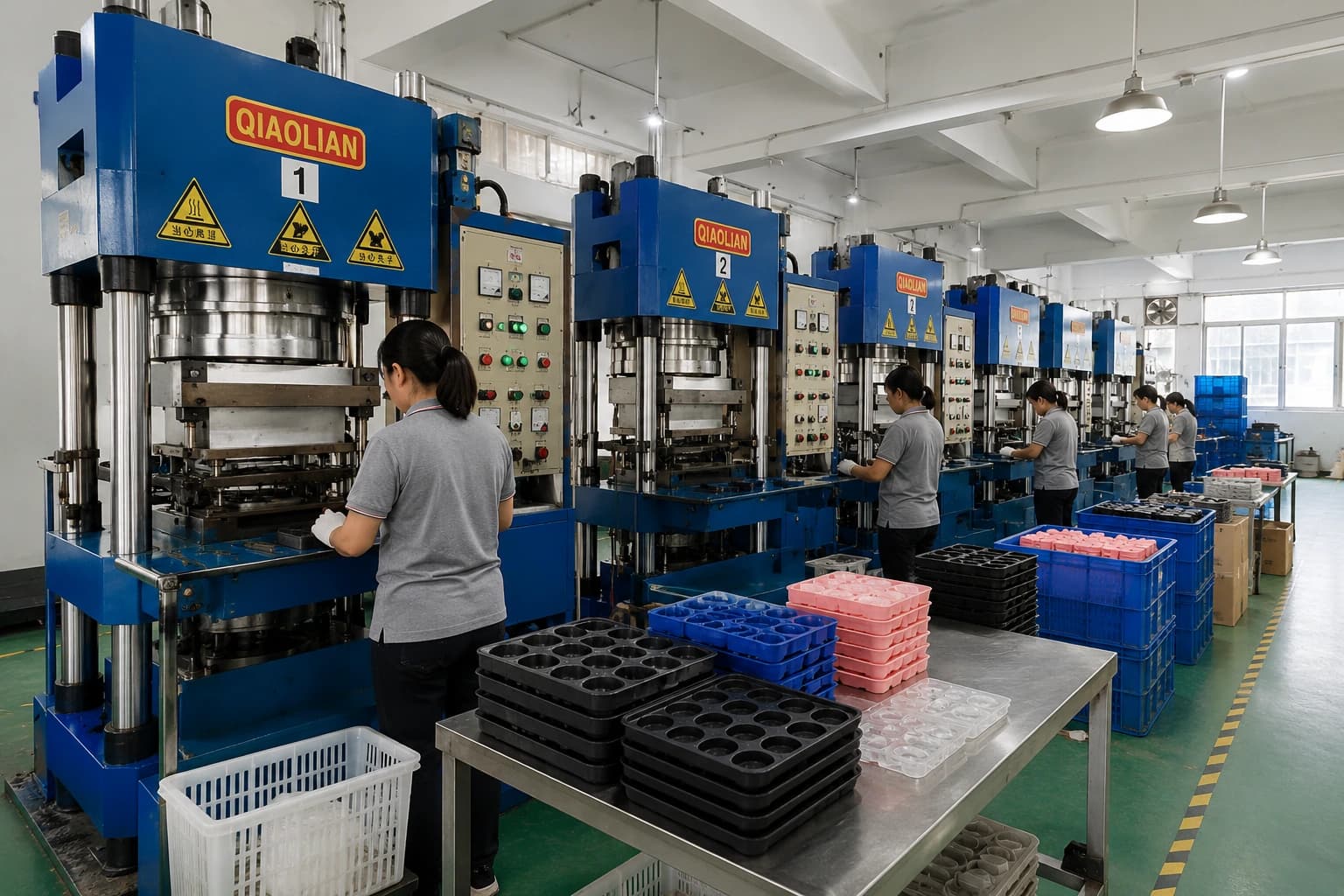
If you want to produce clear ice at scale — for a bar, a brand, or a promotional campaign — custom silicone molds can be a practical route. The knowledge base supports topics such as how custom silicone mold projects move from design review to production, MOQ, tooling, sampling, and lead-time planning [K2]. It also lists buyer checklists for sample approval and pre-shipment inspection [K2].
A typical custom project follows these stages:
- Design review: Define cavity shape, size, wall thickness, and whether the mold will be used for directional freezing.
- Sampling: Produce a sample mold to test ice clarity, demolding, and durability.
- Tooling: Create the production tool based on the approved sample.
- Production: Manufacture the molds with agreed colors, logos, and packaging.
- Quality inspection: Check dimensions, material, odor, and food-contact compliance before shipment.
Caution: The portfolio usage rules state that the product architecture diagram is evidence of a reported portfolio, not proof that every item is currently stocked or available for every market. Confirm current availability, material composition, dimensions, certifications, MOQ, and lead time before publishing a product-specific page or quotation [K3]. Also, do not make unsupported certification claims; market-specific compliance planning should be handled without overstating approvals [K2].

Practical recommendation: Prepare a checklist before contacting a silicone OEM/ODM. Include your target ice shape, expected batch size, freezing method, branding requirements, and packaging needs. Ask for a sample that matches your production tooling, and test it with your actual freezing process. If clarity is critical, request a mold design that supports directional freezing rather than a closed cavity.
6. Key Comparison: Methods for Making Clear Ice
The following table compares common approaches for making clear ice for cocktails. Clarity potential is rated as high, medium, or low based on typical home and small-batch results.
Before finalizing the specification, use custom silicone ice mold manufacturing as an additional planning reference.
| Method | Clarity Potential | Equipment Needed | Best For | Notes |
|---|---|---|---|---|
| Boiled water in standard tray | Low | Tray, freezer | Quick tests | Boiling removes some air, but all-sided freezing still traps impurities |
| Filtered water in standard tray | Low to Medium | Tray, freezer | Everyday use | Fewer minerals, but cloudy core remains |
| Cooler method (directional freezing) | High | Small cooler, freezer, ice saw | Home bars, small batches | Reliable; requires 18–24 hours and cutting |
| Silicone mold + insulating base | Medium to High | Silicone mold, insulation, freezer | Custom shapes, branding | Depends on mold design; open-top or two-part molds work better |
| Directional freezing tray | High | Specialized tray, freezer | Consistent cubes | Often includes an overflow reservoir for impurities |
| Commercial clear ice machine | High | Commercial machine | Bars, high volume | Higher cost; consistent output |
Considerations:
- Time: Directional freezing typically takes 18–24 hours. Plan ahead for events.
- Water: Start with filtered water to reduce dissolved solids, but do not rely on water alone.
- Storage: Clear ice can be stored in a sealed bag or container in the freezer. Avoid frost buildup, which can cloud the surface.
- Safety: Use a proper ice saw or serrated knife when cutting blocks. Let the block temper for a few minutes before cutting.
7. FAQ
Q1. Can you make clear ice in a silicone mold?
Yes, but not automatically. A standard closed silicone mold freezes from all sides and tends to produce cloudy ice. To improve clarity, use an open-top silicone mold placed on an insulating base so freezing starts from the top. Test the mold with your freezer before buying in bulk. Custom silicone ice molds can be designed for specific cavity shapes, sizes, colors, and logos [K1], but the freezing method is still the main factor.
Q2. Does boiling water make clear ice?
Boiling water can reduce dissolved air, which may slightly improve clarity. However, if the water still freezes from all sides in a standard tray, trapped impurities will still form a cloudy core. Boiling is not a substitute for directional freezing. For consistently clear ice, focus on creating a temperature gradient so impurities are pushed into a sacrificial layer.
Q3. How do you make clear ice spheres?
Most clear ice spheres are made by first creating a clear block using directional freezing, then shaping it with a sphere press or carving tool. Some silicone sphere molds exist, but they often produce cloudy spheres unless used with an insulating base and open-top design. For high-volume sphere production, a commercial clear ice machine is more consistent.
Q4. What should I check before sourcing custom silicone ice molds?
Confirm current availability, material composition, dimensions, certifications, MOQ, and lead time before publishing a product-specific page or quotation [K3]. Ask for a sample and test it with your freezing process. Verify food-grade and odorless specifications, and check the temperature resistance range [K5]. Also clarify customization options such as color, size, shape, logo, and packaging [K1]. A structured project plan should cover design review, sampling, tooling, and production stages [K2].
8. Conclusion
Getting clear ice for cocktails is less about buying a special tray and more about controlling how water freezes. Directional freezing — whether in a cooler, a specialized tray, or a well-designed mold — is the most reliable way to push air and impurities out of the final cube or sphere. Silicone molds add flexibility for custom shapes, branding, and easy release, but they must be paired with the right freezing technique to deliver clarity [K1].
For home bartenders, the cooler method offers the best balance of cost and clarity. For bars and brands, custom silicone ice molds can support branded ice programs, but sourcing requires careful verification: food-grade material, odorless properties, temperature resistance, and custom size capabilities [K5]. Before committing to production, confirm current availability, MOQ, tooling, and lead time with your supplier [K3]. A sample test with your actual freezing setup is the most practical way to avoid disappointing results.
If you are evaluating a custom silicone ice mold project, start with a clear design brief, request a sample, and test it under real conditions. That process turns “how to make clear ice for cocktails” from a guessing game into a repeatable operation.