Key Takeaways
- Custom silicone ice molds are a low-MOI (minimum order investment) private-label product that can be developed in shapes, sizes, colors, and branding to match your brand identity.
- The typical sourcing journey includes design-file preparation, tooling, sampling, production, and pre-shipment inspection — each stage has clear checkpoints to avoid costly rework.
- Reliable suppliers offer food-grade, odorless silicone (‑40°C to 240°C) and support custom packaging, but you need to verify compliance documentation independently for your target market.
- A structured buyer’s checklist reduces risk: confirm material specifications, sample approval protocol, and lead-time commitments before placing a production order.
1. Introduction
Branded ice is no longer just a bar trick — it has become a staple in the premium hospitality, event, and retail gifting sectors. Custom silicone ice molds allow businesses to produce ice in unique shapes (logos, geometric forms, novelty figures) that reinforce brand recall at the point of use. But for B2B buyers — e-commerce sellers, promotional product distributors, and hospitality procurement teams — the sourcing process can feel fragmented.
You need a manufacturer that can translate your design file into a durable, food-grade silicone mold, then produce it at a scale and cost that fits your business model. This article gives you a step-by-step checklist, grounded in real-world silicone OEM/ODM practices, to help you ask the right questions and avoid common pitfalls when learning how to source custom silicone ice molds.
2. Understanding Custom Silicone Ice Molds: What You Can Customize
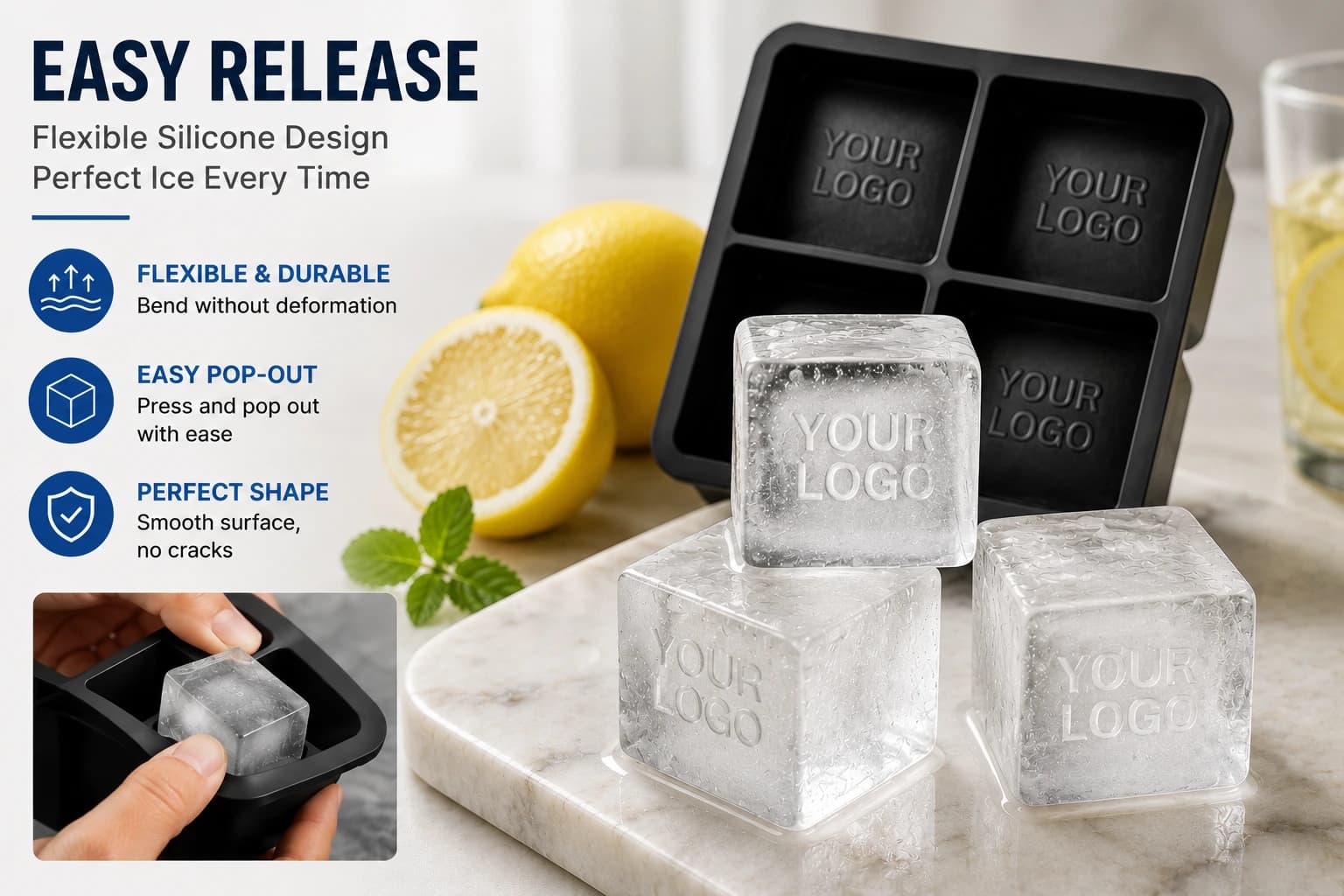
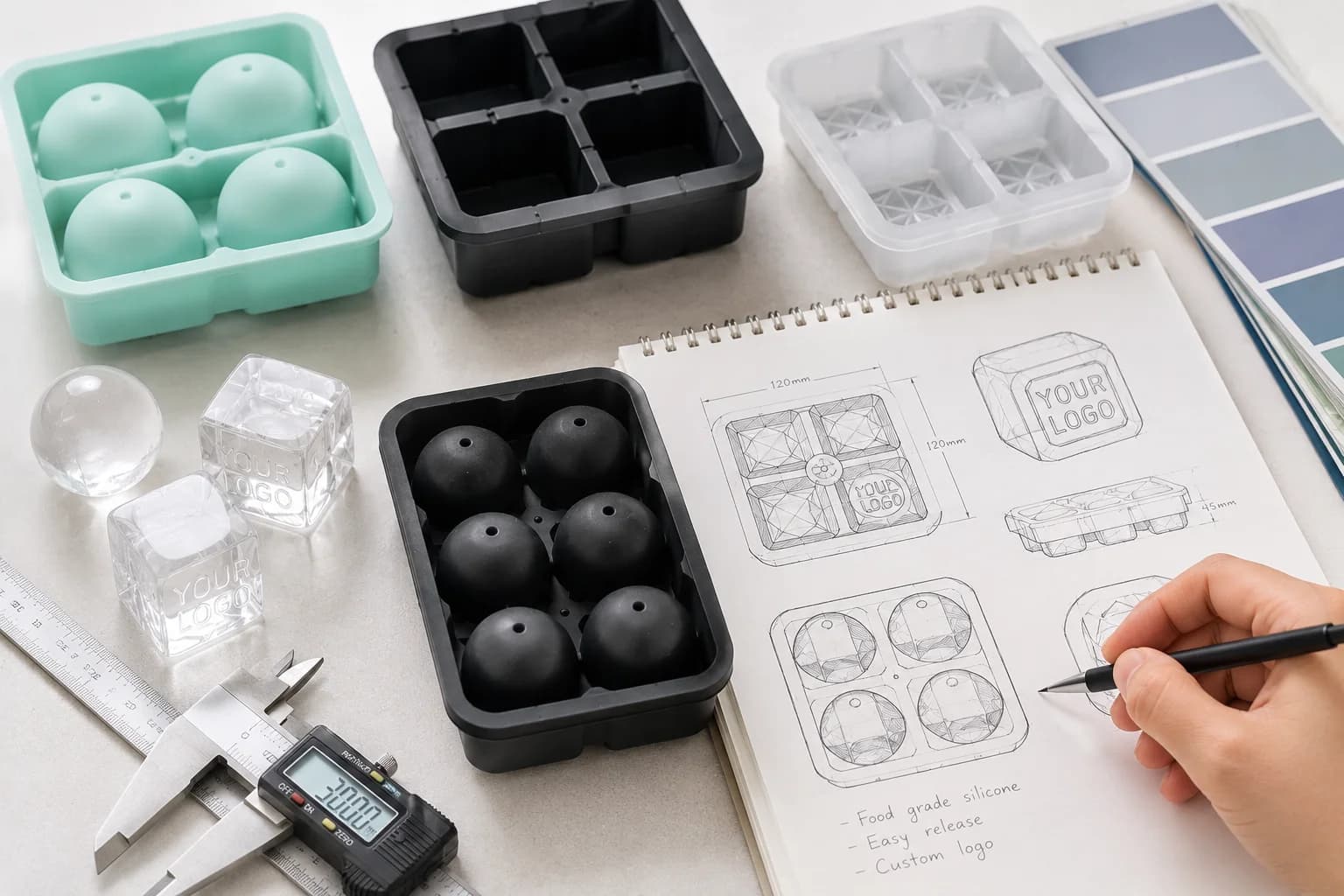
Custom silicone ice molds are not a one-size-fits-all product. A typical project allows you to control cavity design, product shape, size, color, logo, and packaging [K2]. The flexibility is broad, but so is the need for clear specifications.
Core Specifications to Define Early
Your mold design influences tooling cost, sample turnaround, and production speed. Start with these parameters:
For a related manufacturing reference, review custom silicone ice mold manufacturing.
| Customization Option | Typical Considerations |
|---|---|
| Shape & cavity design | Logo embossing, geometric forms, multi-cavity layouts. File formats: AI, CDR, STEP, or STL preferred. |
| Size & dimensions | Standard ice cube (~25 mm), larger sphere (~50 mm), or custom dimensions. Mold thickness affects demolding ease. |
| Color | Opaque, translucent, or matched to your brand palette. Note: clear silicone is not always food-grade; verify. |
| Material grade | Food-grade silicone, odorless, temperature range –40°C to 240°C [K3]. |
| Logo / artwork | Debossed, embossed, or printed logo. Embossing requires a matched cavity cut. |
| Packaging | Retail box, polybag, hanging card, or bulk. Custom barcodes and inserts are common. |
Practical scenario: If you plan to sell the molds in a gift set, you might want a custom color and a branded hang tag. Communicate this during the design review — last-minute packaging changes can extend lead time by two to three weeks.
3. The Sourcing Journey: From Design to Production
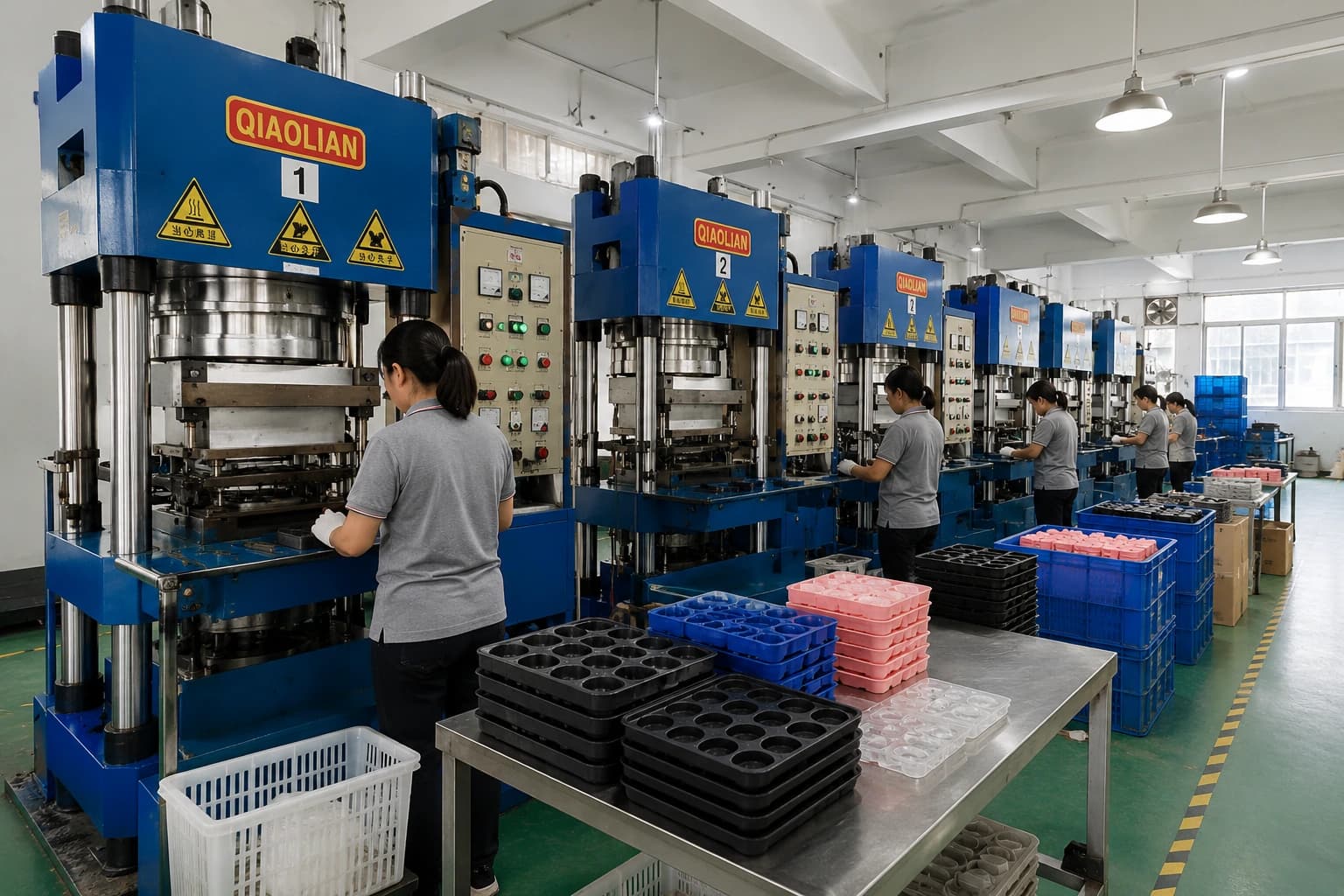
Once you have a clear idea of your mold specifications, the actual sourcing process follows a repeatable sequence. Renjia’s internal project flow (typical for silicone OEM/ODM) includes tooling, sampling, production, and inspection [K1].
Step 1: Design-file preparation and tooling
Send your design file (vector preferred) to the manufacturer. They will evaluate if the cavity geometry can be cut from steel or aluminum tooling.
- MOQ: Most custom silicone ice mold projects have a minimum order quantity of 500–2,000 pieces, depending on mold complexity.
- Tooling cost: A one-time fee that covers mold creation. Simple trays may cost $200–$600; complex multi-cavity molds with fine logos can be $800–$1,500.
- Lead time: Tooling takes 10–15 business days. Sampling takes another 5–10 business days.
Step 2: Sampling and approval
You will receive samples (usually 2–5 pieces) to verify:
- Dimensional accuracy (is the ice cavity the right size?)
- Logo clarity and placement
- Color match (compare under daylight and indoor lighting)
- Odor and feel (no rubbery smell after washing)
Approval protocol: Sign a sample approval form that states “approved for production.” Without a signed sample, issues found during mass production may be difficult to remedy.
Step 3: Production and pre-shipment inspection
After sample approval, production runs typically take 20–30 business days for standard quantities. Before shipping, request a pre-shipment inspection (PSI) to check:
- Quantity, packaging integrity
- Visual defects (flash, discoloration, incomplete cavities)
- Random functional test (fill with water, freeze, and check ice release)
The whole journey, from design review to production, usually spans 40–60 business days for a first order [K1]. Re-orders can be shorter if the mold is already tooled.
For additional context on this decision, see How to Compare Ice Mold Manufacturers: Capabilities, Tooling, and Quality Controls.
4. Key Quality and Compliance Considerations
Custom silicone ice molds are food-contact products. Even if you are buying promotional items, your end customers expect safety. Here are the compliance signals that build trust.
Material Provenance
Insist on written confirmation that the silicone is food-grade and odorless. Reputable manufacturers will provide material test reports or a letter of compliance. Renjia’s shared product specifications confirm these properties for their standard silicone [K3]. Ask the same from any supplier you evaluate.
Temperature Resistance
The advertised range of –40°C to 240°C [K3] is typical for platinum-cured silicone. If your molds will be used in commercial freezers or dishwasher cycles, verify that the manufacturer’s material can handle repeated temperature shocks without degradation.
Compliance by Market
- United States: FDA 21 CFR 177.2600 (indirect food contact) is the common reference. Ask for a statement, not a vague “food-safe” claim.
- European Union: EU Regulation 1935/2004 and 10/2011 (Plastics Implementation Measure) are relevant. Some manufacturers test to LFGB (German standard).
- Other markets: Check local regulations for Canada, Australia, or Japan. Avoid claims like “certified to all global standards” unless backed by evidence — most factories have a few key certifications, not universal coverage.
Boundary note: Do not assume a single compliance document covers all markets. A manufacturer may have a material test from a third-party lab that covers the EU migration limits, but not the US FDA. Verify with your target country’s requirements.
Before finalizing the specification, use What to Include in a Custom Ice Mold RFQ: Drawings, Dimensions, Materials, and Packaging as an additional planning reference.
5. Quick-Reference Sourcing Checklist
Use this table when evaluating a custom silicone ice mold supplier:
| Stage | What to Check | Why It Matters |
|---|---|---|
| Design file | Vector (AI, CDR, STEP) vs. raster | Resolution for cavity engraving |
| Material spec | Food-grade, odorless, temp range | Safety and durability |
| Tooling cost | One-time vs. shared (if multi-cavity) | Budget planning |
| Sample turnaround | 5–15 business days | Schedule alignment |
| MOQ | 500–2,000 pieces typical | Scalability for trial runs |
| Logo method | Debossed, embossed, or printed | Brand presence |
| Packaging options | Retail, bulk, or custom | Shelf-readiness |
| Compliance doc | FDA, EU, or other market-specific | Regulatory risk |
| Inspection | PSI before shipping | Defect prevention |
6. FAQ
Q1. What is the typical MOQ for custom silicone ice molds?
Most silicone OEM/ODM manufacturers set an MOQ of 500 to 2,000 pieces for custom ice molds. If you need a smaller quantity for testing, ask about a sample run or stock-mold customization, where the tool already exists and only color or logo changes. [K1]
Q2. How long does it take to get a sample?
After design-file approval, sample creation takes about 5–15 business days, depending on mold complexity and the manufacturer’s schedule. Shipping adds another 5–10 days for international delivery.
Q3. Can I add my logo to an existing mold shape?
Yes. Many suppliers offer to modify an existing steel or aluminum mold by adding your logo (embossing or debossing). This reduces tooling cost compared to making an entirely new cavity from scratch. Always request a sample to verify logo depth and clarity.
Q4. What should I do if the sample does not match my color requirement?
Reject the sample and provide a physical color sample (Pantone code or chip). Silicone color mixing is sensitive to pigment concentration; a good manufacturer will adjust and re-send a corrected sample. Record the approved color reference in writing to avoid production deviations.
7. Conclusion
Sourcing custom silicone ice molds is a structured process that rewards clarity early on. By mapping out your customization needs, understanding the tooling-to-production timeline, and verifying material compliance for your target market, you reduce the risk of miscommunication and costly rework.
Whether you are launching a branded ice line for your retail store, creating promotional giveaways for a trade show, or developing a private-label product for online sales, follow the checklist in this article. Start with a clear design file, confirm material and compliance specifications, approve the sample formally, and schedule a pre-shipment inspection. That sequence gives you control without slowing down the project.
For your next sourcing initiative, remember: the best partners are those that communicate transparently about tooling costs, sampling timelines, and compliance evidence. Use the questions and milestones outlined here to build a reliable supply chain for custom silicone ice molds.