Key Takeaways
- For custom manufacturing ice mold projects, quality control should start before production, not only at pre-shipment inspection.
- The typical customization range covers cavity design, product shape, size, color, logo, and packaging [K1].
- A verified OEM/ODM knowledge base shows that custom samples usually take 7–10 working days, mass production usually takes 15–20 working days, and mold creation usually takes about 15 working days after 3D design confirmation [K3].
- To evaluate a supplier’s QC capacity, look for quantifiable signals such as production lines, equipment count, QC staff, and monthly capacity. One verified example: 2 production lines, 12 machines, 10 QC staff, and roughly 300,000 pieces per month [K4].
1. Introduction
Brand owners, e-commerce sellers, and sourcing agents are increasingly turning to custom silicone ice molds to differentiate their products. A standard ice tray can be transformed into a branded mold with unique shapes, logos, colors, and packaging [K1]. But customization also introduces new failure points: a logo that shifts, a cavity that tears, a color that drifts from batch to batch, or a pack that does not match the sample.
These problems are commonly discovered after mass production, when the cost of correction is highest. The solution is to move quality control earlier. This article provides a practical, answer-oriented guide to what you should inspect before mass production in a custom manufacturing ice mold project. It draws on verified supplier knowledge about customization scope, lead times, and production capacity [K1][K3][K4], and translates that knowledge into a checklist you can use with your factory.
2. Why Pre-Production Inspection Matters for Custom Manufacturing Ice Mold
Pre-production inspection is not a single event. It is a series of checks that run from design review through tooling and sampling. It matters because your commercial terms make correction expensive once production begins.
For a related manufacturing reference, review custom silicone ice mold manufacturing.
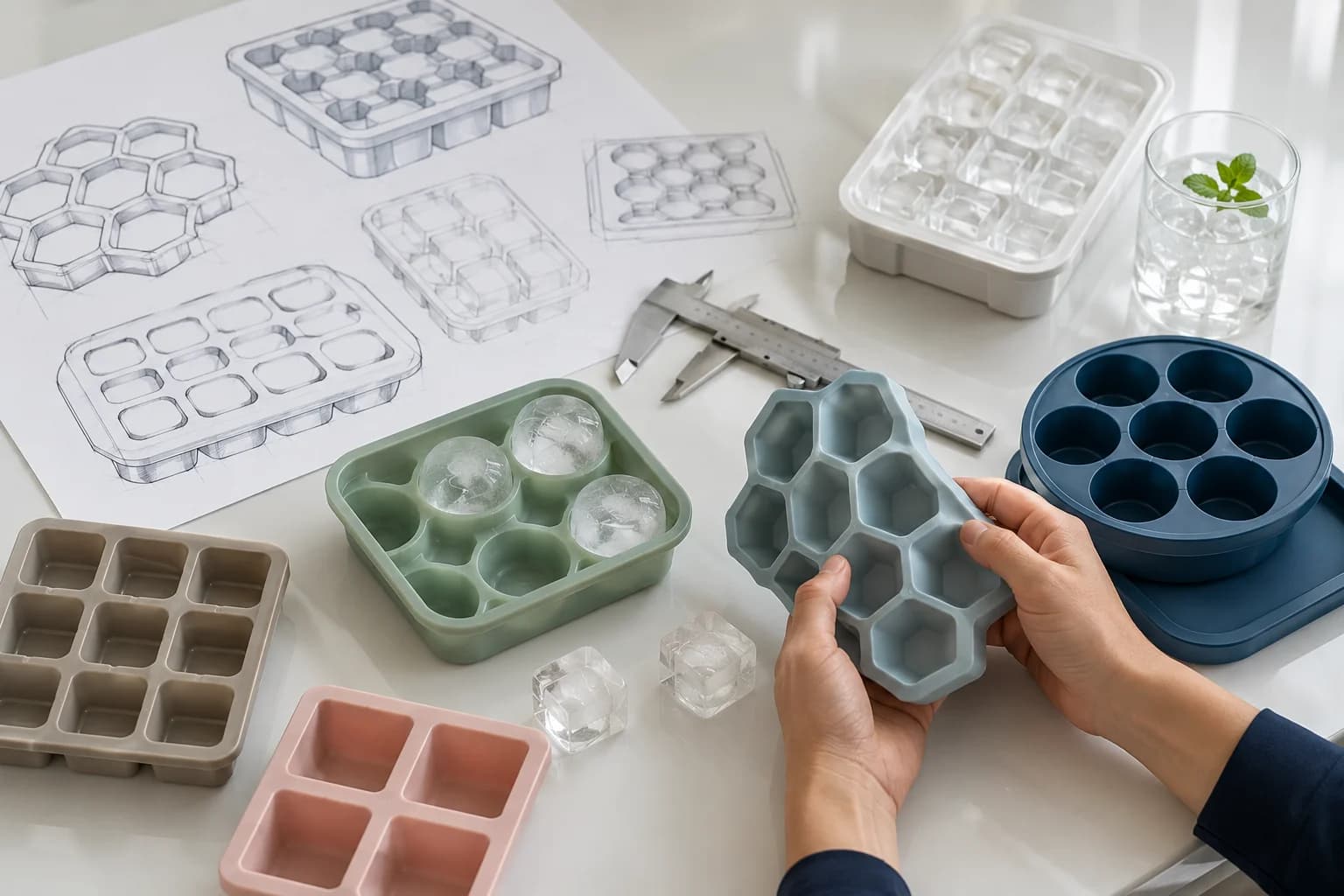
For example, the typical custom-order MOQ for custom silicone ice molds is around 500 pieces, but the final MOQ can vary by design, tooling, packaging, product requirements, and production scheduling [K3]. If you discover a cavity design flaw after 500 pieces are molded, you are facing rework, scrap, and a delayed launch. By contrast, catching the same flaw in a 3D design review costs far less.
The same logic applies to lead times. A verified silicone OEM/ODM knowledge base shows that mold lead time is usually about 15 working days after the 3D design is confirmed, and mass-production lead time is usually 15–20 working days after order and production details are confirmed [K3]. That means a design error found after mold creation can add weeks to your schedule. Planning an inspection at the right milestones is therefore an essential part of project management.
Recommendation: Create a milestone plan with four gates—design file approval, mold completion verification, sample approval, and pilot run sign-off. If each gate is linked to a signature or written confirmation, you reduce the chance of ambiguous requirements.
3. Design Review and Mold Fabrication Checks
The first gate is the most important. For custom manufacturing ice mold projects, the typical customization options are cavity design, product shape, size, color, logo, and packaging [K1]. Each of these must be documented and approved before the supplier starts tooling.
For additional context on this decision, see Silicone Ice Tray Testing Plans: Dimensions, Leakage, Release, and Durability.
3.1 What to Check in the Design Review
- Cavity design: Verify the number of cavities, cavity depth, and the molding structure. Complex shapes may need thicker walls or draft angles to release the ice cleanly.
- Dimensions: Avoid relying only on images. A clear dimensioned drawing or 3D file is the common baseline for quoting mold fees and sample timelines.
- Color standard: Use a standard color reference, such as a Pantone code, rather than a verbal description. This is especially important if your brand uses a signature color.
- Logo placement and depth: Confirm the position, size, depth, and orientation of the logo on the mold. Logo issues are one of the most common causes of sample rejection.
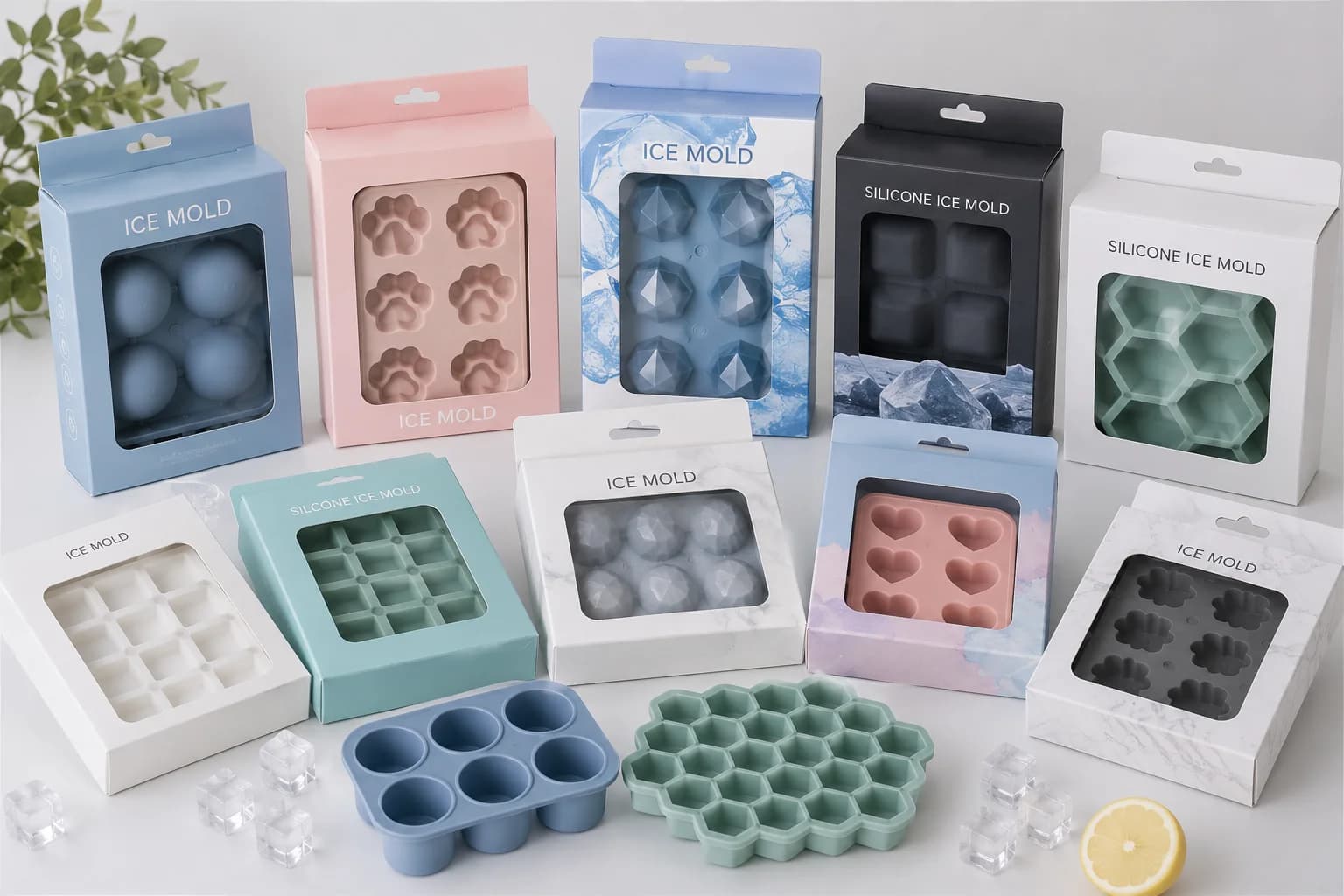
- Packaging: If your private label includes a printed box or hang tag, confirm the artwork and dimensions during the design review [K1].
3.2 Mold Fabrication Checks
After the 3D design is confirmed, mold production usually takes about 15 working days [K3]. During this period, you do not need to stand at the factory, but you should ask for a mold completion report. The report can include photographs of the mold cavity, engraving, and cavity numbering. If the mold is complex, a short video showing the mold opening and closing can help you spot obvious issues before any sample is produced.
Scenario: One buyer asked for a brand-name letterform ice mold and supplied only a logo image. The factory had to guess the wall thickness and connection points between letters. The first sample broke during removal. The buyer then provided a 3D file with minimum wall thickness and the second sample passed. This is a typical example of why design review needs to happen before mold fabrication.
Before finalizing the specification, use How to Compare Ice Mold Manufacturers: Capabilities, Tooling, and Quality Controls as an additional planning reference.
4. Sampling and Pilot Run Inspection
Sampling is the second gate. According to the verified knowledge base, stock-sample lead time is usually 1–2 working days, while custom-sample lead time is usually 7–10 working days after design and specification confirmation [K3]. Custom samples are the ones that matter for a new project.
4.1 Sample Inspection Checklist
When the sample arrives, inspect it against every customization point listed in [K1]:
- Appearance: Look for bubbles, pinholes, flash, or surface roughness.
- Dimensions: Measure key dimensions with calipers and compare them to the approved drawing.
- Function: Fill the mold with water, freeze it, and remove the ice. Check whether the ice comes out easily and whether the shape remains intact.
- Color and logo: Place the sample next to an approved color standard. Verify logo clarity, depth, and alignment.
- Packaging: If custom packaging was ordered, confirm the artwork, material, and fit.
4.2 Pilot Run Before Mass Production
For large quantities, a small pilot run is worth requesting. A pilot run uses the production mold and production conditions to produce a small batch, which you can inspect for consistency. If the pilot units match the approved sample, you can release the mass-production order. If not, the issues should be documented and corrected before the main run.
Note: pilot runs are not automatically free. Confirm with the supplier whether the pilot-run quantity is included in the MOQ or charged separately. This is a commercial detail, not a quality defect, but it affects your project budget.
5. Key Comparison and Actionable Checklist
5.1 Pre-Production Inspection vs. Pre-Shipment Inspection
Both types of inspection are useful, but