Key Takeaways
- An ice mold block is a single large piece of ice formed in a defined cavity. Its lower surface-area-to-volume ratio means it melts more slowly than the same volume of small cubes, so it dilutes a drink less over the same period.
- The difference shows up in three practical places: dilution rate, how long the drink stays cold, and how the drink is presented and perceived.
- Silicone is a practical mold material for this use: food-grade, odorless, and rated from -40°C to 240°C (-40°F to 464°F), with custom sizes, shapes, colors, and packaging available [K5].
- A mold alone does not guarantee crystal-clear ice. Clarity depends mainly on the freezing method, not the tray.
- For brands, ice mold blocks appear in both household and promotional product lines, and can be customized by cavity design, shape, size, color, logo, and packaging [K1][K2].
1. Introduction
Most people treat ice as an afterthought. You fill a tray, freeze it, drop a handful of cubes into a glass, and the drink is cold within a minute. Then it keeps changing — because the ice keeps melting.
That is the real problem with regular cubes. They are small, so they have a lot of surface area relative to their volume. A drink built on small cubes is a race between chilling and diluting, and dilution usually wins. Whiskey turns flat. Iced coffee turns watery before you finish it. Punch bowls go from bright to bland in an hour. And on a table, a glass of small cubes simply does not look like anything deliberate.
A larger format of ice — commonly sold as an ice mold block — changes that trade-off. Not because of branding, but because of geometry. A block melts more slowly for the same cooling effect, which means the drink spends more of its life at the temperature and strength you intended.
This article explains what actually differs between molded ice and regular cubes, where the difference is worth paying for, where it is not, and what to check before buying a mold or sourcing one for a brand. It is written for home drinkers, bar operators, and product buyers who want a clear answer rather than a list of features.
2. Why an Ice Mold Block Cools Differently: The Geometry Argument
Core conclusion: A single large ice block does the same cooling work as many small cubes, but it does it more slowly and with less water released into the drink. That single fact drives almost every other difference.
Cooling happens at the ice surface, where the ice meets the liquid. The amount of surface available per unit of ice volume is therefore the key number. Small cubes have a lot of surface per unit volume; a large block has very little.
An illustrative calculation makes this concrete:
| Format | Total volume | Total surface area | Surface per unit volume |
|---|---|---|---|
| One 5 cm cube | 125 cm³ | 150 cm² | 1.2 cm⁻¹ |
| Eight 2.5 cm cubes (same volume) | 125 cm³ | 300 cm² | 2.4 cm⁻¹ |
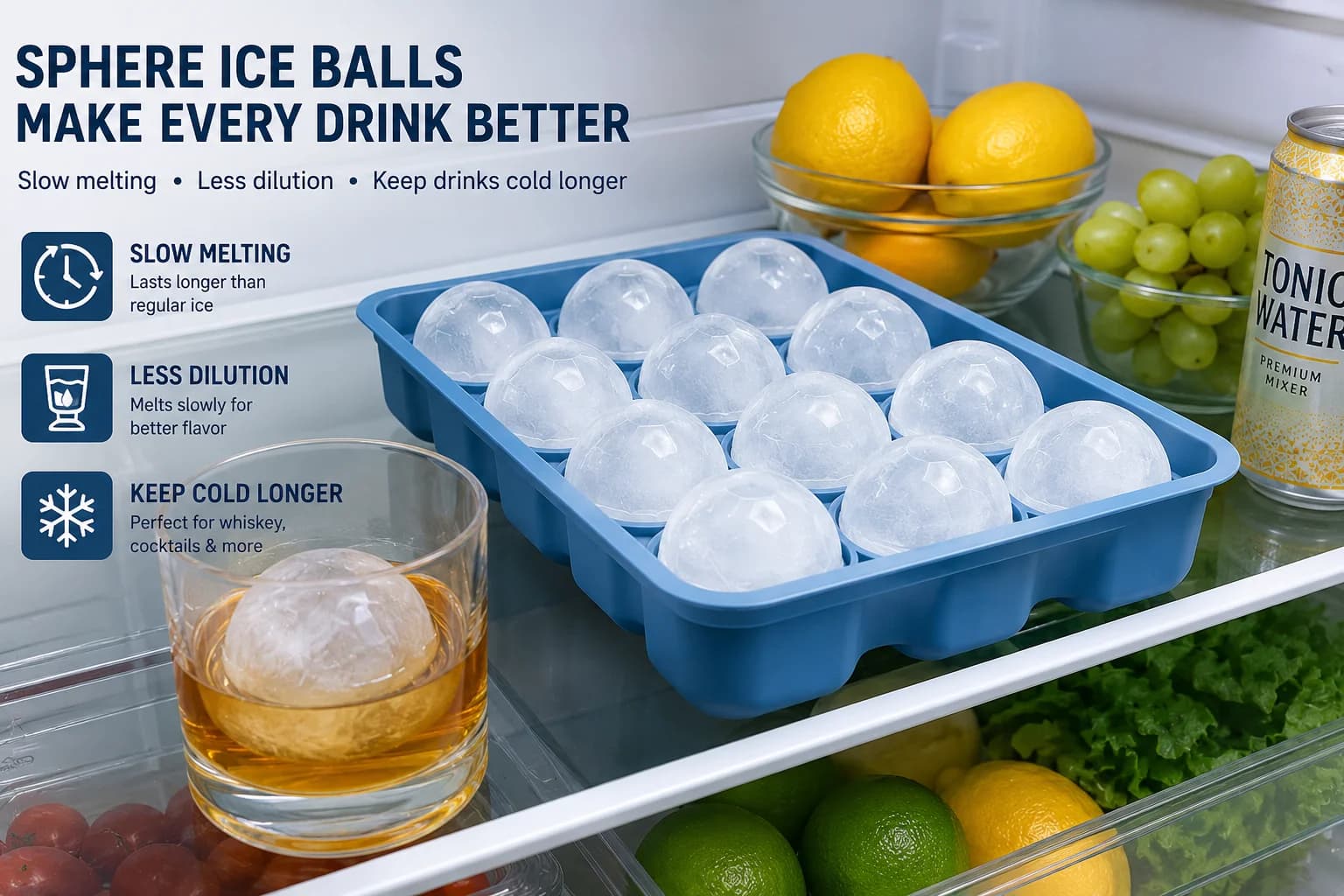
Same amount of ice. Twice the exposed surface. The smaller format chills faster — and melts roughly twice as fast.
This produces two practical consequences:
- Faster initial chill, faster dilution. Small cubes are actually better if you want a drink cold in 30 seconds and do not care about strength. This is why shaking a cocktail with crushed or small ice works so well.
- Slower, steadier chill. A large block brings the drink down more gradually and holds it there longer, releasing meltwater at a much lower rate.
Scenario advice: For a spirit served neat or with a single piece of ice, a large block is the better format — it chills without flattening the drink. For a quick mixed drink you will finish in five minutes, small cubes are efficient and cheaper. The format should match the drinking timeline, not the other way around.
For a related manufacturing reference, review custom silicone ice mold manufacturing.
3. What Actually Changes in the Glass
Core conclusion: The visible difference is dilution. The differences people actually notice are aroma, texture, and presentation — all downstream of dilution.
Dilution. This is the measurable core of the ice mold block argument. Less meltwater per minute means the flavor concentration of the drink stays closer to what was poured. For spirits at 40% ABV, a modest amount of water can open up aromatics; too much closes them down. A block gives you more control over that curve because it moves slowly enough for you to stop drinking before the drink is gone. Note the boundary condition: a block does not prevent dilution, it delays it. Leave a drink for an hour and it will still be diluted.
Temperature stability. Because a large block has more thermal mass and melts slowly, the drink sits in a narrower temperature band for longer. This matters for carbonated drinks — a rapidly melting ice load agitates the liquid and speeds up the loss of carbonation. It also matters for iced coffee, where a slow melt keeps the drink cold without turning it into brown water.
Aroma and perceived quality. This is partly chemistry and partly psychology. Chemically, less dilution preserves volatile aromatics in spirits and cocktails. Psychologically, a single large, geometrically clean block signals that the drink was made with intent. Bars use large-format ice for exactly this reason, and it is one of the few presentation upgrades that also improves the product.
Presentation and pacing. A block takes up more of the glass, which limits how much liquid fits — a real constraint if your glassware is small. It also changes how a drink is consumed: people sip a drink with a block rather than finishing it quickly.
Scenario advice: Match the block size to the glass. A block that fills the glass edge to edge is ideal for a rocks glass, because it moves less and melts more evenly. A block that is too large for the glass leaves the liquid shallow and warms faster from the glass wall.
4. Choosing an Ice Mold: Material, Size, and Real-World Constraints
Core conclusion: Silicone is the practical default for home and commercial ice molds because it releases large, rigid shapes cleanly — but size choice and freezing method matter as much as material.
Material properties. Verified product specifications for silicone ice molds list food-grade silicone, odorless material, and temperature resistance from -40°C to 240°C (-40°F to 464°F), with custom sizes available [K5]. That temperature range covers freezer use and, separately, hot-liquid contact — useful if the same mold is used for other applications, though ice molds are normally freezer-only.
Why silicone rather than rigid plastic. A large block has a lot of surface contact with the mold wall. Rigid trays require either tapered walls or force to release; silicone flexes, so a 5 cm cube or a sphere can be pushed out intact. Odorless material also matters more than people expect: ice absorbs odors from the freezer, and a mold that itself smells will transfer that to the drink.
Size and geometry. Three practical rules:
- Depth over width. A deeper cavity produces a block that melts more slowly than a flat one of similar volume, and it fits standard rocks glasses better.
- Consider the freezer. Large cavities need a level freezer shelf and enough vertical clearance. A mold that does not sit flat produces lopsided blocks.
- Consider stacking. If freezer space is limited, a stackable mold format matters more than a marginally larger cavity.
The clear-ice boundary. A common misunderstanding: buying a mold does not automatically produce transparent ice. Clarity comes from how water freezes — directional freezing pushes dissolved air and impurities to one end, which you then discard — not from the mold itself. If clarity is the goal, expect to combine a mold with a controlled freezing method, and accept a higher failure rate than simple cube freezing.
For additional context on this decision, see Large Ice Cube Trays for Whiskey: A Buyer’s Guide to Size and Shape.
Care and hygiene. Rinse before first use, hand-wash or follow the manufacturer's dishwasher guidance, and dry fully before storing. Silicone picks up freezer odors if stored sealed while damp.
For brands and buyers. Ice mold blocks are established in both household product lines (ice block molds) and promotional product lines (ice cube trays, ice ball trays, popsicle molds) [K2]. Custom silicone ice molds can be specified by cavity design, product shape, size, color, logo, and packaging [K1]. Buyers should also plan market-specific compliance requirements and avoid making certification claims that are not supported by documentation [K3].
5. Key Comparison and Planning Block
Molded ice block vs. regular cubes
| Factor | Regular cubes (small) | Molded ice block (large) |
|---|---|---|
| Surface-area-to-volume ratio | High | Low |
| Initial chill speed | Fast | Slower |
| Melt rate / dilution | Fast | Slow |
| Best for | Quick mixed drinks, shaking, cooling a pitcher | Spirits, sipping cocktails, iced coffee, presentation |
| Glassware fit | Any | Needs a wide, deep glass |
| Freezer space | Flexible | Needs clearance; less efficient per unit volume |
| Visual impact | Low | High |
| Cost per use | Lower | Higher (mold cost, more freezer space) |
| Clear ice guaranteed | No | No — depends on freezing method |
Sourcing and production planning (typical figures)
If you are developing a private-label or custom ice mold product, these verified commercial terms give you a baseline for planning [K4]:
Before finalizing the specification, use How Big Ice Cube Molds Elevate Your Whiskey and Cocktail Experience as an additional planning reference.
| Item | Typical figure |
|---|---|
| Custom-order MOQ | Typically 500 pcs; final MOQ varies by design, tooling, packaging, and scheduling [K4] |
| Stock-sample lead time | Usually 1–2 working days [K4] |
| Custom-sample lead time | Usually 7–10 working days after design and specification confirmation [K4] |
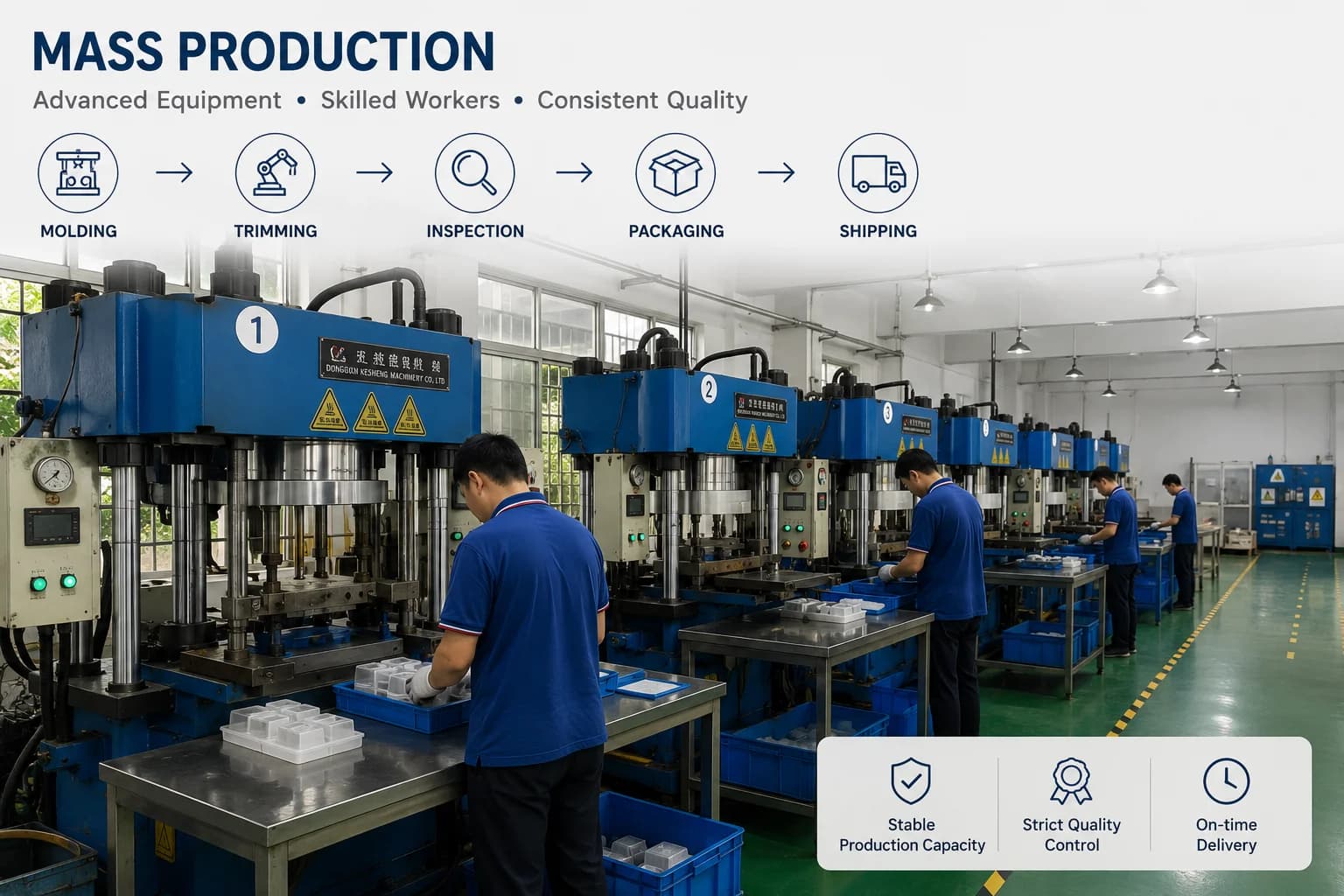
| Mass-production lead time | Usually 15–20 working days after order confirmation [K4] |
| Mold lead time | Usually about 15 working days after 3D design confirmation [K4] |
| Sample policy | Free samples may be available; eligibility, freight, taxes, and custom-sample charges confirmed case by case [K4] |
| Mold fee | Quoted after reviewing design files and project requirements [K4] |
| Customization scope | Cavity design, shape, size, color, logo, packaging [K1]; custom sizes, colors, shapes, and packaging [K5] |

Boundary conditions to keep in mind
- A block slows dilution; it does not stop it.
- Temperature resistance refers to the material's tolerance, not to a guarantee of performance in every use case.
- Odorless and food-grade attributes should be verified against current product documentation for your specific order.
- Lead times above are typical, not contractual; confirm them against your actual project schedule.
6. FAQ
Q1. Does an ice mold block really keep a drink colder than regular cubes?
It keeps the drink cold for longer, not colder at the peak. A block melts more slowly because it has less surface area per unit volume, so it releases meltwater gradually and holds the drink in a stable temperature range for a longer period. Small cubes will chill a drink faster at the start, then dilute it faster afterward.
Q2. Will an ice mold produce clear ice?
Not by itself. Clarity depends on the freezing method, not the mold. Directional freezing — where impurities and dissolved air are pushed to one end and removed — is what produces clear ice. A mold determines the shape and size of the block; it does not control how the water freezes.
Q3. What material should I look for in an ice mold?
Food-grade silicone is a practical choice for large-format ice because it flexes for clean release and does not transfer odor. Verified silicone specifications list food-grade, odorless material with temperature resistance from -40°C to 240°F/464°F and custom size availability [K5]. For commercial orders, confirm food-contact documentation for your specific market rather than relying on general claims [K3].
Q4. Can I order custom ice mold blocks for my brand?
Yes. Custom silicone ice molds can be specified across cavity design, product shape, size, color, logo, and packaging [K1]. Typical custom-order MOQ is around 500 pieces, with custom samples usually taking 7–10 working days and mass production typically 15–20 working days after confirmation [K4]. Final terms depend on design, tooling, and packaging requirements.
7. Conclusion
The case for molded ice is narrower and stronger than most marketing suggests. It is not that small cubes are bad — they are efficient, cheap, and correct for a drink you will finish in five minutes. The case is that a large ice mold block changes the dilution curve, and everything people notice about a well-made drink sits on top of that curve.
Choose a block when the drink is meant to be sipped: spirits, stirred cocktails, iced coffee, anything where flavor concentration and a stable temperature matter more than chilling speed. Choose small cubes when speed and cost matter more than strength. Match the block size to your glassware, accept that freezer space is the real constraint, and treat clear ice as a separate project rather than a product feature.
If you are buying for yourself, start with a single silicone mold in a size that fits your most-used glass. If you are developing a product, the practical next step is to confirm cavity design, size, color, logo, and packaging requirements against current sample and lead-time terms before committing to tooling [K1][K4].