Key Takeaways
- For everyday whiskey service, a large square ice cube tray is usually the most practical format: predictable stacking, easy glass fit, and a shape that suits slow sipping.
- A skull ice cube tray is mainly a presentation and branding tool. Cooling performance depends more on ice mass and surface area than on the novelty shape.
- Silicone flexibility helps demolding, but large cavities still need a stable fill line, a supportive tray structure, and a freezer-friendly footprint.
- For private-label or promotional orders, confirm cavity design, material documentation, dimensions, packaging, MOQ, and lead time before committing. [K1][K4]
- Treat “food-grade,” “non-toxic,” and “eco-friendly” as claims that require product-specific evidence, not category assumptions. [K5]
1. Introduction
Whiskey drinkers often move through the same sequence: first they care about the bottle, then the glass, then the ice. That last step is where tray choice becomes surprisingly practical. A thin, fast-melting cube can turn a carefully chosen pour into a diluted drink within minutes. A large, well-formed cube cools more gradually and keeps the glass looking intentional. For bars, gift brands, and promotional buyers, ice also becomes part of the product experience.
The problem is that “large silicone ice cube tray” is not a precise product description. Cavity size, wall thickness, tray rigidity, lid design, and demolding behavior vary widely. A tray that releases cleanly in a demonstration video may warp in a home freezer, or produce cubes that do not fit a standard rocks glass. The same issue applies to novelty formats: a skull ice cube tray can look striking in photos, but detailed cavities are less forgiving when the mold design or silicone flexibility is poorly matched to the shape.
This article explains how to evaluate large silicone ice trays for whiskey, when a large square format makes more sense, when a skull format is worth choosing, and what commercial buyers should verify before ordering custom or branded ice molds. The goal is not to crown a universal winner, but to help readers match format, material, and use case.
2. Large Silicone Trays and Whiskey: What Actually Matters
Core conclusion: For whiskey, the most important tray criteria are cube mass, cavity geometry, release reliability, and freezer fit — not the number of cavities or the novelty of the shape.
A large cube melts more slowly than a thin cube because it has a lower surface-area-to-volume ratio. In practice, that means less rapid dilution and a longer drinking window. Shape matters less than mass: a large skull cube and a large square cube of similar volume will behave similarly in the glass. The square format is usually easier to stack and store; the skull format is usually chosen for visual impact.
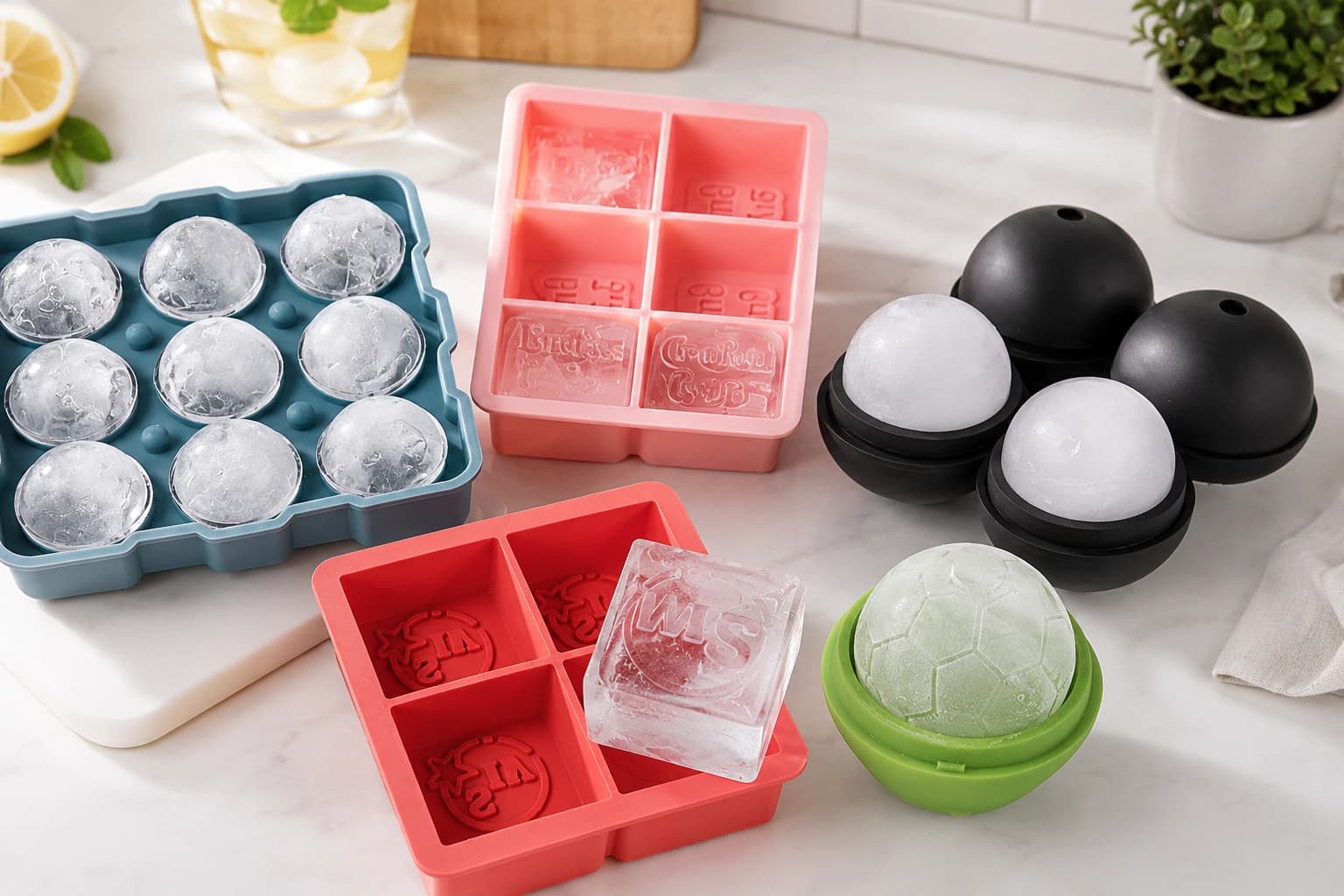
Silicone is popular for ice molds because its flexibility helps release the ice. However, flexibility is not automatically an advantage in very large trays. If the tray is too soft and the cavities are filled near the brim, moving it from counter to freezer can cause spills or uneven cubes. A reinforced rim, a lid, or a rigid outer frame can make a large tray more stable. Buyers should also check whether the filled tray fits level on a freezer shelf and whether the lid clears the shelf above.
For personal use, the practical advice is simple: measure the opening of your usual whiskey glass, check the stated cube dimensions, and confirm that one cube fits without forcing. For bar or retail use, the calculation shifts to consistency: cavity-to-cavity variation, release time, cleaning effort, and packaging. Custom silicone ice molds can be specified by cavity design, shape, size, color, logo, and packaging. [K1] For buyers developing a private-label whiskey ice program, custom silicone ice molds should be evaluated through samples rather than catalog images alone.
3. Large Square Ice Cube Tray: The Reliable Default
Core conclusion: A large square ice cube tray is the most reliable default for whiskey because it balances slow melting, stackable storage, and simple demolding.
The square format has fewer design complications than novelty shapes. The cavity walls are usually straighter, the fill line is easier to read, and the resulting cube fits neatly into a rocks glass. For home whiskey drinkers, a multi-cavity large square tray can produce a batch of cubes for the week. For bars, square cubes are easier to store in bins and easier to count during service. For gift and promotional programs, the square cube is a familiar format that can still be branded through tray color, logo, and packaging.
The main caution is that “large” is not standardized. A cube that is large for a compact glass may be too tall for a lowball glass, and a tray that fits one freezer may not fit another. Buyers should check the stated cavity dimensions and the overall tray footprint, not just the number of cavities. A lid is useful for stacking and odor protection, but it must be removable without flexing the filled tray. If clear ice is the goal, note that a tray alone does not guarantee clarity; clear ice usually depends on freezing method and water management as well.
A supplier’s product portfolio may list ice cube trays alongside ice ball trays, popsicle molds, and other promotional silicone items. [K2] That breadth is useful for buyers sourcing a themed set, but it does not prove that every format is stocked for every market. [K4] A practical review of a silicone ice cube tray portfolio should therefore separate “available formats” from “formats available for my packaging, certification, and order volume.”
4. Skull Ice Cube Tray: Presentation, Branding, and Extra Checks
Core conclusion: A skull ice cube tray is worth choosing when the ice is part of the visual experience — themed bars, Halloween service, gift sets, social content, or branded promotions — but it requires more sample validation than a square tray.
The skull shape does not make whiskey colder or better. Its value is communicative: it signals occasion, humor, edge, or brand personality. That makes the skull ice cube tray a strong fit for cocktail menus, novelty gifts, and promotional merchandise. It can also work for whiskey service in the right setting, provided the cavity volume is large enough to produce a substantial cube rather than a thin decorative piece.
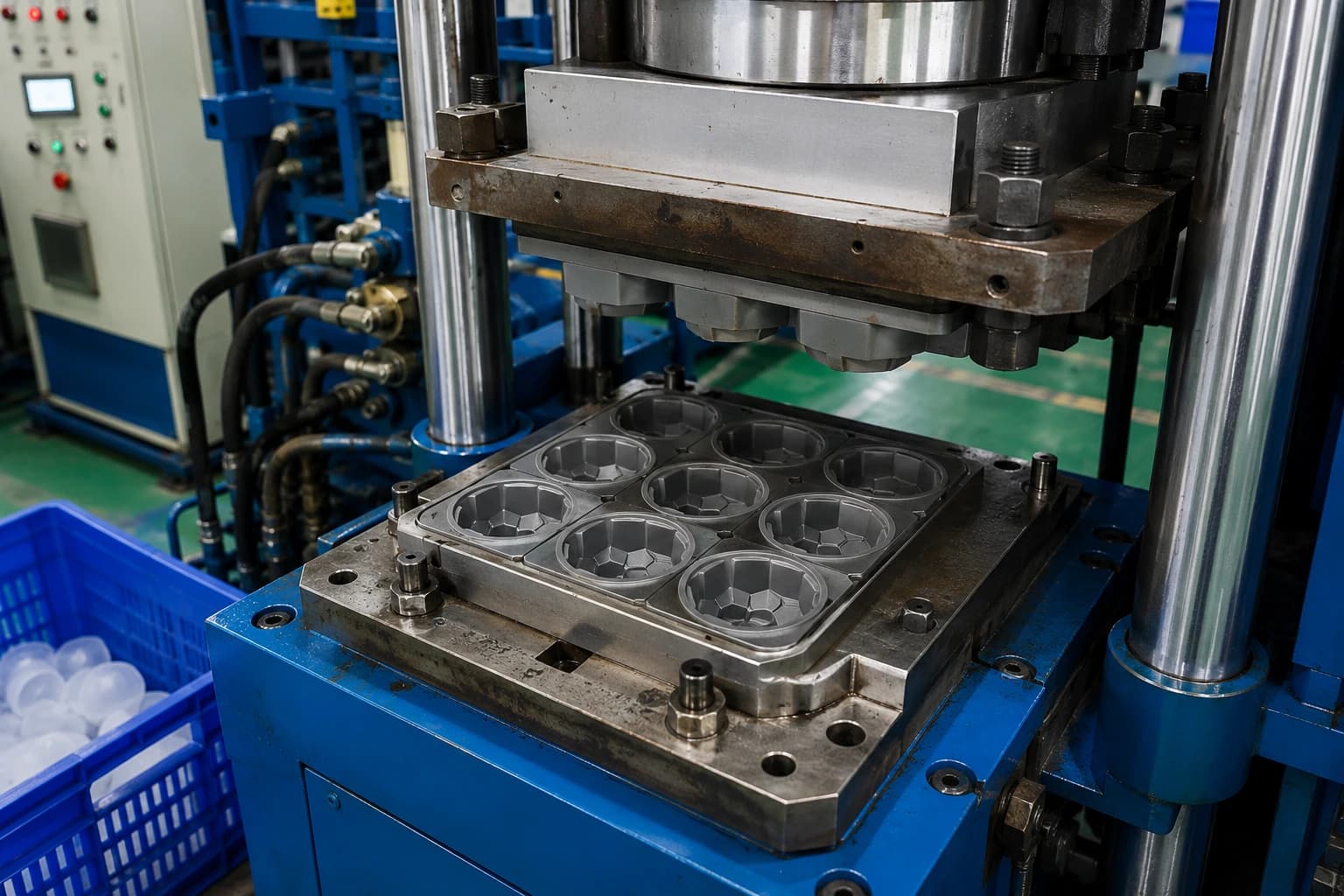
The manufacturing challenge is geometry. Deep eye sockets, jawlines, and undercuts can make demolding harder, especially if the silicone is too soft or the cavity detail is too fine. A good sample should show whether the skull releases cleanly, whether small details tear, whether the cube stands level in a glass, and whether the tray can be filled without overflows. Cleaning is another consideration: detailed cavities need proper drainage and air circulation when drying.
For custom programs, the skull format should be treated as a development project, not a simple color change. Cavity design, shape, size, color, logo, and packaging are all customizable in principle, [K1] and ice molds can be positioned across household, kitchen, and promotional use cases. [K4] For a branded launch, custom skull ice cube tray development should begin with a design file review, a physical sample, and a check on tooling, packaging, quality inspection, and order volume. A supplier’s stated mission or innovation language is not a substitute for those checks. [K3][K4]
5. Key Comparison and Buying Checklist
The table below summarizes the practical differences between common large-format ice mold options for whiskey. “Dilution speed” is relative to cube mass; a large skull cube and a large square cube of similar volume will behave similarly.
| Format | Best for | Whiskey dilution | Release and use | Customization options | Main risk |
|---|---|---|---|---|---|
| Large square ice cube tray | Daily whiskey, bar service, gift sets | Slower than small cubes due to larger mass | Usually straightforward; support frame helps | Cavity size, tray color, logo, packaging | Tray flex, spillage, glass-fit mismatch |
| Skull ice cube tray | Themed bars, novelty gifts, branded promotions | Similar to other cubes of similar volume | Detail-dependent; sample required | Shape, color, logo, packaging | Torn details, unstable fill, harder cleaning |
| Ice ball tray | Whiskey presentation, spirit-forward serves | Slow due to mass | Depends on mold design and release | Shape, packaging | Freezer space, uneven spheres |
| Standard small cube tray | Fast chilling, mixed drinks, high-volume service | Faster due to higher surface area | Easy | Limited branding area | Not ideal for slow sipping |
Before buying or specifying a tray, use this checklist:
- Confirm cavity volume and dimensions. Check the cube against your glass, not just the tray against your freezer.
- Review material documentation. Ask for the specific silicone composition, temperature range, and food-contact documentation for the exact product. [K4]
- Test the filled tray. A tray that is easy to carry empty may spill when filled with water.
- Check lid and stacking behavior. A lid should protect the ice without pressing into the cavities.
- Plan cleaning and drying. Large cavities and detailed shapes need space to dry fully.
- For custom orders, verify sampling, tooling, packaging, and QC. Typical customization covers cavity design, shape, size, color, logo, and packaging; production planning should also cover sampling, tooling, quality inspection, and sourcing. [K1]
- Do not assume availability. The portfolio diagram is evidence of reported product coverage, not proof of current stock for every market. Confirm availability, material, dimensions, certifications, MOQ, and lead time. [K4]
- Use environmental claims carefully. Terms such as “eco-friendly,” “zero waste,” or “non-toxic” should be tied to verified product data or a specific test report, not used as general category language. [K5]
6. FAQ

Q1. Is a skull ice cube tray good for whiskey?
Yes, if the goal is presentation. A skull cube can suit themed bars, gifts, and social content, but it does not cool whiskey better than a square cube of similar mass. Check the cavity volume and whether the finished skull fits your glass without forcing.
Q2. Are large silicone ice cube trays better than plastic trays?
Silicone is flexible, which can make demolding easier, especially for complex shapes. Rigid plastic trays can be easier to carry when full and may suit clear-ice workflows. The better choice depends on cavity size, release behavior, freezer fit, and the material documentation for the exact product. [K4]
Q3. How do I choose between a large square tray and a skull tray?
Choose a large square tray for routine whiskey service, bar prep, and stackable storage. Choose a skull ice cube tray when the ice is part of the brand, theme, or gift experience. If you need both, use square trays for service and skull trays for presentation or limited promotions.
Q4. Can I order custom skull ice cube trays with my logo?
Yes, custom silicone ice molds can be developed with cavity design, shape, size, color, logo, and packaging customization. [K1] Before ordering, confirm the design file, sample approval, tooling, MOQ, lead time, packaging, quality inspection, and the specific material documentation for the product. [K1][K4]
7. Conclusion
There is no single “best” large silicone ice cube tray for every whiskey drinker. For daily use, a large square ice cube tray is the more practical default: it is easier to stack, easier to fit into a standard glass, and less demanding to demold. A skull ice cube tray earns its place when the ice is meant to be seen — in themed service, gift sets, or branded promotions — but it should be chosen with the same attention to cavity volume, release quality, cleaning, and material documentation.
The next step is to define the use case before comparing products. If the tray is for home whiskey service, measure the glass and freezer first. If it is for a private-label or promotional program, request samples and confirm availability, material composition, dimensions, certifications, MOQ, and lead time. [K4] That process is less exciting than browsing photos, but it is the difference between a tray that looks good in a listing and one that performs reliably in the glass.